
Architects: Want to have your project featured? Showcase your work by uploading projects to Architizer and sign up for our inspirational newsletters.
Loud, expressive, bold, iconic, one-of-a-kind.
Not long ago, architecture functioned as a statement-making device. Frequently associated with the era of the “starchitect,” buildings were used as cultural symbols or city-branding agents, often prioritizing attention and grandeur over occupancy and plasticity. Today, however, a quieter design attitude is beginning to emerge and is being celebrated by architects and city inhabitants alike. Specifically, architecture seeks to create spaces that explore multiple possibilities of use. Buildings that perform not through bold declaration, but through a quiet generosity — supporting life without trying too hard.
One way to understand this shift is through the concept of “slack.” In everyday language, slacking is interpreted as lassitude or laziness — or, in architecture, as spaces characterized by a lack of design. But what if we were to understand it instead, as a form of resilience: a margin that allows for adaptation, flexibility and spontaneity. What if architects designed buildings that incorporated generous open spaces, passive environmental strategies and circulation routes that resist rigid scripting?
The following projects illustrate architecture designed with slack, where, rather than prescribing exactly how life should unfold within them, these spaces create the conditions for it. Rather than scripting every possibility, these seven projects demonstrate how architecture can succeed simply by taking a step back.
Glorya Kaufman Performing Arts Center
By AUX Architecture, Los Angeles, California
Popular Winner, Hall & Theatre, 11th Architizer A+Awards
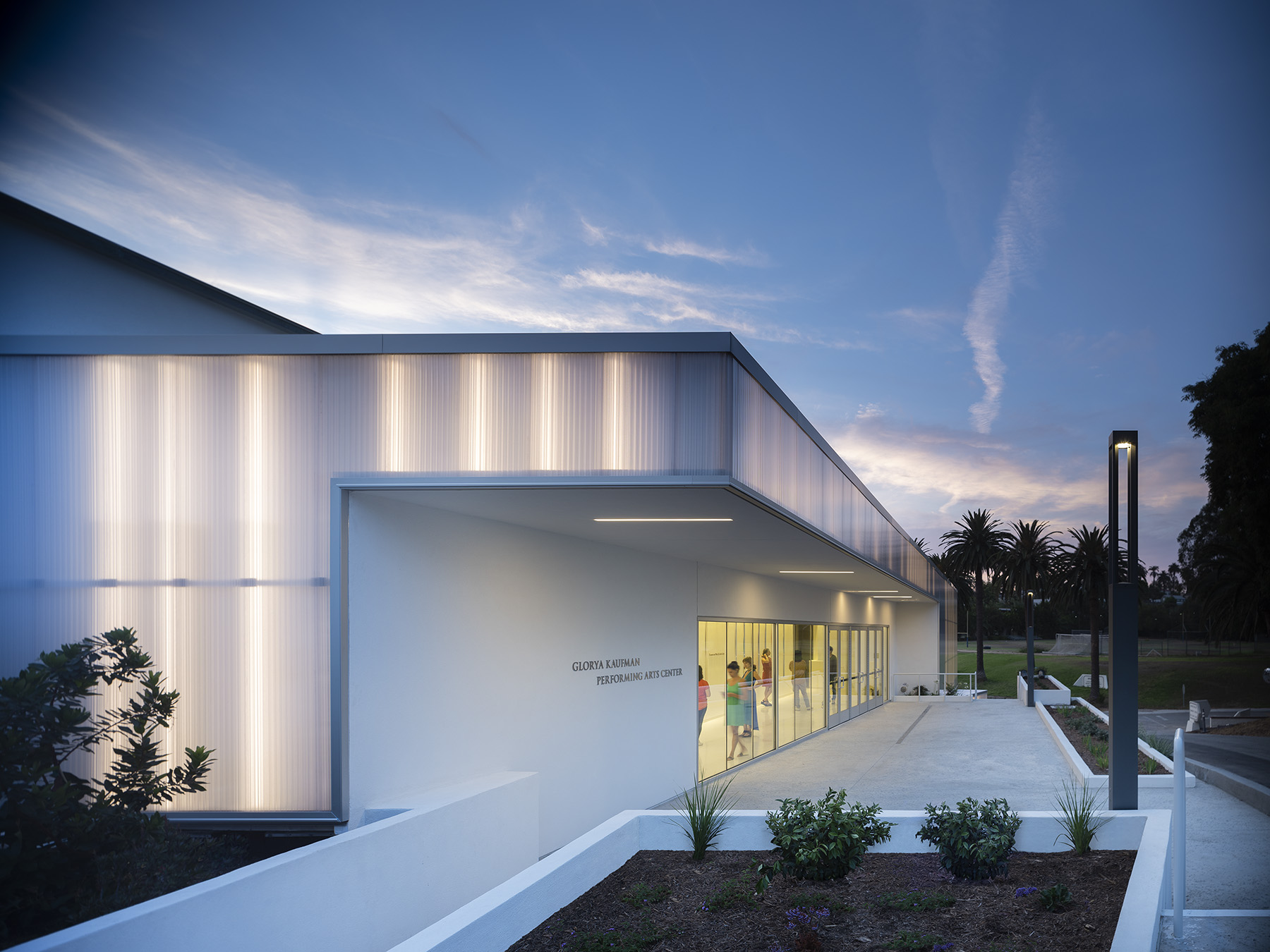
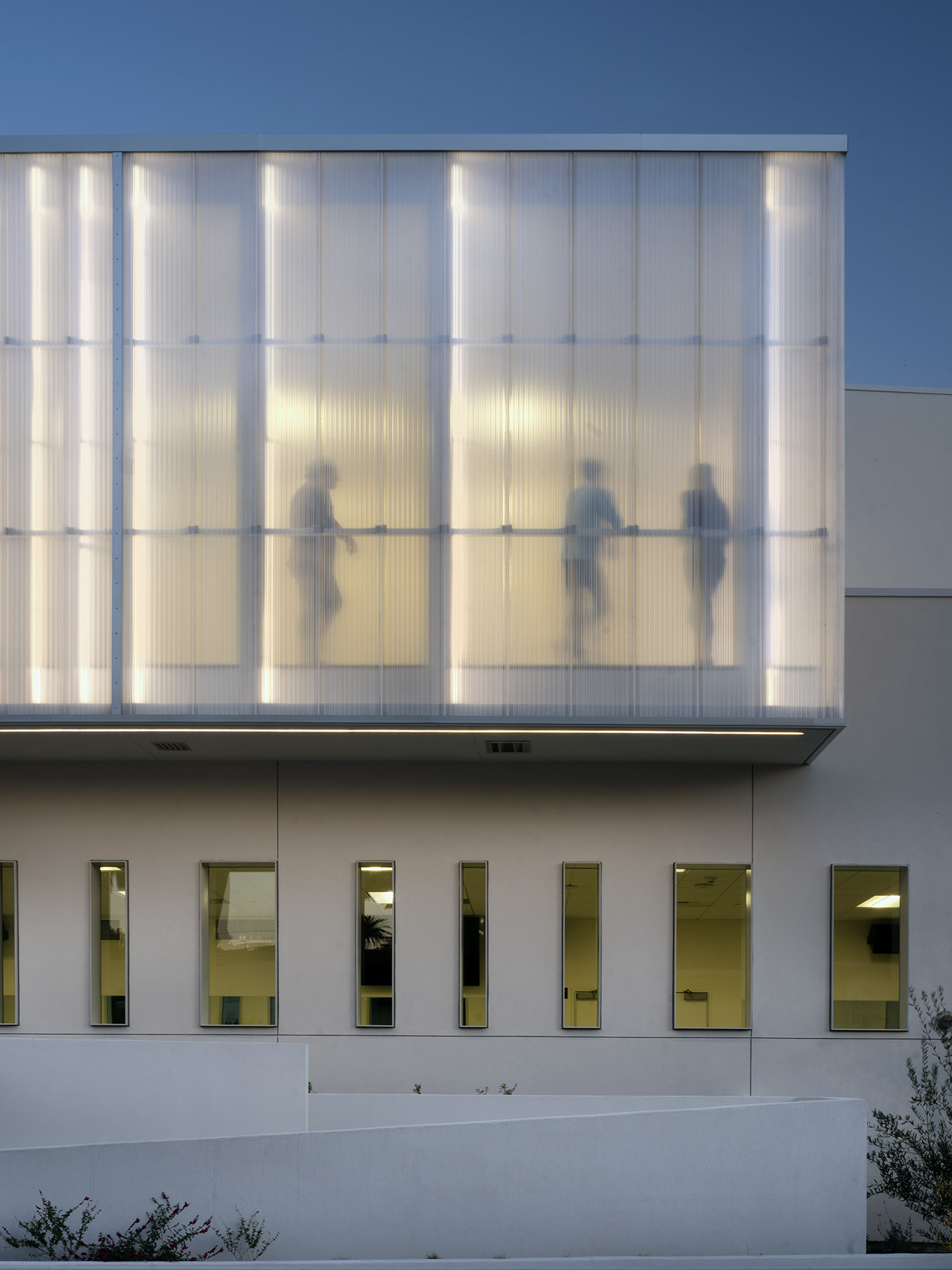 “Programmatic slack” can emerge when buildings are designed to support many activities rather than a single fixed use. The specific project transforms a 1950s temple into a new home for the organization’s therapeutic performing arts program. Activities include dance, music, and theatre in spaces that shift throughout the day.
Designed as a sequence of spatial “vignettes,” these rooms act as classrooms in the morning, rehearsal studios in the afternoon and green stages during performances. In parallel, a semi-translucent polycarbonate façade, made from recycled plastic, wraps and thus preserves the original temple’s structure. The interior is rhythmically framed via identical, consecutive columns, while the lobby alternately compresses and expands to support an array of events.
HAWE Factory
By Barkow Leibinger, Kaufbeuren, Germany
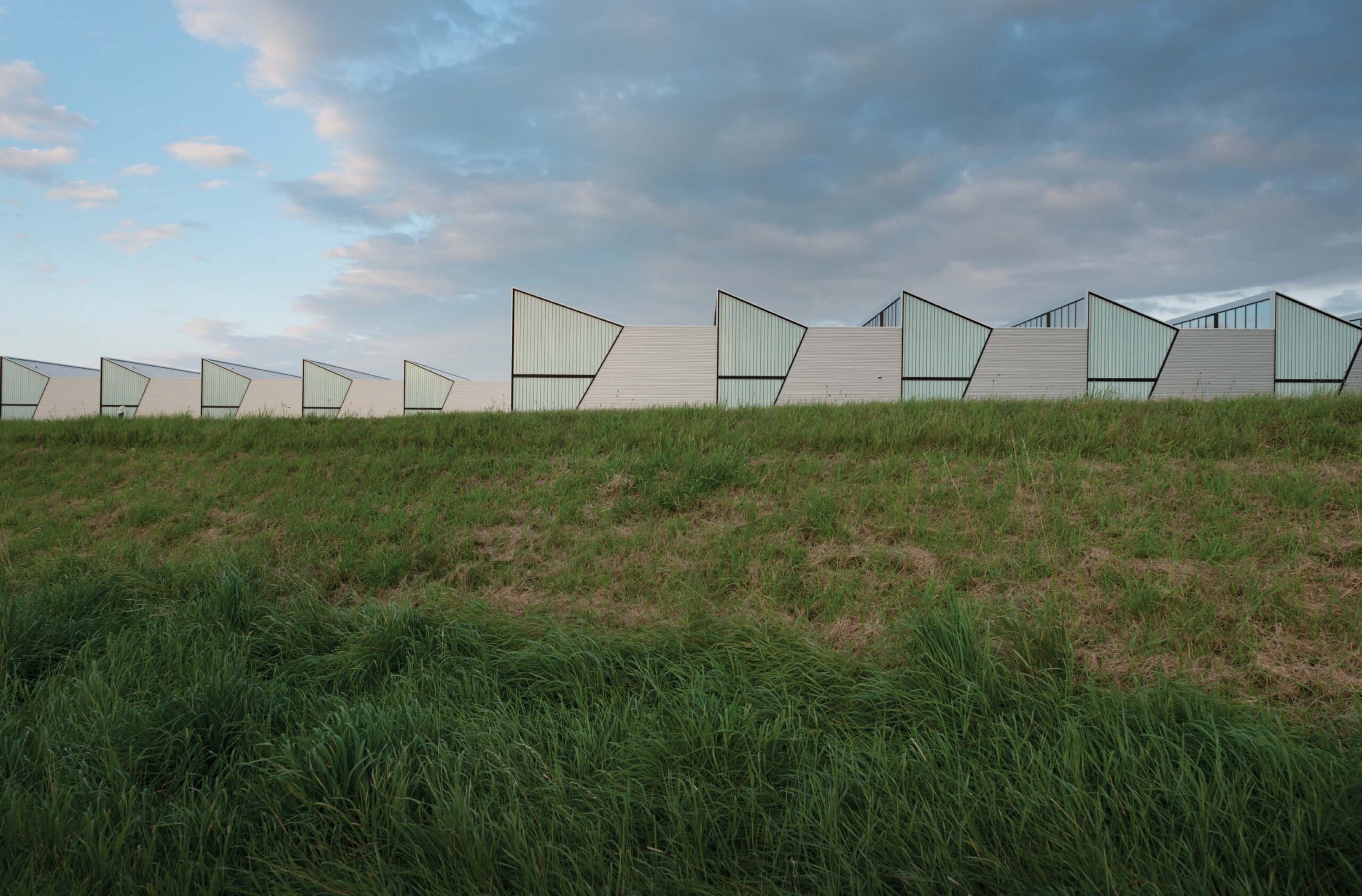
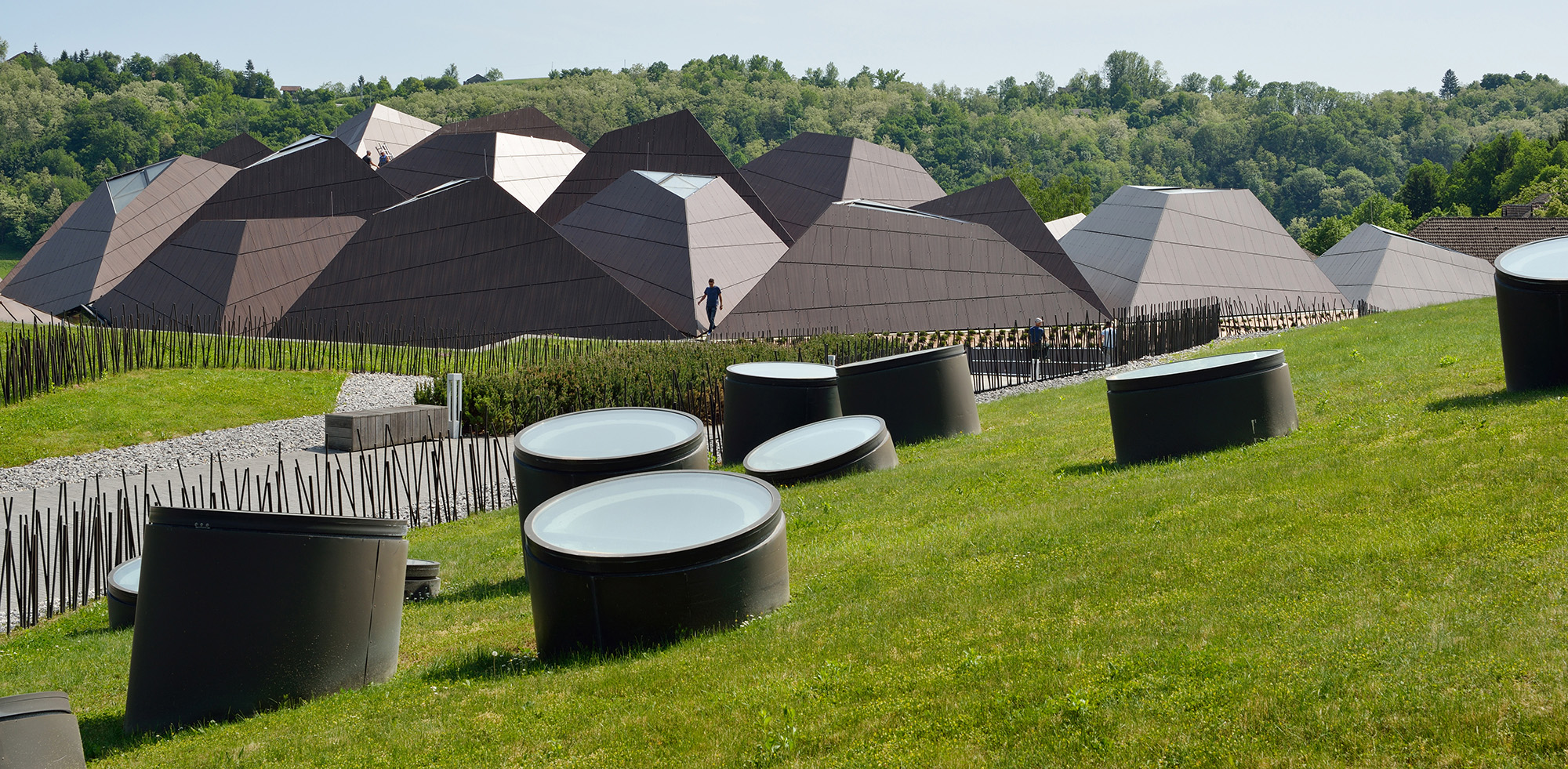
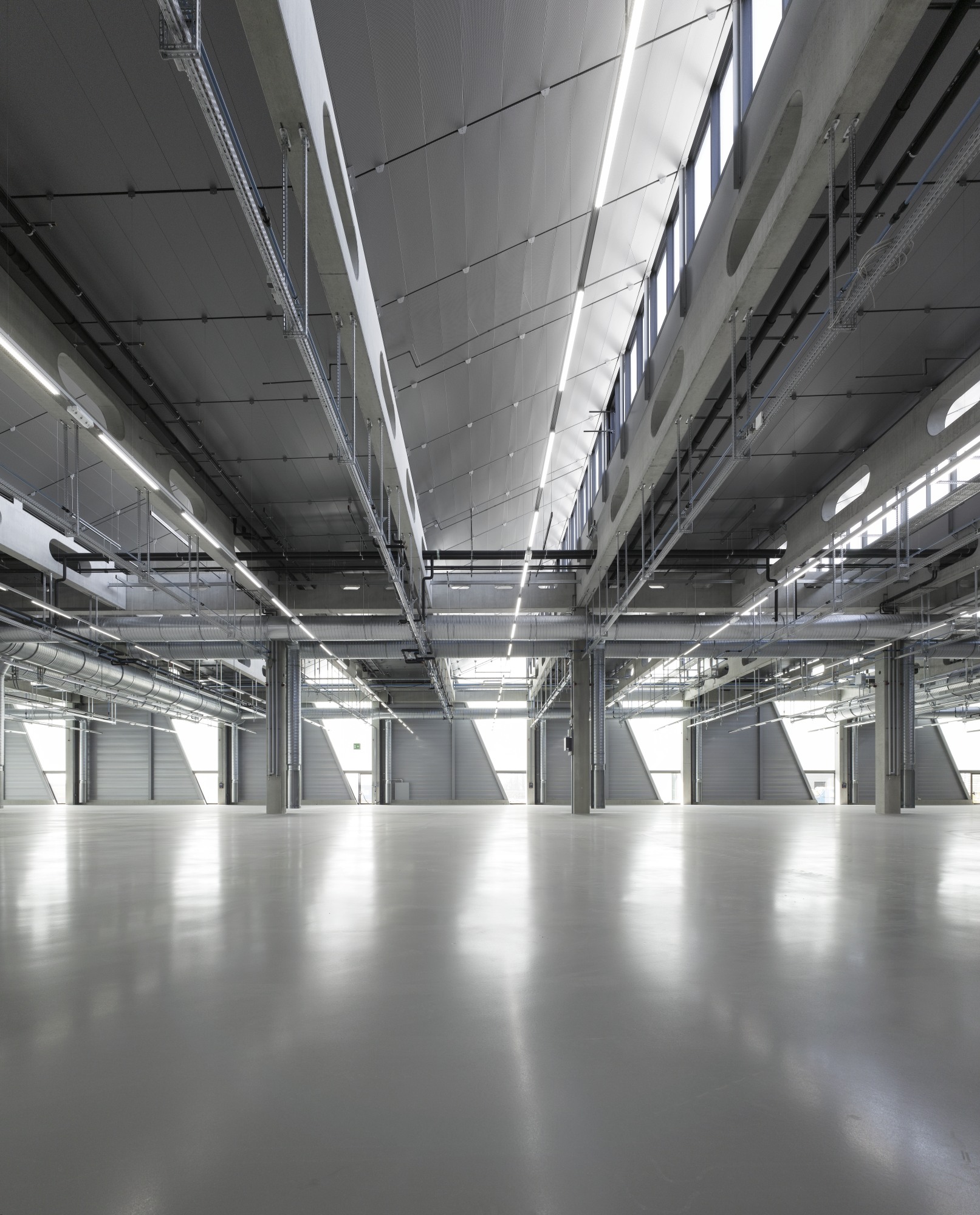 The HAWE Factory reimagines the typical industrial complex as a “green factory” embedded in the agricultural landscape at the edge of the Bavarian Alps. The building includes four production halls in a pinwheel formation around a central courtyard containing offices, meeting rooms and shared facilities.
The areas are wide and open, supported by large structural systems that offer adaptability and spatial generosity, while a façade made of metal and glass echoes the rhythms of the nearby Alpine terrain. Finally, photovoltaic panels are installed on the roof, reducing the need for artificial lighting and extensive mechanical systems for the building’s performance.
KIDO Kindergarten
By xystudio, Aleksandrow Lodzki, Poland
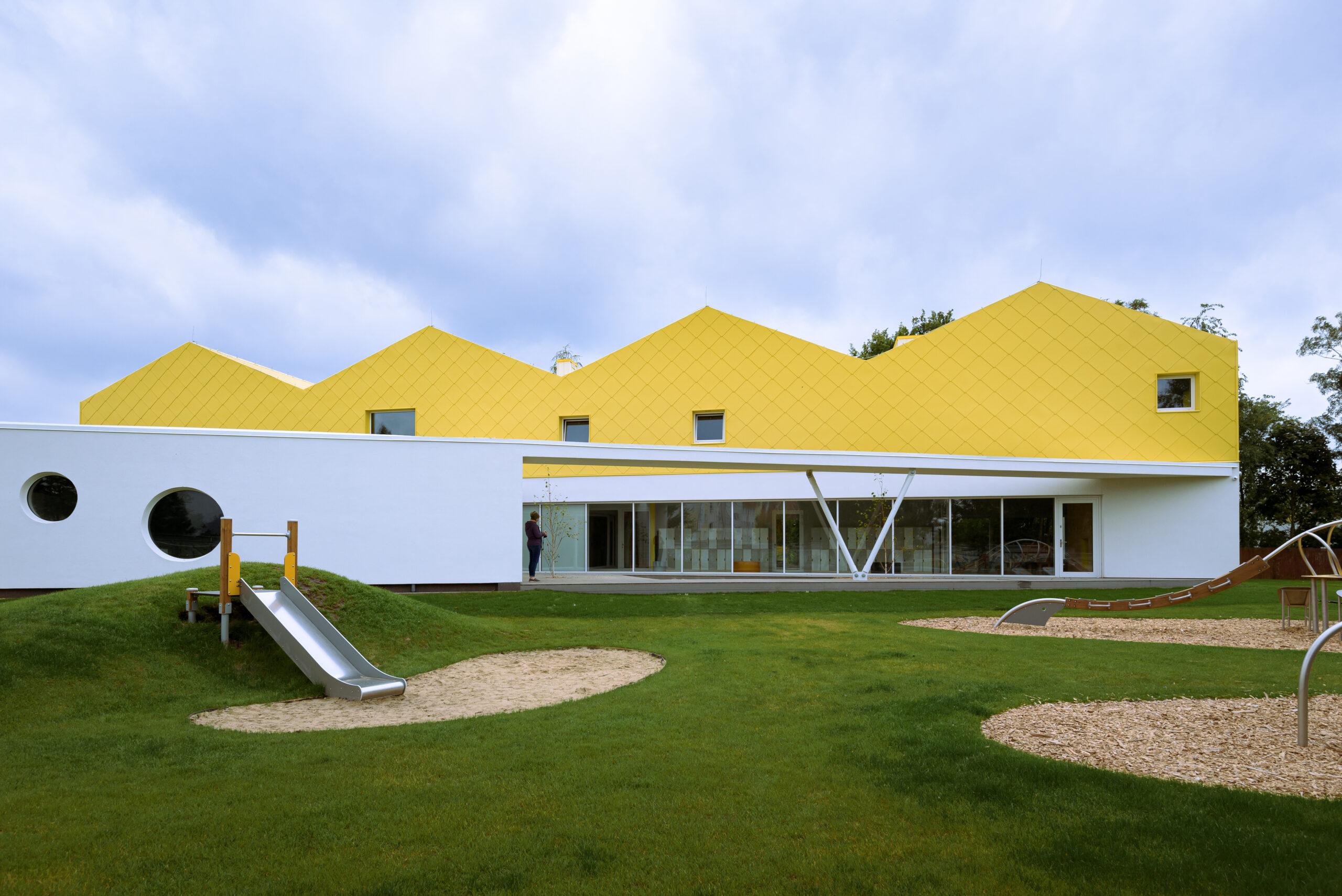
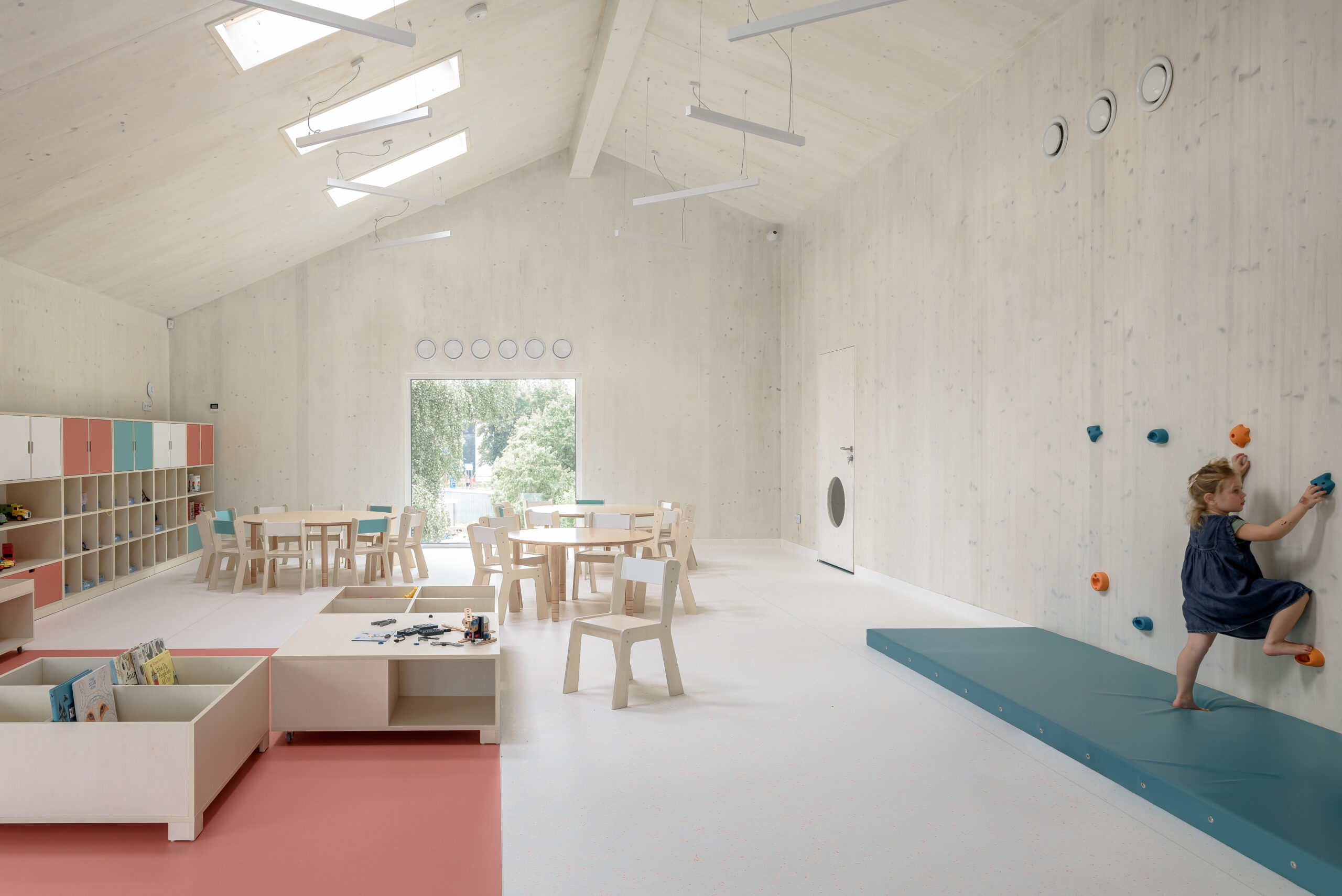 Relying on simple passive strategies and materials, the KIDO Kindergarten – nicknamed the “Yellow Crocodile” – is a public childcare facility in Poland. The project is “slacking” environmentally.
Natural ventilation, chimney draft support and underfloor heating minimize the need for complex technical systems, while exposed timber cladding successfully insulates the space. The layout follows an open-plan organization, where classrooms are positioned around a central hall that acts as a multi-purpose area for play and interaction.
New Generation Research Center in Caen
By BRUTHER, Caen, France
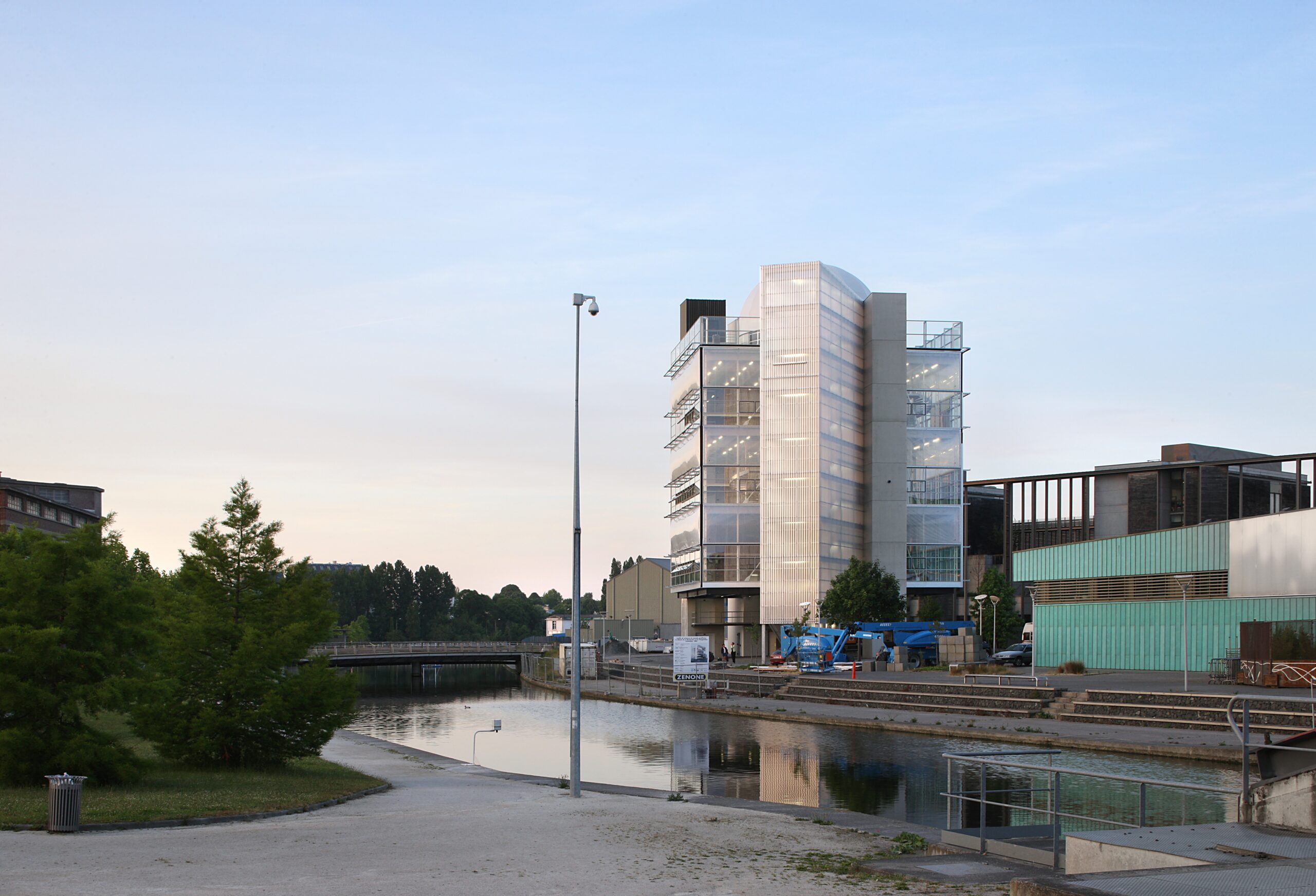
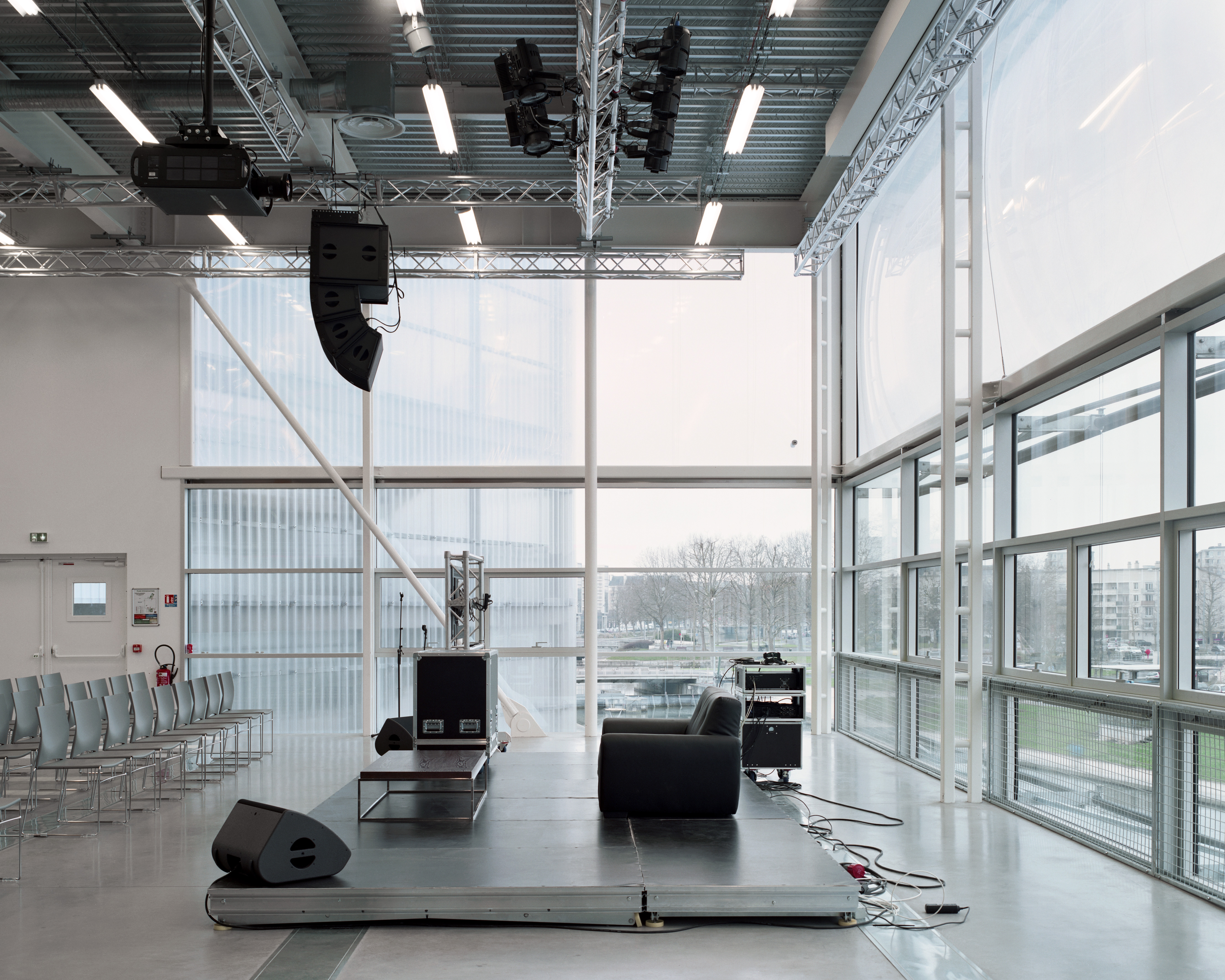 The project is conceived as a spatially open framework. Instead of creating fixed containers for specific activities, the research center extends outwards to the public, encouraging idea exchange and experimentation across disciplines.
The compact structure is located within the urban redevelopment of the Caen peninsula along the canal, organized around large, flexible “megafloors”. A prefabricated structural grid allows each floor to become reconfigured, shifting spaces and activities, while the core service areas are strictly separated.
Webb Chapel Park Pavilion
By Studio Joseph, Dallas, Texas
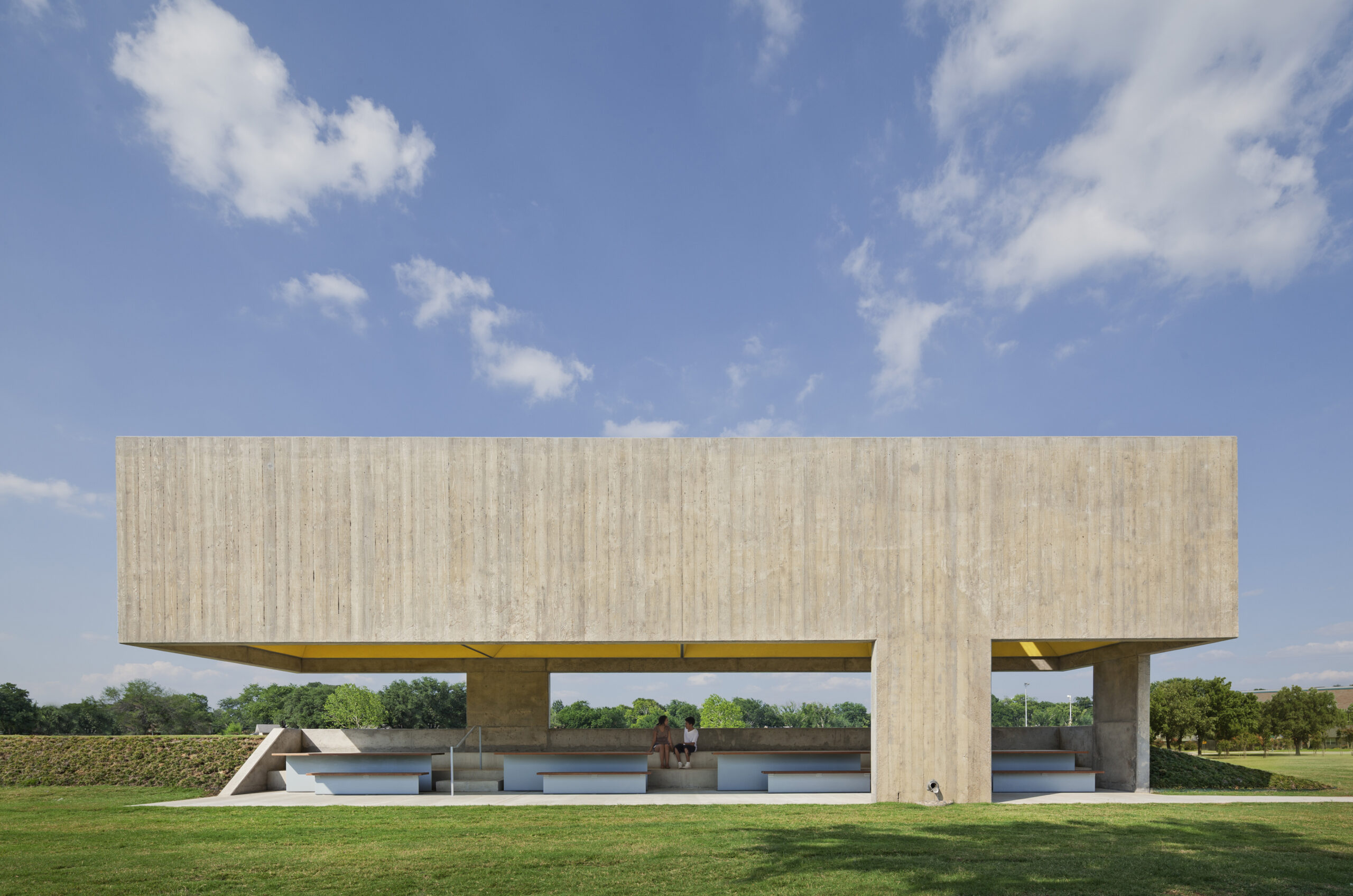
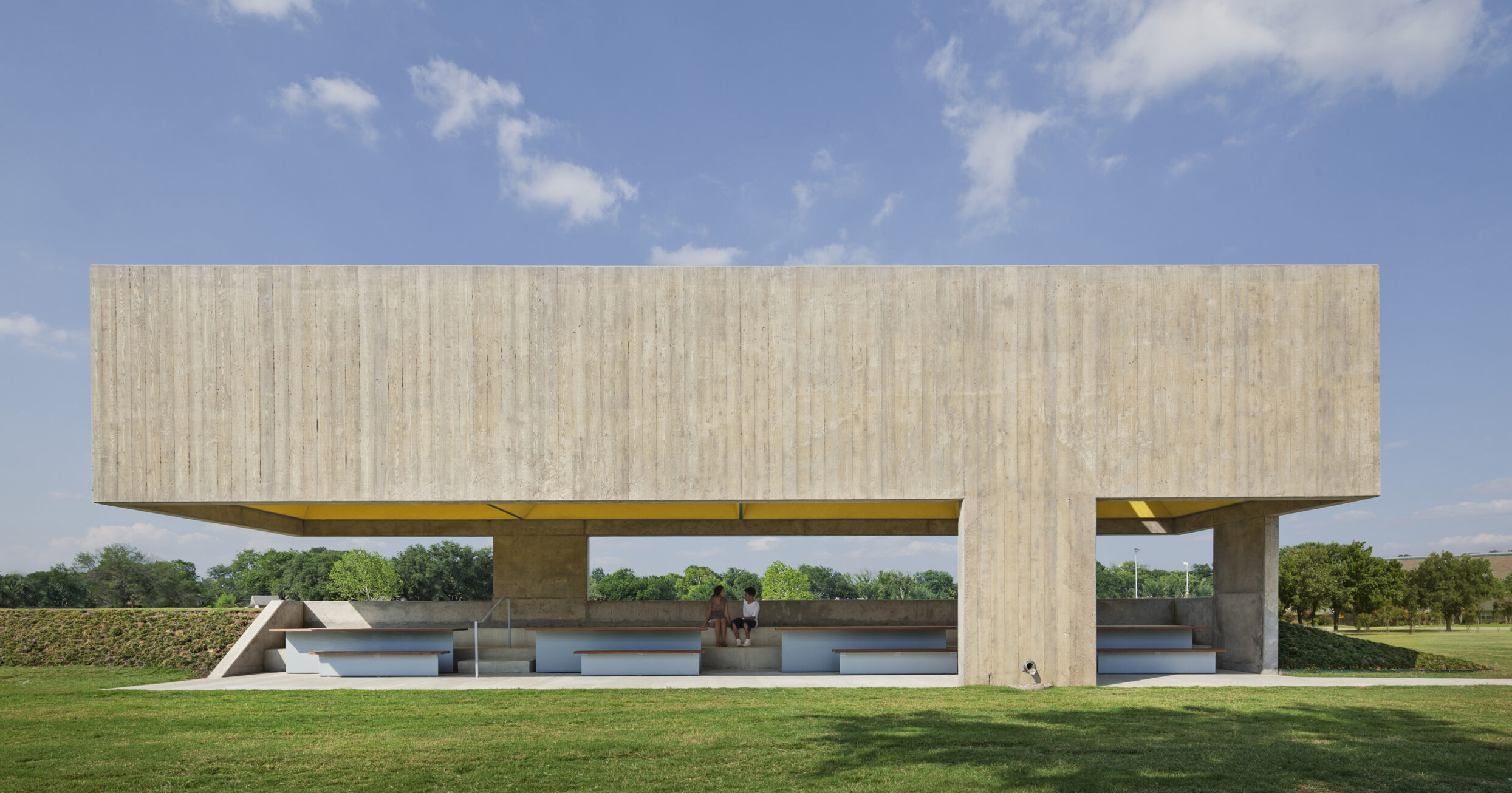
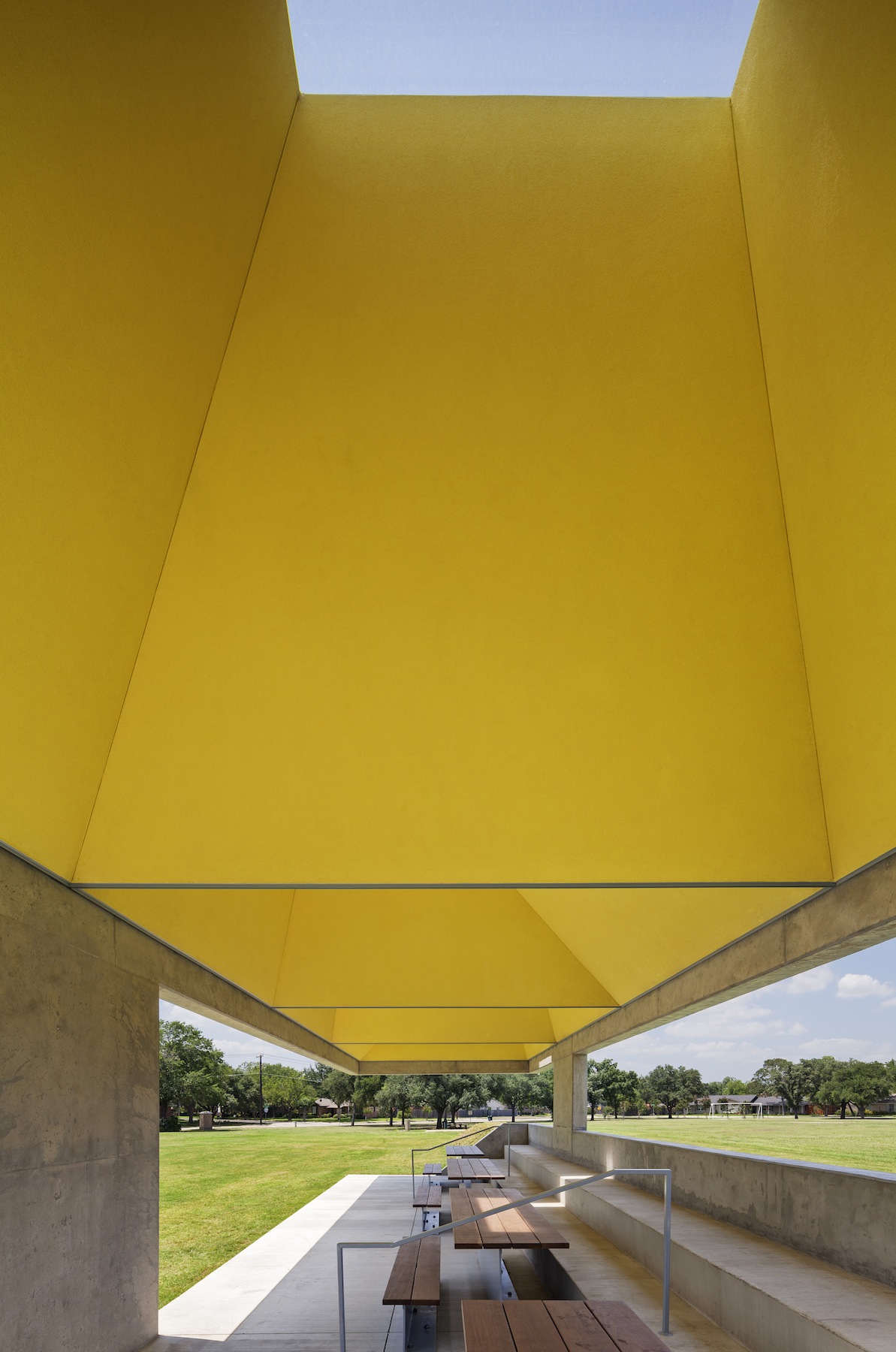 This pavilion project is a small civic structure that relies on discreet spatial strategies to create environmental comfort. Defined by a deep concrete canopy that cantilevers from just three supports, the structure creates an open shaded space that benefits from a passive ventilation system inspired by traditional palapa structures. Programmatically, it replaces a series of aging part shelters, acting as an intermediary space between a playground and a soccer field.
Magnolia Mound Visitors Center
By Trahan Architects, Baton Rouge, Los Angeles
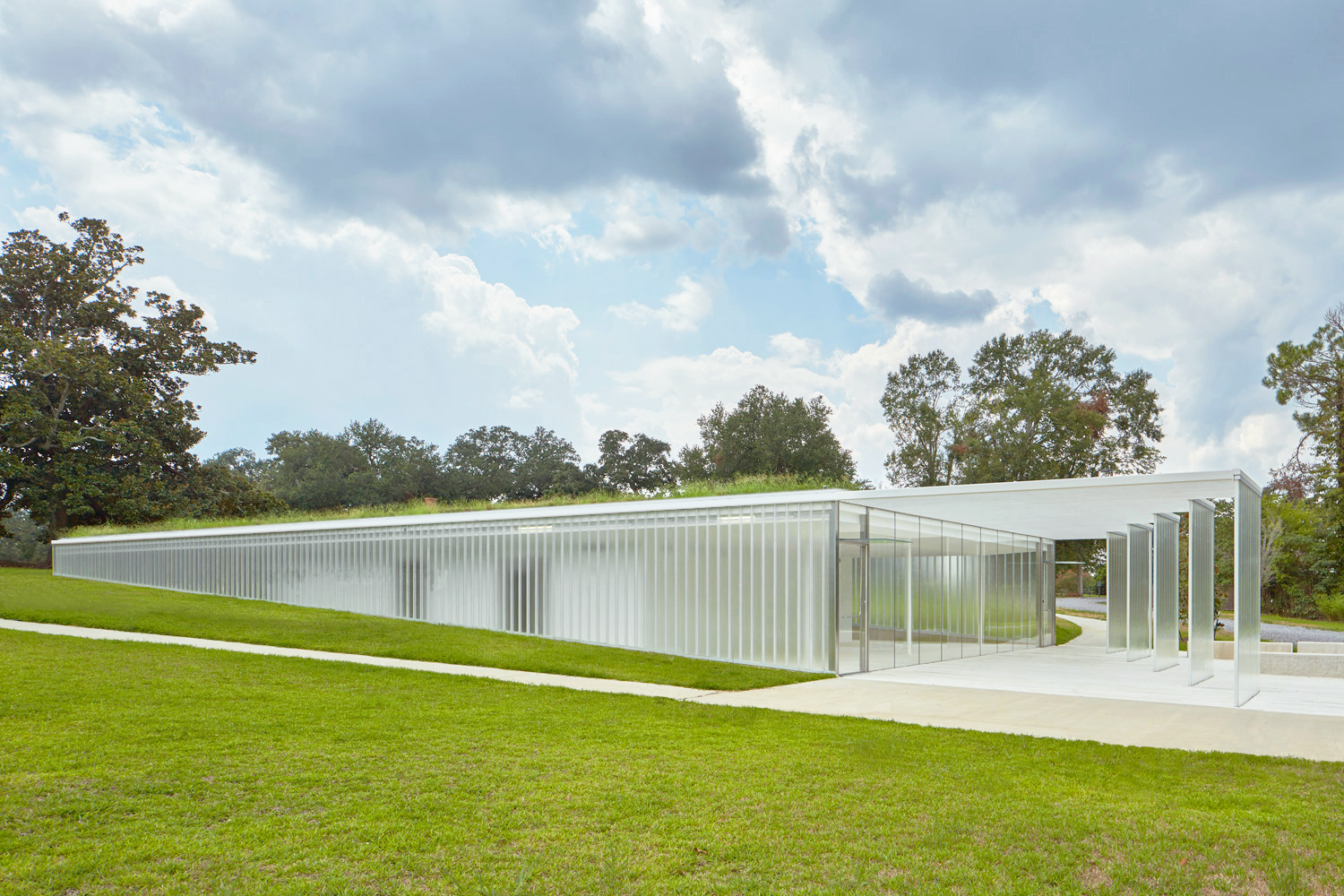
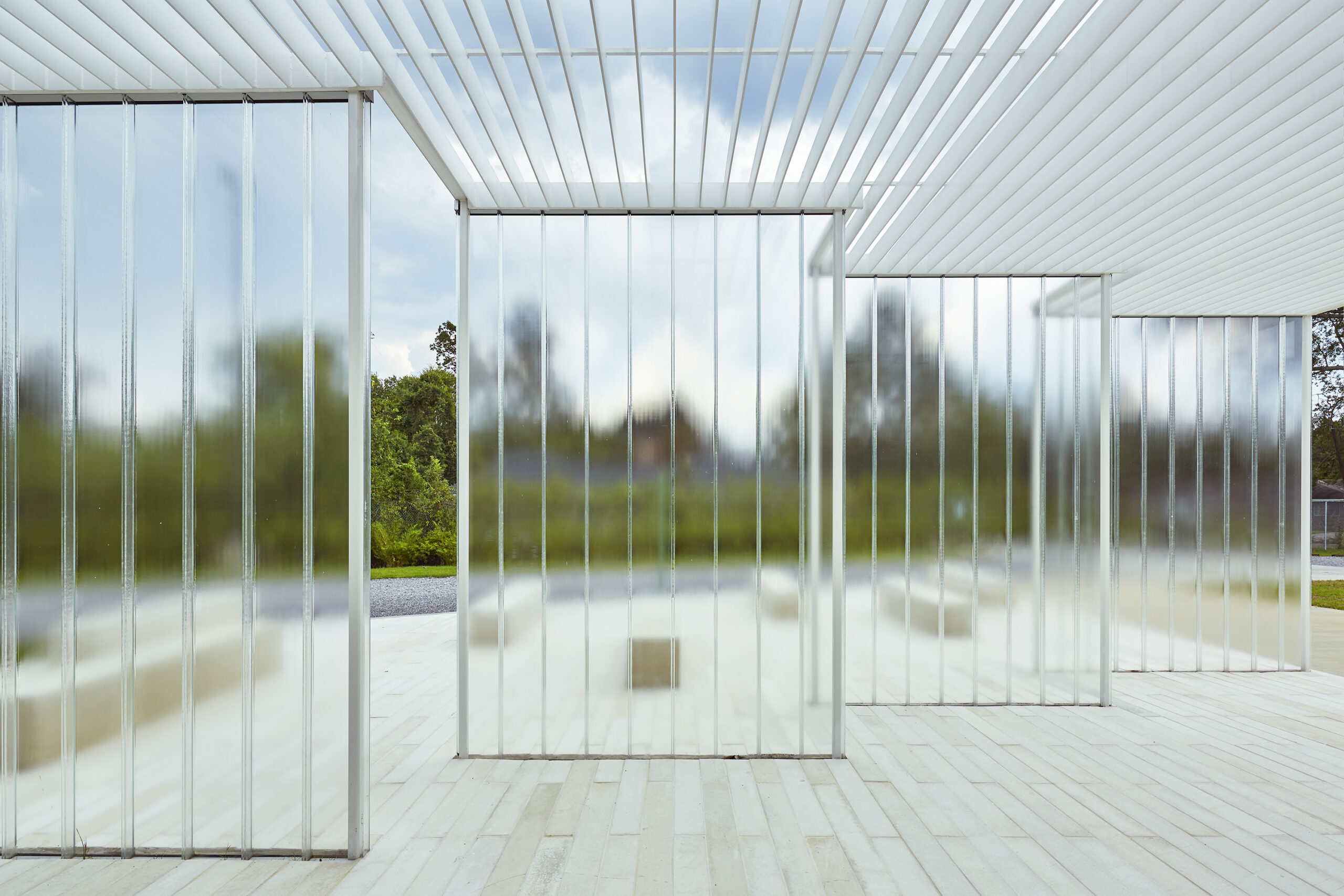 The visitor center deliberately recedes into its surroundings, introducing a minimal contemporary intervention within the historic grounds of the late-18th-century plantation. Instead of antagonizing the existing historic buildings, the project becomes a threshold that transitions the visitors to the cultural site.
Following the topography of the mound, the roof structure eventually aligns with the landscape, forming a datum that subtly links the new building to the existing architecture. Movement and orientation are gently framed, allowing the landscape and cultural heritage to take center stage.
Architects: Want to have your project featured? Showcase your work by uploading projects to Architizer and sign up for our inspirational newsletters.
Featured Image: HAWE Factory by Barkow Leibinger, Kaufbeuren, Germany
 HAWE Factory
  KIDO Kindergarten
  Magnolia Mound Visitors Center
  New Generation Research Center in Caen
  Webb Chapel Park Pavilion