
The judging process for Architizer's 14th A+Awards is now underway. Subscribe to our Awards Newsletter to receive updates about Public Voting, and stay tuned — winners will be announced later this spring.
Scandinavian design has always led the pack when it comes to embracing natural materials. More so, the region is synonymous with pioneering techniques, pushing the envelope in terms of what can be done and with what.
Of course, timber structures are found across the globe. It’s one of the most traditional options for building design, and fundamental to so many cultures and societies. Nevertheless, few can hope to match the scale of Wood City in Stockholm or the aptly titled high-rise Wood Hotel, further north in Sweden. We’ve also seen timber put to striking use for smaller, more intimate projects — not least within the context of event spaces.
The Greenhouse Theatre in London is a prime example, a temporary zero-waste stage and space that was located in the heart of the UK capital, predominantly made from reclaimed pallets and plank framing. Meanwhile, thousands of miles south, the waterborne housing solution Kunlé Adeyemi designed for vulnerable communities in Lagos, Nigeria, is also being used for a floating music studio and venue in the Cape Verde Islands.
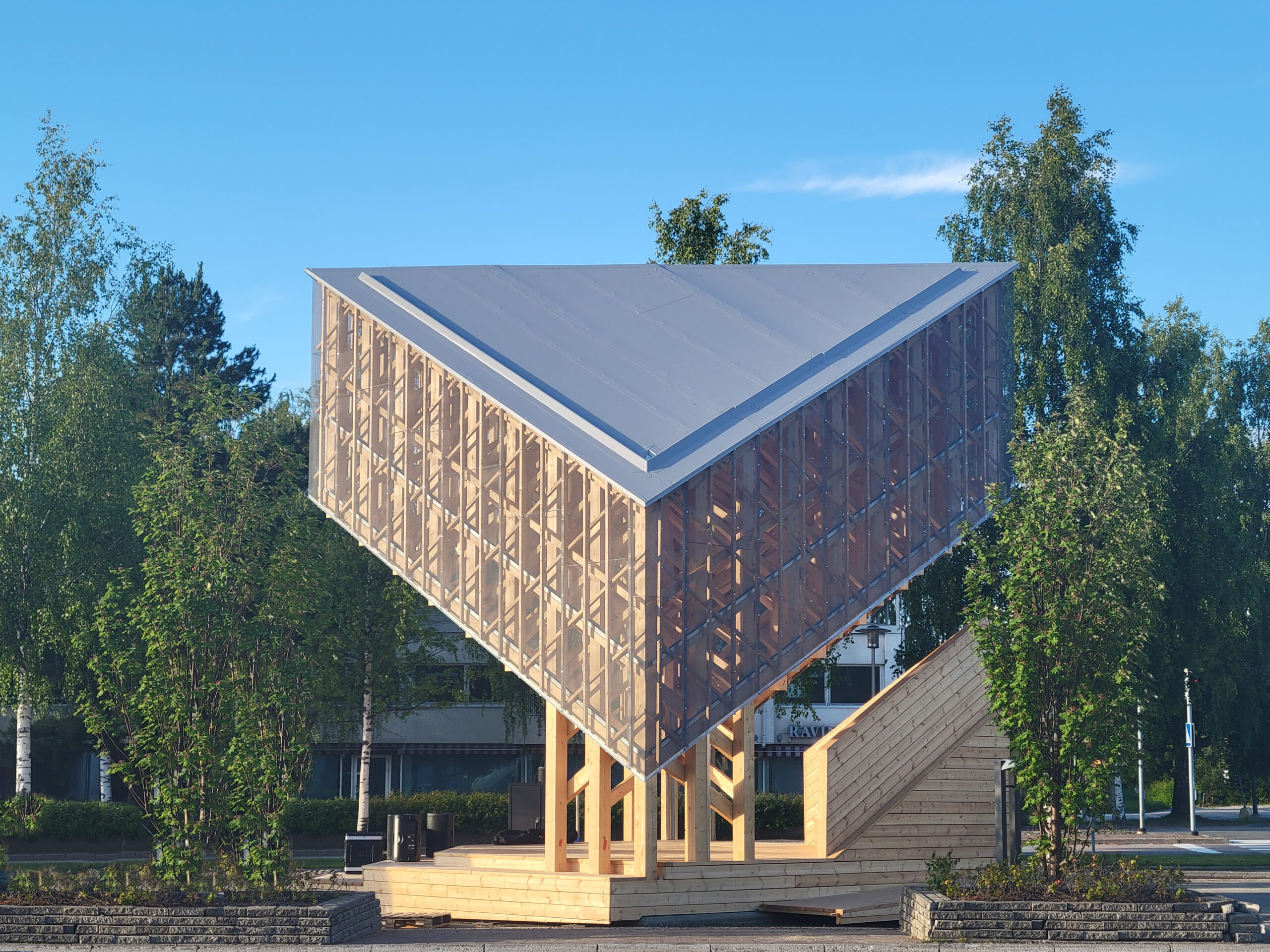
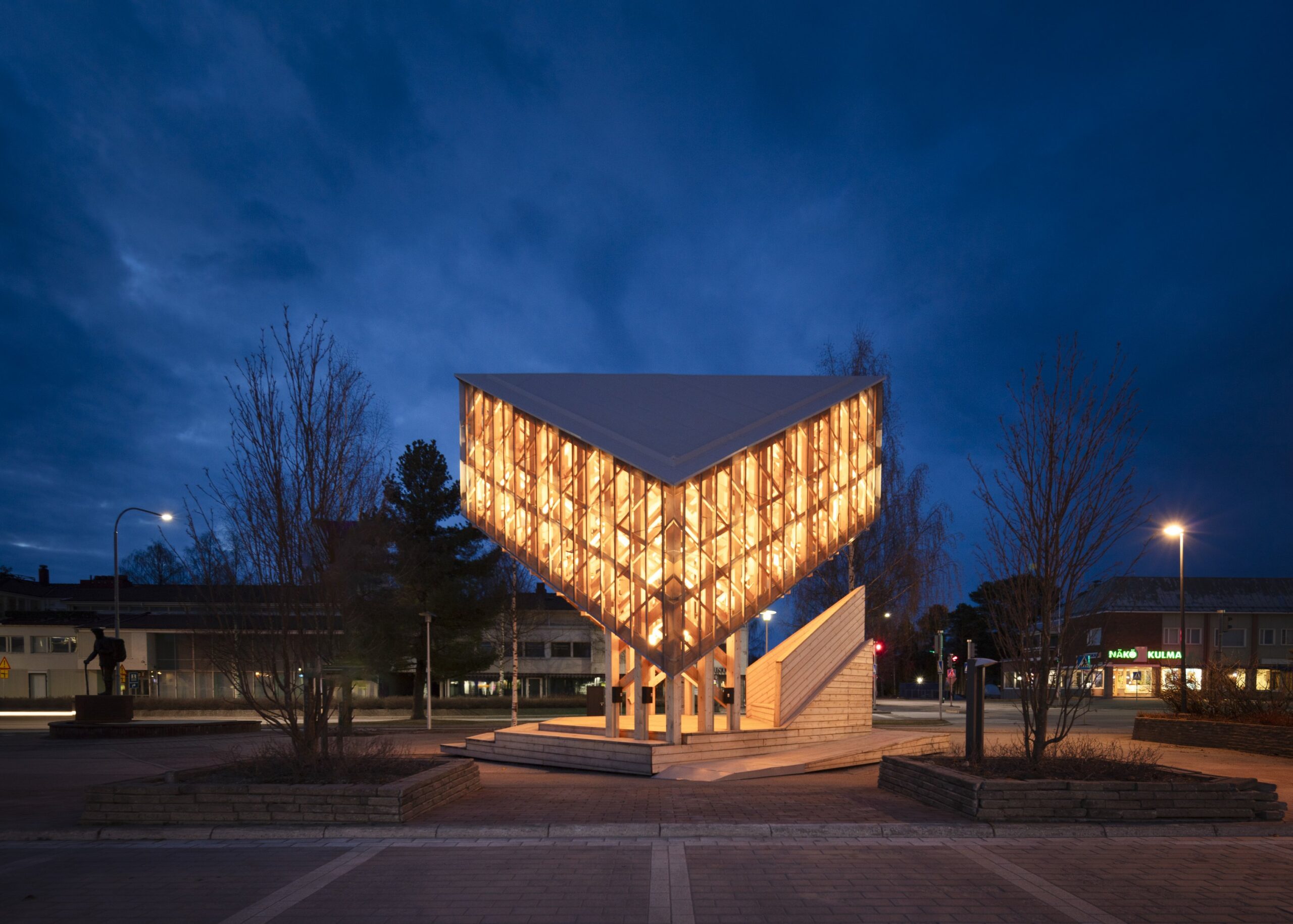
Kide by Aalto University Wood Program, Kuhmo, Finland | Popular Choice Winner, Pavilions, 13th Architizer A+Awards
There is undoubtedly an inherent emotional connection between people and wood, and this goes some way towards appreciating why performances seem to hit differently when surrounded by this material. But there are also practical reasons why we are seeing a number of spectacular arts and culture spaces that are built from, or predominantly use, timber. Highly flexible and versatile, it opens up numerous possibilities to genuinely do things differently.
Kide, by the Aalto University Wood Program, is a case in point, which takes us back to the Nordic school. An outdoor event space in the Finnish city of Kuhmo, erected for the 30th anniversary of the Wood Program, the concept pays homage to the town’s history as an epicenter of timber production and the surrounding forests that provide the necessary resources to sustain that industry.
Laminated veneer lumber, glulam and local pine all feature in a design that sets a simple canopy on top of two corners, then uses eight interwoven, mechanically connected trusses to create an eye-catching square geometry and introduce depth and volume. Breathing new life into a very familiar town square, the open plan layout and options for various uses only add to the sense that this is very much a place built for people, rather than an imposition forced on the location.
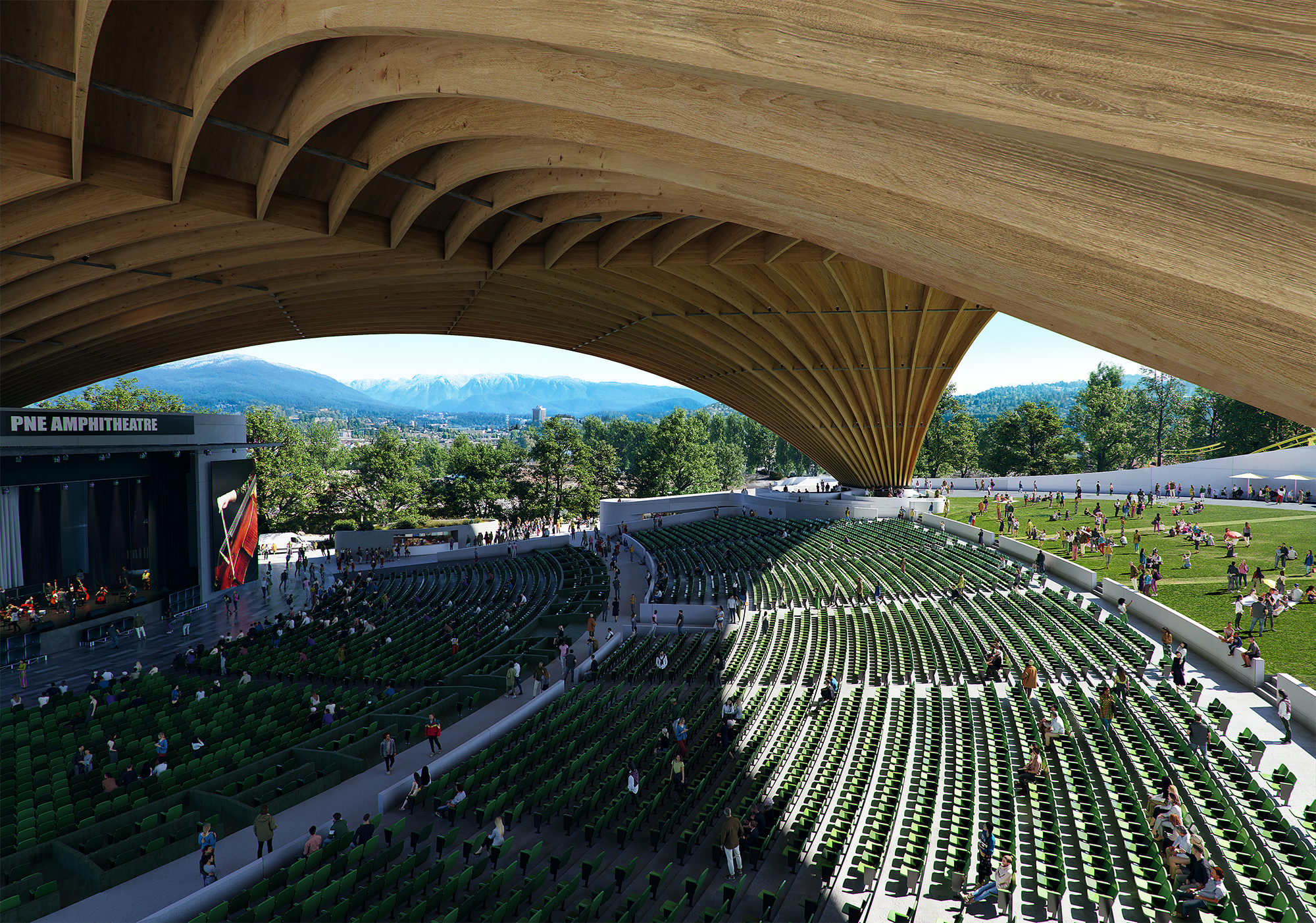
Rendering of inside the PNE Amphitheatre by Revery Architecture, Vancouver, Canada | Popular Choice Winner, Unbuilt Cultural, 13th Architizer A+Awards
On a much larger scale, Vancouver is currently working on the PNE Amphitheatre, which is due to be completed later this year. Pegged by Revery Architecture as a “world-class outdoor venue for up to 10,000 spectators,” again, the focus is very much on mixed-use, broad programming. Unarguably beautiful, the blueprint becomes all the more impressive when the surrounding topology is taken into account. The 345-foot (105-meter) mass timber roof follows the lines of Windermere Hill and will offer audiences a wonderful perspective of the distant North Short Mountains.
Part of a wider Festival Plaza development, which also includes an urban park, public artworks and event infrastructure, masterplanners are introducing a small creek which will accentuate the natural feel of the structures and backdrop. The impact should be subtle, but more than likely will make it hard to imagine any other type of structure — certainly harder materials, like concrete or steel — standing in the same place and not looking decidedly out of place.
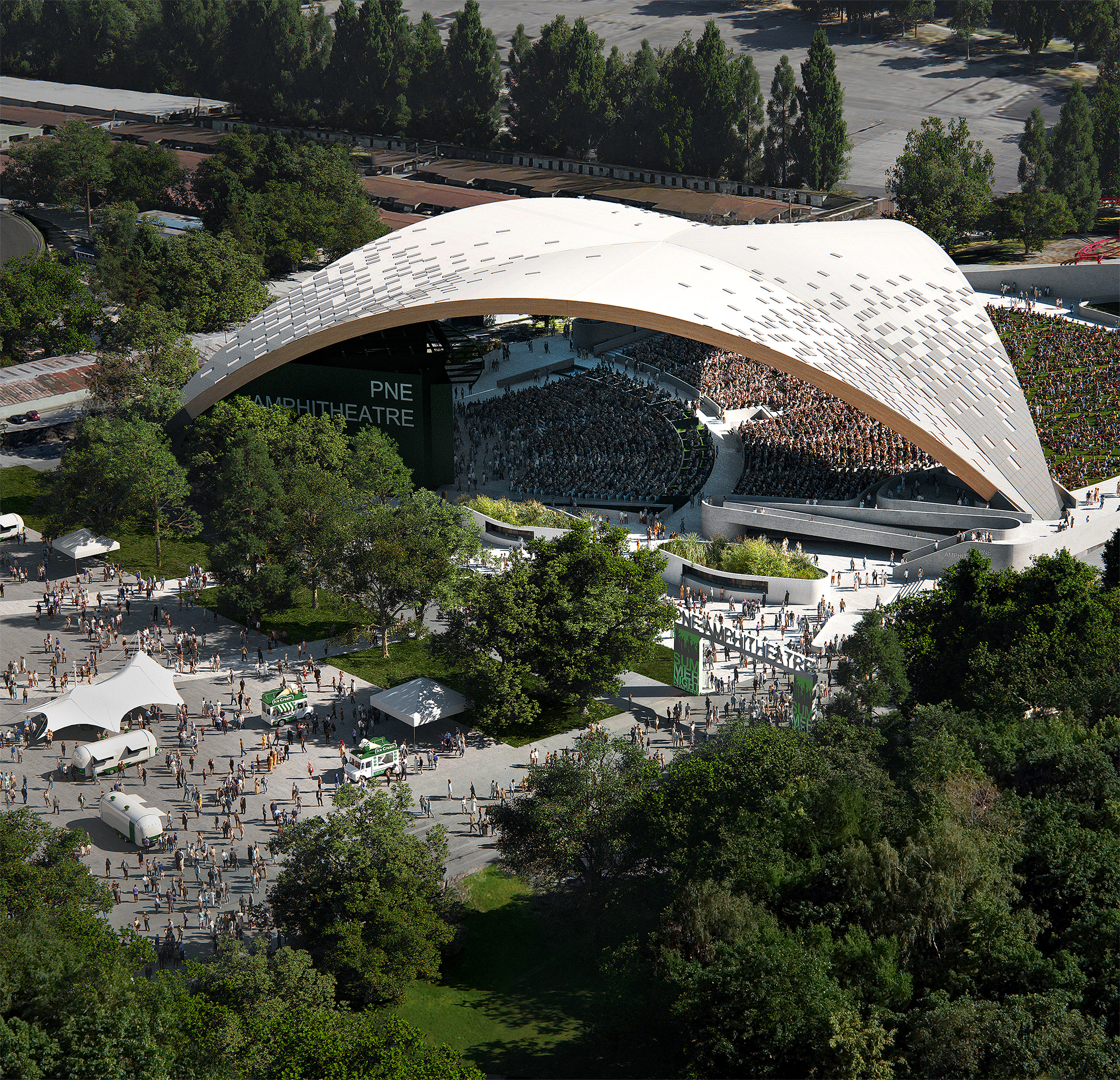
PNE Amphitheatre by Revery Architecture, Vancouver, Canada | Popular Choice Winner, Unbuilt Cultural, 13th Architizer A+Awards
In China’s Zhejiang province, the Sky Concert Hall takes the idea of an event space, which is both physically and symbolically. Developed by Yike Architects, taking inspiration from boat design, it stands 4,690 feet (1,430 meters) above sea level in the Liuchin Lake Scenic area, at the end of a rhododendron-lined hiking trail.
Large cantilevers limit contact with the land and allow for varying degrees of stress from wind and snow, with the main observation deck built in southern pine anticorrosive glulam alongside strength grade TCT32, and involved limited excavation work. Designed to fit into its setting, the result is a remarkable place to convene with nature and hold small gatherings — the structure is jaw-dropping, but the landscape is the star of any resident show.
So far, all these examples have involved external architects delivering timber concepts for informal or ticketed cultural activities for which they may not have a role. In contrast, Belgium’s Horst is a “DIY-spirited platform for arts, club culture, and collective creation” which, in addition to an annual festival, also involves an atelier element featuring resident and collaborating architects.
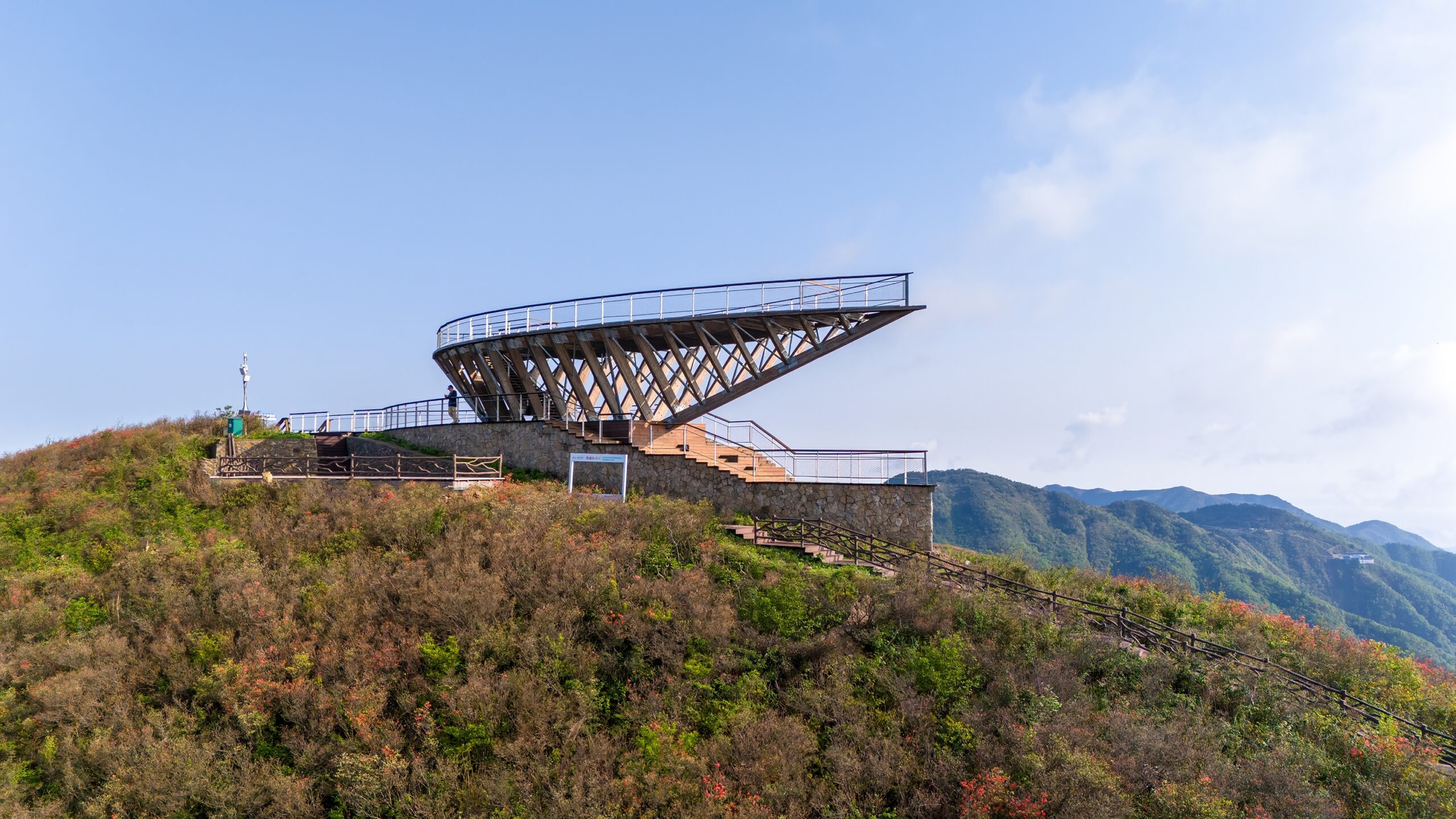
Sky Concert Hall by Yikes Architects, Zhejiang, China | Jury Winner, Architecture +Wood, 13th Architizer A+Awards
Amongst other things, this process produces new venue spaces for the annual event, held on a former military base, many of which remain in situ afterwards, slowly adding to a playground for structural design. Others will be dismantled, reconfigured, improved upon and replaced with an emphasis on minimizing waste and environmental footprint.
Some practitioners, such as Leopold Banchini, have now worked on multiple editions and have been responsible for some of the most groundbreaking schemes. For example, Dark Skies, for which he collaborated with Giona Bierens de Haan. A joint initiative with DJ and producer DVS1, the pavilion’s angular frame is made from black impregnated wood, with each section capable of holding reclaimed ceiling panels and high-powered audio speakers – ensuring no audience member is more than a few meters from a source of sound.
Others, like Carole Depoorter, are full-time Horst members and trained architects. “In Dark Skies, the structure is formed from quite small timber sections to create this very complex truss… in the atelier, it’s very important that what we build involves critical thinking about materials because we are also working with non-professional and inexperienced people at the construction stage… Wood is just so nice to work with, easy to assemble, and as we are very focused on reuse, wood is perfect for this.”
The judging process for Architizer's 14th A+Awards is now underway. Subscribe to our Awards Newsletter to receive updates about Public Voting, and stay tuned — winners will be announced later this spring.