
Deadline extended! The 14th Architizer A+Awards celebrates architecture's new era of craft. Apply for publication online and in print by submitting your projects before the Extended Entry Deadline on February 27th!
Architecture has a façade problem. Despite decades of discourse around experience, occupation and use, too often, architectural value is measured from the outside. Likely exasperated by the rise of Instagram and other social media platforms, buildings are circulated and celebrated as objects. In this economy of attention, the exterior becomes the primary site of authorship, while interior architecture — where daily life actually unfolds — is treated as secondary or supplemental — it becomes part of a long trajectory of relegating decorative elements to a secondary tier in design.
Nowhere is this imbalance more apparent than in transport and civic interiors. These are spaces millions of people move through each day: terminals, stations, concourses and halls. They shape perception and human behavior more consistently than façades ever will. Yet they remain persistently undervalued in architectural culture. To be clear, this is not a matter of taste; rather, it’s a failure of recognition. For this reason and more, Architizer’s A+Awards champion interior design with accolades dedicated to Transport Interiors, Sustainable Interior Project, and Best Interior Design Firm.
When Architecture Stops at the Envelope
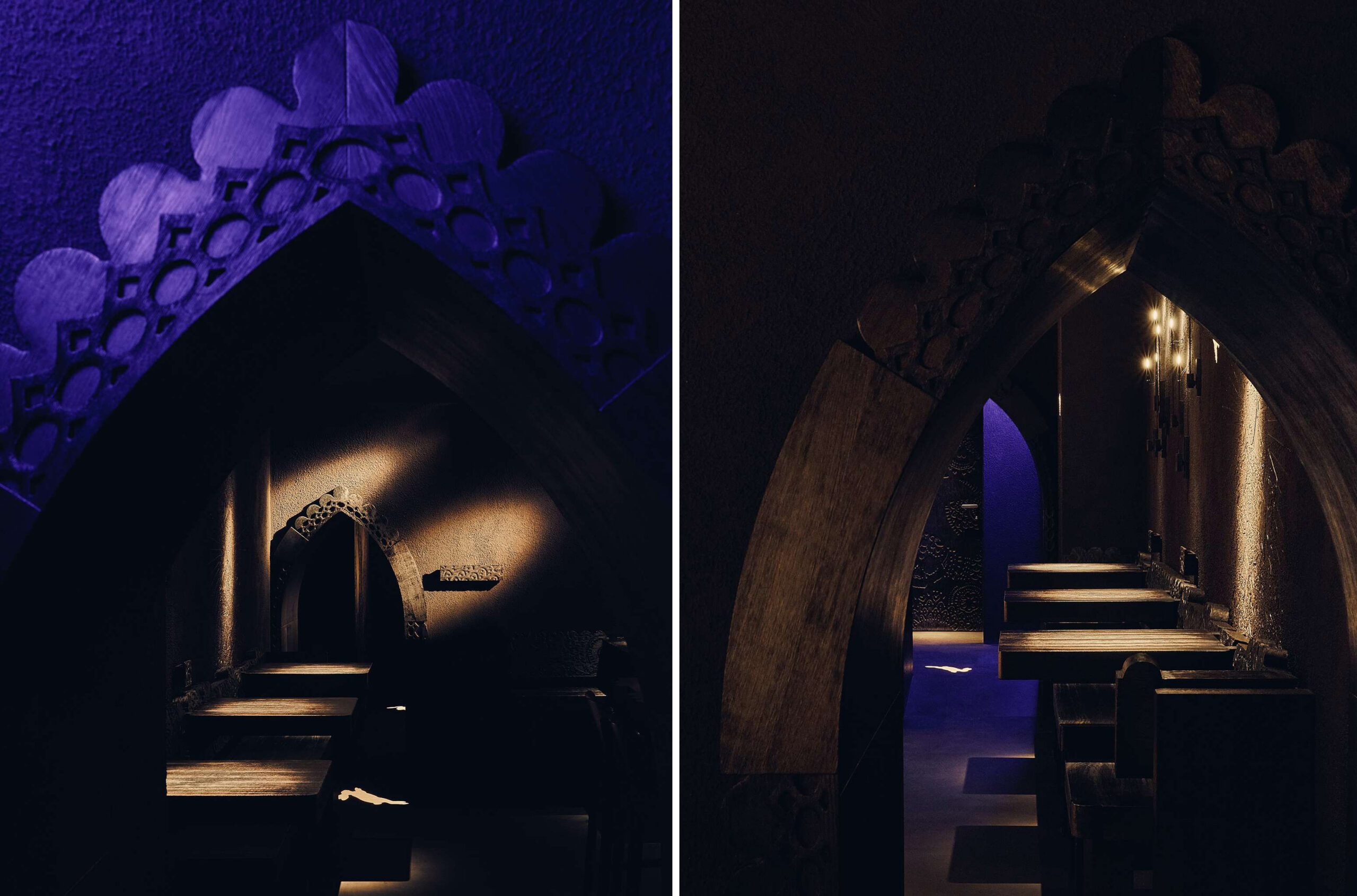
EL COPITAS bar by DA bureau | Jury Winner, Best Interior Design Firm, 13th Architizer A+Awards | Photos by Dmitry Suvorov
The profession’s long-standing fixation on the icon has trained both architects and audiences to read buildings at a distance. On top of the centuries-long degradation of decoration, silhouettes and hero images stand in as digestible symbols, while interiors — experienced in motion and over time — resist easy capture.
Within this framework, interior architecture is often framed as execution rather than conception — a response to the program, made after the structure has been established. Even when interior strategy determines how a building functions, authorship is diluted. Credit accrues to the object, not the environment. This hierarchy is especially entrenched in large-scale public buildings — especially airports and train stations.
The Architecture People Actually Use
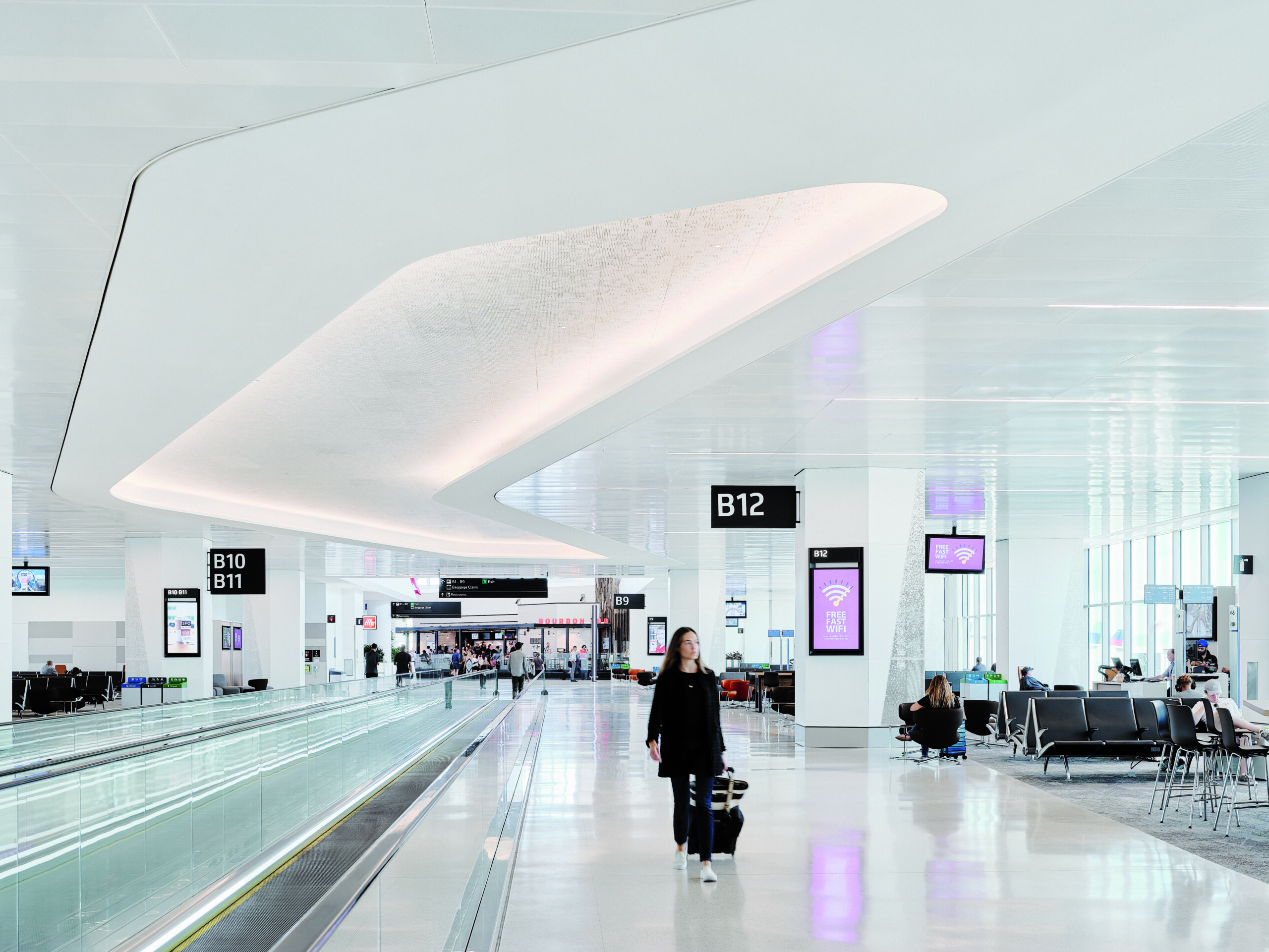
SFO Harvey Milk Terminal 1 by Gensler, San Francisco, California | Popular Choice Winner, Transport Interiors, 13th Architizer A+Awards
Perhaps more clearly than almost any other typology, transport interiors expose the limits of façade-driven thinking. These spaces are designed for constant occupation, not occasional visitation. They must operate under pressure, accommodate uncertainty and guide people who are often running on a sleep deficit, rushing to catch a connection, or are simply disoriented.
Projects such as the Harvey Milk Terminal 1 at San Francisco International Airport demonstrate how interior architecture performs civic labor. Here, spatial clarity and daylight are not simply aesthetic gestures; they are operational tools. Far from being shaped by external form, the experience of the building hinges on how movement is choreographed through the design.
Other practices push interior architecture in a different direction altogether. The work of DA Bureau treats interior space as an immersive environment, where light, sound and material textures combine to produce distinct sensory worlds. These interiors are not subordinate to architecture; emanating main character energy, they are the architecture. Put differently, in these environments, façades are thresholds — interiors are the architecture.
Civic Space Happens Inside
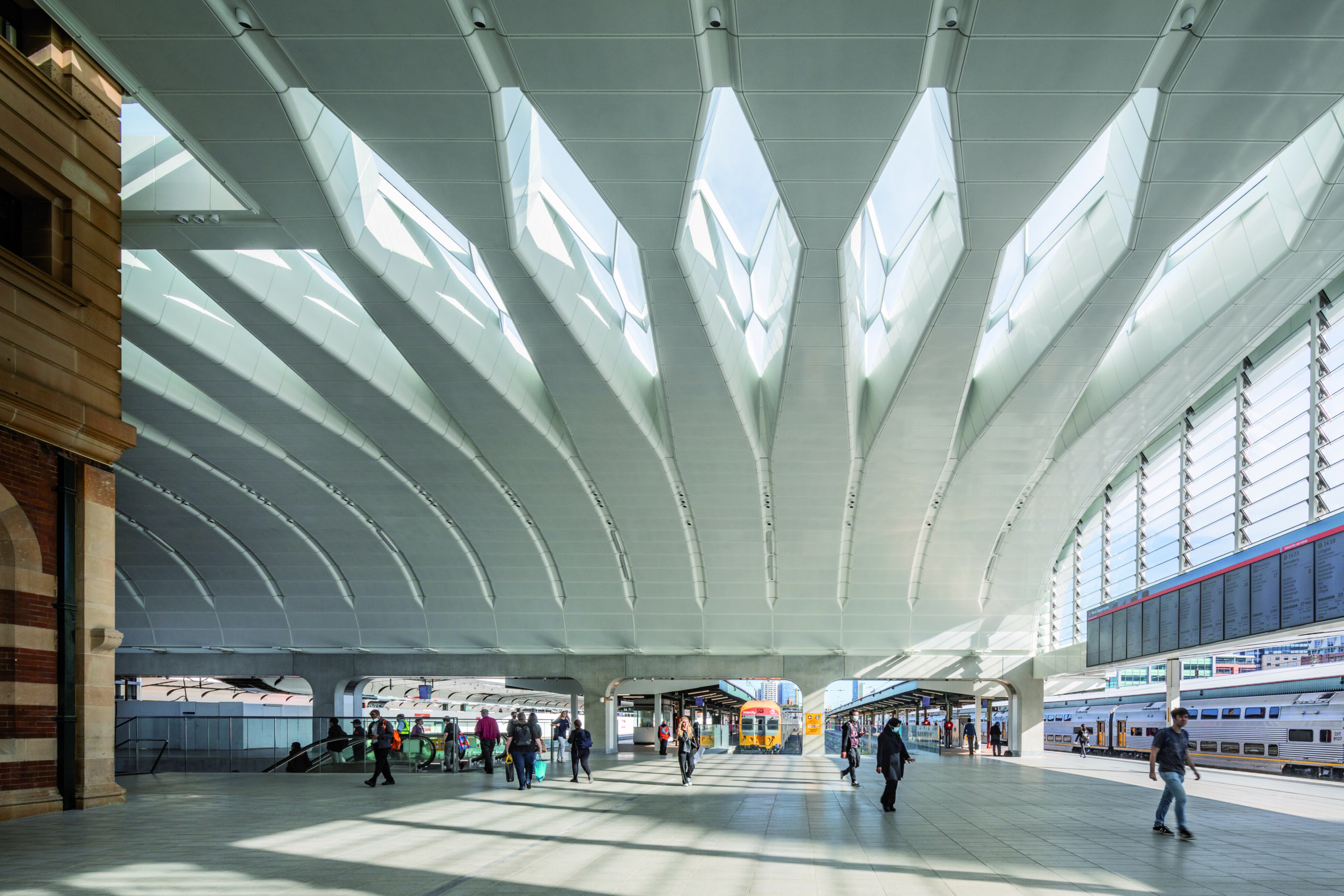
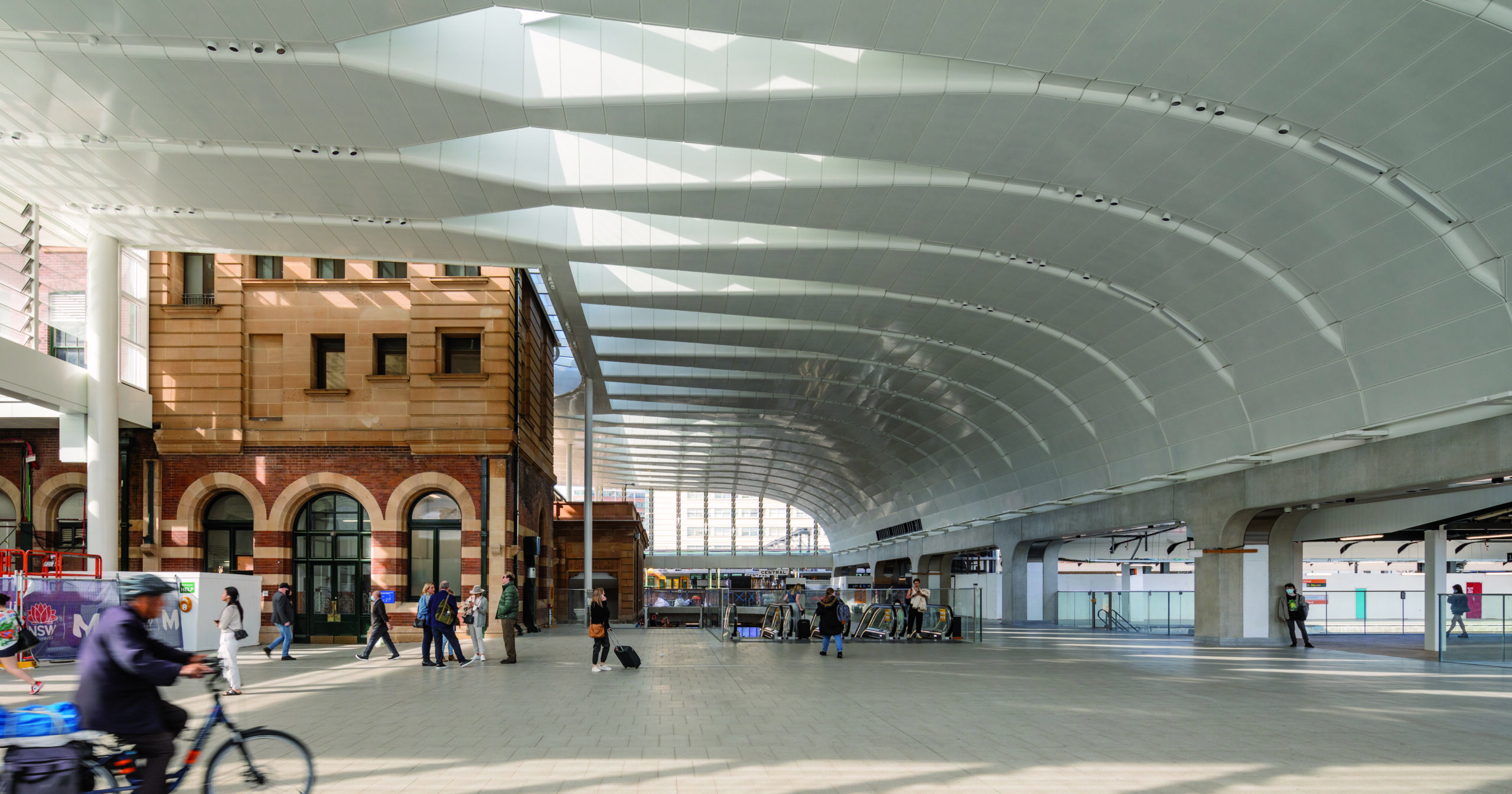
Central Station by Woods Bagot, Sydney, Australia | Jury Winner, Transportation Infrastructure, 13th Architizer A+Awards
The undervaluation of interior architecture extends beyond transport. Civic buildings, too, are often celebrated as objects while their interiors are treated as neutral containers. Yet it is interior space that mediates public life: where people gather, wait, move and encounter one another.
Sydney’s new Central Station offers a reminder that civic identity is constructed through interior sequences as much as urban presence. Its cultural weight is carried by halls, passages and thresholds — spaces that manage scale and movement while sustaining collective orientation. These are not residual zones; they are the building’s public core.
Even at smaller scales, interior architecture shapes how buildings are understood and remembered. Krume Bäcker demonstrates how identity can be constructed on the inside. Its architecture is experienced at the scale of the body, not the skyline, yet it is memorable and unique.
Interior Architecture as Discipline, Not Decoration
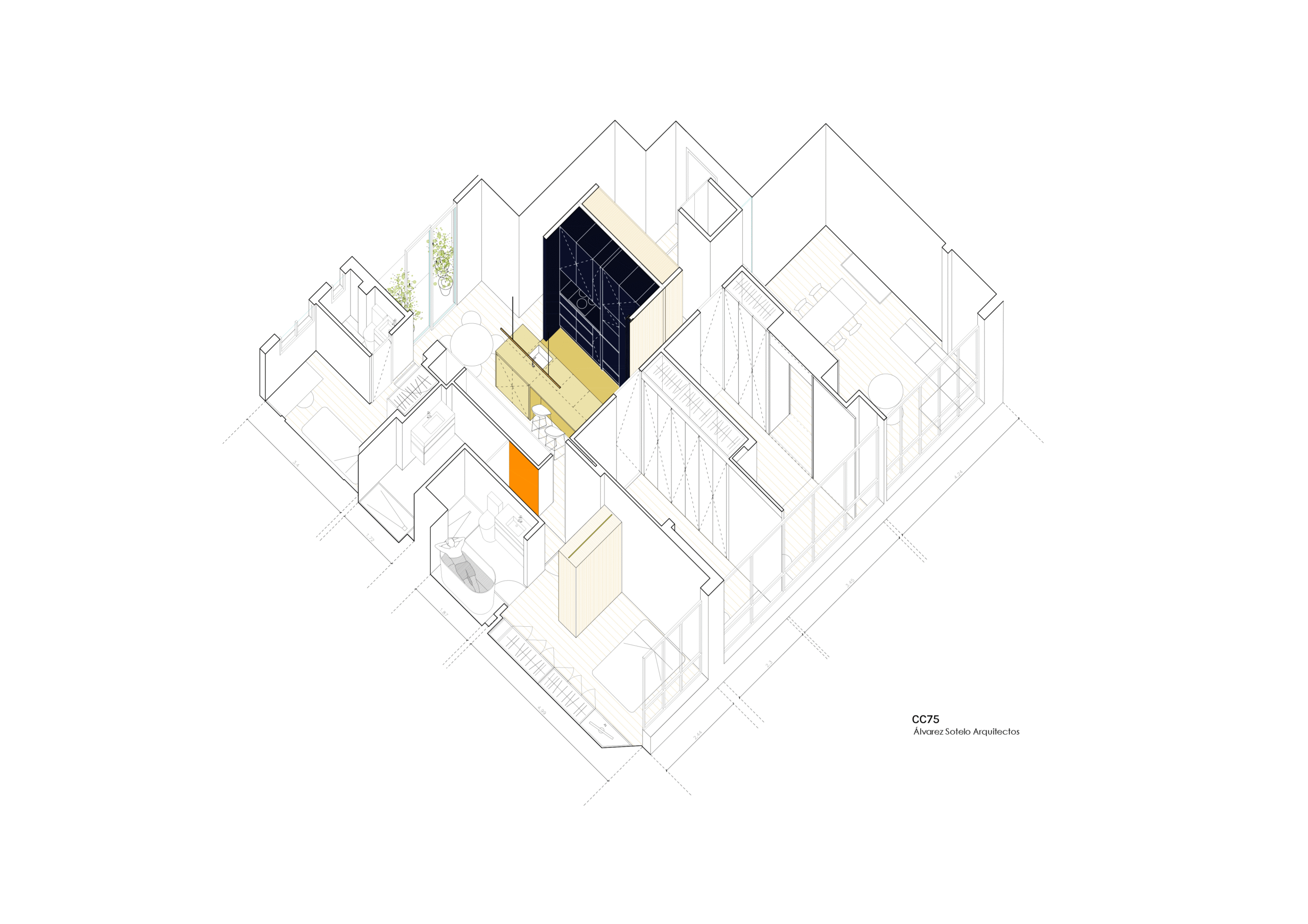
CC75 by alvarez | sotelo, Madrid, Spain | Jury Winner, Best Young Interior Design Firm, 13th Architizer A+Awards
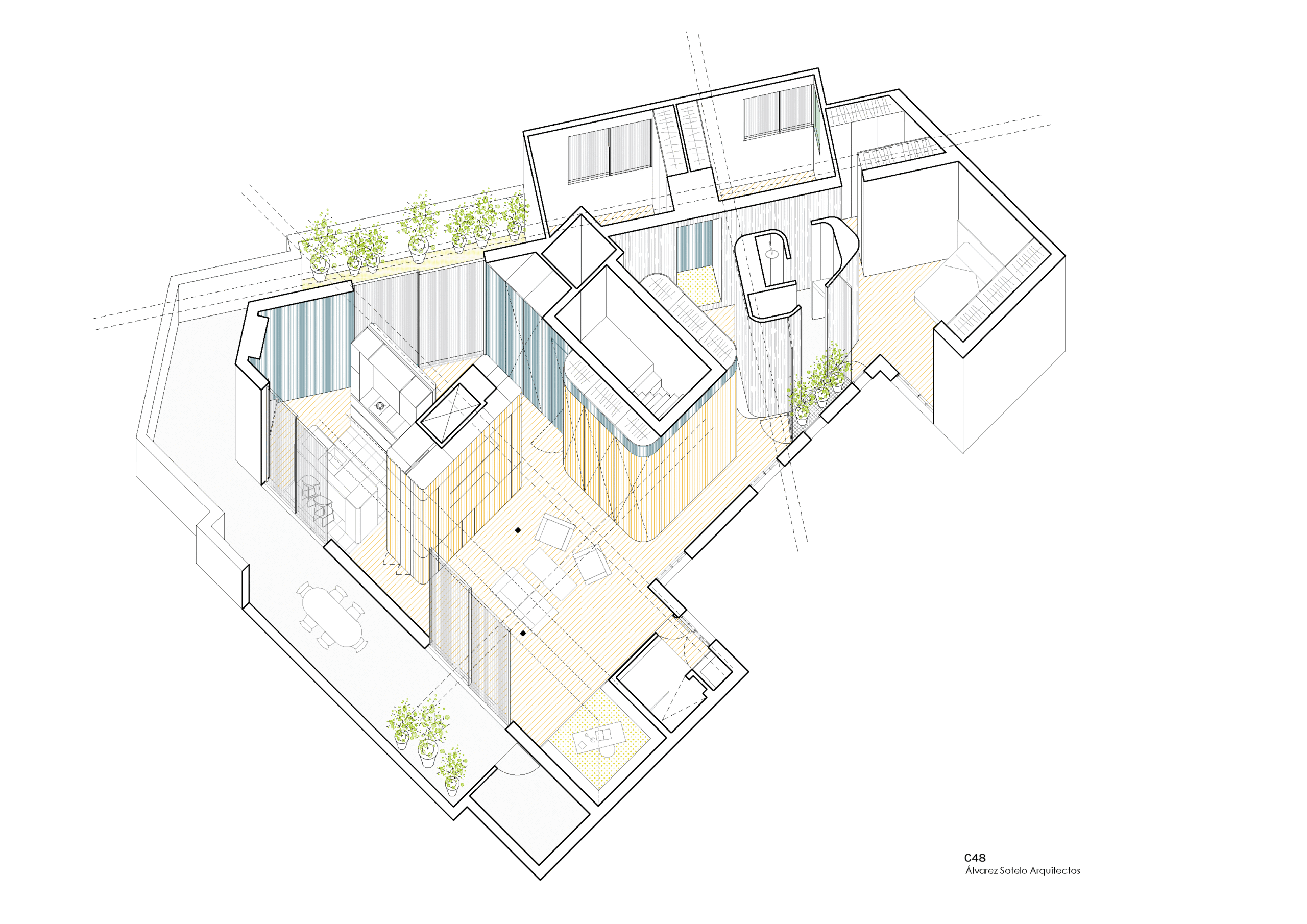
C48 by alvarez | sotelo, Madrid, Spain | Jury Winner, Best Young Interior Design Firm, 13th Architizer A+Awards
Part of the problem lies in how interior architecture is framed professionally. Too often, it is positioned as a specialization rather than a discipline — a subset of architecture rather than a mode of architectural thinking.
This is particularly evident in the work of Alvarez Sotelo Arquitectos, whose residential renovations treat the interior as an architectural system rather than a surface condition. Through precise spatial reorganization — adjusting alignments, circulation paths and degrees of enclosure — their projects demonstrate that interior architecture can recalibrate how space is understood and inhabited without relying on formal spectacle.
Practices such as Linehouse further complicate the hierarchy between exterior and interior by demonstrating how material intelligence and spatial continuity can carry architectural intent at close range. Their work foregrounds cultural specificity through atmosphere, resulting in resoundingly unique places defined by their interiors.
Crucially, these approaches advance the discipline by resisting object-centric thinking. Instead, they demonstrate the importance of architectural intelligence at close range, privileging continuity over novelty, occupation over image. Yet interior work is still too often celebrated in isolation, reinforcing the idea that it matters — just not as much.
Sustainability Lives Inside
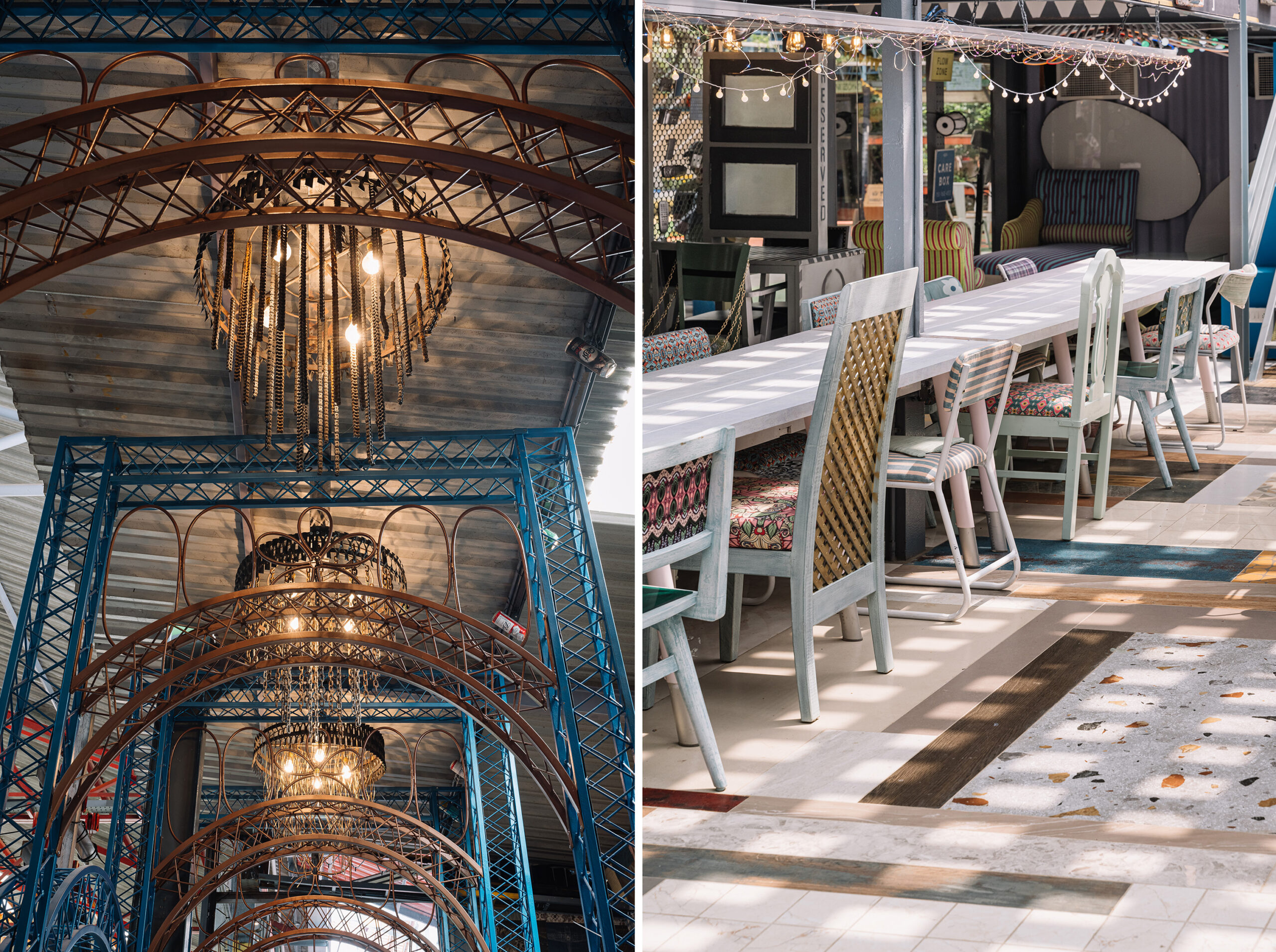
Project Big Top by Multitude of Sins, Bengaluru, India | Popular Choice Winner, Best Young Interior Design Firm, 13th Architizer A+Awards
The hierarchy between exterior and interior has real consequences, particularly for sustainability. In many building types, environmental performance is shaped as much by interior decisions as by envelope design. Daylight penetration, material selection, spatial density and adaptability all influence long-term resource use.
In transport and civic interiors, these factors are amplified. Large volumes, extended operating hours and fluctuating occupancy place enormous demands on environmental systems. Interior architecture mediates these conditions daily, often invisibly. Still, sustainability narratives tend to privilege façades and technologies over spatial intelligence. This reinforces the misconception that interiors are temporary or replaceable, rather than integral to long-term performance.
This logic is especially evident in the work of Multitude of Sins, whose interiors frequently address issues of material economy through reuse and minimal intervention. Rather than treating sustainability as a visible layer, their projects locate environmental responsibility in decisions about what is preserved and adapted, building sustainability into their architectural approach rather than positioning it as a technical add-on.
Why Recognition Shapes the Discipline
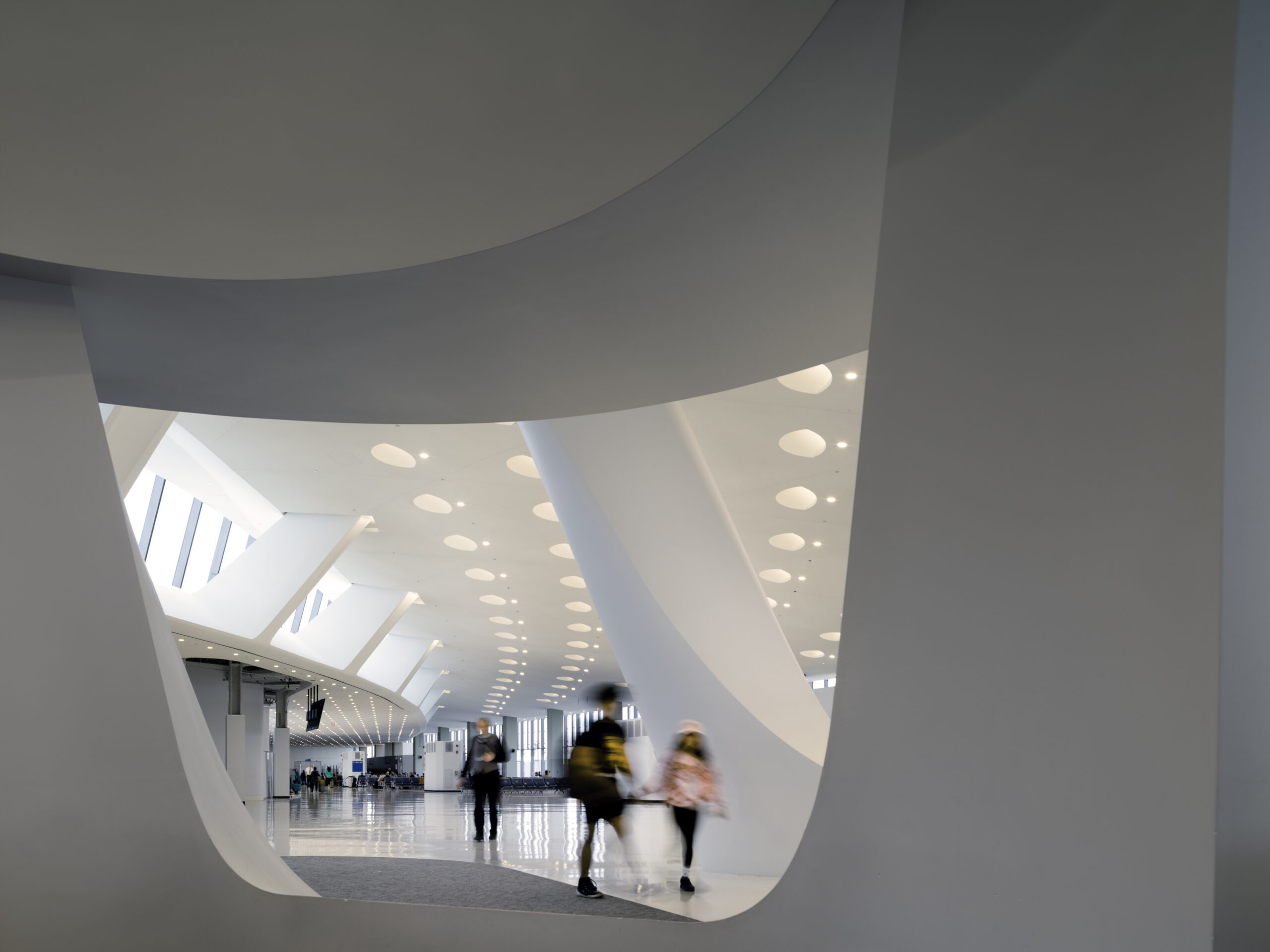
O’Hare International Airport Terminal 5 Expansion by HOK, Chicago, Illinois | Popular Choice Winner, Transportation Infrastructure, 13th Architizer A+Awards
Awards are often dismissed as symbolic, but their influence is structural. They define what is seen, what is valued and what is pursued. When interior architecture is treated as secondary, the profession absorbs that hierarchy. This matters because interior architects are integral to the profession. They operate within fixed constraints, negotiate complex programs and shape environments that must perform continuously. Their work is no less architectural because it is internal — far from it. Recognition does not inflate interior architecture’s importance; rather, it gives it visibility.
The consequences of this imbalance become especially clear at the scale of major transport hubs. Interiors like the expansion of Terminal 5 at O’Hare International Airport are among the most complex architectural environments in contemporary practice, required to operate continuously, absorb evolving security protocols and accommodate vast flows of people over time. Yet their architectural intelligence — the spatial sequencing, environmental control and organizational clarity that make them function — is rarely recognized with the same cultural weight as exterior form. When projects of this scale are discussed primarily as infrastructure rather than architecture, the discipline quietly concedes one of its most demanding arenas.
Beyond the Icon: Façades announce buildings. Interiors define them.
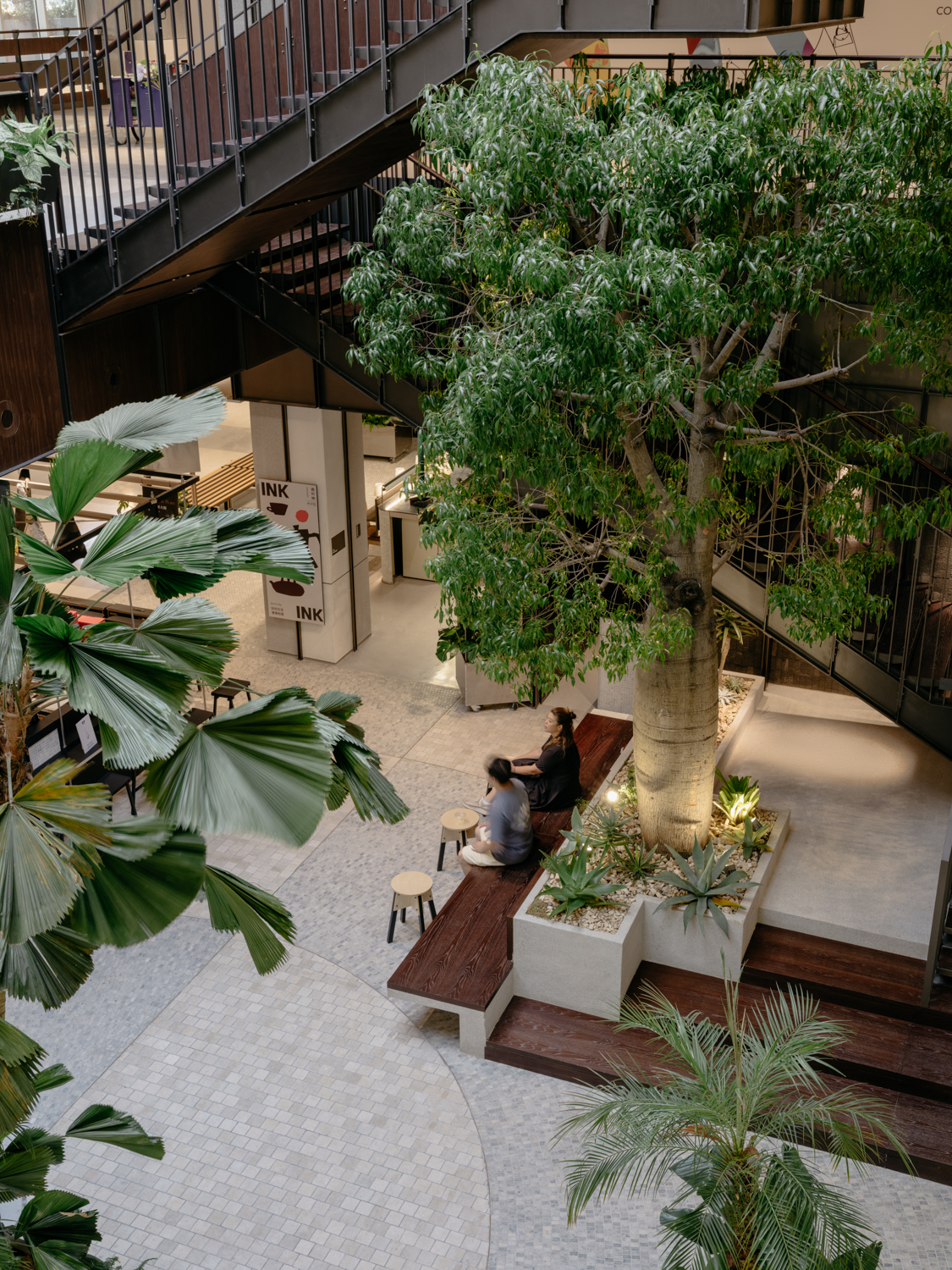
Ink Ink Market by LINEHOUSE, Shanghai, China | Popular Choice Winner, Best Interior Design Firm, 13th Architizer A+Awards
The tyranny of the icon persists because it is easy; it offers instant legibility and marketable imagery. Yet, if architecture is ultimately about shaping human experience, then interiors ask more. These are the sites where architecture’s cultural relevance is tested most consistently, where the discipline is given the opportunity to prove its capacity to organize complexity and, often, sustain public life.
Interior architecture — particularly in transport and civic contexts — is where architecture’s social, environmental and operational intelligence converges most clearly. From terminals and stations to adaptive interiors and large-scale public environments, these big-picture projects demand rigorous long-term thinking. By championing interior architecture alongside building typologies, recognition frameworks can reflect how architecture is actually experienced — not just how it is seen — and elevate work that shapes daily life at its most fundamental level.
Deadline extended! The 14th Architizer A+Awards celebrates architecture's new era of craft. Apply for publication online and in print by submitting your projects before the Extended Entry Deadline on February 27th!
Enter Your Interior Project in the 14th A+Awards→
Top image: Central Station by Woods Bagot, Sydney, Australia | Jury Winner, Transportation Infrastructure, 13th Architizer A+Awards