
The votes for the 2025 Vision Awards have been counted! Discover this year's cohort of top architectural representations and sign up for the program newsletter for future updates.
Architectural storytelling is a very “overused” phrase amongst architects nowadays. Many practitioners claim that their designs always follow certain narratives, making experiences rather than spaces. And yet, there aren’t many architects who have truly utilized the tools in their arsenal to communicate their stories. Before construction, they rely on polished renders or heavily technical drawings, and after the project is completed, they record it through carefully curated photographs. But how can one capture the messy bit, the one in the middle?
Axonometric drawing is ideal for explaining the thought-process behind a proposal. It sits between drawing and 3D-modelling, exploring form, circulation, program, structure and even site-specific interactions, guiding the viewer through the various decisions architects make to produce a design. The following six projects showcase how architects have utilized axonometrics in this year’s Vision Awards in order to slow-down perception and prevail within a very image-driven culture.
These projects prove that the axonometric drawing is far more than a representational convention. It is a hybrid composition that allows architects to express their thinking, establish connections between the various project components and craft a space for nuance and intention.
Community 2.0
By UArchitects / Misak Terzibasiyan
Editor’s Choice Winner, Vision for Community, 2025 Vision Awards
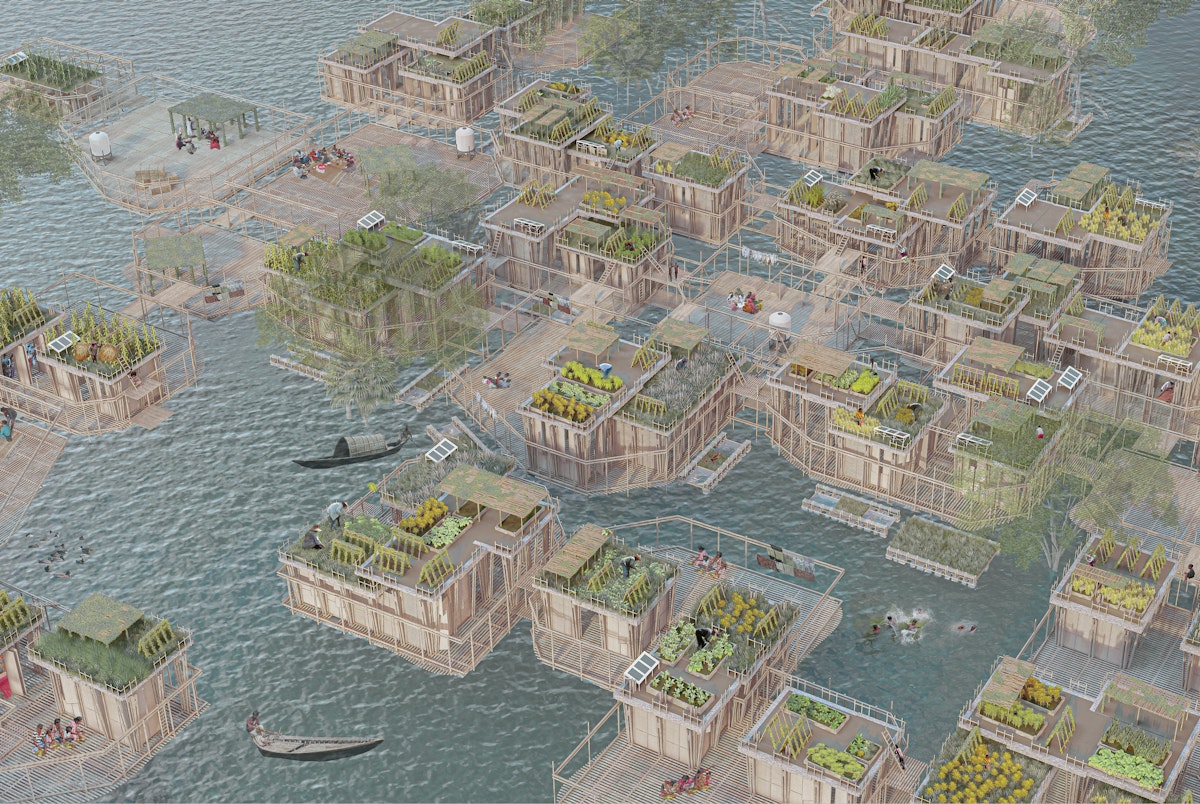
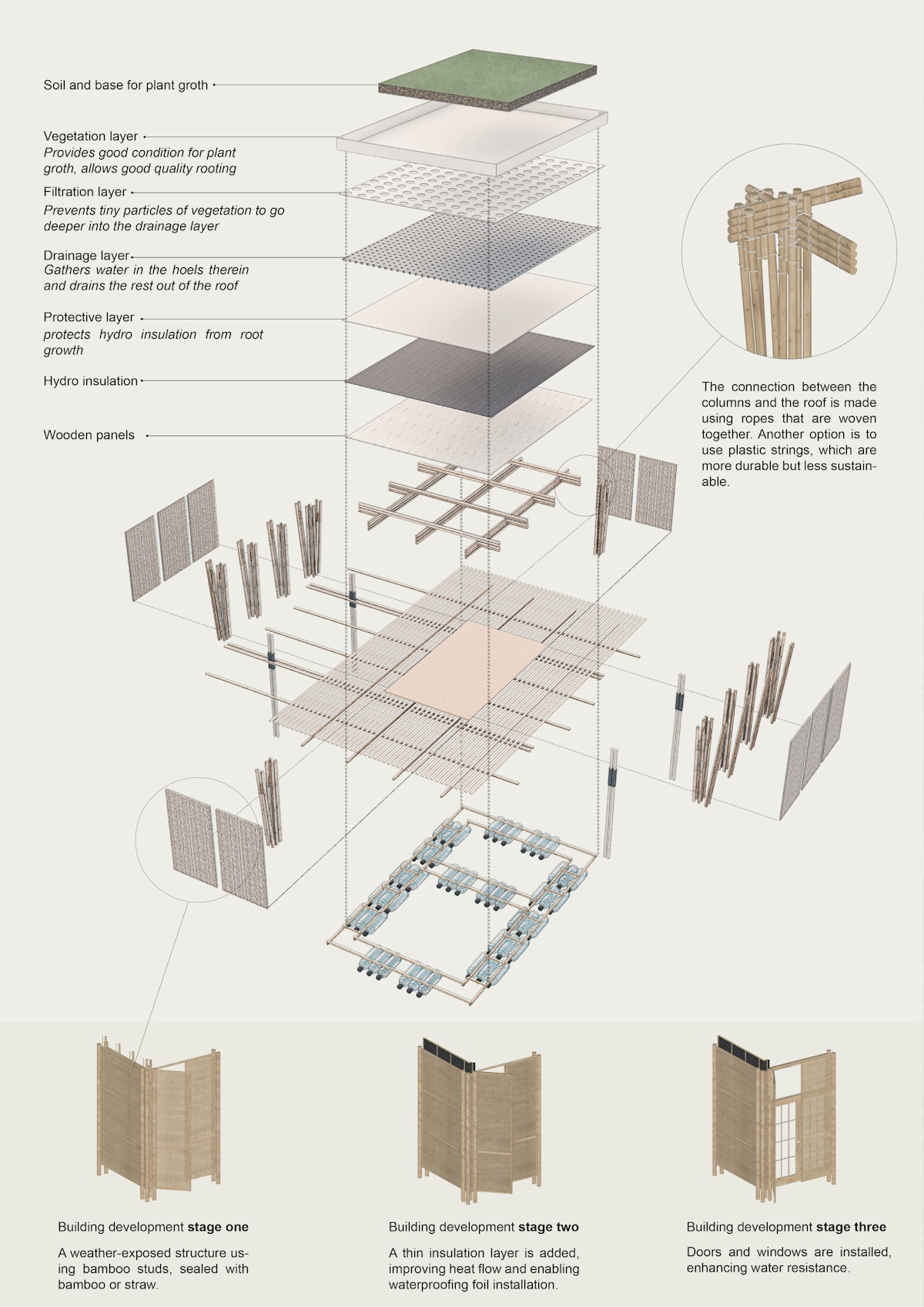 The project proposes a self-sustaining, floating, and adaptable community to address rising water levels in Bangladesh. Amongst their images and drawings, the architects have produced two axonometrics: one that shows a complete proposal of the scheme and one that breaks down the technical aspects of the structure.
The former is an image that invites the viewer in; instead of drafting a traditional site plan, the axonometric is fully rendered via colors and textures in order to communicate the atmosphere and the actual experience of living within the community. In contrast, the exploded axonometric of a single bungalow explains how the design creates self-sufficient systems that can operate within a flooded territory, as well as what materials are needed for construction.
Bionica – Reimagine Hospital of the Future
By HDR Inc.
Finalist, Vision for Wellness, 2025 Vision Awards
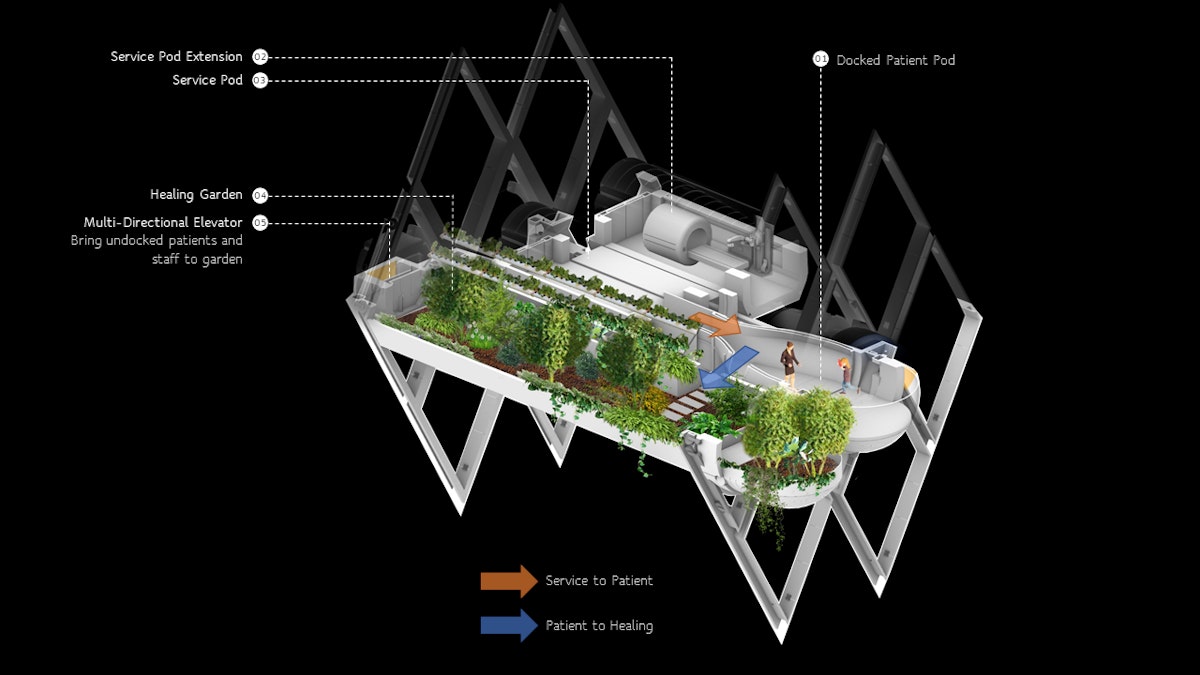
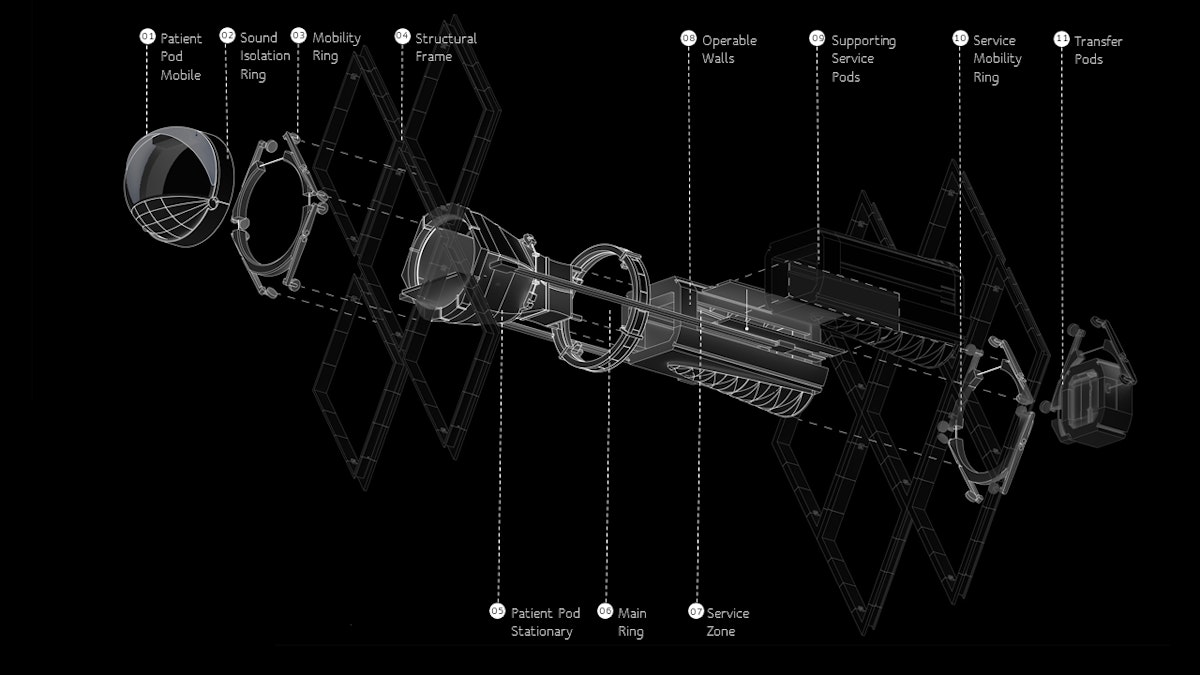 Bionica is a project that completely reimagines the hospital as a space as well as its operation. It suggests a design where patients are situated in nature, while automated robots provide all the necessary services via pods. Similar to the Community 2.0 project, the axonometric drawings operate in two scales. The first shows the form of the pod, the layout organization of its interior, as well as the possible circulation routes within.
The second drawing is technical and explains how each pod works by presenting elements such as the mobile patient pod, the sound insulation ring, the structural frame and so forth. The drawing proves that this is not just a vague concept but a proposal that has considered all technical components — one that can actually be implemented.
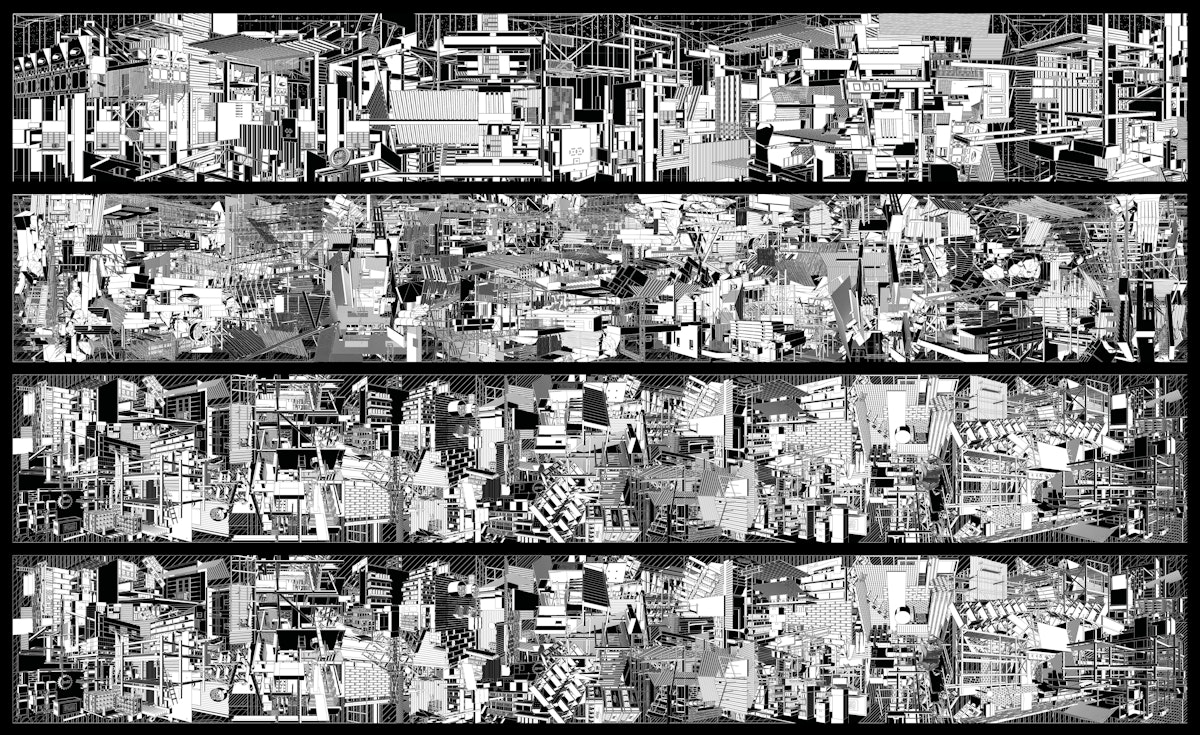
Whom?: The Home Fragmentation and Memory Reassembly in the Thirteen Villages of Kowloon
By Wong Hoi Ching Candy
Finalist, Vision for Renewal, 2025 Vision Awards
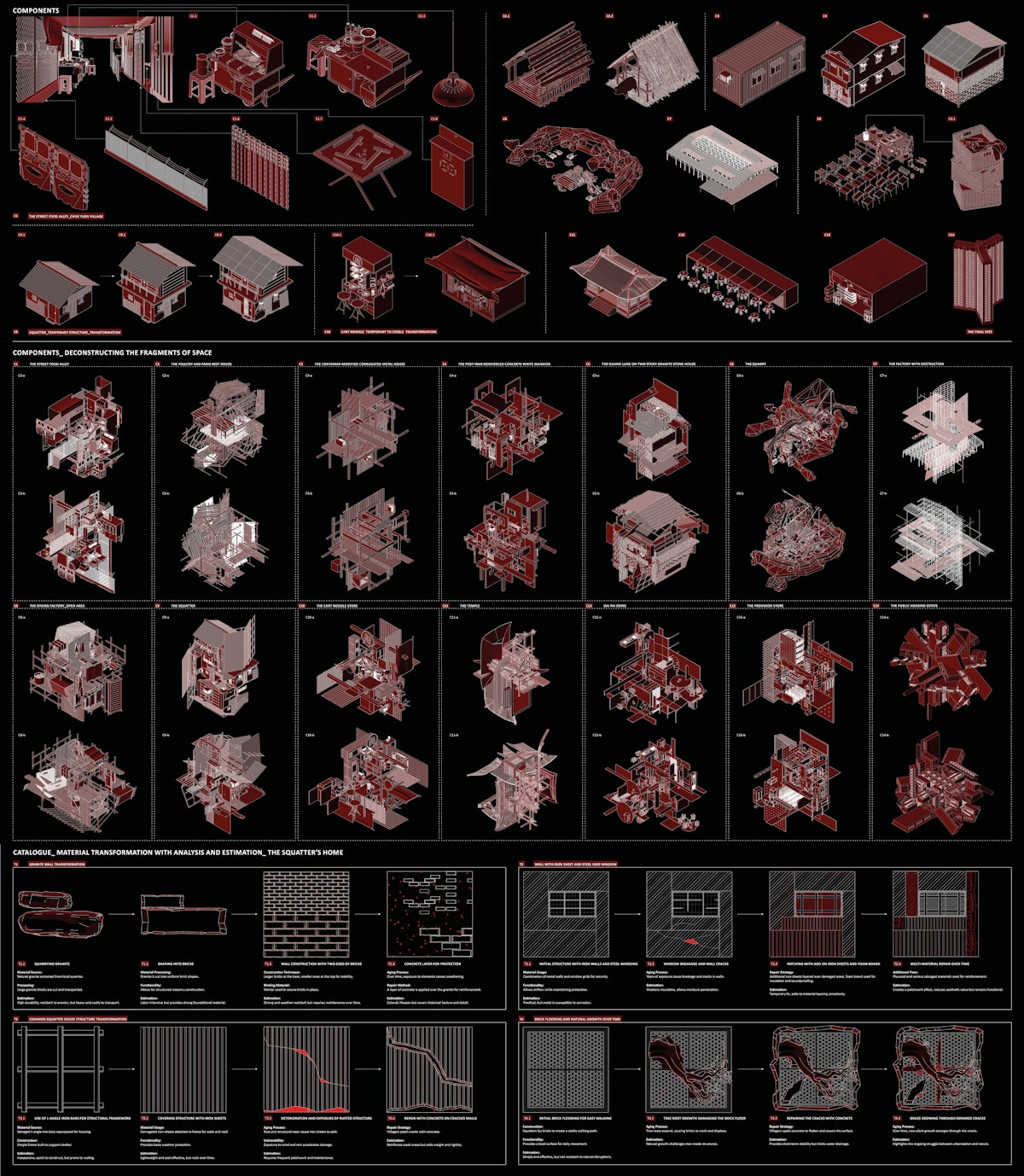
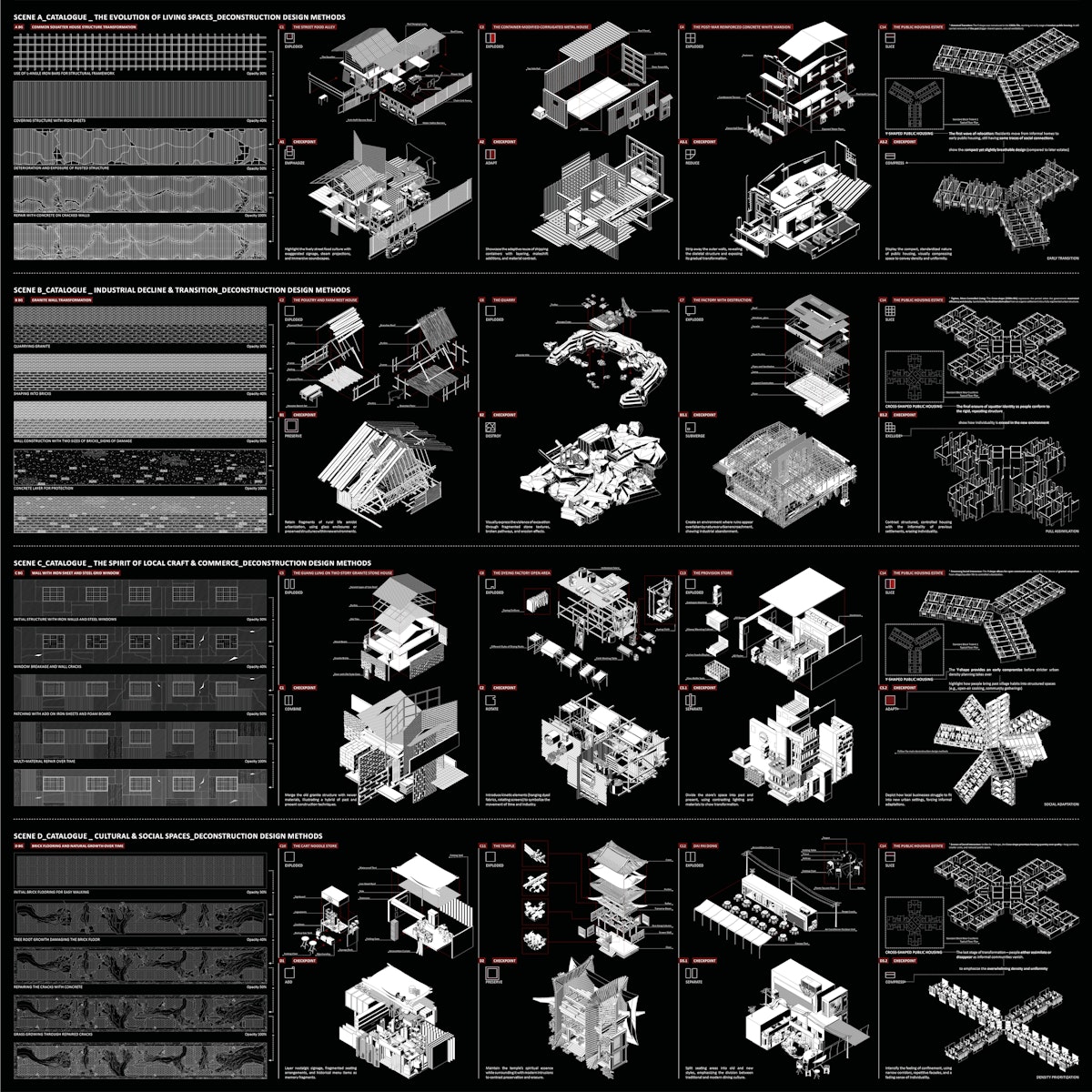 This narrative project reimagines the Thirteen Villages of Kowloon, highlighting their disappearing histories through architectural deconstruction. A series of axonometric drawings records this deconstruction by dismantling and reassembling “low-value structures,” presenting them as distinct tectonic pieces. Additionally, the two drawings celebrate overlooked details such as bricks, grills and rhythms, acting as an archive of fragments that hold stories as well as architecture. Through these axonometrics, the project becomes narrational, communicating process, loss, and architectural memory rather than a fixed final form.
Death of the HOA
By Ty Skeiky
Jury Winner & Editor’s Choice Winner, Hand-Drawn, 2025 Vision Awards

The Death of the HOA is an exploratory project. Through a sectional axonometric drawing, it seeks to challenge the banal nature of a traditional home by revisiting it through assembly. The drawing is a hybrid. It stands both as a survey of the residence and as a speculative apparatus of what it can be. A collection of tools and machines “plug in” to the original structure in an attempt to modify or support it, eventually disfiguring the house as a whole through its own reproduction.
Savannah Train Station – Cityscape Reimagined
By Xinyi Liu
Finalist, Vision for Transport, 2025 Vision Awards
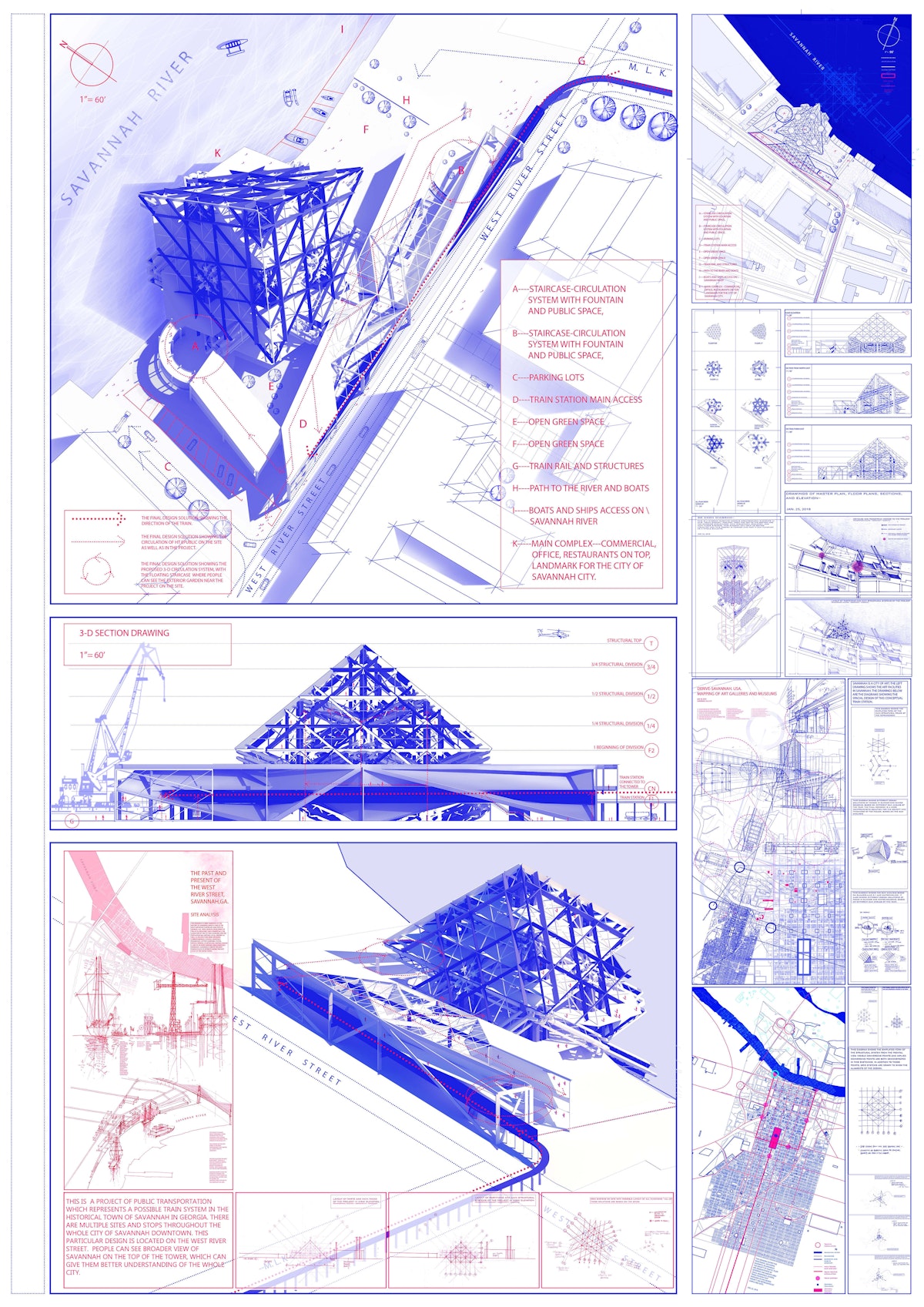 This urban redevelopment project is presented using some maps that were originally designed as Derive drawings (produced via an aimless walk through city streets, that follows the whim of the moment). Surprisingly, the maps are drawn as axonometrics, in three-dimensional form, superimposing layers of historical, industrial, economic, geographical, and cultural significance of the evolving contemporary city of Savannah. In parallel, they are heavily annotated, presenting data generated from GIS tools, Revit, as well as hand-drawn sketches. In essence, the drawings are primarily analytical, revealing the methods through which the systematic information was overlaid in order to reveal the complexity of the specific urban reality.
Bard on the Beach Performing Arts Centre
By Revery Architecture
Jury Winner, Vision for Nature, 2025 Vision Awards
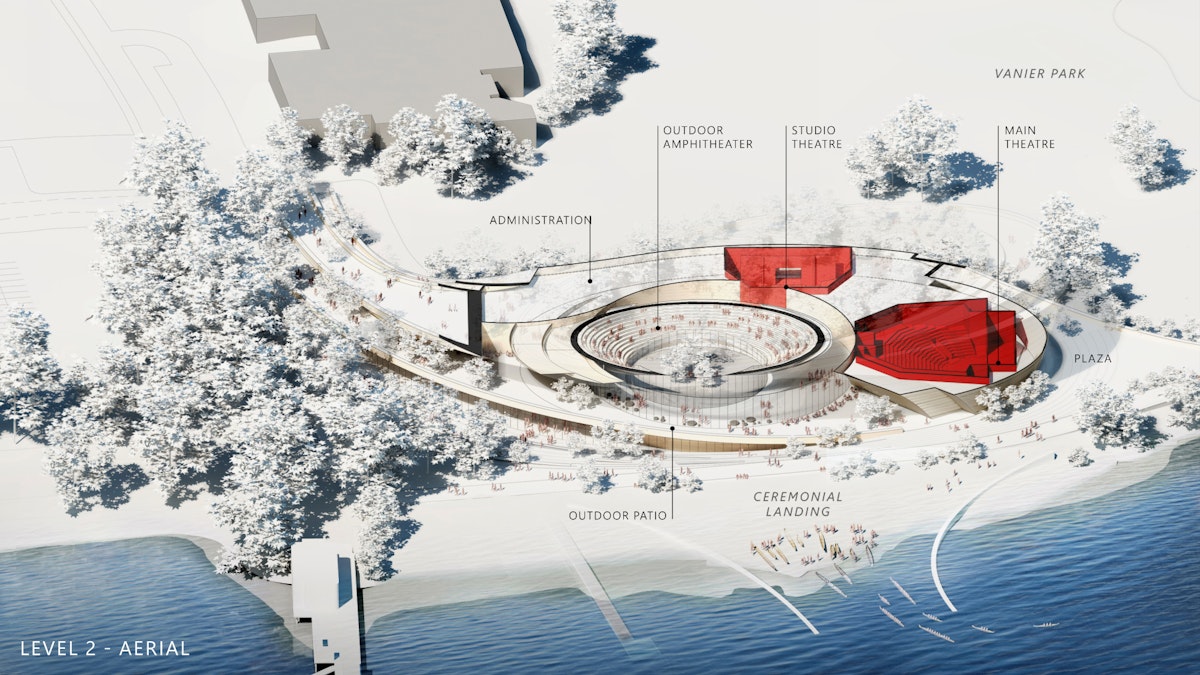 The project is composed as an elliptical structure that is organically inserted into the landscape. The axonometric drawing is used as an agent for understanding the relationship between structure and ground. Specifically, it shows an elegantly chiseled façade that – at times – becomes either part of the terrain or a border that pushes against it. By employing the axonometric as an analytical tool, these ambiguous moments become legible, offering a clear narrative of how the building negotiates, rather than dominates, the landscape.
The votes for the 2025 Vision Awards have been counted! Discover this year's cohort of top architectural representations and sign up for the program newsletter for future updates.
Featured Image: Whom?: The Home Fragmentation and Memory Reassembly in the Thirteen Villages of Kowloon by Wong Hoi Ching Candy, Finalist, 2025 Vision Awards, Architectural Concept – Vision for Renewal