
Architizer's 14th A+Awards judging is live! Subscribe to our Awards Newsletter for updates on Public Voting and the big winner reveal later this spring.
When we look at Toronto, we see glass towers reaching for the sky and the image of a modern metropolis. However, behind this landscape lies a deep housing crisis that the city has fallen into over the past decade. Although Toronto consistently ranks high on lists of the world’s most livable cities, owning a home in this city has become nearly impossible for an individual with an average income. At this critical time, the Quayside project, led by Waterfront Toronto and brought to life by Quayside Impact (a partnership between Dream Unlimited and Great Gulf Group), is taking a step toward redefining Toronto’s urban space.
Aiming to transform a currently disused 12-acre former industrial brownfield along the shores of Lake Ontario, the design aims to become one of the city’s most valuable cultural destinations. And the list of architects involved is nothing to scoff at, either: Alison Brooks Architects, Henning Larsen and Adjaye Associates are all co-lead architects on this visionary development, along with SLA, whose landscape expertise shapes the design of the part, weaving together the buildings. This plan emerges from the ashes of the ill-fated Smart City plan, which Google-affiliate Sidewalk Labs was famously planning with building designs from Snøhetta and Heatherwick Studio.
A New Balance of Sustainability and Affordable Housing
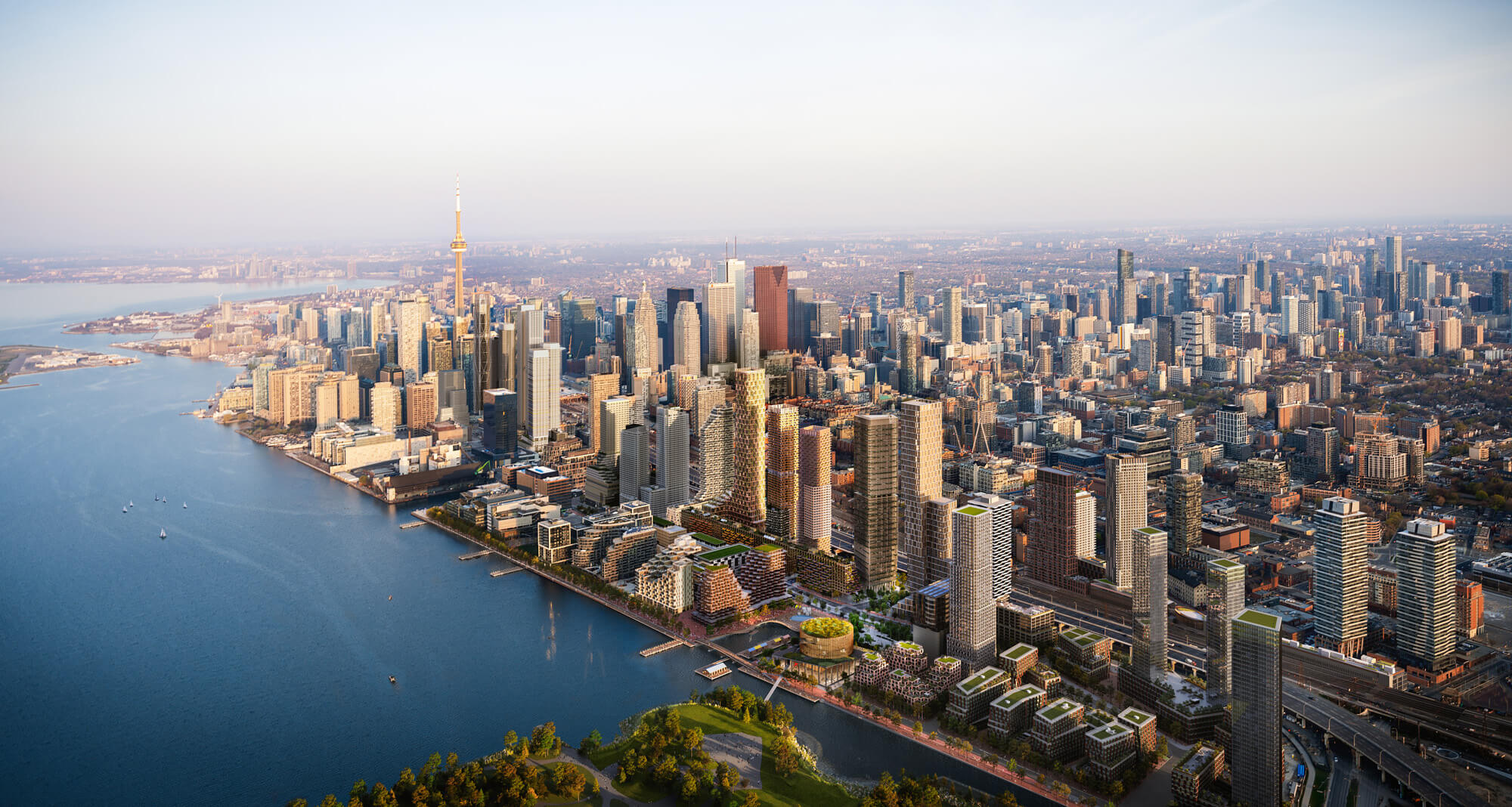
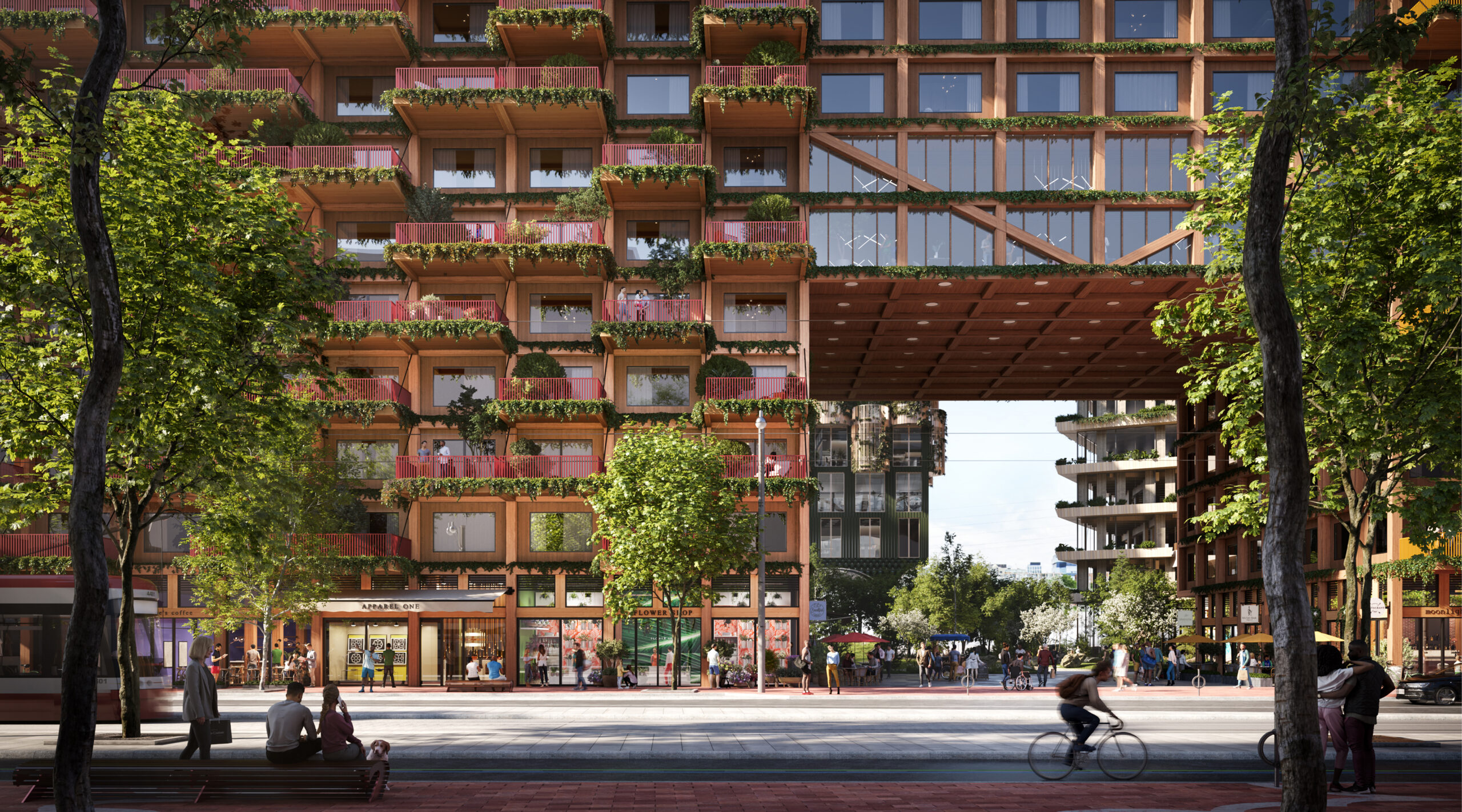
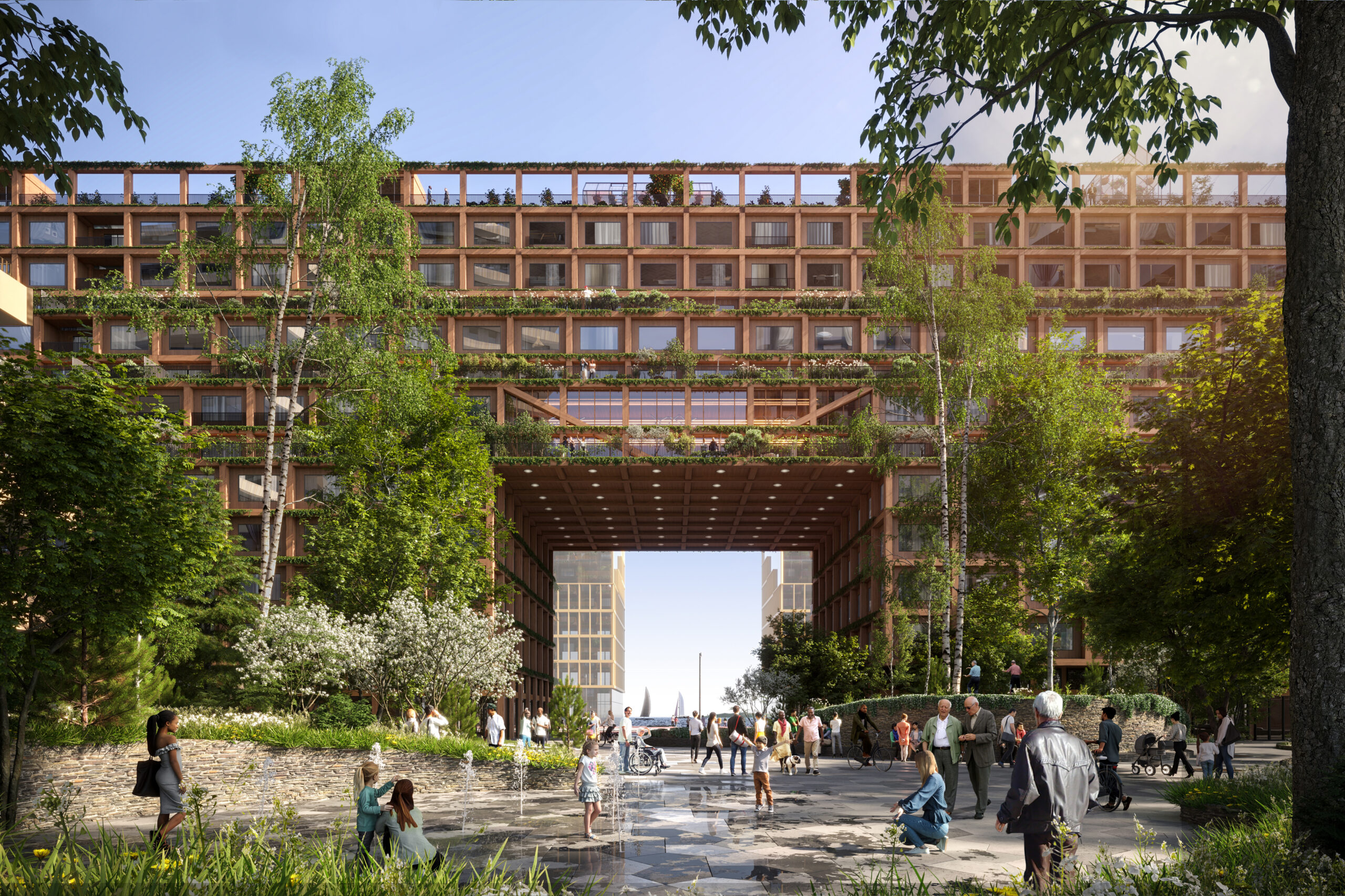
Quayside with contributions by Alison Brooks Architects, Henning Larsen, Adjaye Associates and SLA, Concept for Toronto, Canada | Renders by Norm Li
The Quayside project addresses one of Toronto’s biggest problems, the housing crisis, not just by building more buildings, but by redefining who these buildings are for and how they are built. This project moves forward with a strategy to more than double the existing amount of affordable housing along the Toronto waterfront. The fact that more than half of the approximately 800 new affordable housing units planned for the early construction phase are designed with large square footage for families demonstrates the project’s sincerity regarding social justice. The key innovation here is that these homes are not put down to the “cheap” corners of the project; instead, they are integrated into a unified architectural style designed by Henning Larsen and Alison Brooks Architects.
Also, the building that has become the symbol of the project is set to be one of Canada’s tallest mass-timber structures. With sustainability consultancy from the Purpose team, this fully electric neighbourhood, focused on achieving zero carbon emissions, will be a living example of a resilient city model in the face of the climate crisis. The urban farm on the roof, optimised by SLA, completes this ecological cycle through local food production.
One of the most notable aspects of the project is its foundation in the principle of Indigenous stewardship. With the involvement of Indigenous consultancy groups like Two Row, the project aims to move its relationship with nature beyond a technical engineering matter to one grounded in respect for the land and water.
Redefining Public Space: The Overstory and the Community Forest
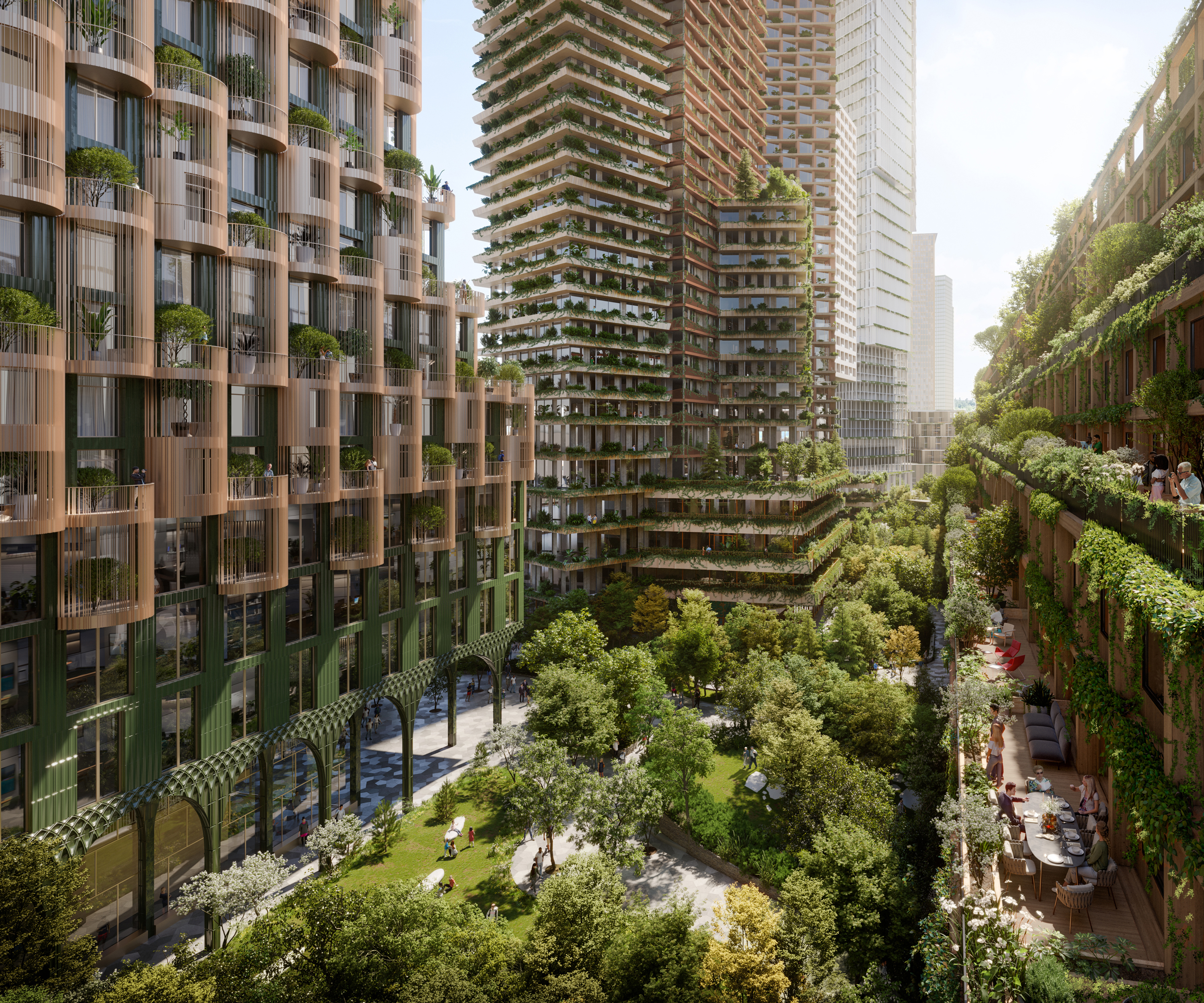
Quayside with contributions by Alison Brooks Architects, Henning Larsen, Adjaye Associates and SLA, Concept for Toronto, Canada | Renders by Norm Li
At the heart of the project is the concept of the “overstory” (referring to the highest layer of vegetation in a forest, usually forming the canopy, or trees that constitute that layer) and the massive 2-acre community Forest, which uses nature as a connector in the concrete-dominated city centre. A network of car-free green spaces totalling 2.5 acres connects parks, squares, and plazas.
This public space design is shaped by SLA’s principles “optimising topography, wind and microclimate.” According to its designers, spending time outdoors in Quayside becomes an experience that offers shelter from Toronto’s harsh winds.
With the expertise of community care specialists like WoodGreen, every square and park in the neighborhood functions as a space for solidarity. By restoring points like Parliament Slip, the project brings the city back to the lake, proving that public space is not just emptiness, but an active organism that heals the community. According to its designers, Quayside’s streets belong to no one; instead, they are designed as a “shared living room” for everyone.
Quayside’s Future as an Urban Laboratory
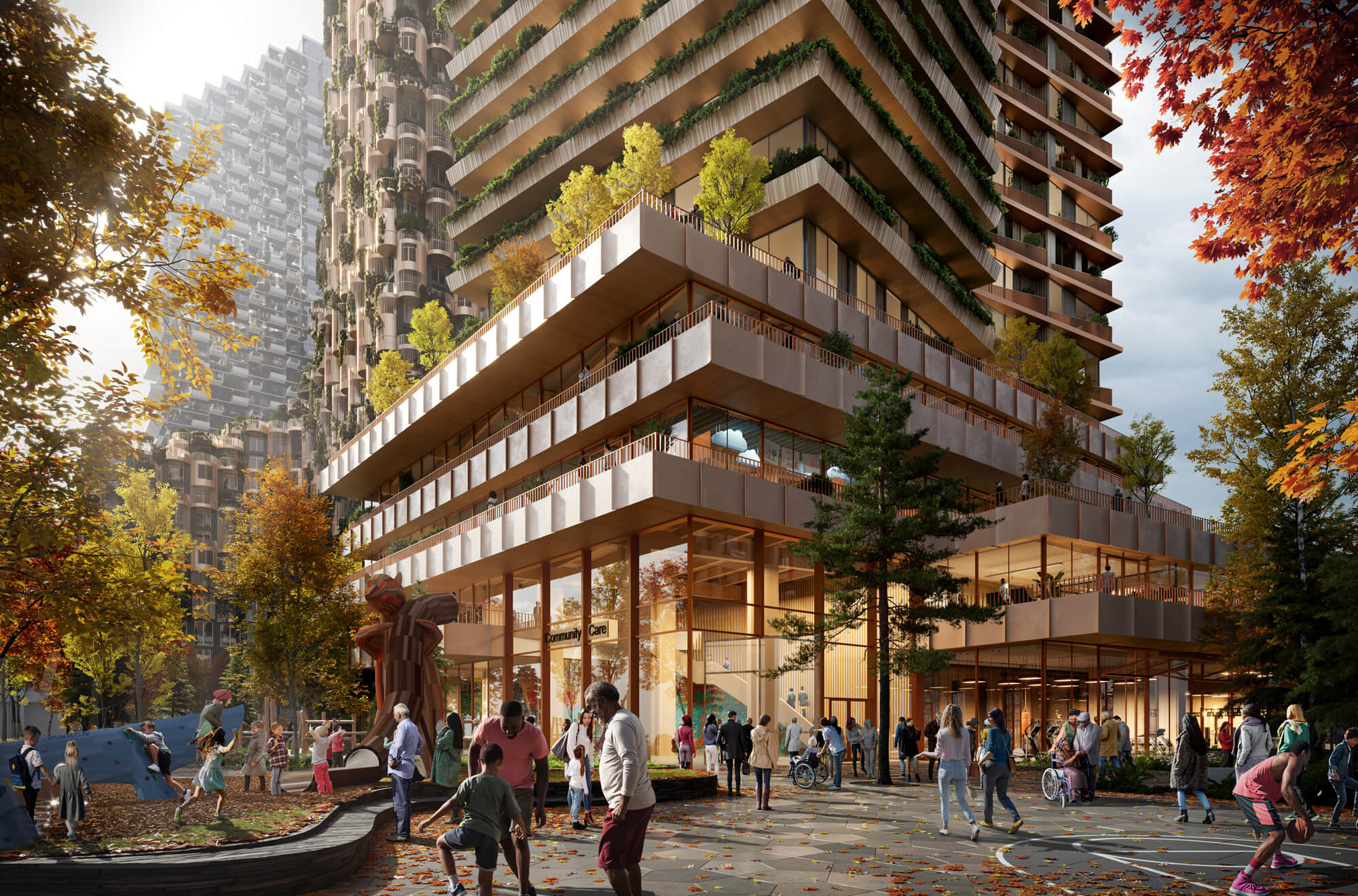
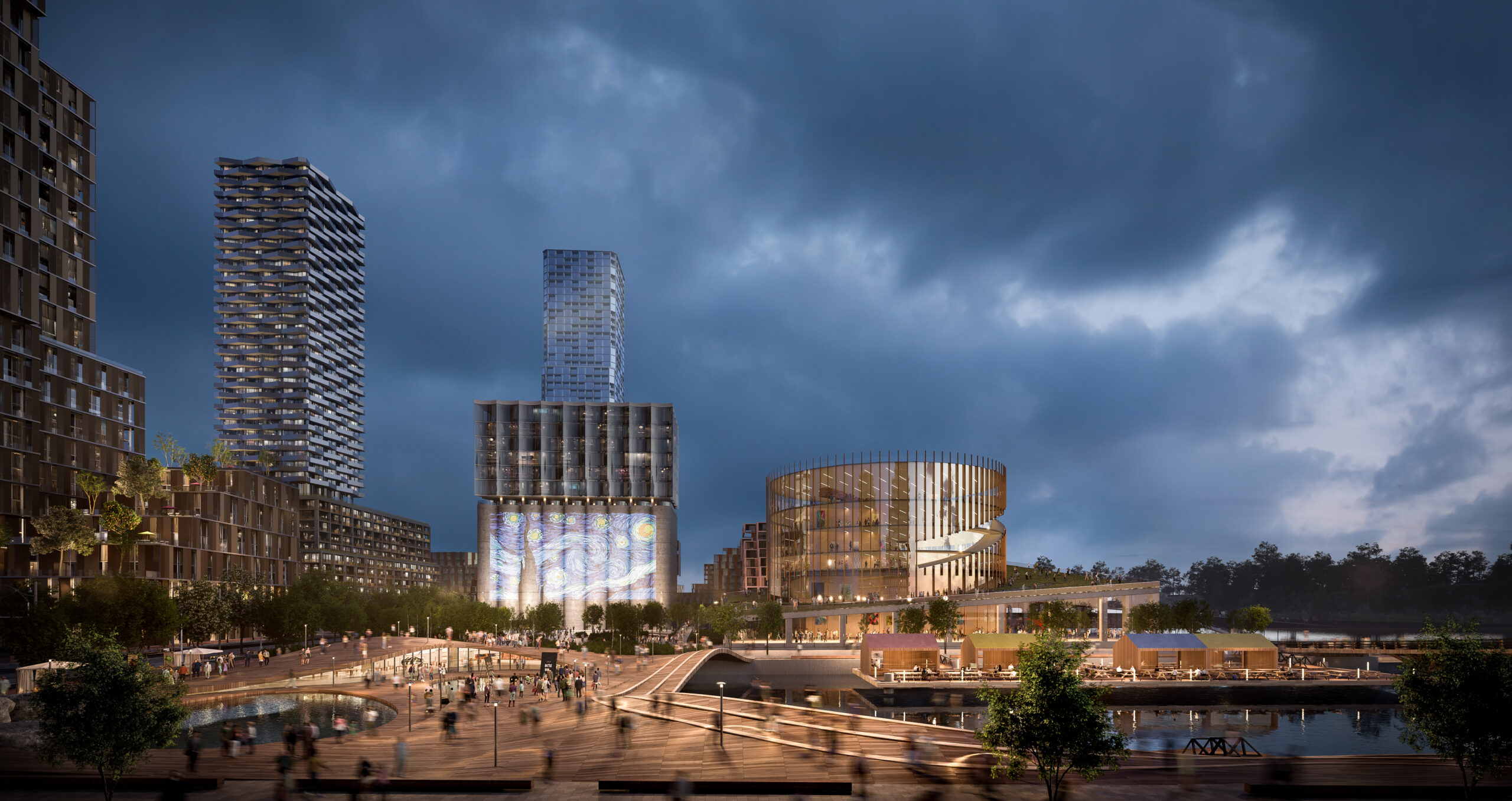
Quayside with contributions by Alison Brooks Architects, Henning Larsen, Adjaye Associates and SLA, Concept for Toronto, Canada | Renders by Norm Li
The Quayside project, with a timeline extending to 2034, serves as a massive urban laboratory for Toronto. While it promises a green future equipped with mass-timber structures and expansive green spaces, the public is closely watching to see to what extent these promises will be realised. Quayside is not just a real estate development project; it is a test case against chronic urban problems such as gentrification and the privatization of public space.
While the 800 affordable housing units offered by the project are promising, the critical question remains whether these units will remain “truly accessible” in the long term. Urban planners and critics worry that such mega-projects can sometimes hide behind greenwashing while indirectly increasing the cost of living in the area. Quayside’s success will be measured not only by the aesthetics of the buildings but by how well this neighborhood preserves Toronto’s social diversity. If the project cannot maintain its philosophy of a “shared room open to all,” the waterfront risks becoming a sterile zone accessible only to a certain segment of society. So, by the 2030s, whether this neighborhood provides a real solution to Toronto’s housing crisis or remains a luxury eco-island will depend on the transparency and inclusivity of its implementation.
Architizer's 14th A+Awards judging is live! Subscribe to our Awards Newsletter for updates on Public Voting and the big winner reveal later this spring.