
The jury is deliberating... stay tuned for the winners of Architizer's A+Product Awards! Register for the A+Product Awards Newsletter to receive future program updates.
In the field of construction, there has been a contemporary obsession — or rather a fascination — with flexibility. Modular systems, adaptable plans, moving components and even demountable walls make buildings that can be “anything, anytime.” Perhaps, one reason may be that architecture is responding to the world’s pressing uncertainty, that being economic, social or environmental. Design enhances impermanence and plasticity to keep up with the rapid cultural shifts, both in terms of construction as well as program, when inhabited. But what if flexible architecture actually masks a deeper desire, specifically, the longing to live in more stable cities, where permanence is the norm and not the exception?
The housing crisis, the rise of the digital nomad lifestyle, short-term leases and an overall tendency for temporary living have resulted in a state of persistent residential precarity. Architecture that proposes lightweight systems that can be easily dismantled, offering more impermanence in an already unstable world. Yet, amidst this temporality of construction, there are products that opt for permanence. They are heavy, materially honest and structurally stable. Architizer’s 2025 product winners feature some of the most notable examples of this counter-tendency, presenting façades, wall finishes and distinct architectural elements that refuse lightness and privilege mass.
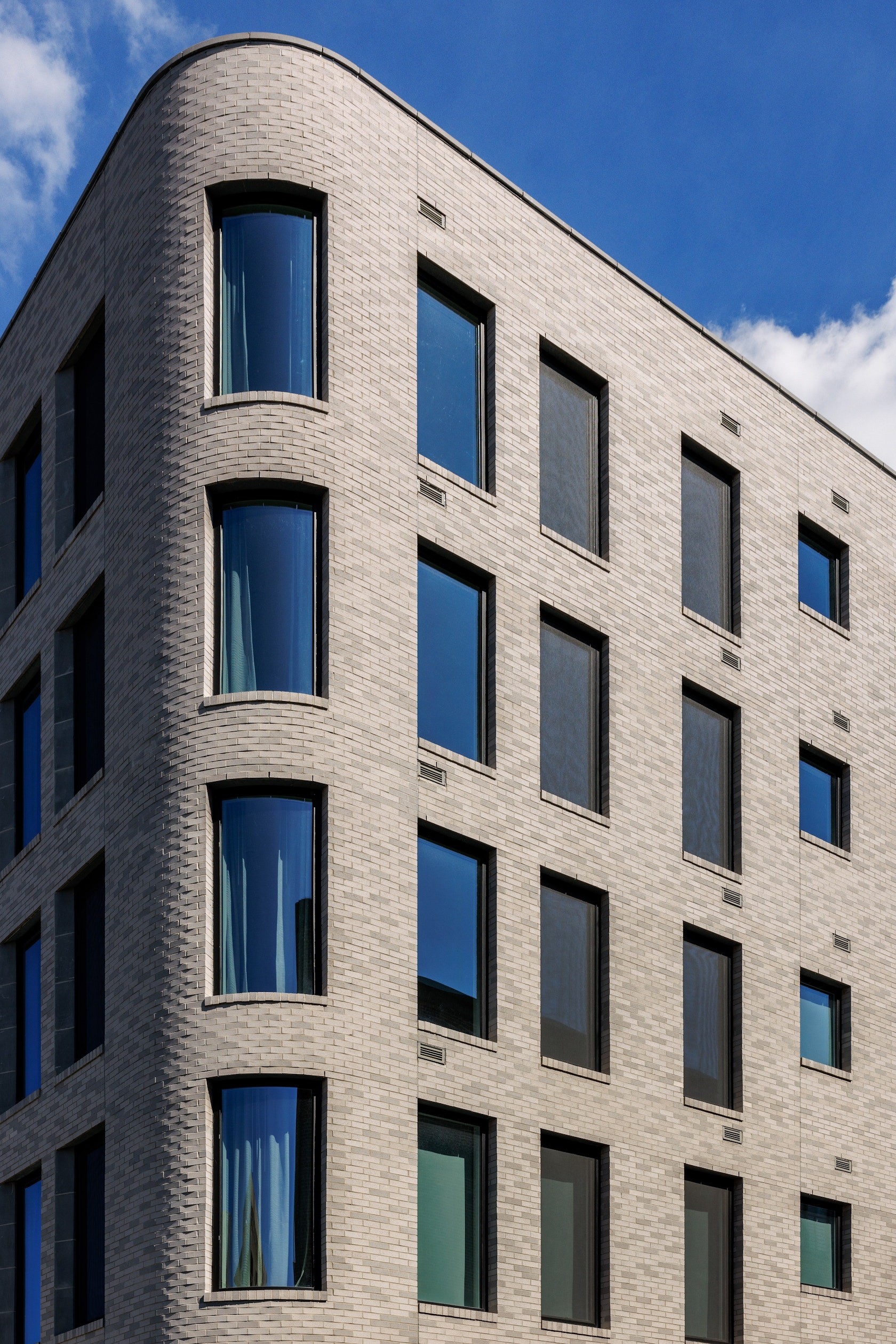
Silver City Smooth & Wirecut by Glen Gery Corp | Jury Winner, Building Envelopes, Cladding & Roofing, 2025 A+Product Awards
One example is the Silver City Smooth & Wirecut brick collections, produced by Glen Gery Corp, that can be used for commercial façades as well as residential homes. The collections blend timeless materials with a contemporary edge that delivers a polished, modern finish. The Silver City Smooth design follows clean, smooth lines that can easily complement other, more lightweight materials such as glass, steel and wood.
On the other hand, Silver City Wirecut offers a more tactile texture that creates a dynamic interplay between light and shadow and is used particularly for revitalizing heritage sites, adding a touch of modern craftsmanship to existing architectural structures. Both options are unique examples of masonry envelopes that excel in durability, weather resistance and energy efficiency, showcasing how a single material can reaffirm permanence as an active design choice rather than a passive afterthought.
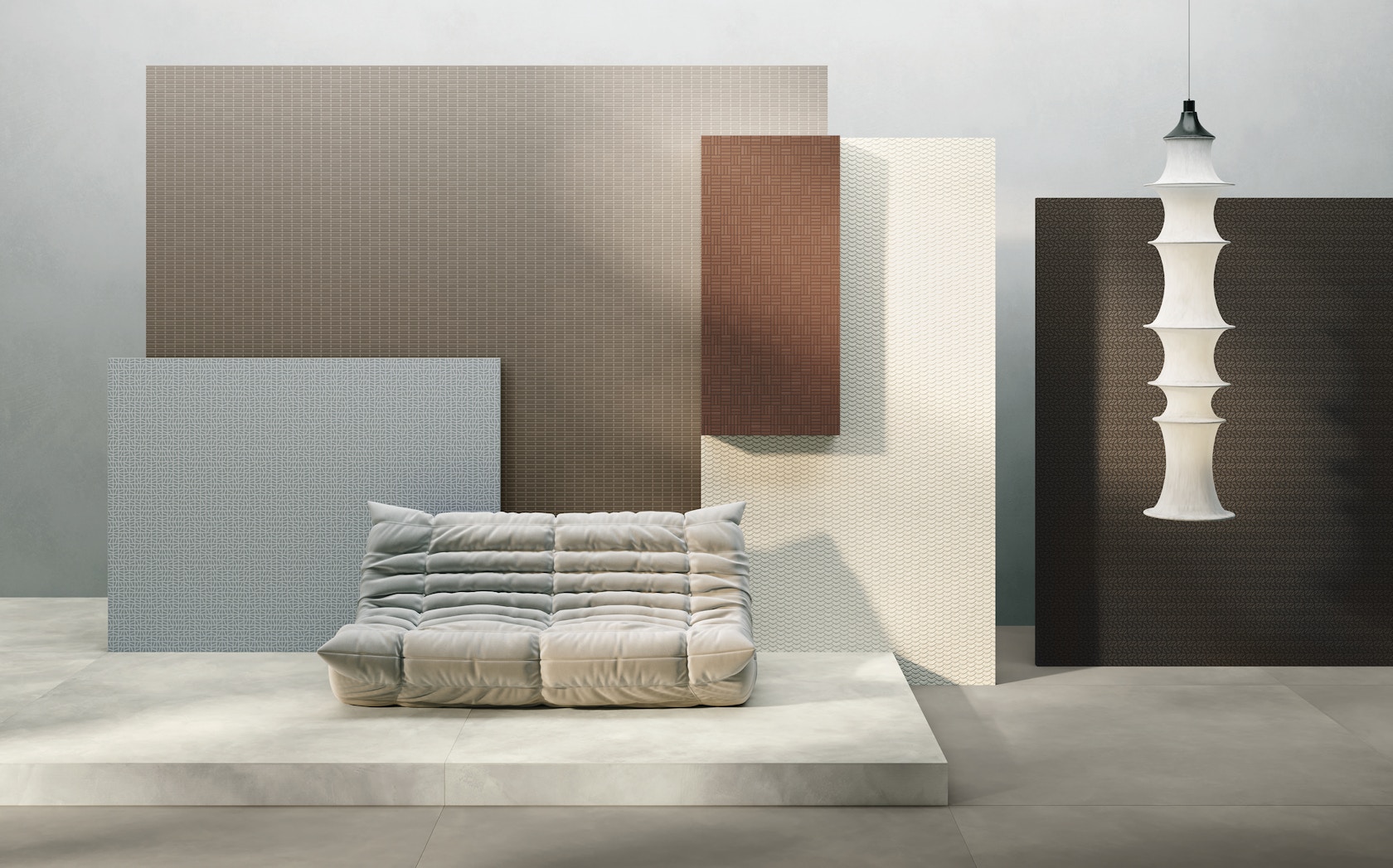
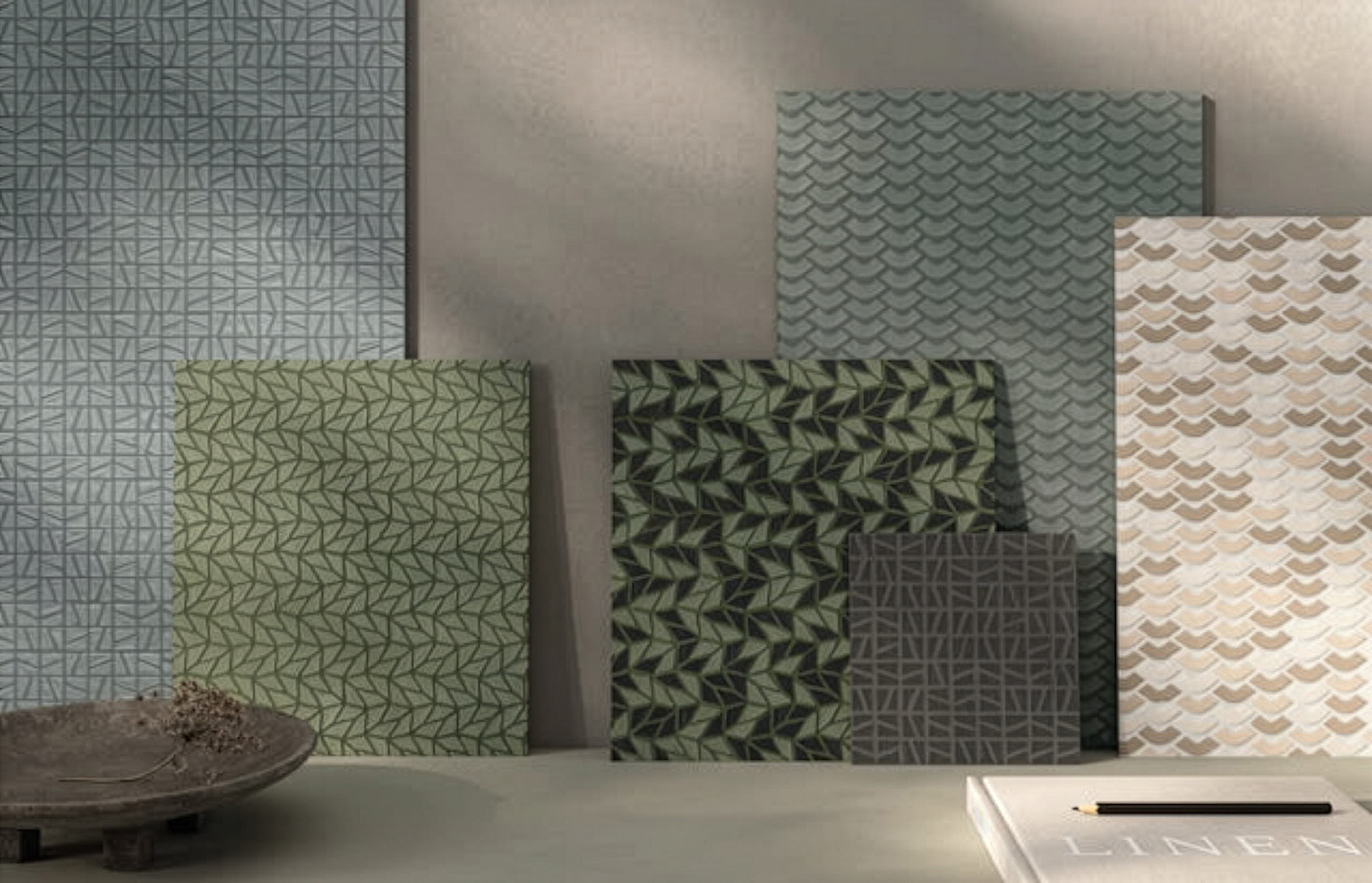
The Nagomi collection by Mirage, Jury Winner & Popular Choice Winner, Hard Surfacing, Tiles & Stone, 2025 A+Product Awards
Similarly, the Nagomi collection by Mirage, created in collaboration with architect Hadi Teherani, features a ceramic wall cladding option that operates beyond the mere concept of decoration. Instead, it pays tribute to ceramic production practices, incorporating a significant percentage of glass derived from the recycling of cathode ray tubes as the primary material, and showing how recycling and sustainability can become mechanisms for permanence through active reuse.
Additionally, Teherani infuses the collection with a strong cultural narrative, where its form originates from traditional patterns but evolves into a different type of architectural language — one that can be reappropriated to suit different, more contemporary contexts. In the Nagomi collection, permanence resides through the ability of the material to remain relevant throughout time, both in terms of production and cultural identity.
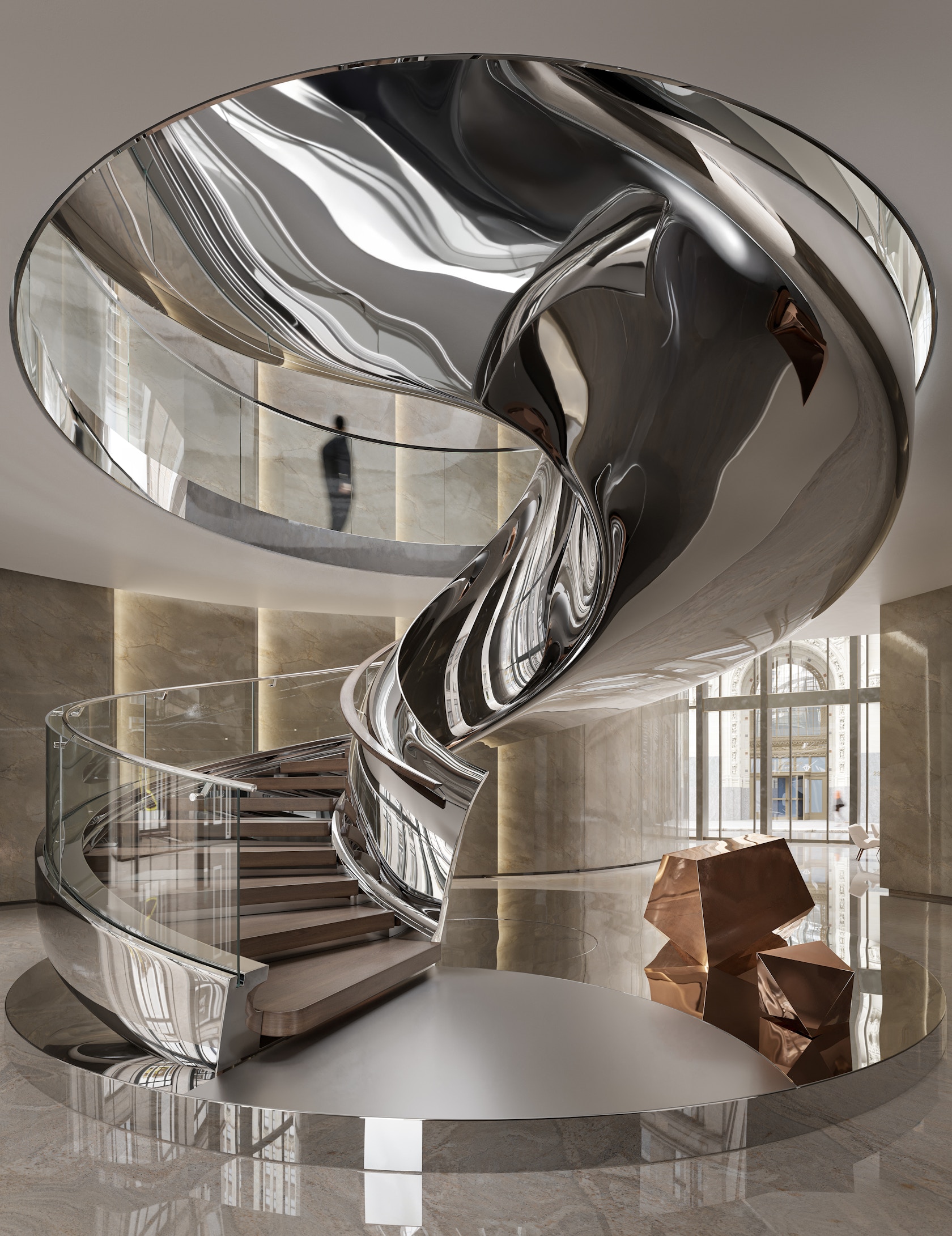
The Silver Sterling Coated Staircase by Marretti, Jury Winner, Best of the Year – Architectural Design, 2025 A+Product Awards
Finally, the Silver Sterling Coated Staircase by Marretti is a rather unique architectural product in relation to permanence. Usually, staircases are considered part of circulation spaces, where movement and transition take place. They are often made of lightweight materials, blending with the immediate space. However, the specific staircase features a box structure crafted from polished stainless steel, coated in silver, while the external railing is constructed from 3/8-inch by 3/8-inch curved ultra-clear structural glass, recessed into the structure. On the internal side, a polished stainless-steel convex helical band, also silver-coated, is complemented by a flat handrail for comfort, while the steps are made from solid walnut wood, with integrated LED lighting on the underside.
Consequently, the staircase no longer functions as a mere circulation device but also takes on the role of architectural anchor, accentuating the act of movement throughout the space. It celebrates physical longevity by using durable, tactile materials that prolong the staircase’s life and enhance its spatial presence. In parallel, this gesture of elevating a simple architectural element into a component that matters suggests a long-term investment in the building itself, making it unlikely to be replaced or dismantled.
Together, these products offer solutions for quiet permanence. They produce a more subtle architecture that avoids being rigid or authoritarian and instead chooses to introduce permanence as care: production through reuse, materials that support the renovation of historic sites and interior components that act as anchors of inhabitation. More importantly, these products suggest a much-needed sense of optimism, “daring” to stay still in an age of constant adaptation and asking what might change if architects started investing in endurance again.
The jury is deliberating... stay tuned for the winners of Architizer's A+Product Awards! Register for the A+Product Awards Newsletter to receive future program updates.
Featured Image: The Nagomi collection by Mirage, Jury Winner & Popular Choice Winner, Hard Surfacing, Tiles & Stone, 2025 A+Product Awards