
This article was written by Jamie Jang on behalf of Architecture 2030, whose mission is to rapidly transform the built environment from a major emitter of greenhouse gases to a central source of solutions to the climate crisis. For 20 years, the nonprofit has provided leadership and designed actions toward this shift and a healthy future for all.
Urbanization has shaped the face of our planet since the 1950s. The rural to urban migration marches on as cities continue to thrum with economic, social, and cultural activity. It is one reason why so many people struggle to find affordable housing in cities of the global north. Surprisingly, the majority of global urbanization is grassroots, affordable and representative of its own unique heritage, and that’s because over 50% of urban housing around the world is produced informally.
Informal Urbanization Is Already the Global Norm
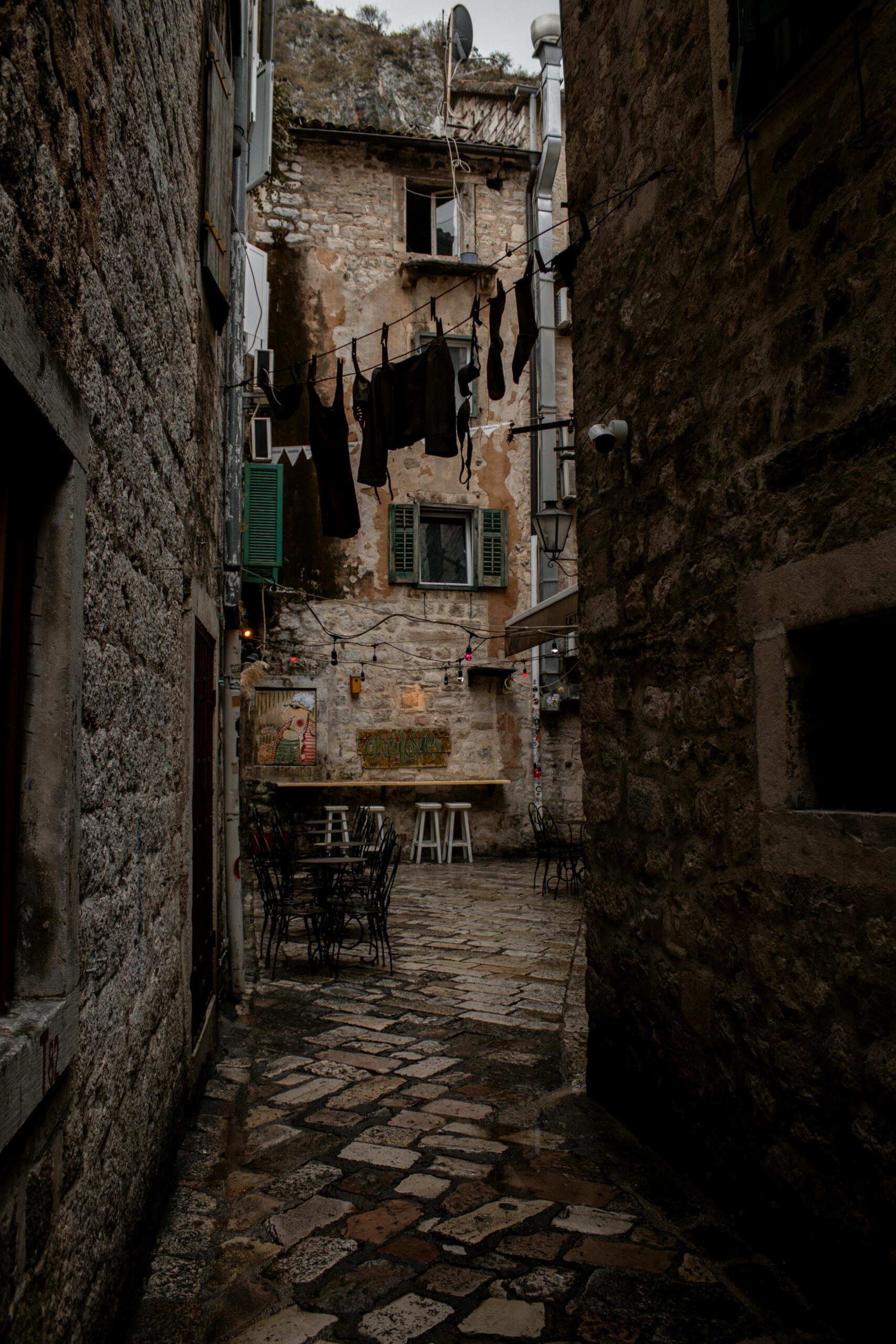
Narrow old street in Old town of Kotor, Montenegro | Photo by Viktoriia Kondratiuk via Pexels
Worldwide, informal settlements grow at an annual rate of nearly 10%, and by 2050, 50% of city-dwellers will live in informal settlements, totaling 3 billion people. Industry professionals and policymakers frequently overlook these self-built communities and treat them as problems to fix. Researchers, however, have studied these communities for decades and have identified the potential of these communities to develop regeneratively.
“Regeneration” may be a bit of a buzzword these days, but regenerative design specifically refers to a mindset and methodology for development that pursues going beyond sustainable by revealing the hidden potential of communities. To accomplish this, regenerative designers seek to enmesh communities with each other and with the natural systems within which they exist; an equal partner in the evolution of place. Over half of all urban production is already grassroots, affordable, and representative of its unique place. Regenerative design principles can empower these communities to draw out their inherent potential.
Why Formal Development Keeps Missing the Point
In some respects, informal settlement is defined by its counterpart, formal development. Economically, this is the dominant mode of urban production: it is estimated that between 2020 and 2030, roughly $90 trillion will be spent on infrastructure worldwide (contrast this with the estimated $6 trillion investment that would be needed to upgrade informal settlements globally. These planned projects represent standard formal development; projects with the requisite government approval for their construction and use. At its best, formal development ensures the safe, organized and sustainable creation and maintenance of communities.
In its current practices, it also extracts, exhausts and pollutes on a scale so large that it destroys habitats and produces wide-ranging global consequences, like extinction. Furthermore, the globalization of formal processes paves the road to the world that James Kunstler describes, where “every place looks like no place in particular.” As a mode of production, formal development is one of homogenization, biodiversity decline, and climate catastrophe.
Informality as a Design Process, Not a Problem
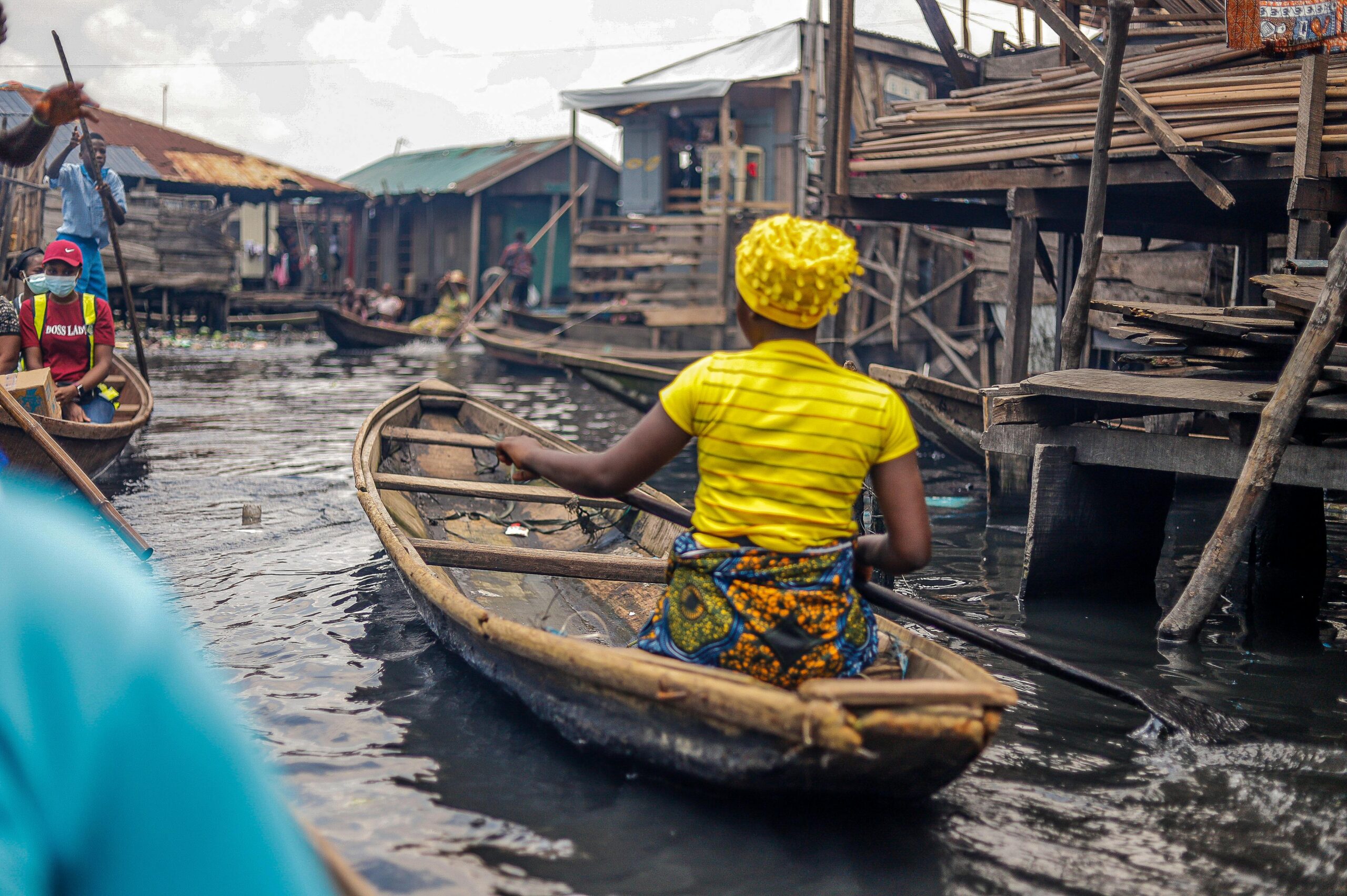
Man in Yellow T-Shirt and Yellow Hat Riding on Brown Boat, Lagos, Nigeria | Photo by Lagos Food Bank Initiative via Pexels
Contrast formal development with informal settlement, which, when broadly defined as a verb, is the “incremental, unauthorized, and self-organized production of new urban neighborhoods.” This represents an opposing mode of urban production where no authority dictates the development of infrastructure, roads, parcel zoning or structural form. Instead, residents develop their community themselves, in a process that is complex, unique to each place, adaptive and emergent.
In Ghana and Tanzania, self-built housing is the predominant method through which people of all income levels acquire homes. Only a very limited amount of housing is developed by private companies. Even when Brazil’s favela communities are strongly correlated with lower incomes, they generate significant value — Brazilian favelas alone represent $27.7 billion in annual purchasing power. These developments tend to occur through rapid iteration, making informal settlements highly adaptive. Due to their characteristics, scale and diversity, they are best understood not as the outcome of any final urban form, but as a process of iterative urbanization that is constantly evolving. Understanding informal settlements this way allows for the recognition of their suitability for regenerative design.
Where Regenerative Design Finds Its Natural Counterpart
Regenerative design is a methodology that, like informal settlement, diverges significantly from more formal processes. While both the formal and informal would benefit from regenerative methodologies, the affinities between regenerative design and informal settlement appear stronger. Additionally, serious and valid concerns have been raised by academics about ivory tower saviors intervening in autonomous communities like informal settlements. Interventions potentially threaten the respect of cultural heritage and may express distrust in the communities themselves. This important discourse is one that should be foundational to any regenerative design project working with informal settlements. An abridged summary of regenerative design follows (for a deeper exploration, read Regenerative Development and Design by Pamela Mang and Ben Haggard):
- Partner with Place. Regenerative designers understand that co-evolution occurs in specific places using tailored approaches to create bonds. They do this by asking, “What is the essence of this place?” and then listening in an attempt to uncover the community’s vocation (as defined by Aristotle, “where your talents and the needs of the world cross, there lies your vocation”).
- Work from Potential. Regenerative designers understand the difference between solving problems and seeking potential, with emphasis on the latter. They do this by asking, “What can this place become?” and inviting the community to evolve towards greater potential.
- Make Nodal Interventions. Regenerative designers map a community’s nodes and flows of exchange in the five forms of capital: Social, Natural, Produced, Human, and Financial. Then, they make small, strategic and conscientious interventions to increase beneficial human impact.
The Opportunity Architects Can No Longer Ignore
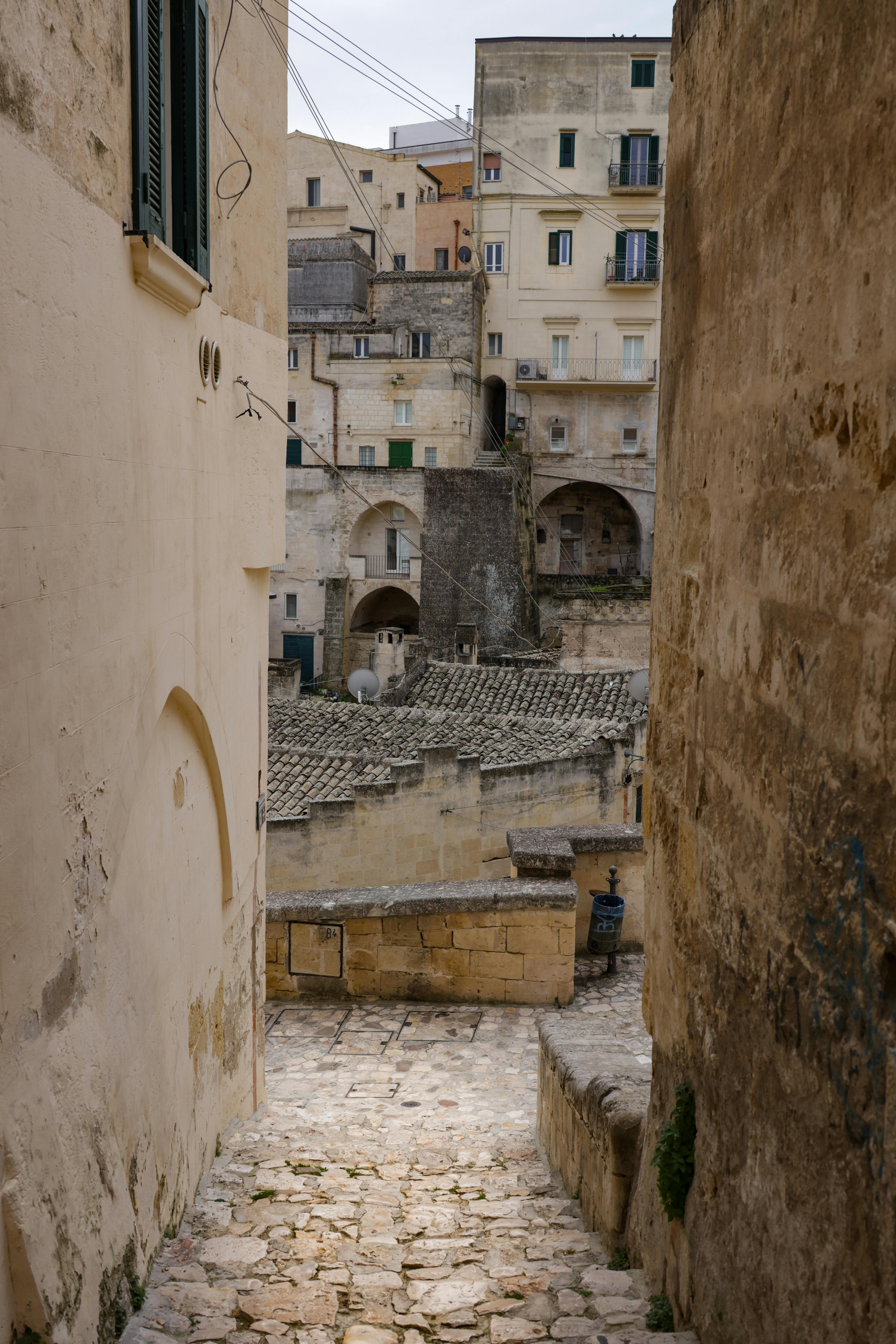
Historic Architecture in Matera Old Town Alley, Italy | Photo by Magda Ehlers via Pexels
Regenerative design insists that everybody is a designer, a notion epitomized in informal settlements. Creating one’s home is an incredibly powerful human experience. At its core, informal settlement is “driven by desires for a better life, for affordable housing with access to jobs, and for a foothold in the city.” This understanding reveals the true potential of informal settlements: the human resource, driven by the virtually universal value of desiring “a better life.” Considering the vast resources devoted to urban development, it would be a monumental failure to overlook the value and potential of the most ubiquitous form of urbanization: informal settlements.
This is a call to stakeholders involved in the urbanization of these vibrant, grassroots and affordable communities. Let the work begin. Do not view any informal settlement as a problem to be solved, but instead partner with the place to uncover a vast wellspring of human potential.
Jamie Jang is a former Architecture 2030 Intern and a graduate from the University of Massachusetts Amherst’s M. Arch program. This article is a summary of part of his thesis project, Informal Regeneration. Jamie is now practicing architecture in Northern California, where he continues to engage in research on the built environment.
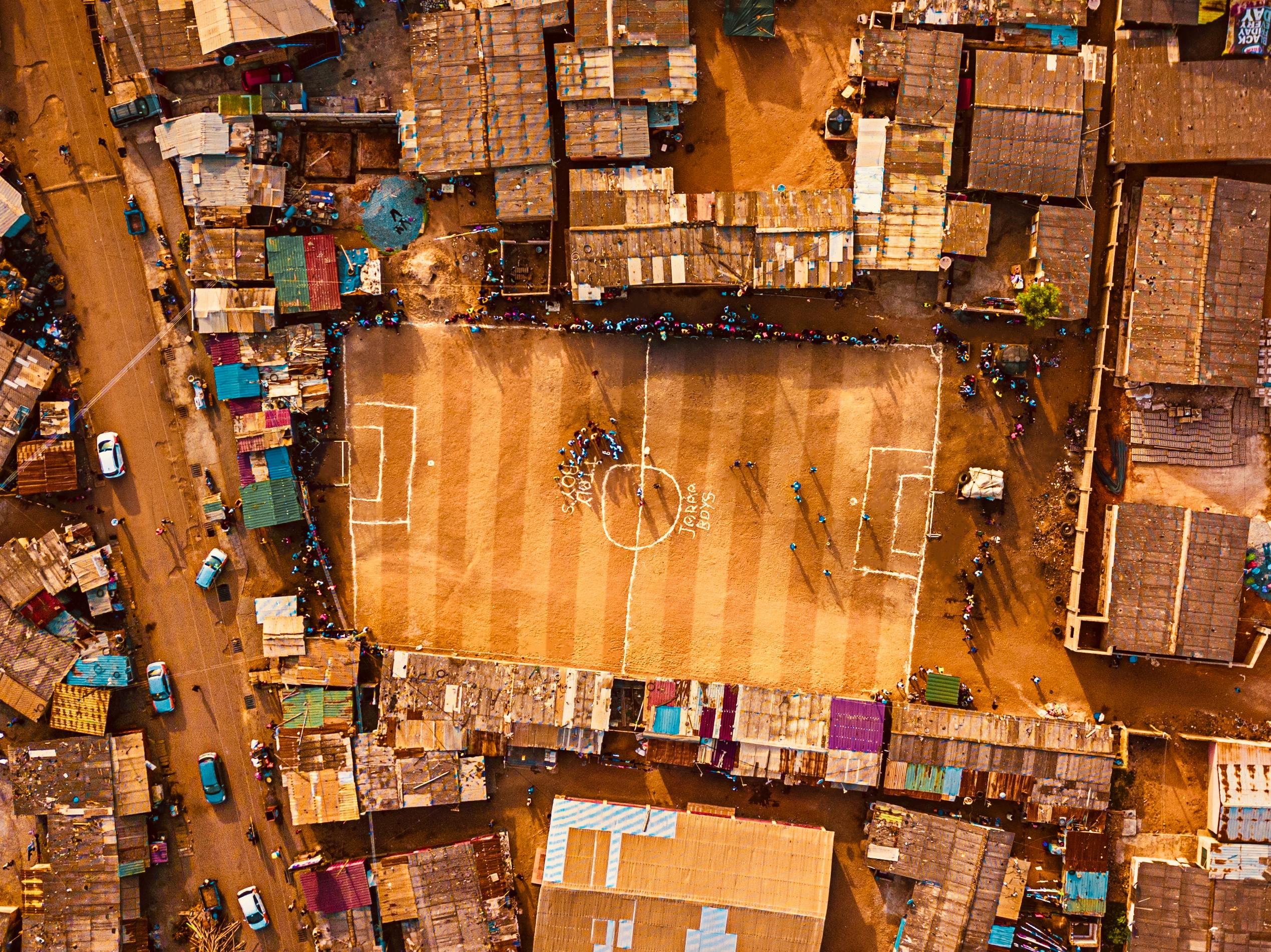
Top image: Bird’s Eye View of Houses in an Urban Area by Amos Kofi Commey, Accra, Ghana via Pexels