
The judging process for Architizer's 14th A+Awards is now underway. Subscribe to our Awards Newsletter to receive updates about Public Voting, and stay tuned — winners will be announced later this spring.
In The Agony and the Ecstasy, Irving Stone’s 1961 biographical novel about Michelangelo, the artist is depicted as falling in love with marble long before he became interested in art. As a teenager, Michelangelo worked in his father’s small marble quarry in the afternoons, side by side with Tuscan stonecutters, legendary craftsmen whose expertise had, over the centuries, made Florence into one of the wonders of the world. When Michelangelo is older, he often returns to his hometown of Settignano to spend time with the stonecutters, enjoying their company far more than that of his wealthy patrons, the popes and Medicis.
When I first read The Agony and the Ecstasy, I was afraid these details about Michelangelo were novelistic fabrications, devices intended to make Michelangelo sympathetic to 20th-century readers. It just seemed too good to be true: the idea that the premier artist of the Renaissance had a modernist’s appreciation for materiality and an almost Bauhaus-like understanding of the unity of art and craft. I found the idea so attractive that I did not want to ruin it, so I made a point not to research further. (In small and inconsequential cases, ignorance can be bliss). It was only by coincidence that I later stumbled across this quote from Michelangelo in Giorgio Vasari’s 1550 classic, Lives of the Most Famous Painters, Sculptors, and Architects: “If there is some good in me, it is because I was born in the subtle atmosphere of your country of Arezzo. Along with the milk of my nurse, I received the knack of handling chisel and hammer, with which I make my figures.”
Viktor Kossakovsky, the director of the acclaimed 2024 documentary Architecton, wants us to understand architecture as Michelangelo did, by considering materials first. A Reddit user quipped that this film should really be called Drones and Stones, and they make a good point: a majority of this film’s 1 hour and 38 minute run time is devoted to drone footage of quarries and ruins, both ancient and modern. Instead of a voiceover describing the images onscreen, Kossakovsky provides dissonant and heavily percussive music by the composer Evgueni Galperine. Not having seen Kossakvosky’s other films, the reference point that came to mind was Godfrey Reggio’s 1982 film Koyaanisqatsi, which similarly takes an abstracted, almost alien’s-eye view of its subject matter, which is not altogether different than the subject matter of Architecton. (Reggio juxtaposes scenes of nature and urban life to present an impression of “life out of balance,” which is what Koyaanisqatsi means in the Hopi language).
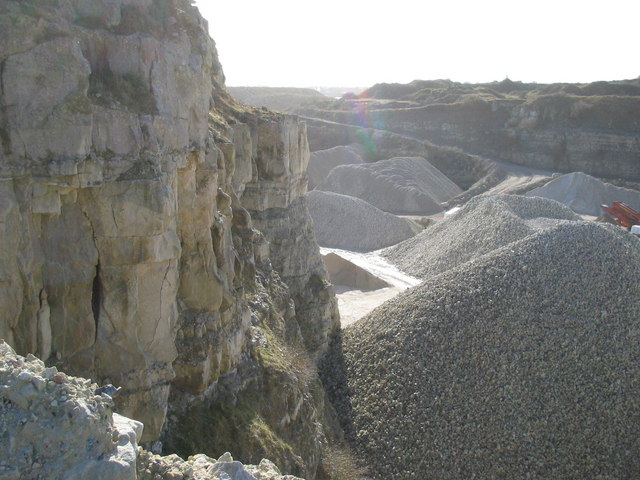
Working Portland Stone Quarry (geograph.org.uk-432985). Photo by Ian Saunders, CC BY-SA 2.0 via Wikimedia Commons
In Koyaanisqatsi, human beings are made to look like ants in a colony or cogs in a machine, parts whose individual movements make more sense when considered as part of a larger system. In Architecton, stones take on a similar role, especially in the scenes that depict mountains being strip-mined. Minutes tick by as the camera tracks avalanches of rocks that have been blasted loose from mountains. Their journey is patiently followed down the conveyor belts, which take them to their final destination: gravel processing. Other memorable moments include the explorations of modern ruins. Drones weave through the vacant rooms of bombed-out buildings in Ukraine and those destroyed by earthquakes in Turkey. Where there once was life, now there is only crumbling infrastructure, piles of shattered concrete and twisted rebar. It is these materials that the camera emphasizes, not any evidence of the kinds of lives that were lived in these spaces. Kossakovsky also films ancient ruins, but these are pointedly presented in a much less alienating light. At the temple ruins of Baalbek, a bearded man presses his hands against the famous megalithic Baalbek Stones and smiles beatifically.
The bearded man at Baalbek is the only distinctive personality to emerge in the film. There are a few other human figures, but they rarely speak. We also see him in another setting, his own garden in Italy, where he directs workers to create a stone installation in his garden. His concept is elemental: he wants to create a “magic circle” of large boulders about 20 feet in diameter that no person will set foot inside of. While the grass around the circle will be maintained as a manicured lawn, the interior of the circle will be allowed to grow wild. The scenes with the magic circle, where workers move stones in wheelbarrows under the architect’s guidance, are a welcome relief from the montages. The extent to which filmgoers crave narrative, even very minimal narrative, cannot be overstated.
In the film, the architect is never named until the credits. The workers, somewhat strangely, just call him “the architect.” In any case, he is Michele de Lucchi, an alumnus of the Memphis design group best known for his lamp and furniture designs. He doesn’t speak much – simply directs construction — until the film’s epilogue, where he makes some comments that, it seems, are intended to give form and meaning to the film as a whole. Like the other scenes in which he is featured, these words are like cool water in the desert. After more than an hour of slow pans over mines and ruins, the viewer craves an explanation, a narrative to tie together all the stunning footage.
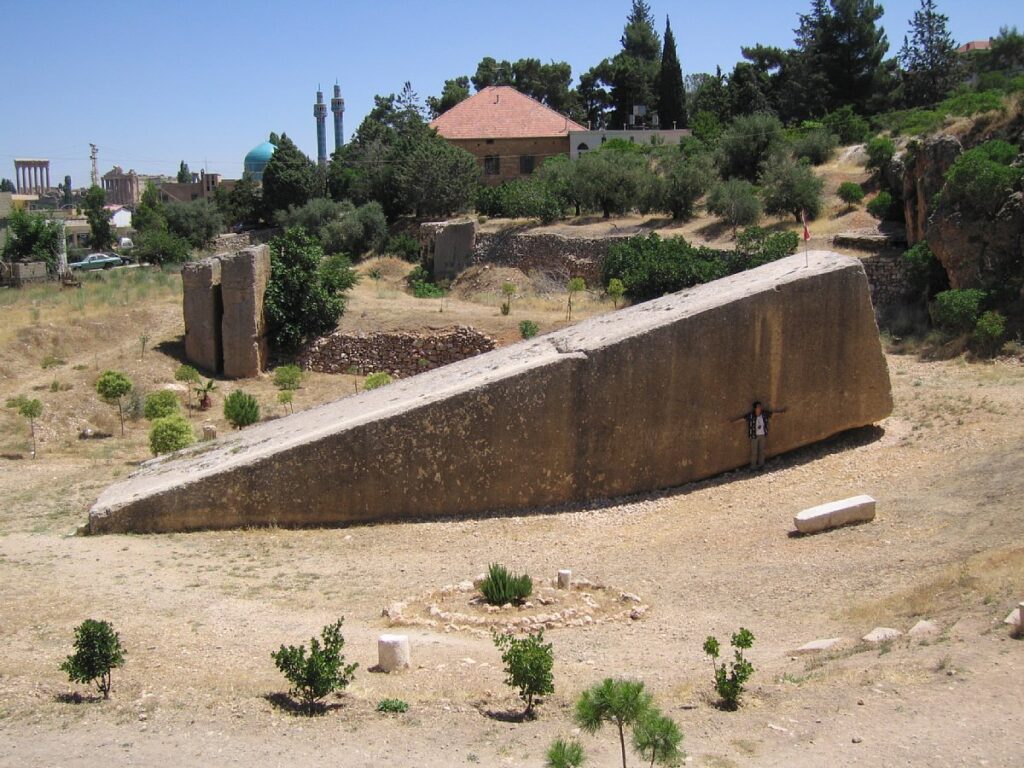
The Stone of the Pregnant Woman is a colossal unfinished Roman-era monolith at Baalbek, Lebanon—one of the largest stones ever quarried. It features prominently in Architecton, but there are no captions or voiceover to explain its significance. Photo by SenemmTSR, Public domain, via Wikimedia Commons
Sitting under a tree near his magic circle, in conversation with none other than the filmmaker himself, Lucchi laments the disposability of modern architecture and especially the use of concrete, which he resents because it does not belong to “nature.” He is concerned about environmental destruction and what it means for a culture to create buildings that are only meant to last for 50 years rather than 1,000. As shown in the earlier montages, human beings are, each day, destroying mountains and forests to acquire building materials. Lucchi is unconvinced that the buildings we are creating justify their environmental cost.
I share Lucchi’s ecological concerns, but I found his commentary too one-sided to carry the film. He fails to take into account the human needs that are addressed by the low-cost concrete and timber construction he resents. Is it possible, I wondered, to house the world’s growing population in buildings made from reclaimed stone and timber? Maybe it is — I am not sure because the film doesn’t even approach the question. Instead, there is just this whiff of nostalgia, this notion that our contemporary, industrial civilization is wasteful and profane compared to the Romans who built the Baalbek temples. This kind of critique isn’t even a critique. It’s just a lament, a passive retreat into despair.
In my view, Architecton would have been better served by commentary that attempted to meet the moment and propose a vision for contemporary architecture that addressed social needs. But perhaps that isn’t what Kossalovsky was after. Poetically, the film forces the viewer to take into account the tectonic scale of mining, deforestation, construction, and even warfare. The sheer scale of resource extraction needed to support modern building practices is shown here in all its unfathomable scope. This in itself is an important gesture; capitalism depends on people not remembering the fact that the Earth’s resources are finite. The film’s real achievement is defamiliarizing the reader’s understanding of mining and construction.
Although I was critical of the epilogue, this section does contain my favorite part of the film. As Lucchi describes his dissatisfaction with contemporary architecture, the camera pans back to reveal his magic circle, now filled in with local vegetation. It’s beautiful, I admit. But that’s not the thing I liked. Orbiting the perimeter of the circle are these awkward little self-driving lawnmowers. There is a charm to their movements; they kind of zig-zag here and there and bump into things. They seem to exist as reminders that the modern world, with all of its flaws, dangers and opportunities, cannot ever really be escaped — even inside a magic circle.
The judging process for Architizer's 14th A+Awards is now underway. Subscribe to our Awards Newsletter to receive updates about Public Voting, and stay tuned — winners will be announced later this spring.
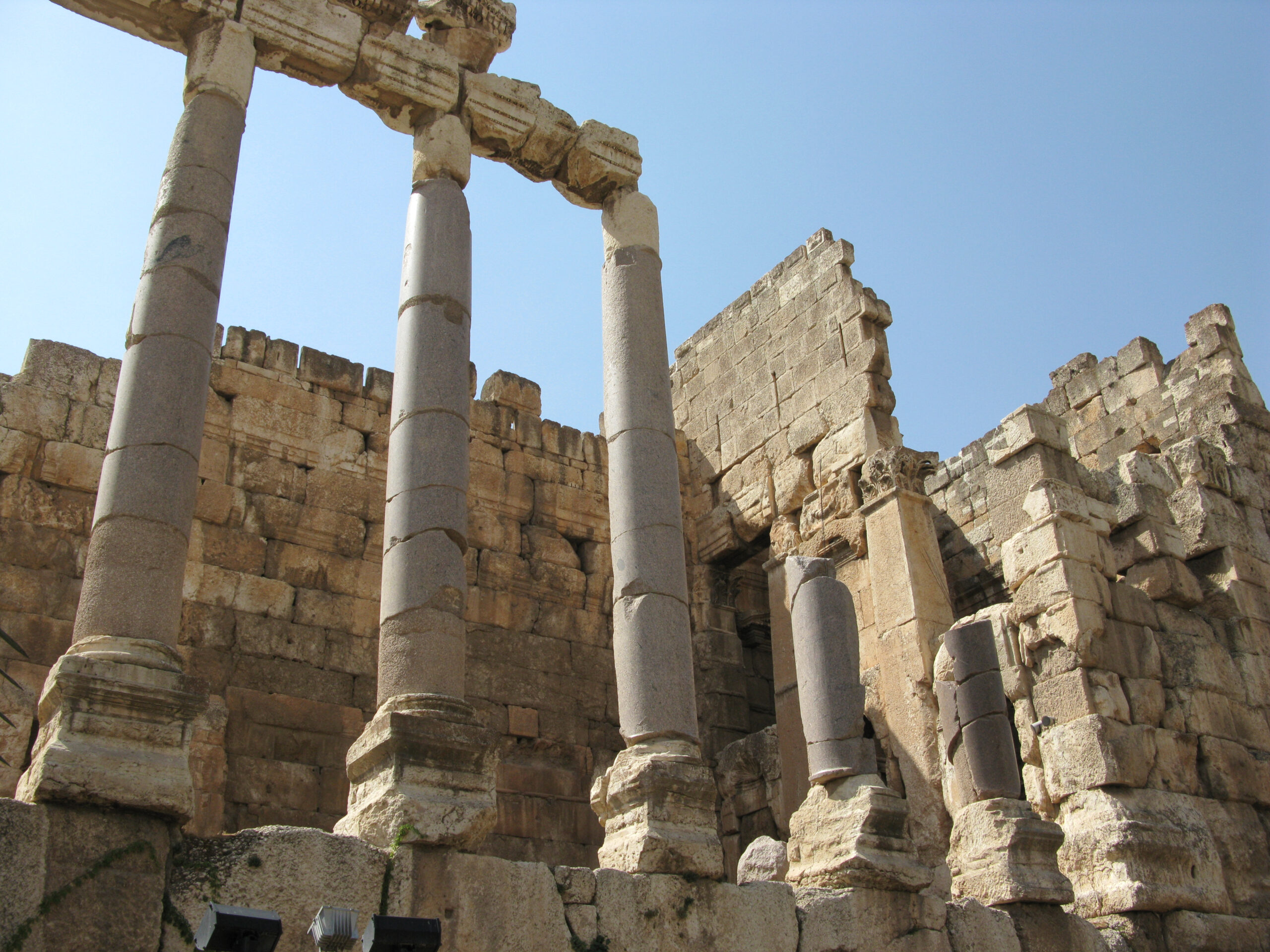
Cover Image: © Vyacheslav Argenberg / http://www.vascoplanet.com/, Lebanon, Baalbek, Corinthian capitals in Baalbek, Ancient Roman columns, CC BY 4.0