
The judging process for Architizer's 14th A+Awards is now underway. Subscribe to our Awards Newsletter to receive updates about Public Voting, and stay tuned — winners will be announced later this spring.
For decades, urban planning has operated under a constant daytime bias. Our streets, parks and plazas are designed to peak during the 9-to-5 window, with almost no attention to anyone outside that window. Historically, this transition from day to night has been treated as a functional off switch, with cities managing the dark hours through the narrow, clinical lenses of basic visibility or reactive policing.
This traditional approach ignores a fundamental reality: the city doesn’t sleep.
When we design only for daylight, we ignore the second half of the day and the diverse population that inhabits it, from healthcare workers and logistics crews to hospitality staff. The scale of this oversight is massive. According to the World Economic Forum (2024), New York City’s nighttime economy generates over $35.1 billion annually and supports 300,000 jobs, while in London, the nighttime sector contributes £26 billion and employs more than one million people.
Recognising this, a shift in urban governance is taking place. Several years ago, the Netherlands pioneered the role of the Night Mayor (Nachtburgemeester), a municipal title for someone who represents and develops a city’s life after dark. This movement has since gone global; Amy Lamé serves as London’s first Night Czar, and Washington, D.C. has established a Director of the Mayor’s Office of Nightlife and Culture. These officials act as essential mediators between daytime bureaucracy and nighttime reality.
At this intersection, Nighttime Urbanism enters the conversation. This strategic planning approach to the design and management of cities between 6 PM and 6 AM aims to create safe, dynamic and inclusive 24-hour environments. By balancing the needs of the nighttime economy (such as culture, entertainment and logistics) with the requirements of night-shift workers and residents, as well as ecological sustainability, nighttime urbanism ensures that the city remains a living, breathing entity long after the sun goes down.
The Economic Reality of the 24-Hour City
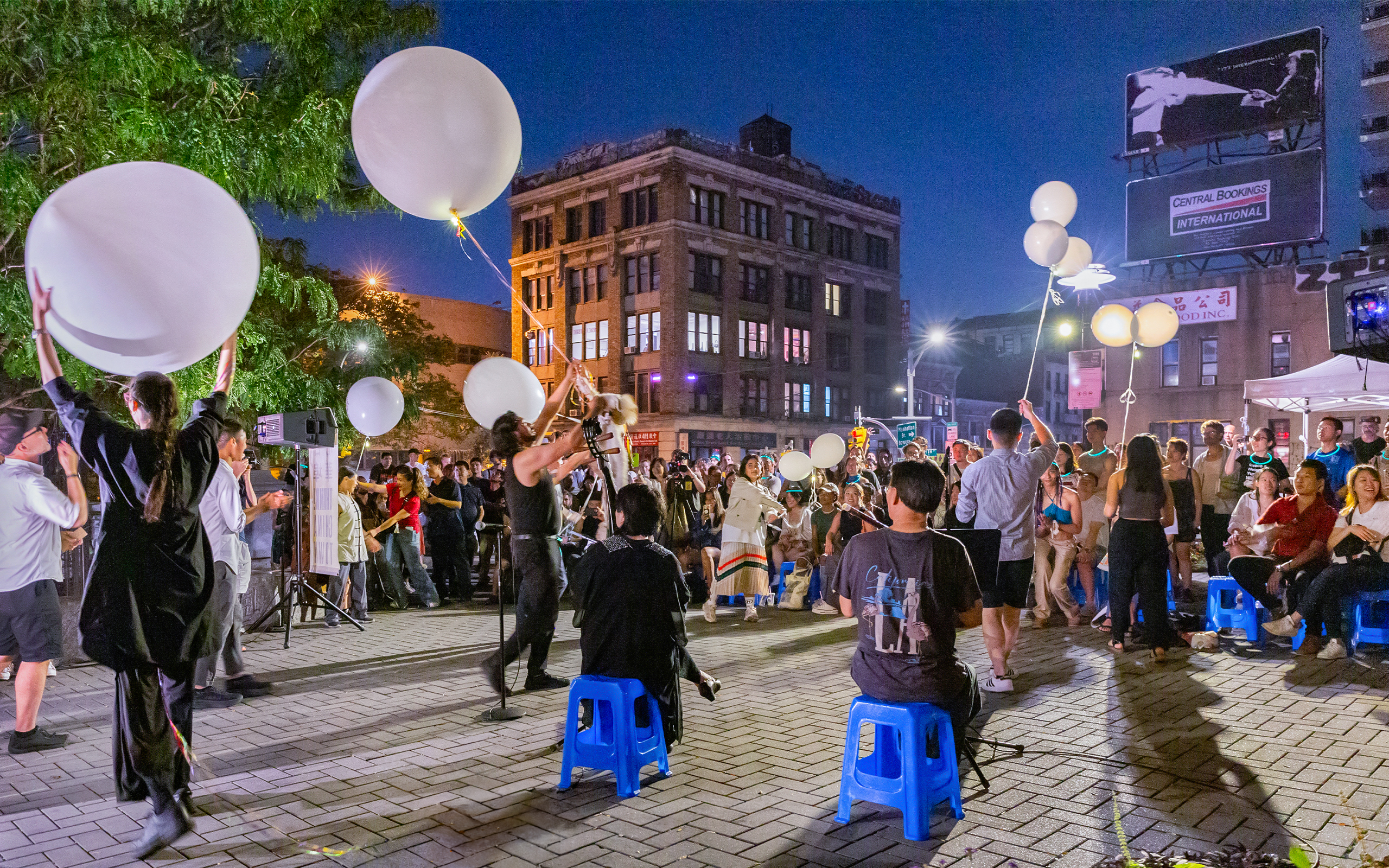
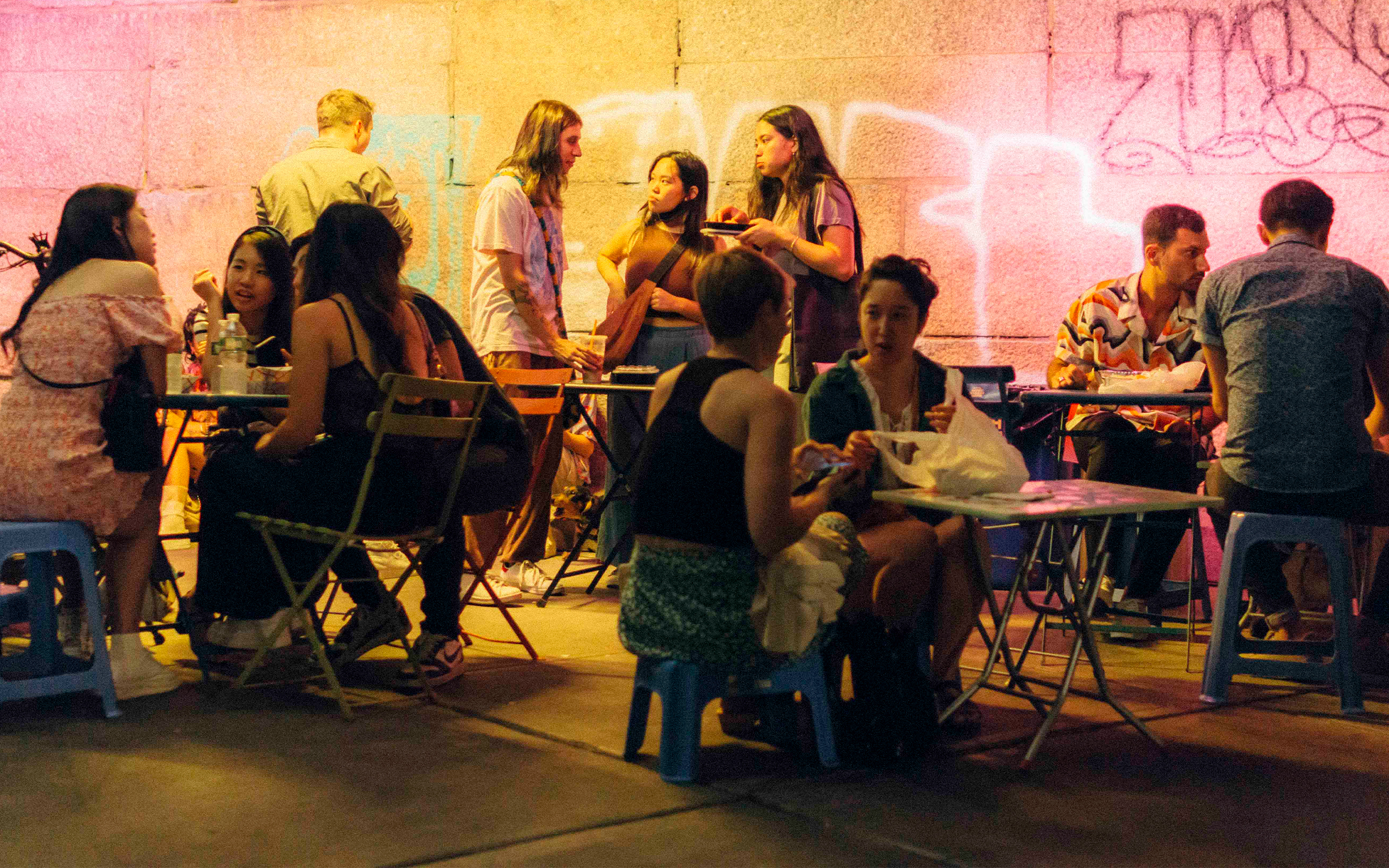
Chinatown Night Market by di Domenico + Partners, New York City, New York
When we discuss the “night economy,” we often think of neon signs and crowded dance floors. While culture and leisure are vital, they are only the visible tip of a massive economic iceberg.
Today’s 24-hour city is a complex machine powered by a diverse, often invisible workforce that keeps the metropolis’s heart beating. The scale of this “second shift” is becoming a primary driver of urban policy.
In the United Kingdom, the Night Time Industries Association (NTIA) reported in 2025 that the nighttime economy accounts for 6% of the UK’s total GDP. Furthermore, data from the Office for National Statistics (ONS) shows that roughly 27% of the total UK workforce (about 8.7 million people) now work during the night.
Also, in the United States, mid-sized cities are showing similar economic weight. According to a 2025 report from the International Downtown Association (IDA), nighttime spending in US 24-hour districts has grown 15% faster than daytime retail spending since 2022. In Philadelphia, a recent study by Econsult Solutions found that the nighttime economy has a total annual impact of $30.4 billion. Crucially, the largest share of this (nearly 40%) comes from “Night Shift Industries” like healthcare, logistics, and emergency services, rather than just food and beverage. Similarly, in Atlanta, the nighttime sector generates $5.1 billion in direct revenue annually, supporting over 41,000 jobs.
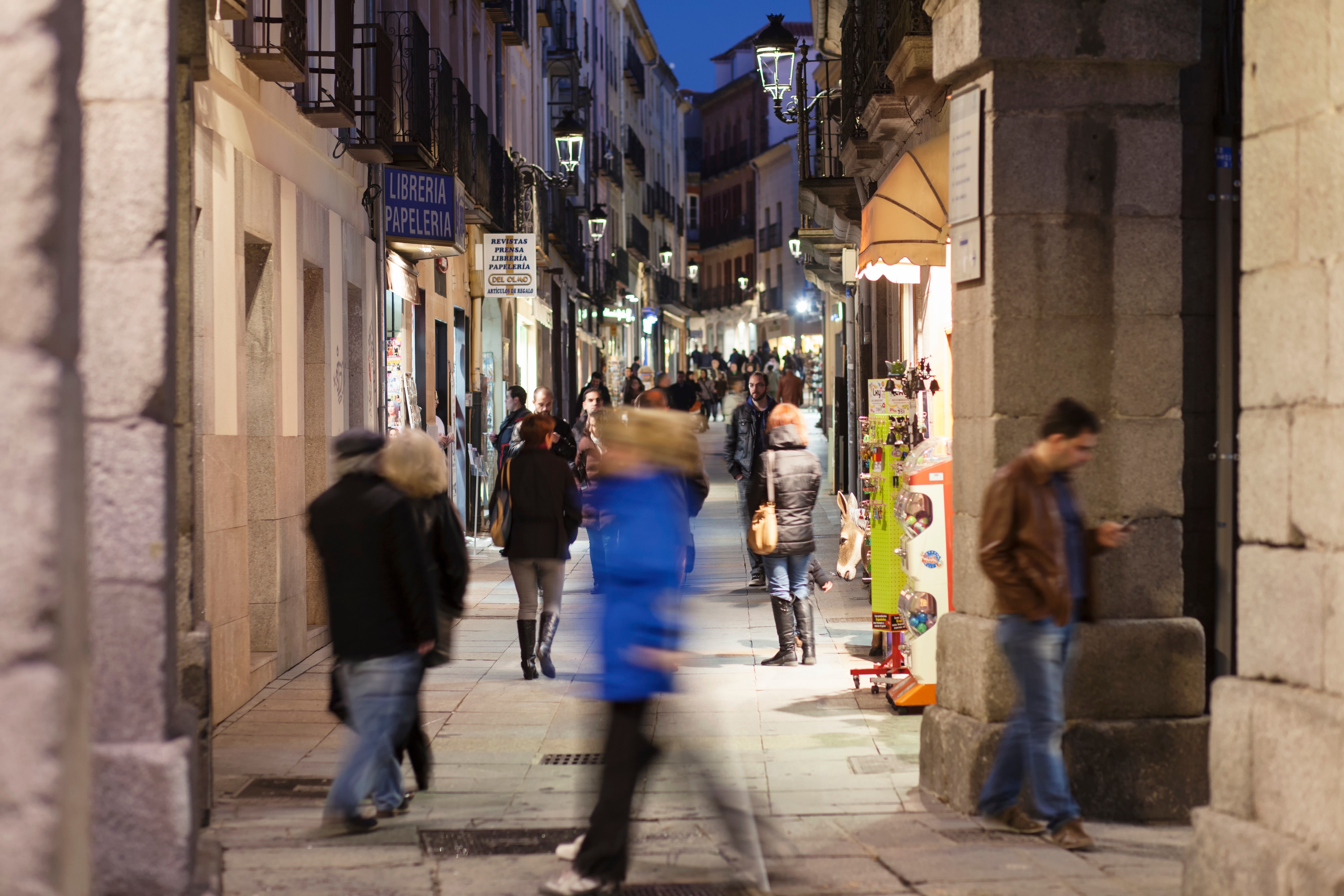
AVILA New Nightscape Masterplan by AUREOLIGHTING, Ávila, Spain
For architects and urban planners, these figures represent a massive, underserved demographic. If a city’s economy relies on billions of dollars generated between 6 PM and 6 AM, the physical environment must reflect that value.
Supporting this economy requires moving beyond surviving the night and toward thriving in it. However, the experience of the 24-hour city is not universal; it is also deeply shaped by gender and identity. For women, non-binary individuals and the LGBTQ+ community, the second half of the day often brings a heightened negotiation with the built environment — that is, higher alert. True nighttime urbanism must, therefore, prioritise inclusive infrastructure that goes beyond basic illumination to address perceived and actual safety.
This means designing well-lit transit hubs for the 3 AM nurse, but also ensuring those hubs have “eyes on the street” and clear lines of sight to reduce the feeling of isolation. It involves creating 24-hour third spaces that offer refuge and utility for shift workers and students alike.
For the LGBTQ+ community, nighttime urbanism is also about preserving and protecting queer space. As many traditional LGBTQ+ venues face closure due to rising rents, urban planning must moderate to ensure these safe havens are integrated into the city’s permanent fabric, rather than pushed to the dark, industrial periphery.
From “Daytime Bias” to Architectural Agency
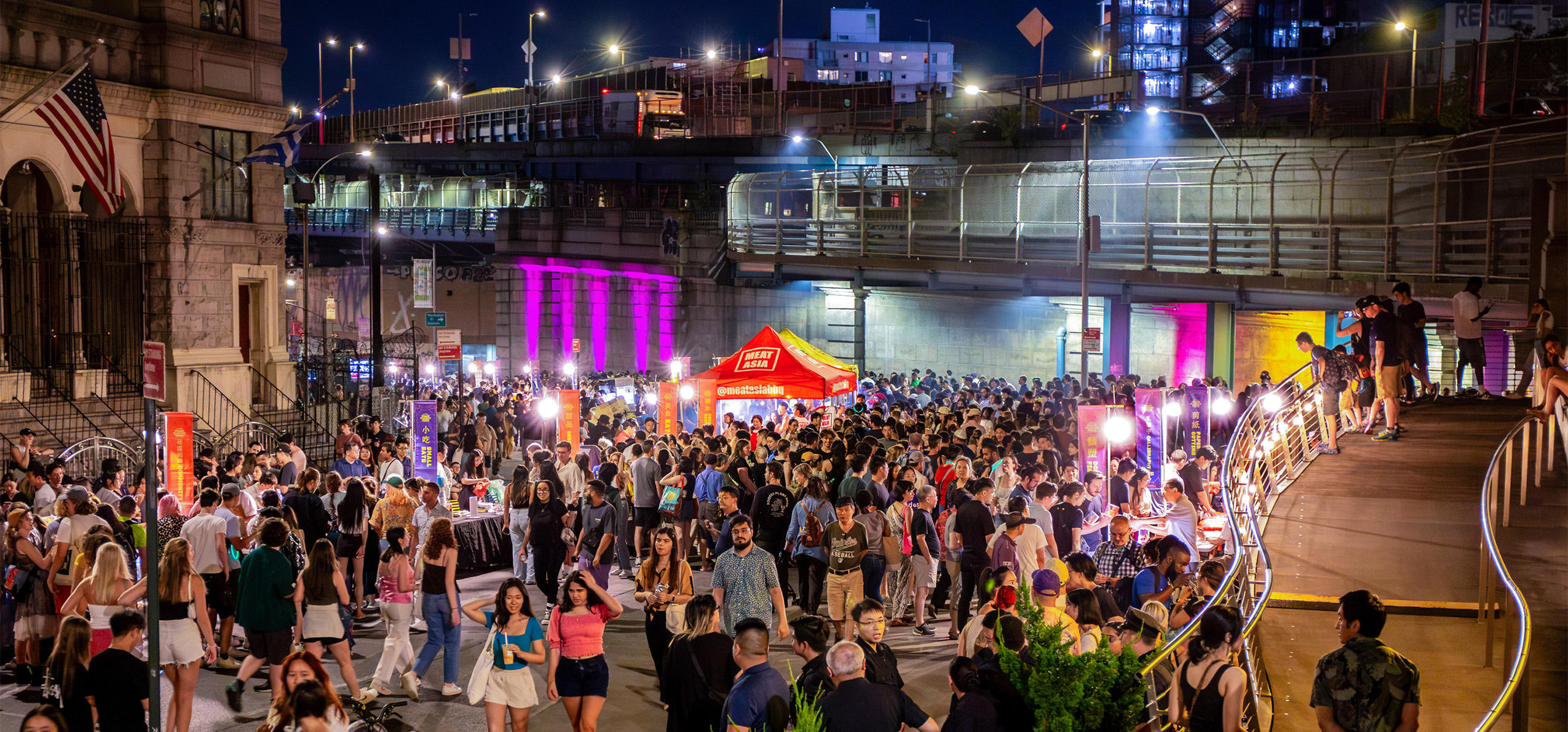
Chinatown Night Market by di Domenico + Partners, New York City, New York
As designers, our professional development is currently inhibited by a pervasive daytime bias. Throughout our education and practice, we are taught to prioritize the aesthetic and functional properties of the built environment under the sun. We render buildings for noon-day clarity, study shadow diagrams for solar gain, and conceptualise masterplans as static, 9-to-5. Even when we personally admire the night city, our representational tools (and by extension, our design instincts) tend to treat the night as a binary off switch rather than a dynamic, distinct design phase. We must face the fact that our current architectural toolkit is largely “solar-centric.” If we only visualize space through the high-contrast lens of daylight, we basically blind ourselves to 50% of the city’s actual operational life.
However, we are at a critical tipping point. As the 24-hour economy becomes a foundational pillar of productivity, and as our climate crisis necessitates more robust adaptation, the night is re-emerging as a frontier for architectural innovation. As daytime temperatures in urban heat islands reach extreme levels, the nighttime use of parks, plazas, and transit hubs becomes a necessary adaptation to keep cities livable.
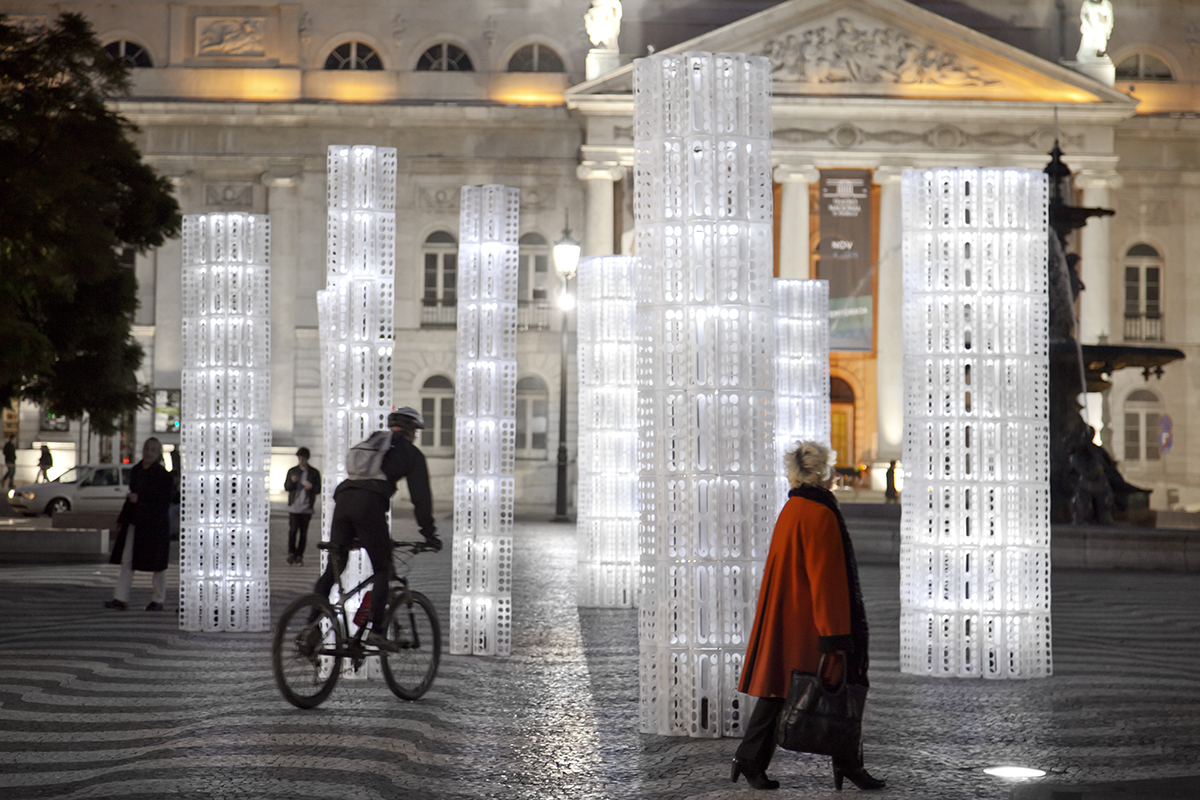
Frozen Trees by LIKEarchitects, Lisbon, Portugal
We can see the early seeds of this shift in contemporary practice, beginning with the power of tactical activation and modularity.
For example, the Chinatown Night Market in New York shows that nighttime infrastructure does not require massive, permanent construction to succeed. By using a tailored, modular layout for vendor stations and infrastructure, the design team successfully transformed an underutilised plaza into a 24-hour economic engine. This project proves that flexible, human-centric design can successfully invite foot traffic during previously dead hours, showing how we can make our cities more welcoming and accessible by simply reconsidering the temporal choreography of existing civic space.
Beyond temporary activations, we must also explore the potential of atmospheric typology and material innovation. Projects like Frozen Trees in Lisbon and the Open-Air Market in Bangkok challenge the permanence of architectural form. The former uses temporary, ethereal lighting to transform a standard civic square into a sensory nighttime landscape. At the same time, the latter elevates the traditional tent typology into a fixed, semi-permanent structure that accommodates changes in commercial events.

Open-Air Market by STA, Bangkok, Thailand
Also, we must scale these interventions to the systemic level, as shown by the Ávila New Nightscape Masterplan in Spain. This project represents a necessary change in how we view urban lighting, treating light as a precious, non-renewable resource — much like water or energy. By balancing the complex requirements of tourism, economic activity, and safety with the essential ecological need to reduce light pollution and restore the visibility of the stars, the project frames architecture not as a static object but as a dynamic system that intervenes among human experience, economic necessity, and environmental integrity.
So, to design for the 24-hour city, we must abandon the copy-paste approach of daytime planning and instead adopt a nighttime lens: one that prioritizes the sensory experience of the 3 AM nurse, the ecological impact of our light footprints, and the social equity of our public spaces. This requires a new commitment to “night-rendering,” modelling the city as it truly is: a complex, layered and perpetually active organism.
The judging process for Architizer's 14th A+Awards is now underway. Subscribe to our Awards Newsletter to receive updates about Public Voting, and stay tuned — winners will be announced later this spring.