
The judging process for Architizer's 14th A+Awards is now underway. Subscribe to our Awards Newsletter to receive updates about Public Voting, and stay tuned — winners will be announced later this spring.
Rooftops are not new territory in architecture. Historically, they’ve hosted bars, gardens and pools, giving us a much-needed place to step out and take in the view (whenever there’s a good enough view to be taken in, that is).
In this collection, however, the rooftop takes on a more deliberate role, becoming part of the spatial idea from the start and shaping how people move, gather and spend time within the building.
Some are designed as paths you follow. Others extend daily life upward in unexpected ways. A few even rethink what a roof actually is. But taken together, these eight projects show how a familiar element can do far more than offer a stunning view.
Aruma Split Garden
By RAD+ar ( Research Artistic Design + architecture ), Indonesia
Project of the Year, 13th Annual A+Awards
Jury Winner, Restaurants (L > 1000 sq ft), 13th Annual A+Awards
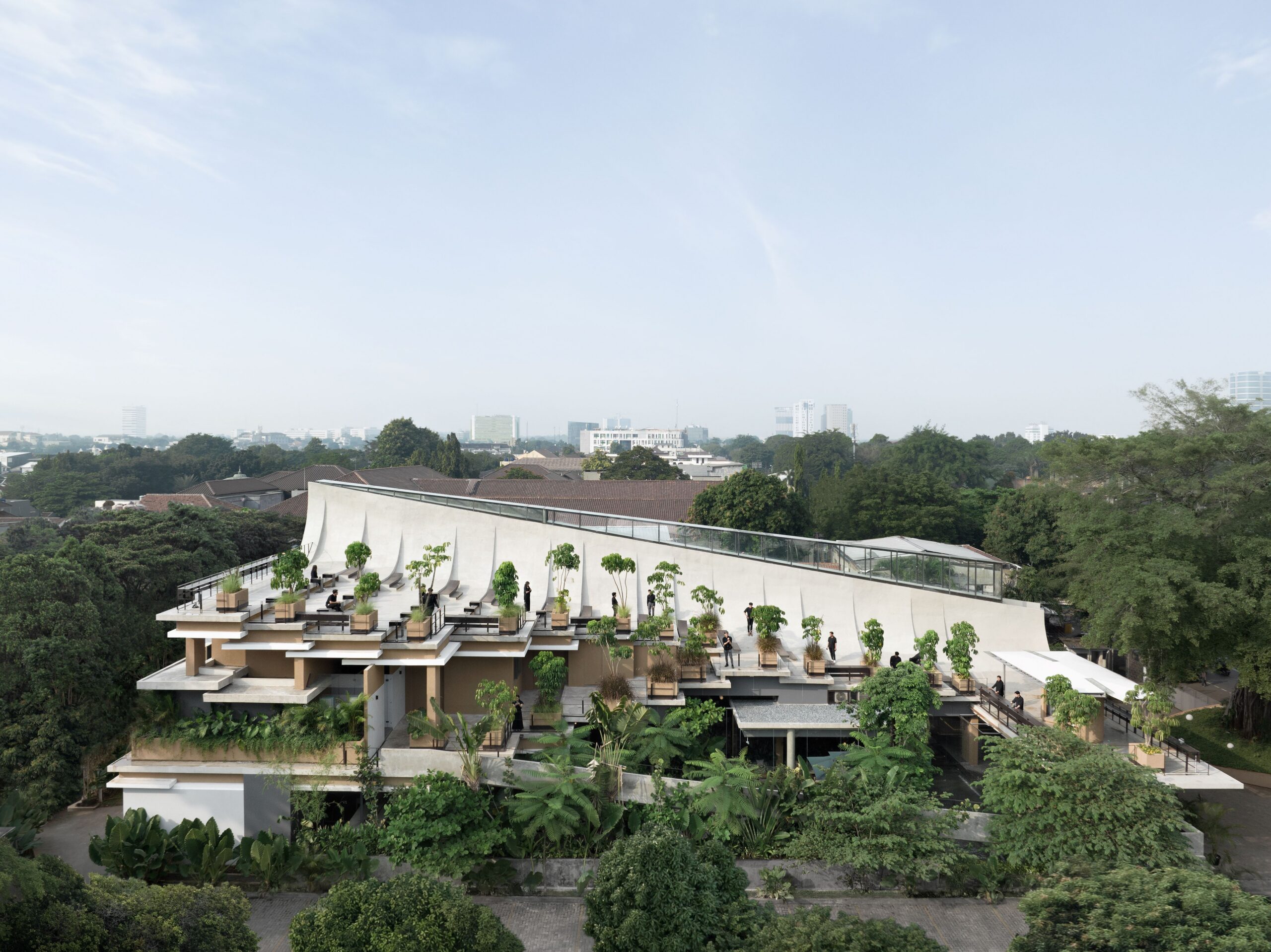
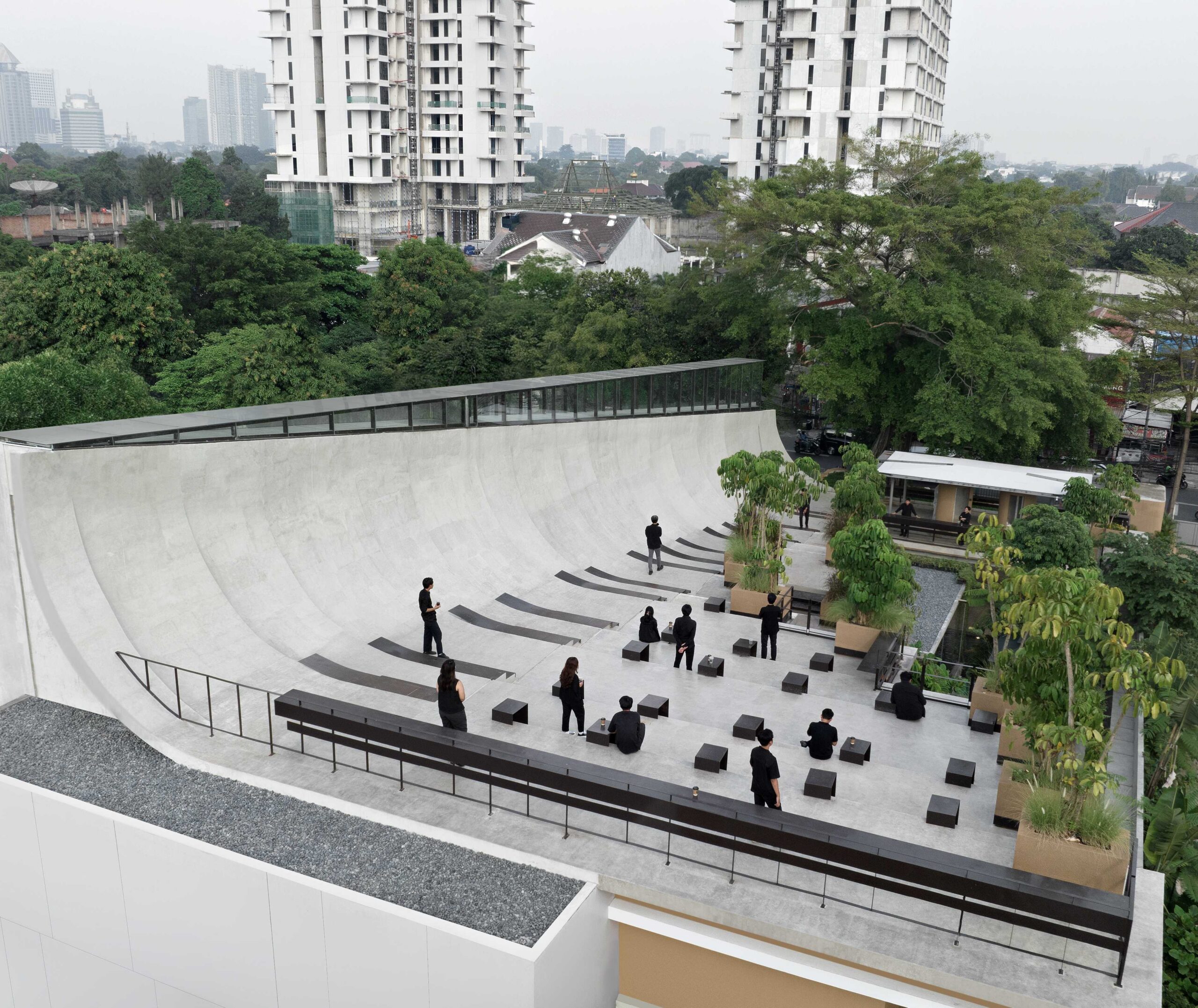 In cities where every square meter counts, this project starts by questioning the typical stacked floor. Aruma Split Garden breaks the volume into shifting levels that move around existing trees. Floors step and overlap, connected by diagonal paths that guide visitors through restaurants and a mezzanine bar.
The rooftop is where everything opens up. A beer garden stretches across it, but it does not feel like a final destination. It continues the same movement, the same greenery, the same atmosphere. You arrive gradually, already part of it. By extending the activity upward, the roof becomes an active public layer rather than leftover space.
Bienvenüe – the new headquarters of RATP Habitat in Paris
By Atelier du Pont, Paris, France
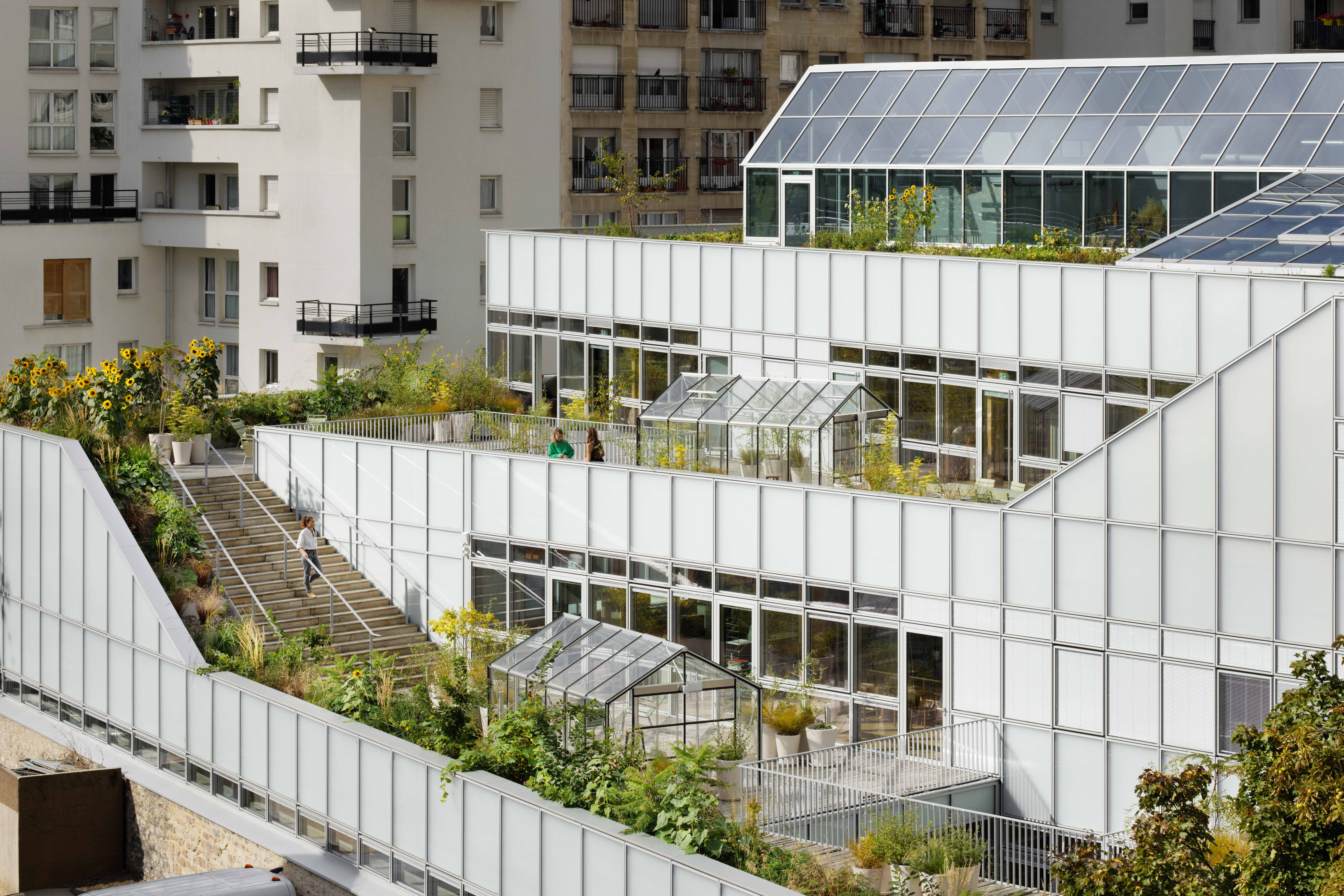
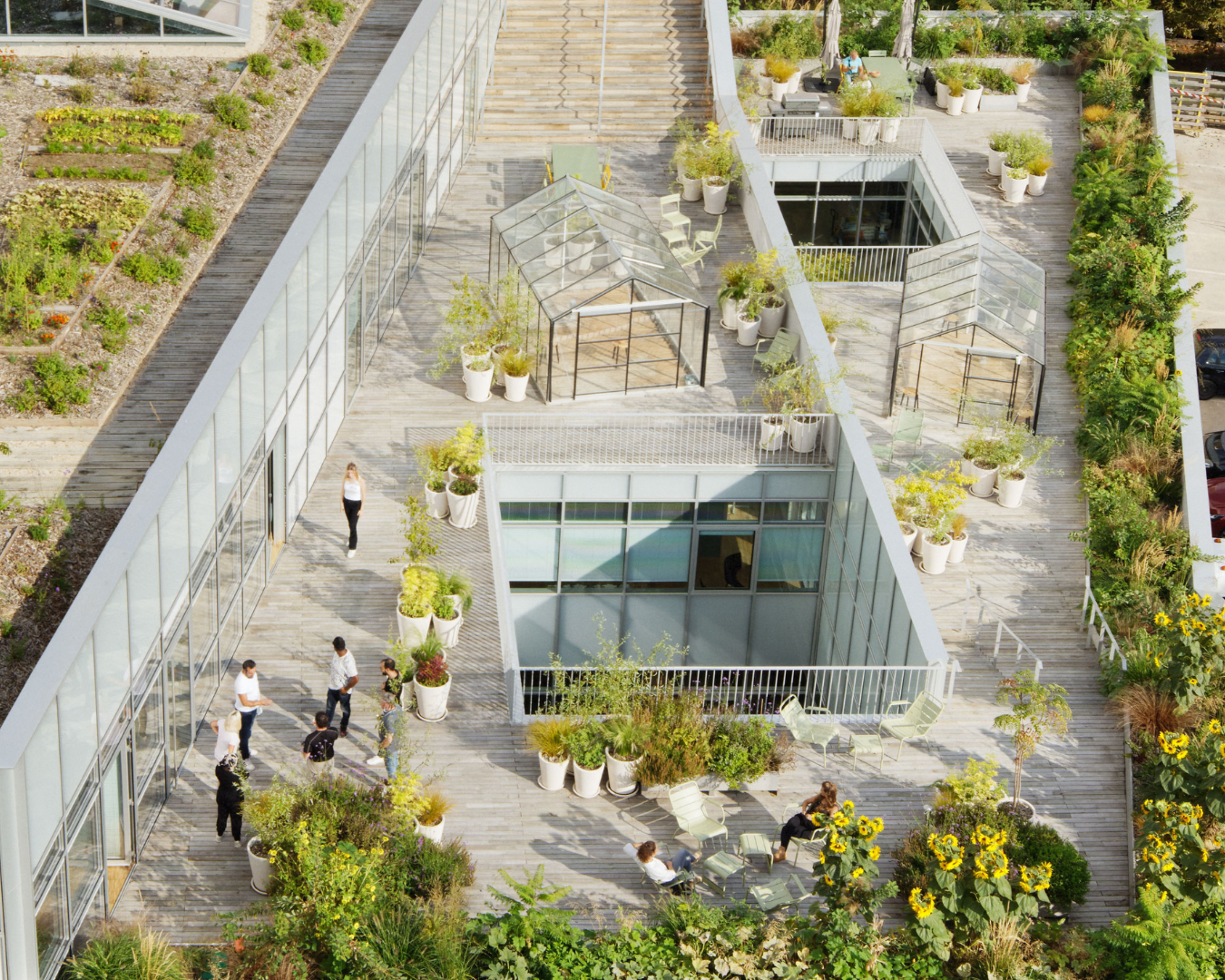 In a dense Parisian block, this project gives the roof back to daily life. Built across a fully occupied ground footprint, the building shifts its open space upward. A series of stepped terraces turns the rooftops into places to work, meet, or step away from the desk. Stairs connect each level, allowing movement outside without returning indoors.
The uppermost roof becomes a vegetable garden, while lower levels host seating, small greenhouses and informal work areas. A timber structure keeps construction light and precise. Inside, layouts stay flexible. And above, the rooftops carry the rhythm of the workplace.
280 Art Boulevard
By Zien, São Paulo, Brazil
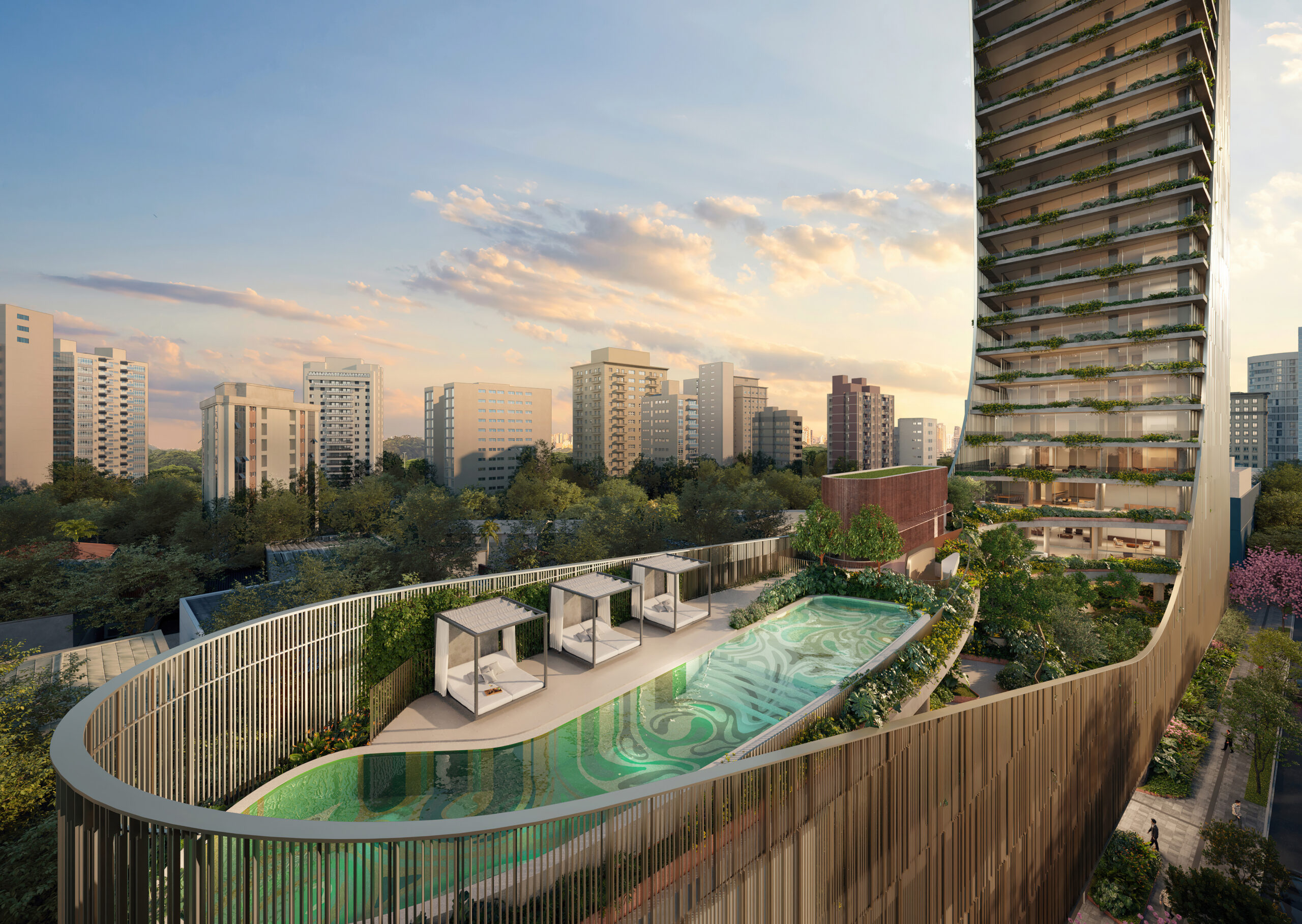
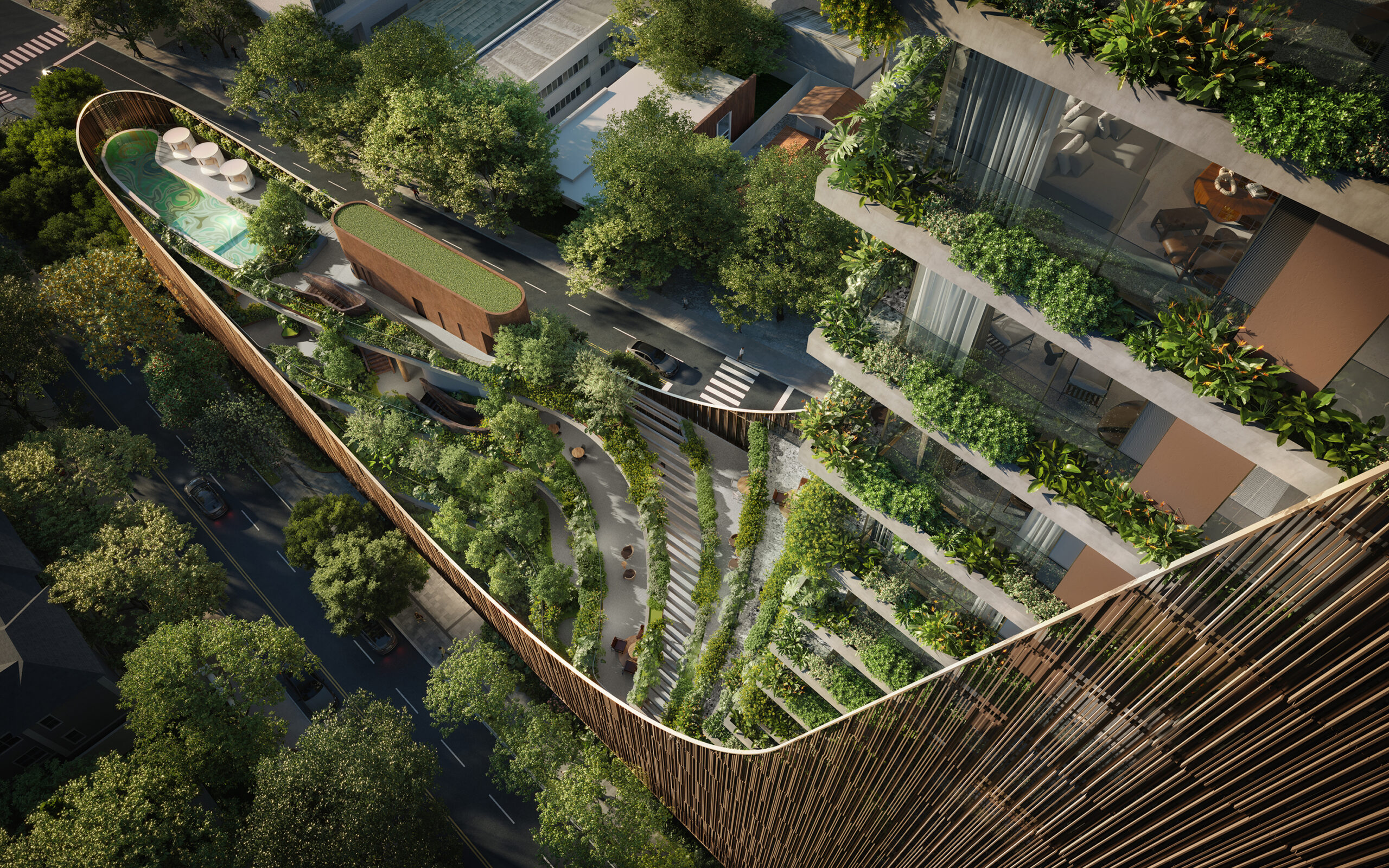 Set between two contrasting urban fabrics, this tower responds with a changing geometry that widens, narrows and opens again. This creates a central canyon and a series of stepped terraces that carry planting upward through the building.
The rooftop grows out of this system. It is shaped by the same curves and openings, offering views framed by the building itself rather than a single outward gaze. Structure, envelope and landscape are developed together, allowing each level to feel distinct while remaining part of one continuous form.
The Quartet – Songzhuang Z Museum
By TEAM_BLDG, Zhejiang, China
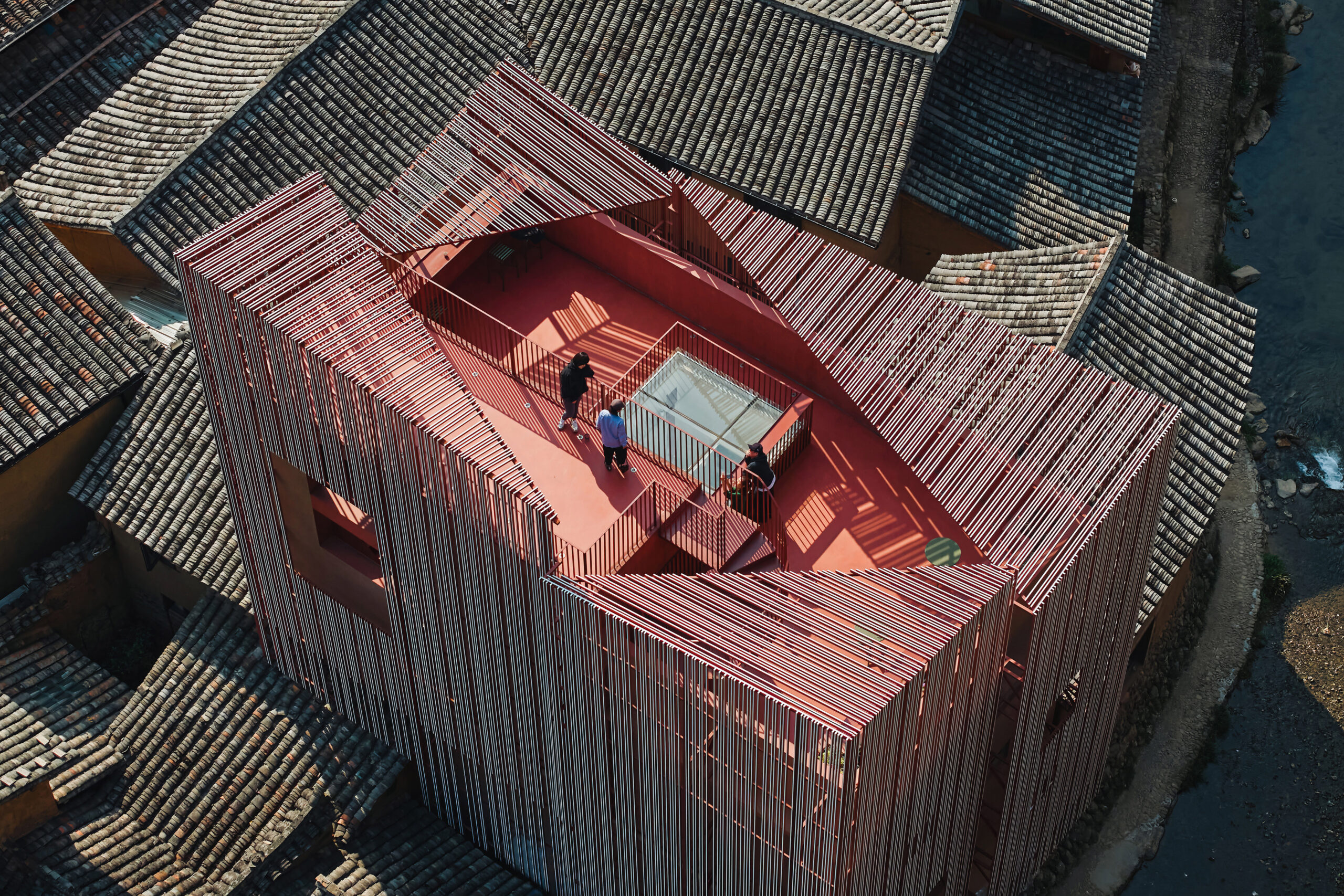
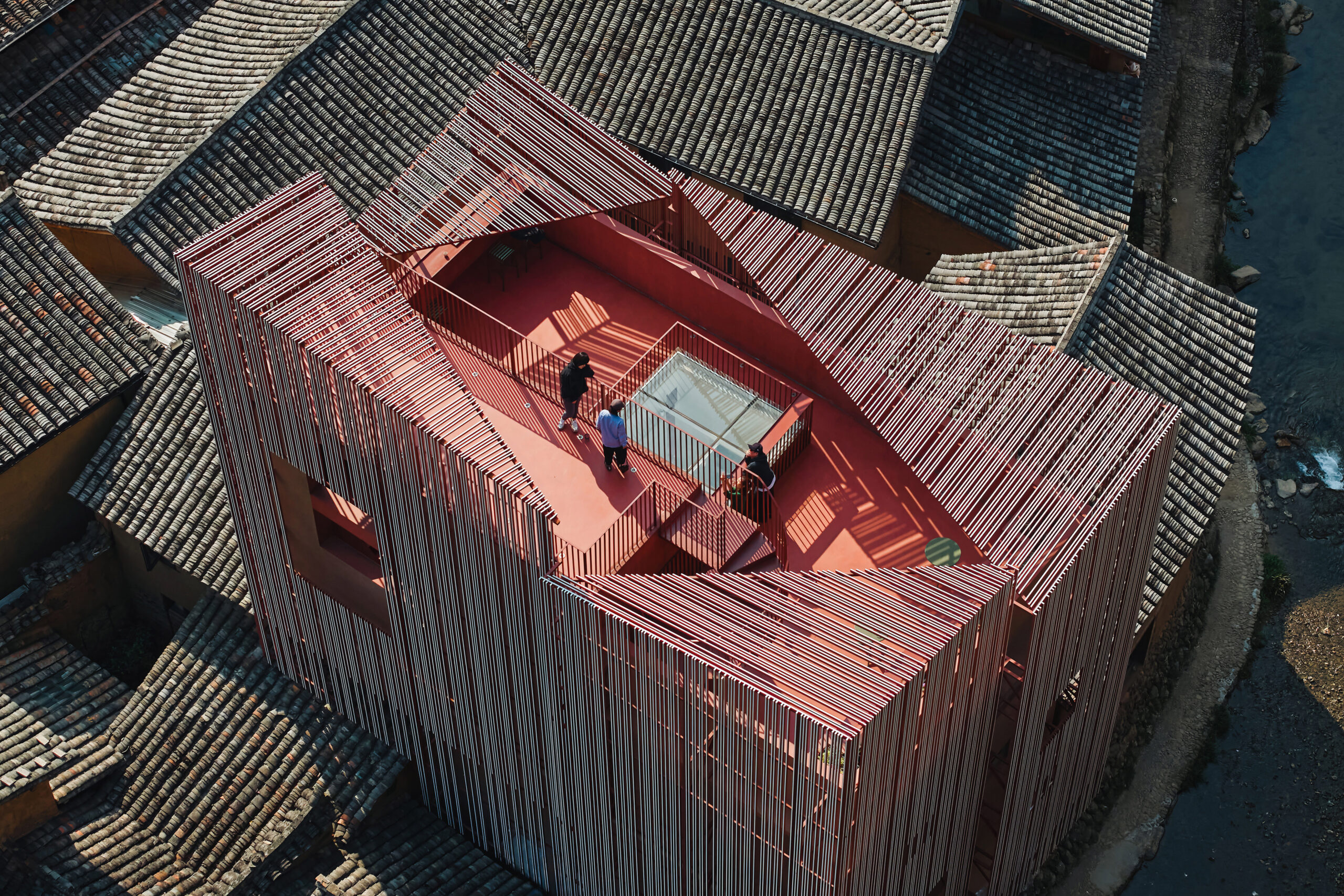
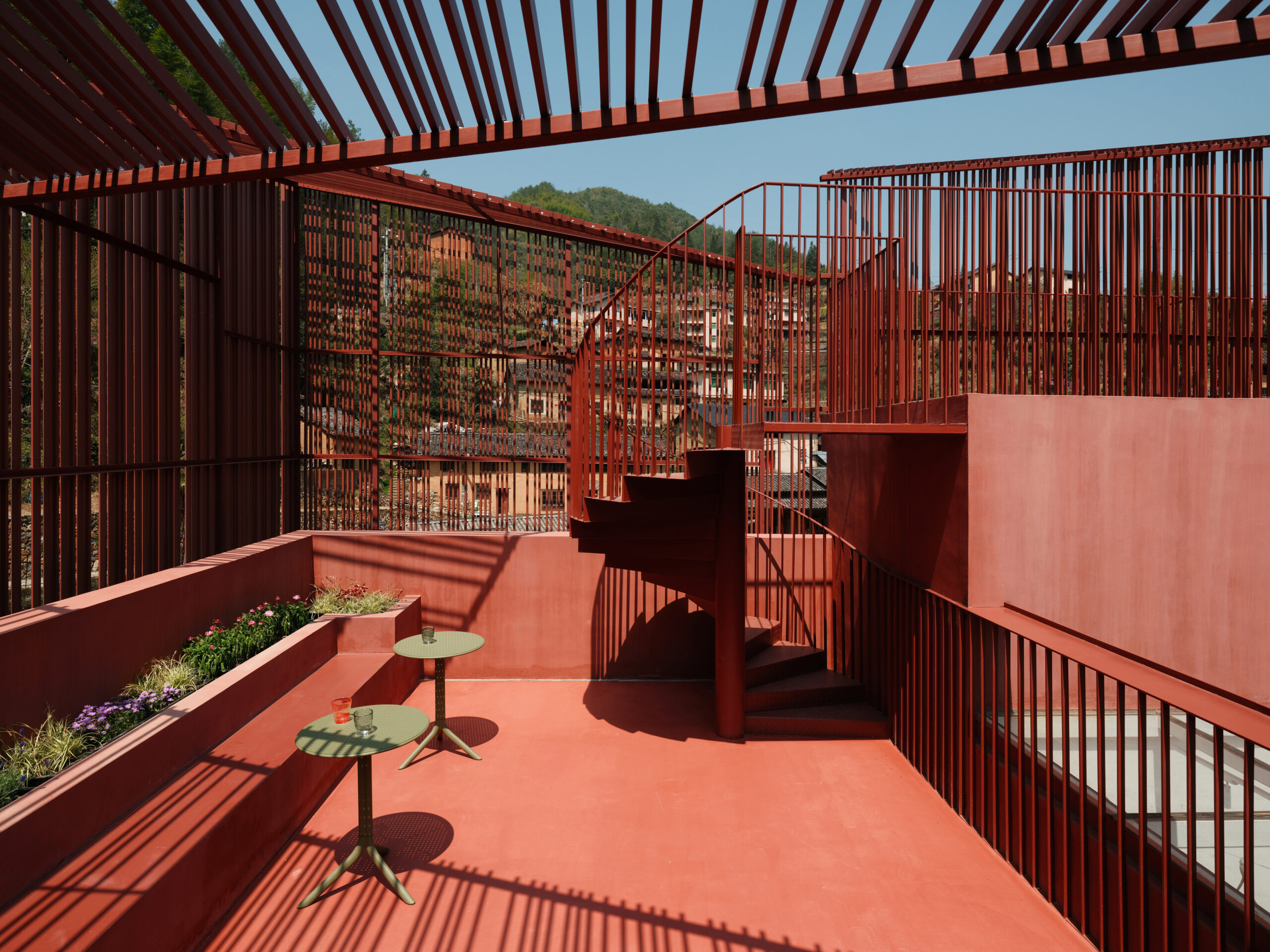 Some rooftops give you a view. This one gives you a place to stay.
Set within a 600-year-old village, the project begins with a difficult building: a concrete house that never quite belonged. Instead of hiding it, TEAM_BLDG pushes it further. The volume is split into four parts, opening gaps, carving courtyards, and, most importantly, turning the roof into a layered terrace.
As you move upward, the museum slowly shifts from enclosed galleries to open air. By the time you reach the top, there are no strict paths. Just platforms, steps and edges to occupy.
Inside, the spaces stay quiet to let the work stand out. Above, the rooftop becomes the social layer of the museum, where visitors pause, wander and reconnect with the village around them.
Beacon House
By EVEREST GROUP, Philadelphia, Pennsylvania
Jury Winner, Unbuilt Multi-Unit Housing (S < 10 floors), 13th Annual A+Awards
Popular Choice Winner, Unbuilt Multi-Unit Housing (S < 10 floors), 13th Annual A+Awards
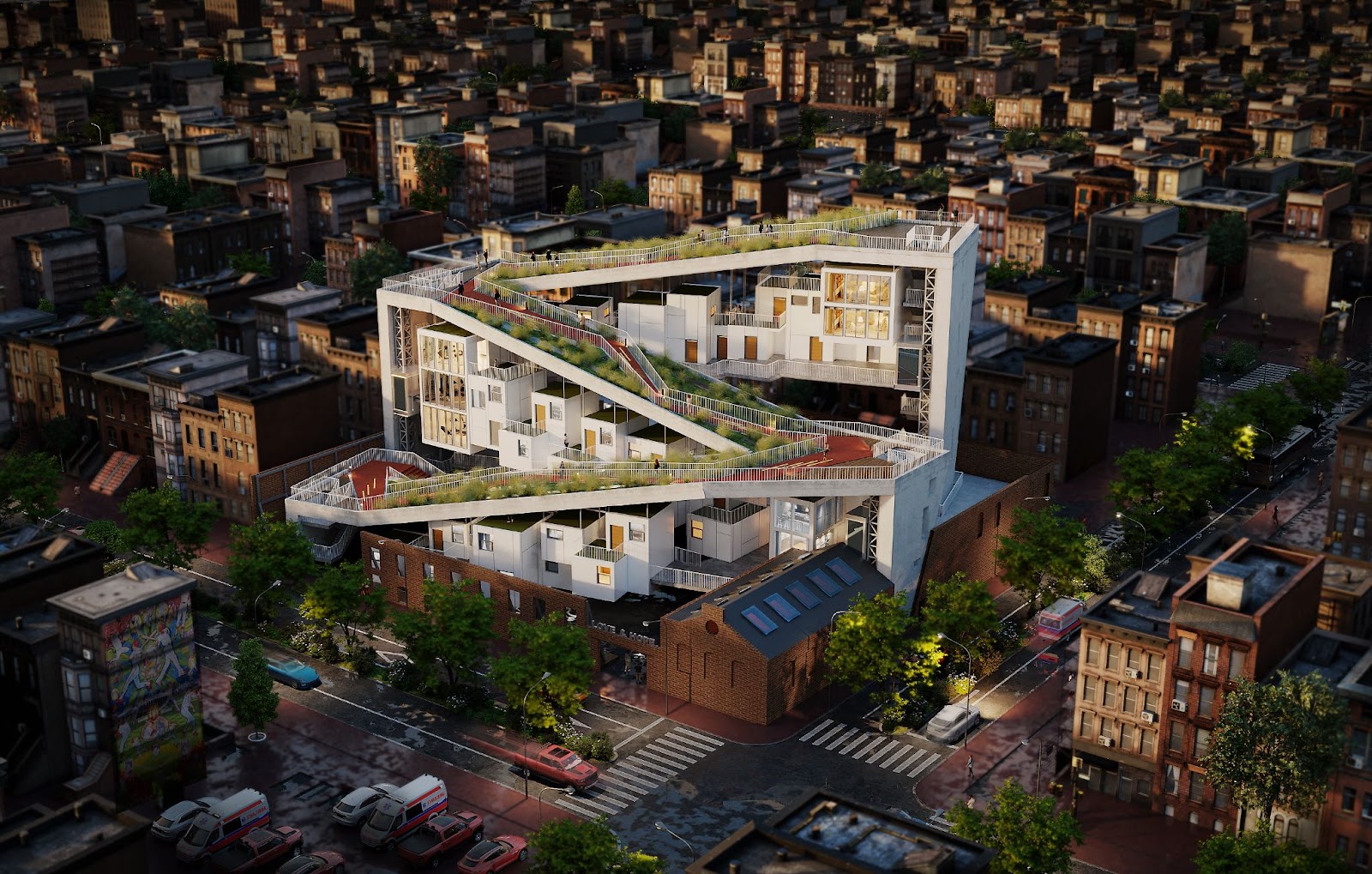
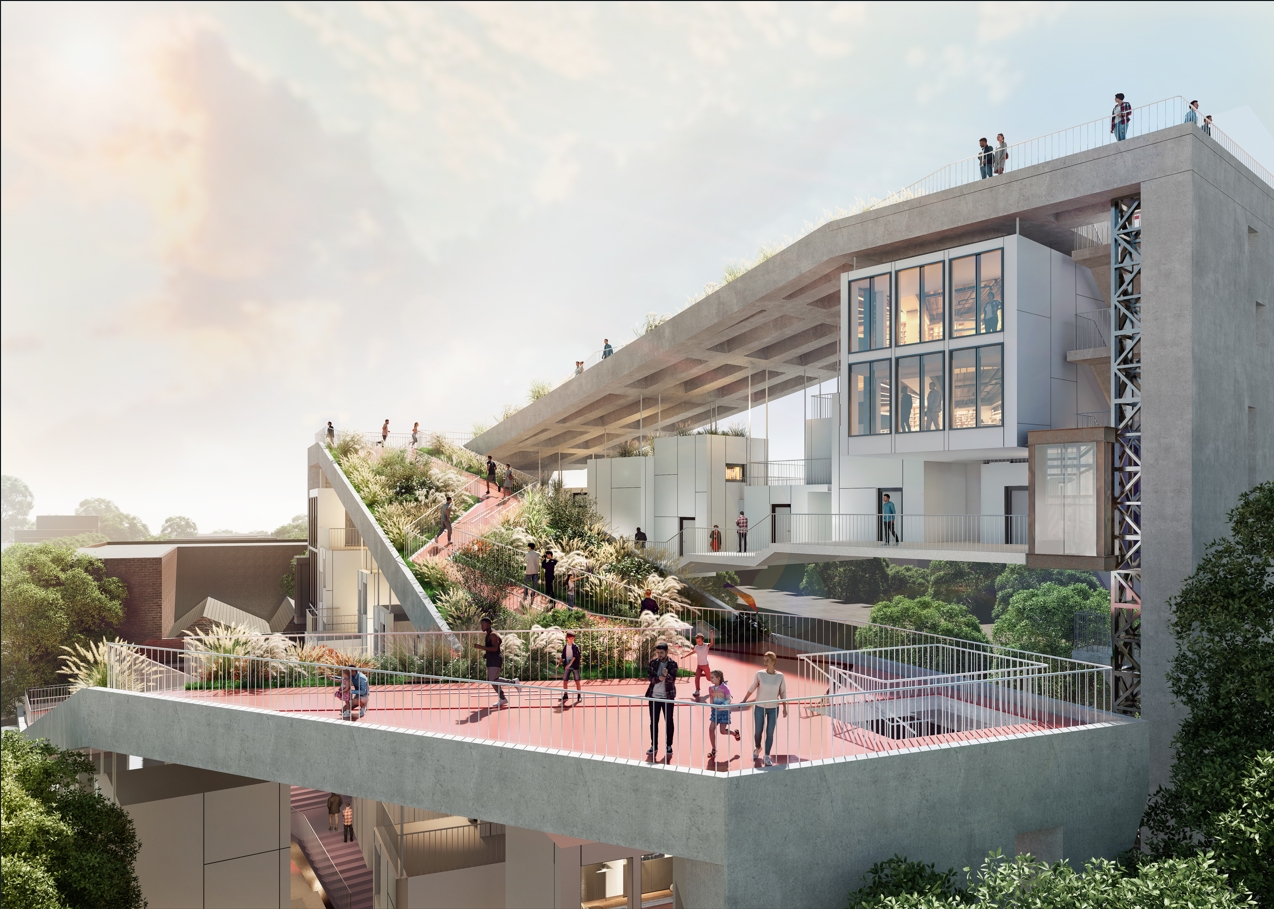 At Beacon House, the rooftop is both the journey and the destination. A continuous path begins at the ground and rises along the building, turning the act of reaching the top into a daily ritual.
Designed as transitional housing, the project responds to homelessness with more than shelter. The building twists to frame views of the Philadelphia skyline, giving residents access to a perspective often out of reach. As the path ascends, it creates moments for pause, movement and reflection.
At the top, the rooftop becomes a shared space tied to that climb, where the city is no longer distant, but part of everyday life.
Azabudai Hills
By Heatherwick Studio, Tokyo, Japan
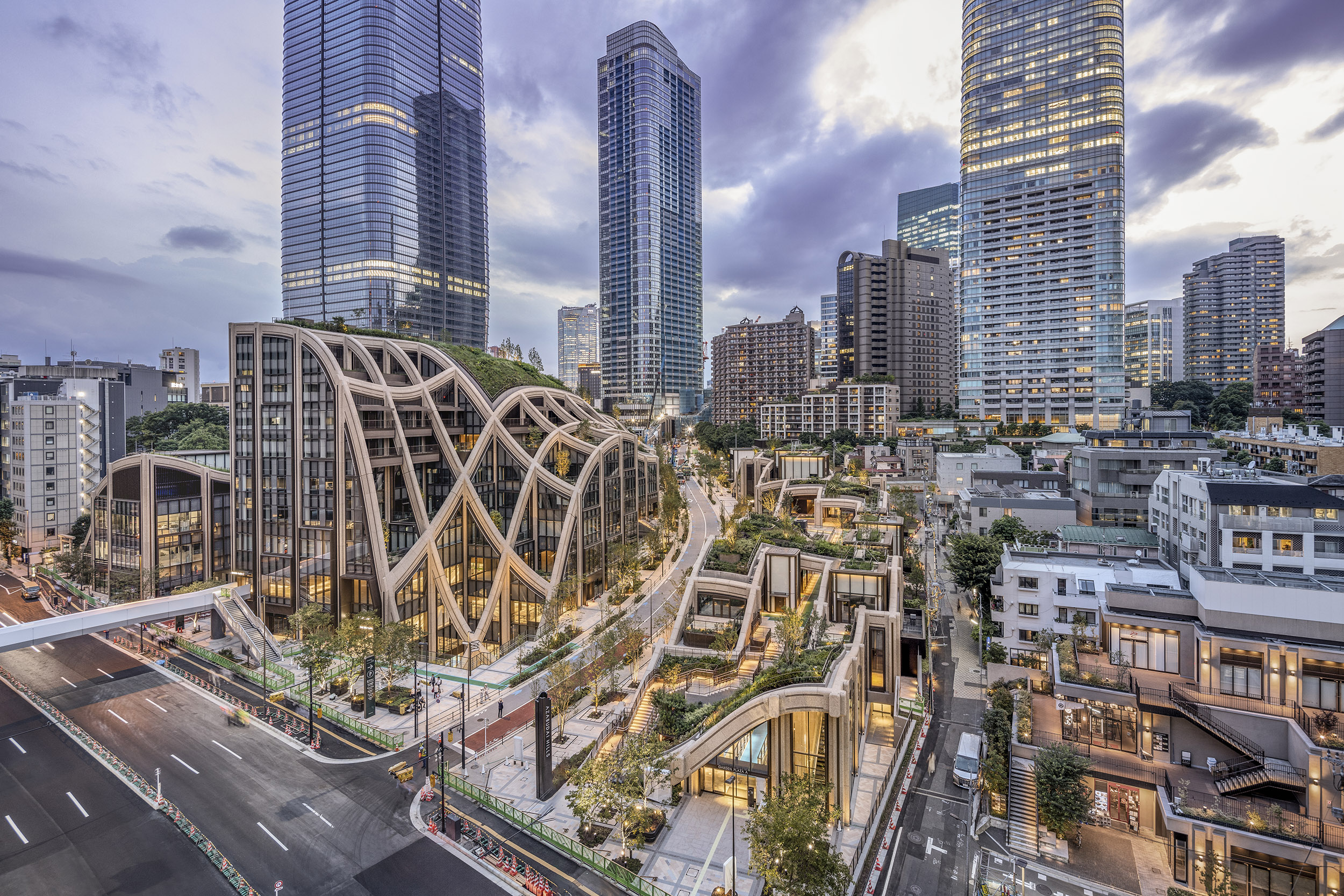
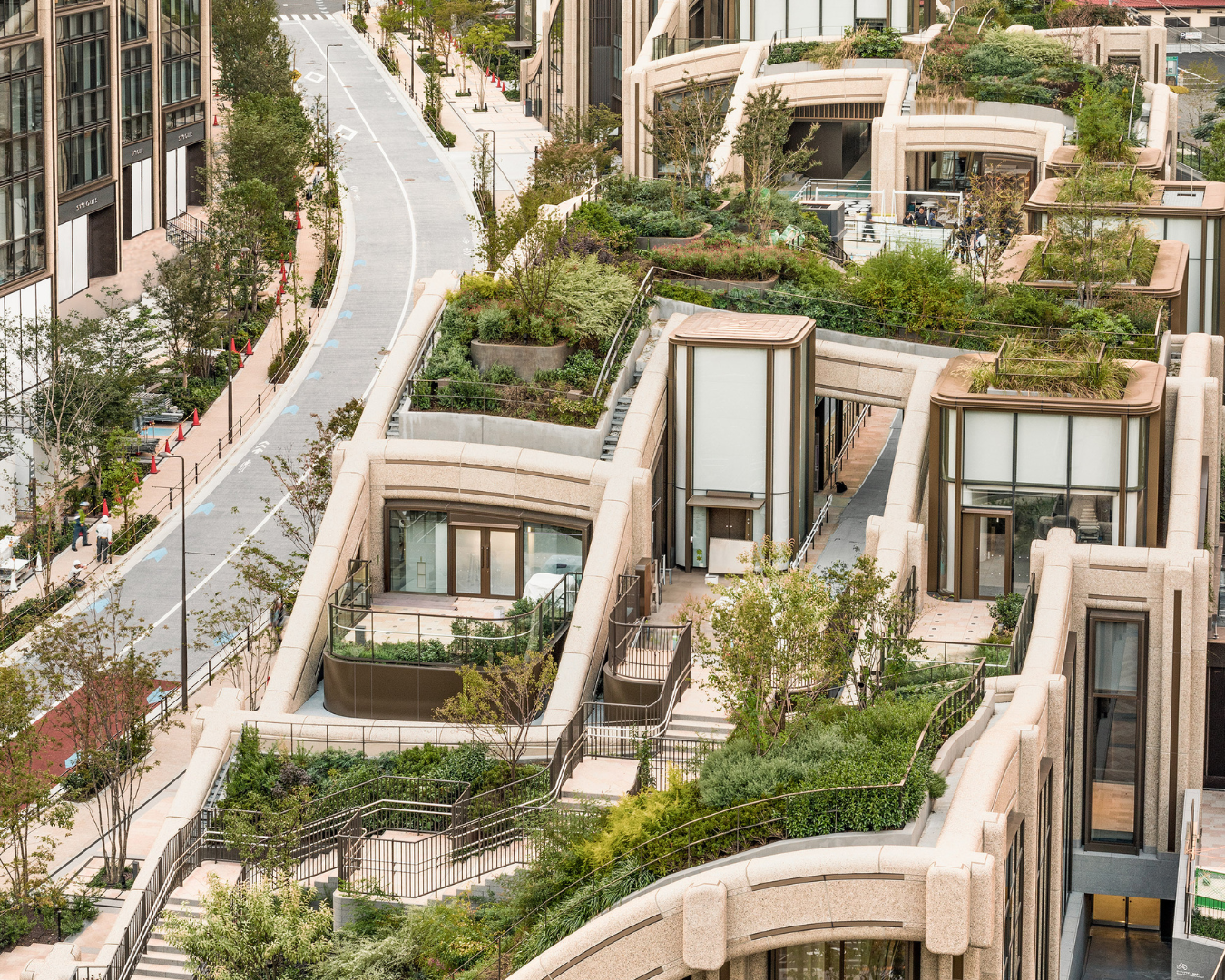 At Azabudai Hills, the rooftop becomes part of the ground. It rises, slopes and stretches across the district, turning the act of walking through the city into something continuous.
Set within a dense part of Tokyo, the project introduces a layered landscape that lifts greenery upward. Podium buildings are shaped like a hillside, allowing people to move across roofs as they would through a park. Paths curve and extend, connecting shops, offices and cultural spaces along the way.
Rather than stopping at the top, the rooftop keeps the city in motion, offering a new public terrain built above it.
The Pyramid of Tirana
By MVRDV, Tirana, Albania
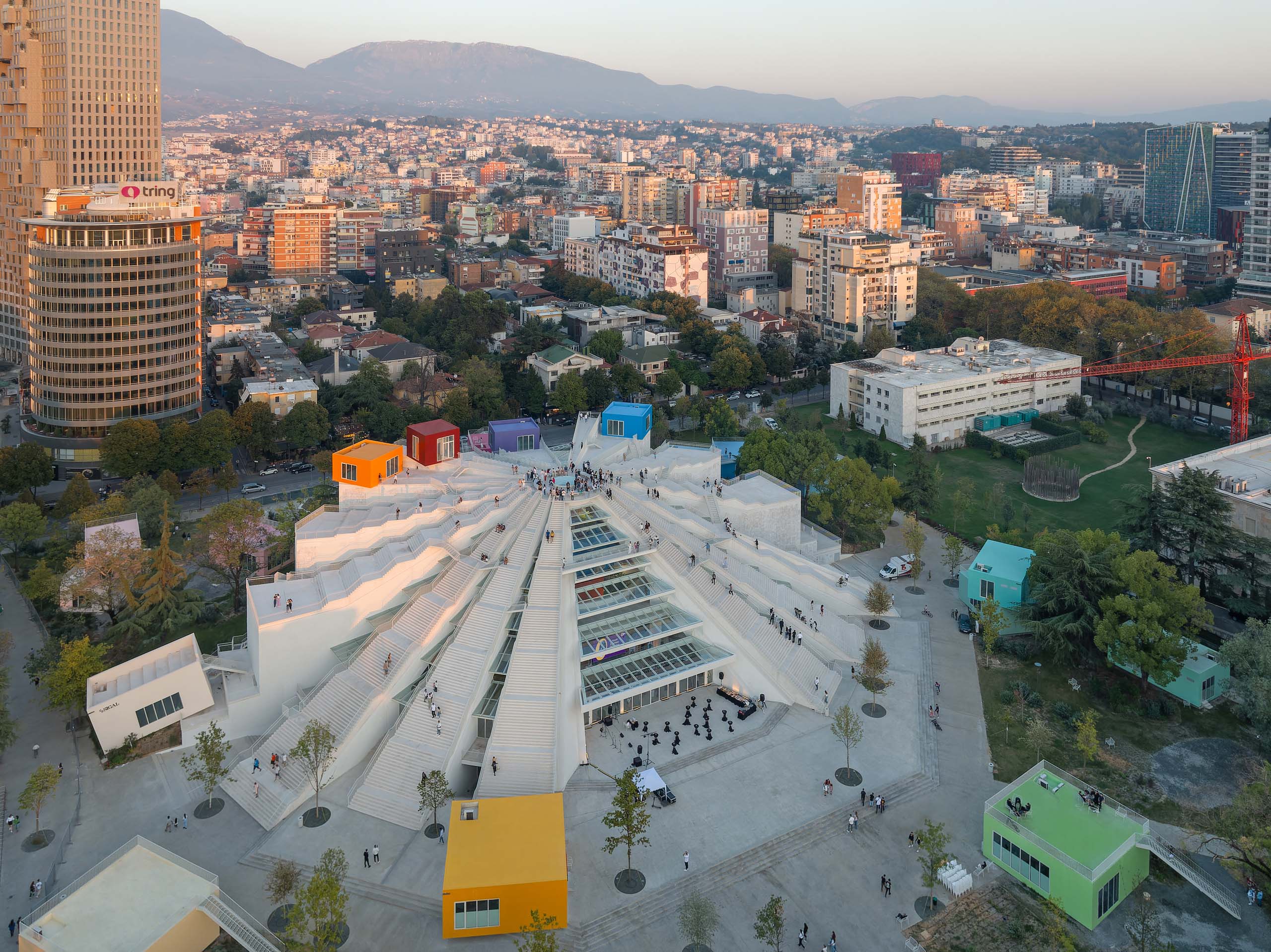
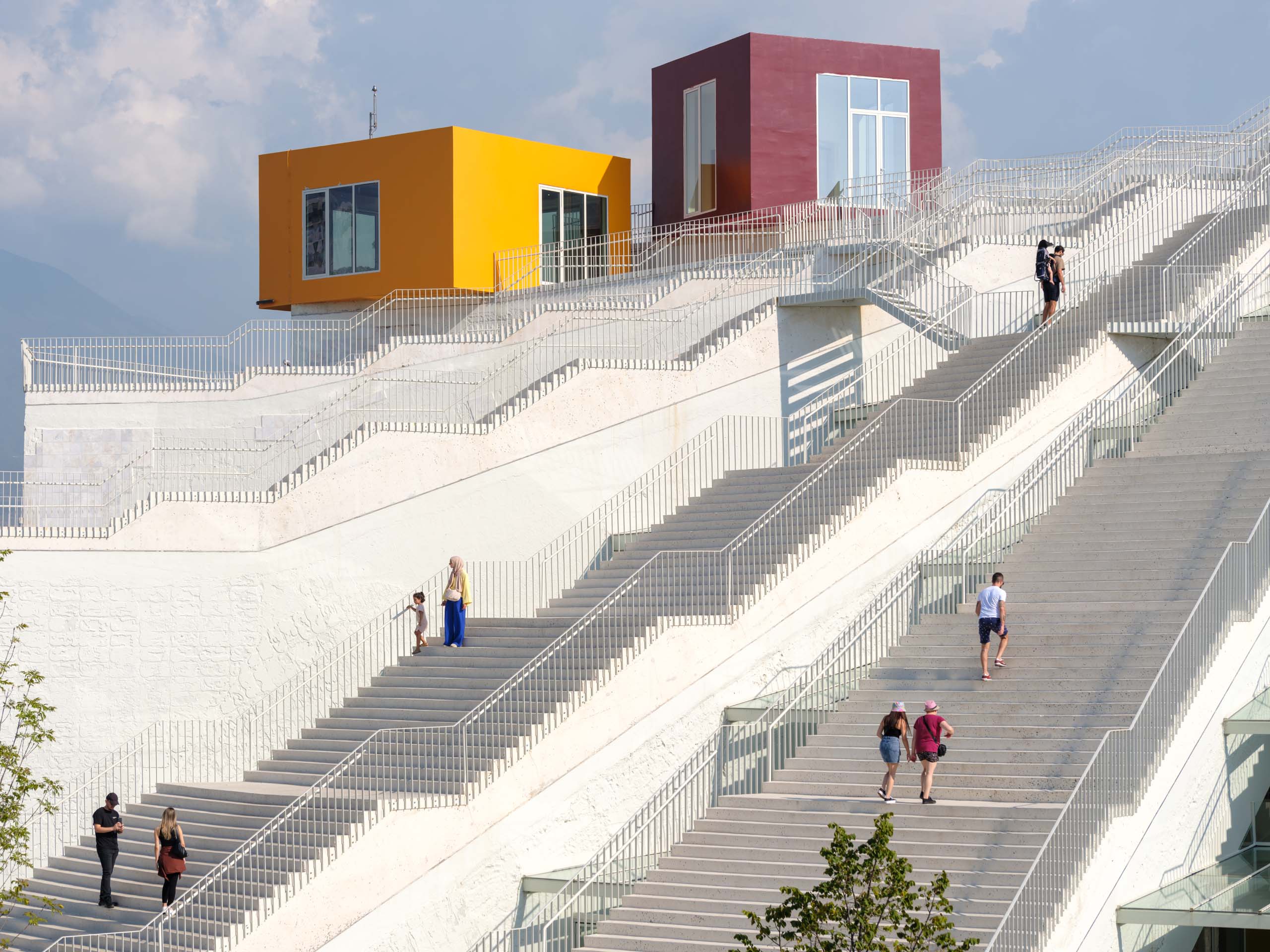 While this might not be the typical rooftop, it is still the top of a building, reached in this case through an unusual route.
Originally built as a museum for Enver Hoxha, the Pyramid stood as a closed and symbolic structure at the center of Tirana. The transformation reopens it completely, turning a once-isolated monument into a place for everyday use. Steps carved into its sloped sides invite people to climb to the top, making the rooftop part of a public path rather than a hidden surface.
Inside, colorful volumes introduce classrooms, studios and cafés within the original shell.
Von Zwischenraum zu Spielraum
By roeck architekten, Wenns, Austria
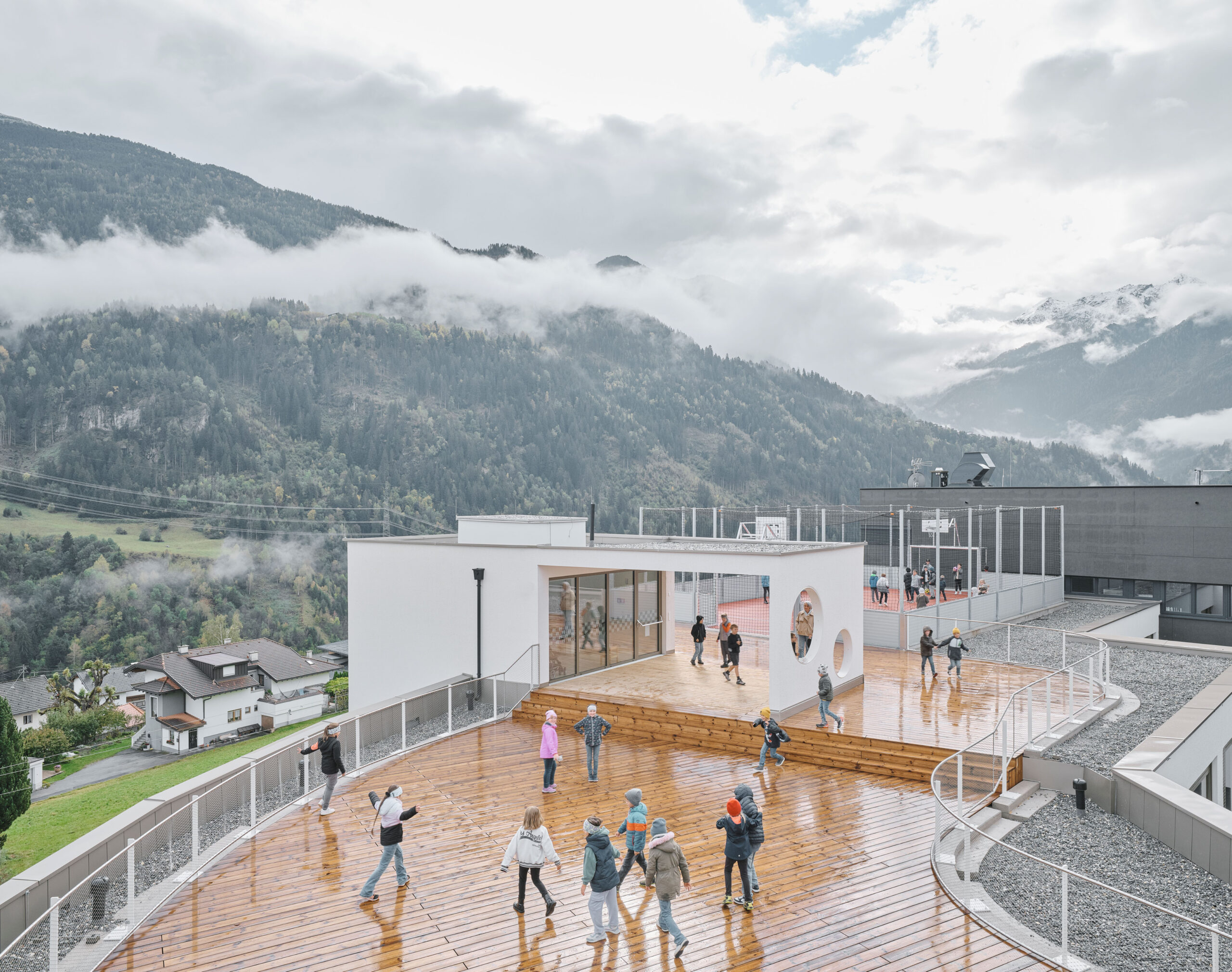
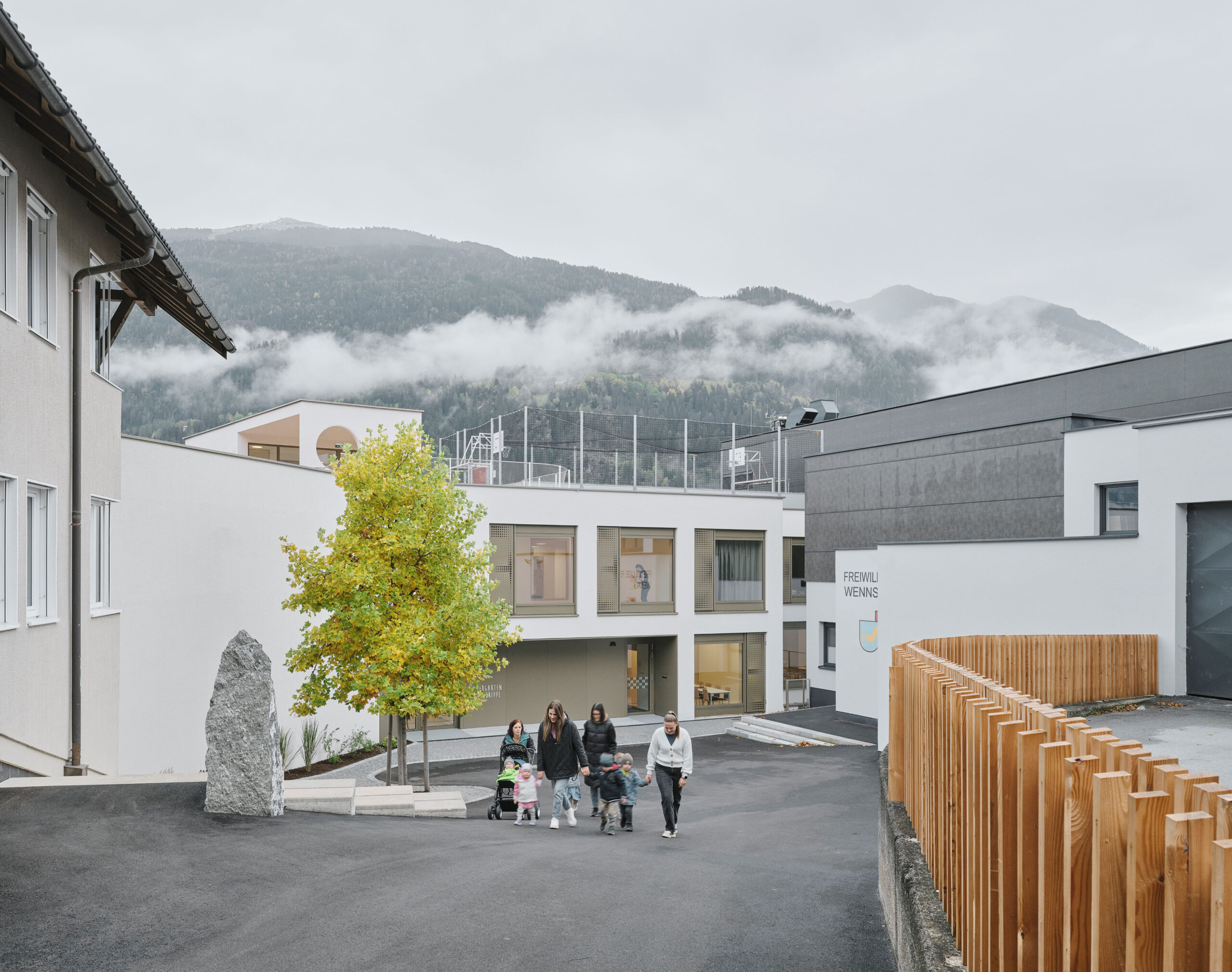 While many school rooftops stay out of reach, this one becomes part of the day.
Set within a growing educational campus, the new kindergarten fills a tight gap between existing buildings. Instead of leaving the roof unused, it is turned into a large outdoor play space. Children move up through open, accessible floors and arrive at a deck that feels like an extension of the classroom.
The curved layout follows the building’s edge, opening views toward the mountains while keeping the space contained and safe. At the top, the rooftop becomes a place to run, gather and learn outside.
The judging process for Architizer's 14th A+Awards is now underway. Subscribe to our Awards Newsletter to receive updates about Public Voting, and stay tuned — winners will be announced later this spring.
 The Quartet