Something has shifted in how architecture firms talk about technology. Three years ago, in 2022 and 2023, much of the conversation was very speculative — maybe AI will change how we design — but how? Later, a barrage of Midjourney images hit with force, and AI completely overtook the architectural tech discourse. Meanwhile, whispers about how game engines could potentially reshape visualization pipelines remained, as did the growing belief that BIM needed to evolve past its current limitations.
Now, however, the “mights,” “coulds” and “shoulds” have given way to something more urgent: a growing sense that the industry is mid-transformation, and that the architects who understand it will define what practice looks like for the next generation. It’s into this moment — charged, uncertain and alive with possibility — that the ATN Summit has taken form.
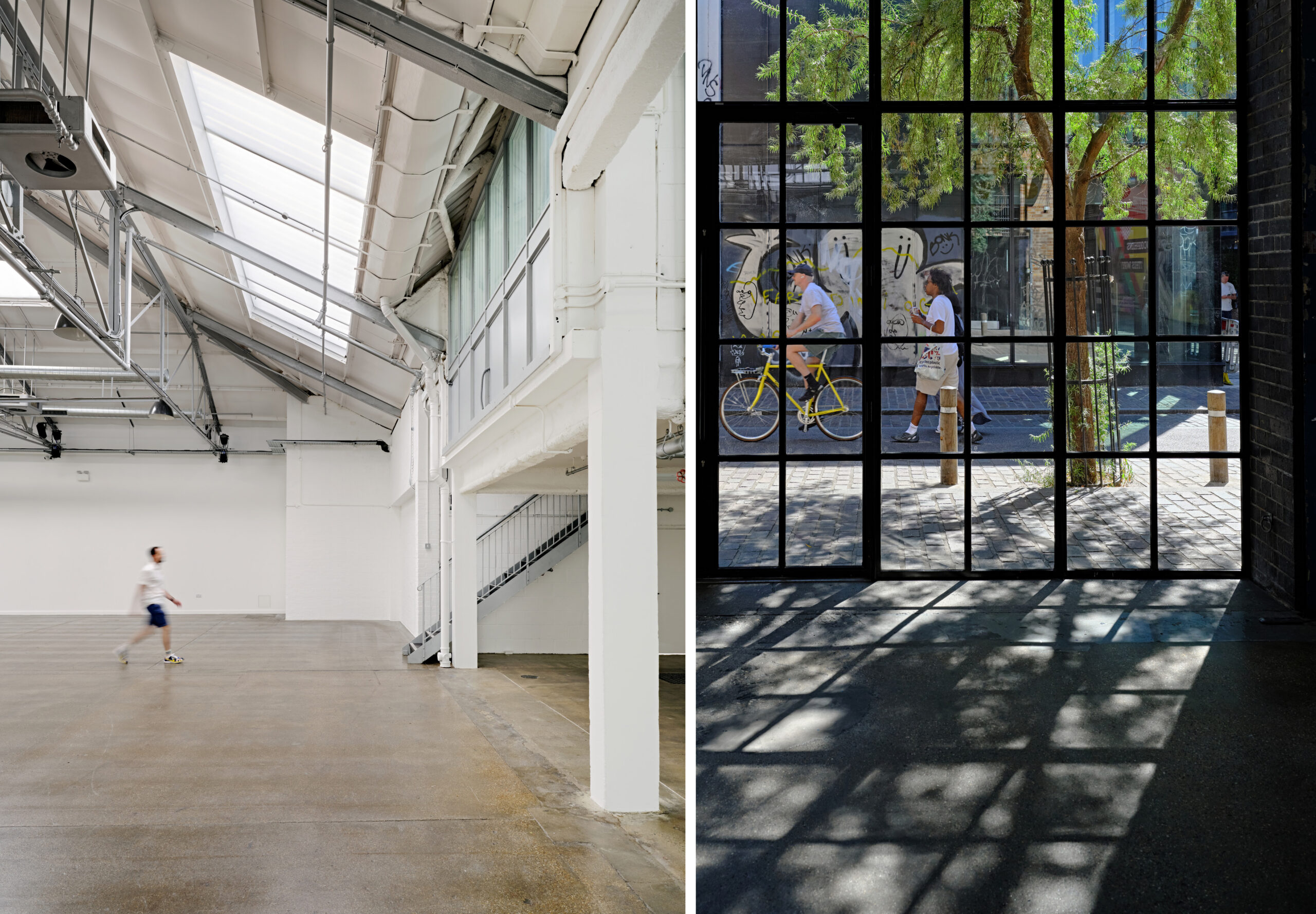
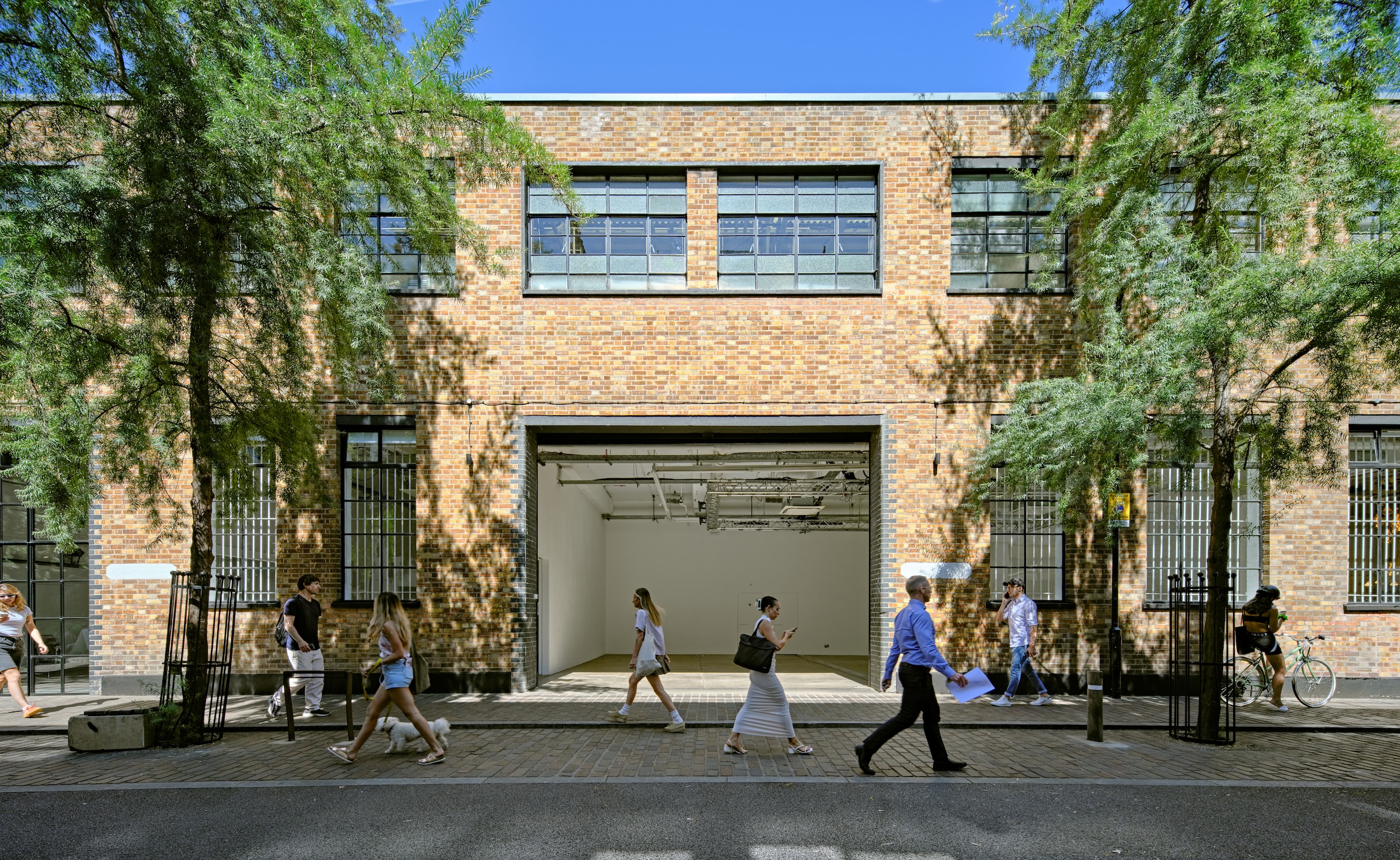
Two days, one stage, world-leading firms, and a deliberately TED-style format, the event was designed to make sure every talk earns its place in the room. The Summit is the flagship event of Archi-Tech Network (ATN): a platform founded by Oliver Thomas, a former Design Technology Manager at Bjarke Ingels Group (BIG), who has spent five years at the intersection of architecture, technology, and knowledge-sharing. It will take place at Protein Studios in Shoreditch, London, from March 18th to 19th, 2026.
From Clubhouse to Conference
 ATN didn’t begin with grand ambitions. It began, as many of the best things did, in the early days of COVID, with a podcast on Clubhouse, a chat app that briefly turned the internet into one enormous, unruly salon. “You were just in a room with Snoop Dogg talking about NFTs,” Oliver recalls, laughing, “and then Elon Musk would pop in. It was a weird moment.”
But beneath the chaos, Oliver spotted something real: a gap he’d been watching widen from his desk at BIG. “Even there, we were seeing junior, mid-level, and senior people come into the office without the digital skill set they needed to actually work in practice,” he explains. “If this is what we’re experiencing from people in New York, from Harvard — there’s clearly something missing between university and practice.”
The existing landscape wasn’t much help. On one end: formal, dry training resources. On the other: a wave of young online creators who were engaging and accessible, but sometimes missing crucial real-world grounding. Oliver saw the gap between them and decided to occupy it — teaching architecture technology from the perspective of practice, with the sensibility of someone who’d lived both worlds.
What began as a weekly podcast grew into a YouTube channel, then into courses covering Rhino, Revit, and Grasshopper. Inside, AI, and visualization — all taught from the inside out, the way Oliver had trained people within BIG itself. Then came the events. When he moved back to London and took up the role of Design Technology Manager at BIG’s London office, he could feel something else in the air: a post-COVID hunger to be in a room with other people. So he created one.
PechaKucha in the Pub was a deliberate reinvention of the architecture meetup format. In short: no hour-long talks. Instead, 20 slides, 20 seconds each, starting in a pub so people already had a drink in hand. No awkward sponsor pitches wedged into the middle. Just fast, sharp ideas and the kind of conversation that actually happens at 9pm rather than being rushed into the last beer before the last tube. Every event sold out (some within 30 minutes!). The format traveled to Copenhagen, New York, and eventually to Epic Games’ innovation lab in London.
The Summit is where all of that leads. “It’s basically a culmination of five years of doing ATN,” Oliver says (hence the name, Summit). “These little meetups have evolved into the big leagues.”
What Makes This Different
 Architecture conferences have a reputation. There’s the trestle-table sponsor zone, the clash-detection pitch nobody asked for, the keynote speakers who’ve given the same talk three times already this year. The ATN Summit has been designed, consciously and with some glee, as an antidote to all of it.
The format is TED-style: 20–25 minute talks, back to back, one stage, no competing streams. (“I hate when you have multiple stages and you want to see two people but you can’t,” Oliver says.) The sponsor zone has been reconceived as the Innovation Pub — high-top bar tables, open conversation, and a beer tap in the afternoon. The kind of space where you sit down next to someone building the next generation of BIM software and actually want to hear what they’re working on, as if you were sitting in a pub.
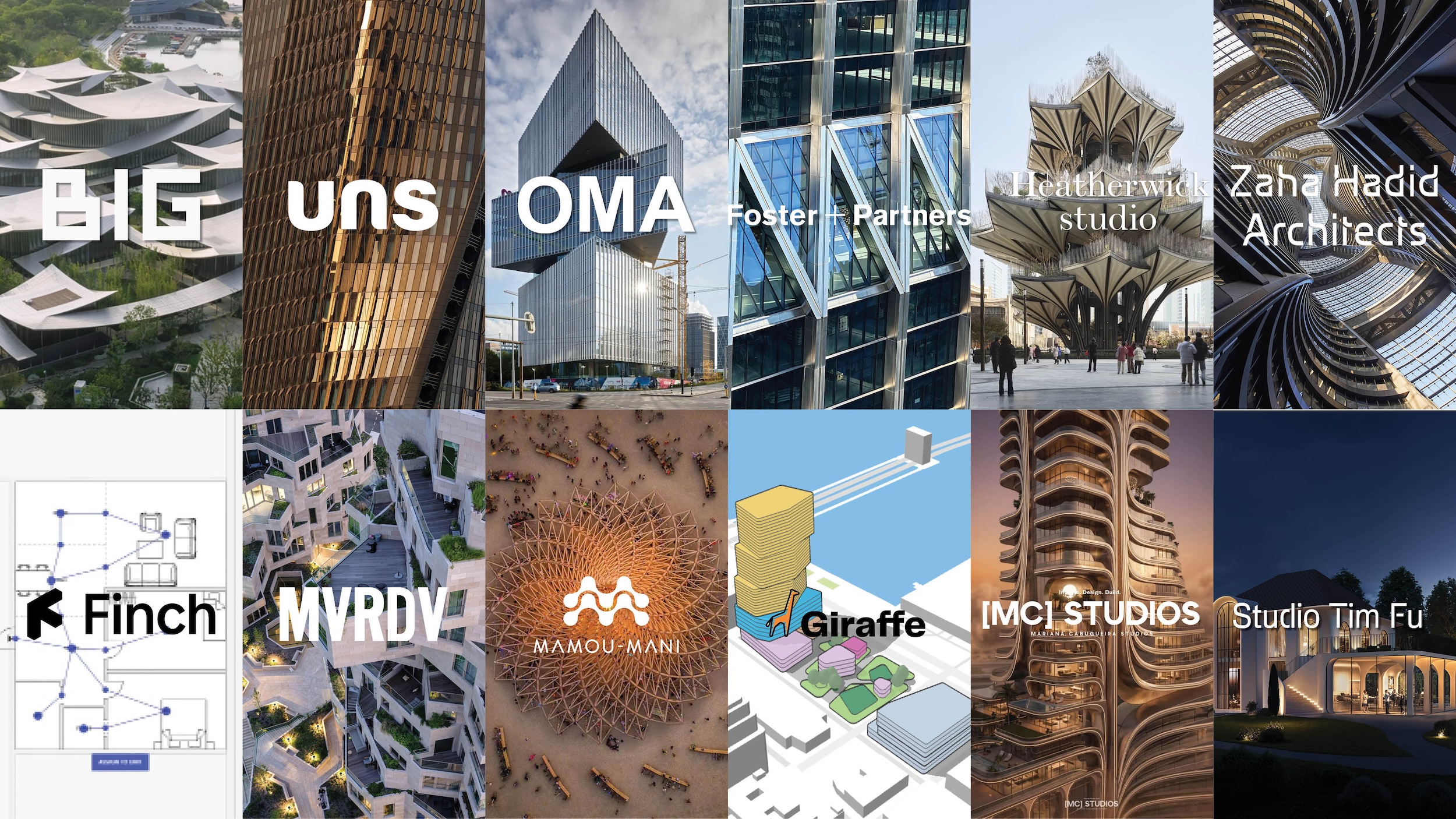
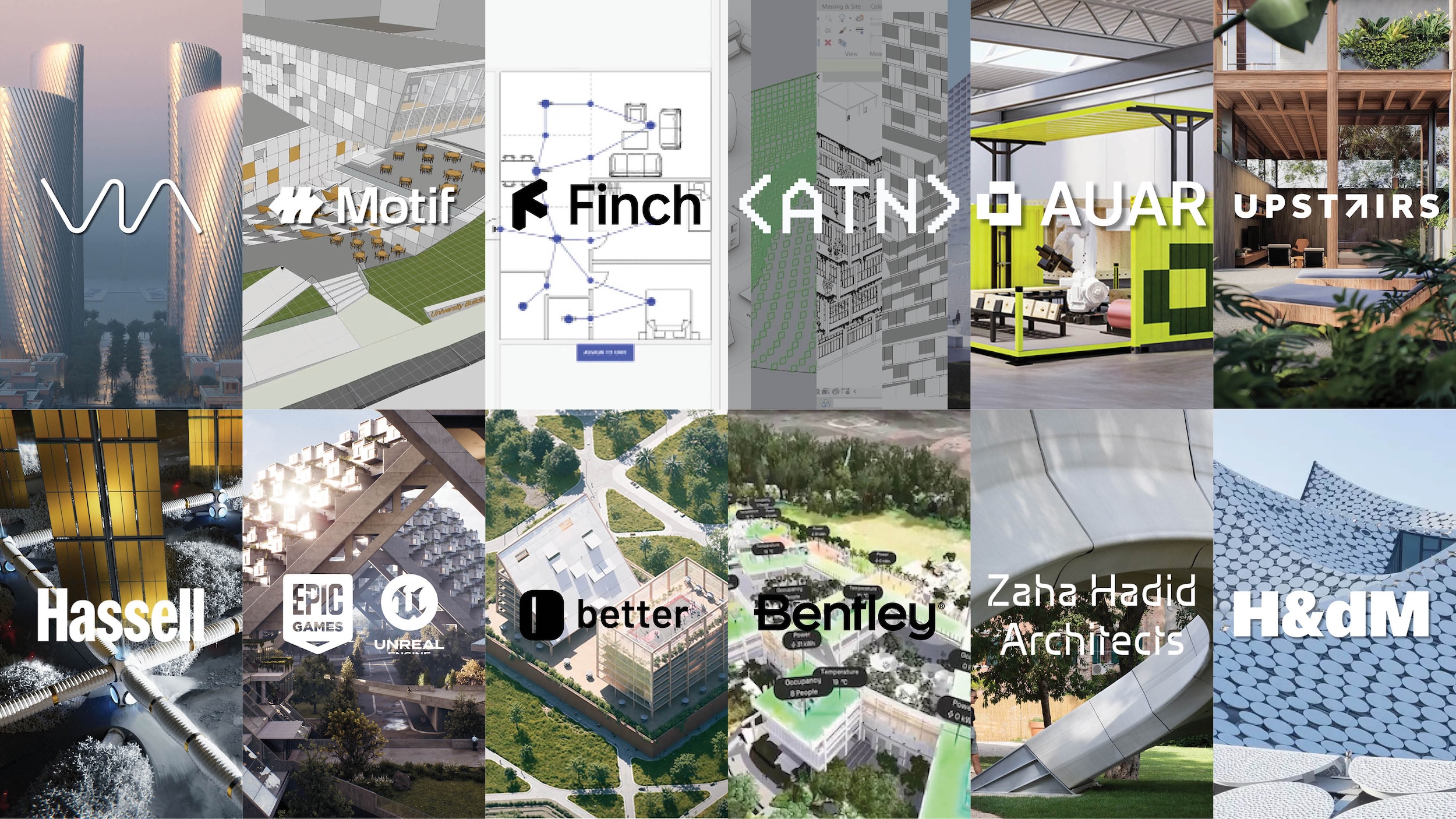
The speaker lineup reflects five years of genuine relationships, not a booking agency. BIG, Foster + Partners, Zaha Hadid Architects, MVRDV, Heatherwick Studio and Mamou-Mani, alongside a constellation of startups reshaping the tools of practice: Motif, Conic, Giraffe, Finch, Speckle and Automated Architecture (and many more — you can read the full lineup here). The conversations between these worlds — established global firms and the lean, fast-moving companies building the software they’ll use next — are the kind that don’t often happen in the same room.
And the room itself is genuinely international. As of a few weeks before the event, attendees had registered from 28 countries, with over 100 firms represented in the audience. The balance skews professional — this is a conference for practitioners, not a student expo — but student tickets are available, and the ATN Influence Day running on the Saturday after the main Summit has been priced specifically to be accessible to junior and emerging voices.
Architect 3.0: What You’ll Actually Walk Away With
 There’s a version of a conference that leaves you with a tote bag, a headache from the AV system, and vague good intentions. This is not that conference.
Oliver talks about the value of in-person events with the conviction of someone whose career was shaped by them. A single conference in 2014, Smart Geometry, connected him to the people who eventually led him to BIG. “From this one conference, I met all these different people,” he says. “It was right at the time I wanted to get into computational design. Did I want to do a degree? So I simply went to a conference about it — and that really brought me into this world.”
What the Summit offers is harder to quantify than a workshop certificate, but more lasting: the inspiration of seeing what’s actually possible at the leading edge, and the serendipity of being in a room when it matters. You’ll hear from architects who are using computation and AI to drive daylight and solar analysis, from firms like Mamou-Mani who are 3D-printing recyclable furniture and taking it back at the end of its lifecycle to reprint the next project, and from startups using timber automation to make sustainable construction economically viable. And you’ll hear something more surprising — a serious conversation about game engines.
“Everyone is focused on AI, but this world of Unreal Engine, more and more architects getting into this space and then having opportunities in film, VFX, gaming — I think it’s a really slept-on aspect of the industry right now,” Oliver says. It’s one of the Summit’s deliberate interventions: to make space for the conversations the industry isn’t quite having yet, alongside the ones it can’t stop having.
Because behind all of it is a bigger question. Oliver calls it Architect 3.0 — a shift as significant as the move from drafting by hand to CAD. In this new era, AI and emerging tools aren’t replacing architects; they’re accelerating the parts of practice that don’t need human ingenuity, so the parts that do can breathe. But the profession needs to be intentional about what it does with that freedom. “We’re already doing more, even faster, for the same amount,” Oliver says. “If we’re not careful, AI will do the same thing.”
That’s the conversation the Summit exists to have.
 The ATN Summit takes place 18–19 March 2026 at Protein Studios, Shoreditch, London. Tickets and further information are available at atn-summit.com.
Learn more about ATN social media:
YouTube: https://www.youtube.com/@architech.network
Instagram: https://www.instagram.com/architech.network/
LinkedIn: https://www.linkedin.com/company/architech-network/