Architects: Want to have your project featured? Showcase your work by uploading projects to Architizer and sign up for our inspirational newsletters.
We are all very familiar with the use of stone-filled gabion structures as retaining walls or façades, defining outdoor spaces. Though many may assume that gabion sits squarely within the domain of landscape architects and engineers, more and more architects are exploring the versatility and creative potential of gabion structures to create works that are equal parts aesthetic and functional. Local availability is a big part of the draw, but so too are durability and permeability. From a constructive perspective, structures made with gabion are affordable and easy to build, and, when built using materials from nearby, they can amplify the natural language of the surrounding area.
Gabion structures can be used in a variety of ways depending on the project. They may serve as defining design components or subtle accents. Expanding on their creative potential, gabion can also be filled with recycled or unconventional materials, adding to their versatile expressive potential. The following projects illustrate this versatility, showcasing how gabion techniques can be adapted across scales and contexts, ranging from backcountry accessory buildings and public parks to cultural facilities, homes and restaurants.
Qingtai Market
By He Wei Studio/3andwich Design, Chongqing, China
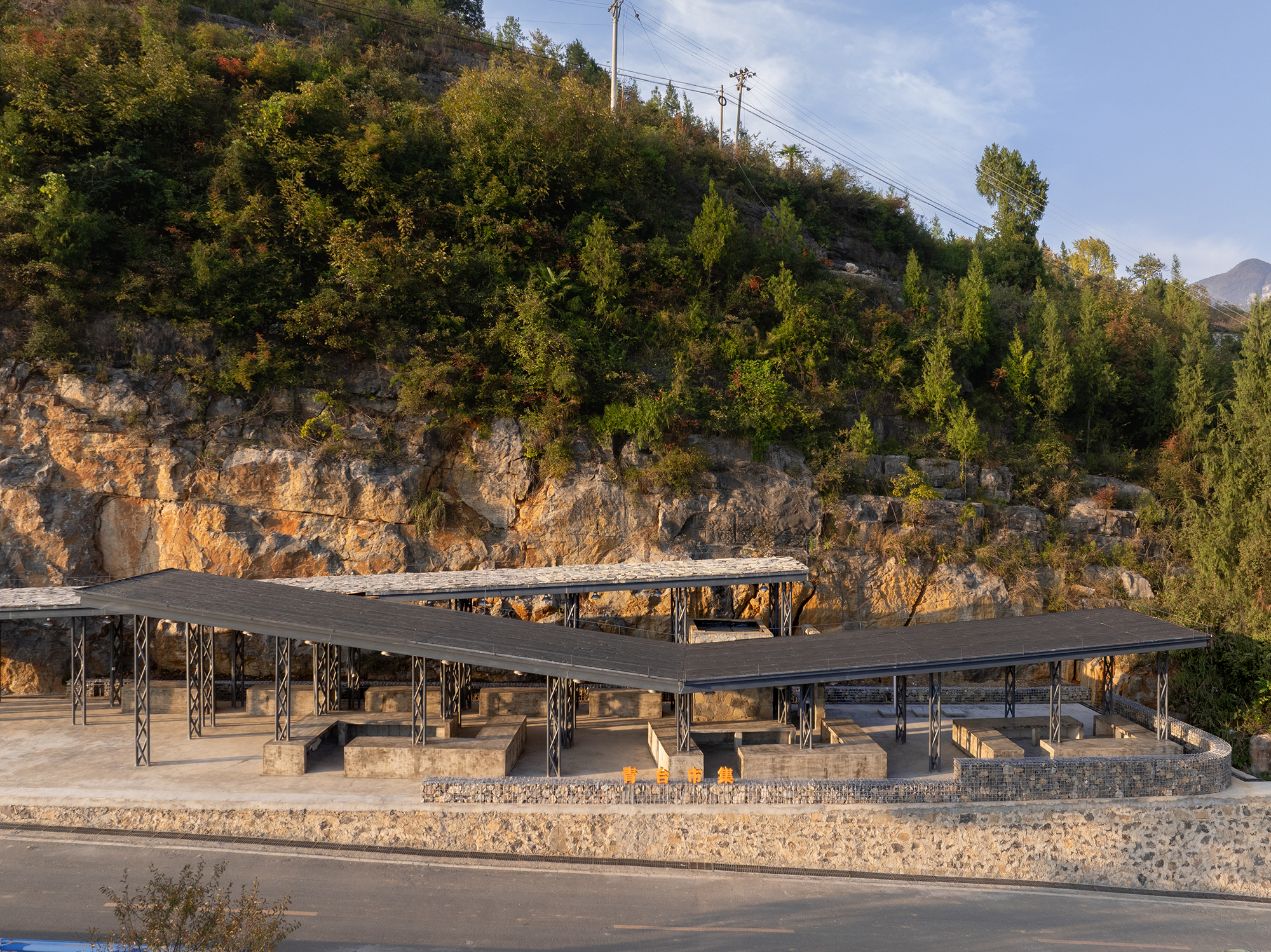
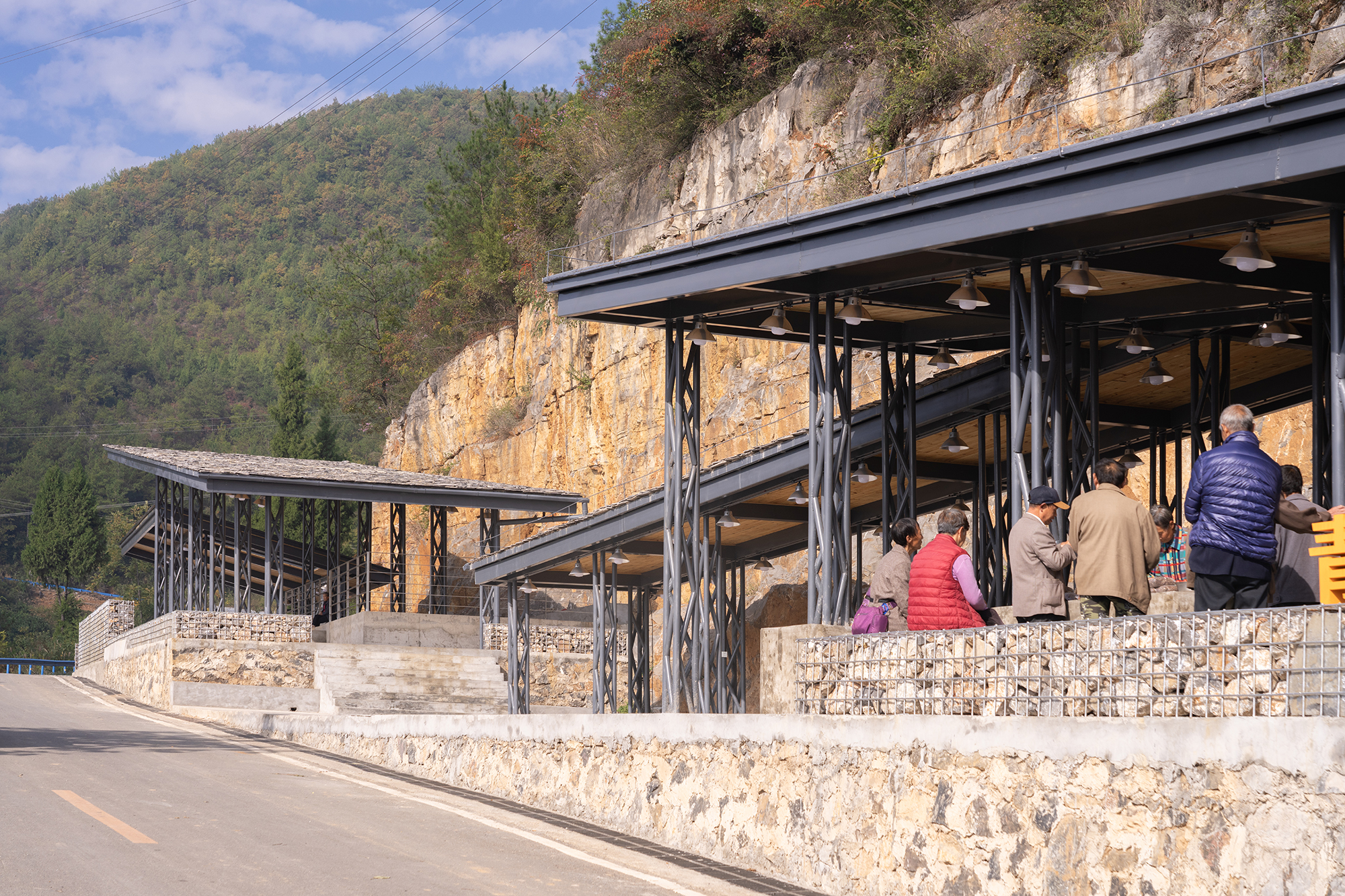


Gabion walls filled with local stone are used as both retaining and façade elements, referencing the site’s history while simplifying construction. The result is a functional and cost-effective construction that repurposes the abandoned quarry site for tourists and villagers alike.
Open-Air Cinema Prachatice
By Mimosa Architects, Jihočeský kraj, Czechia
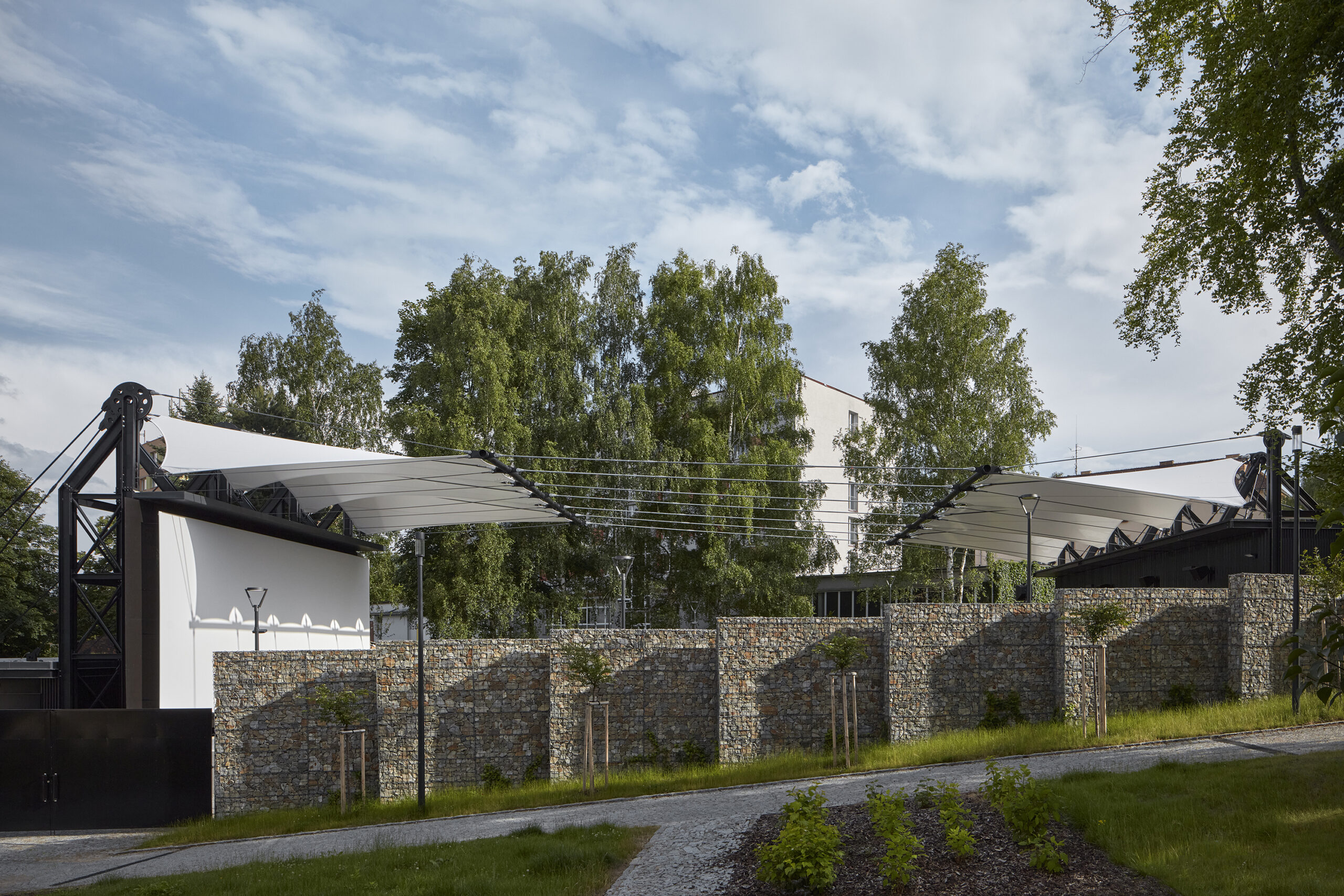
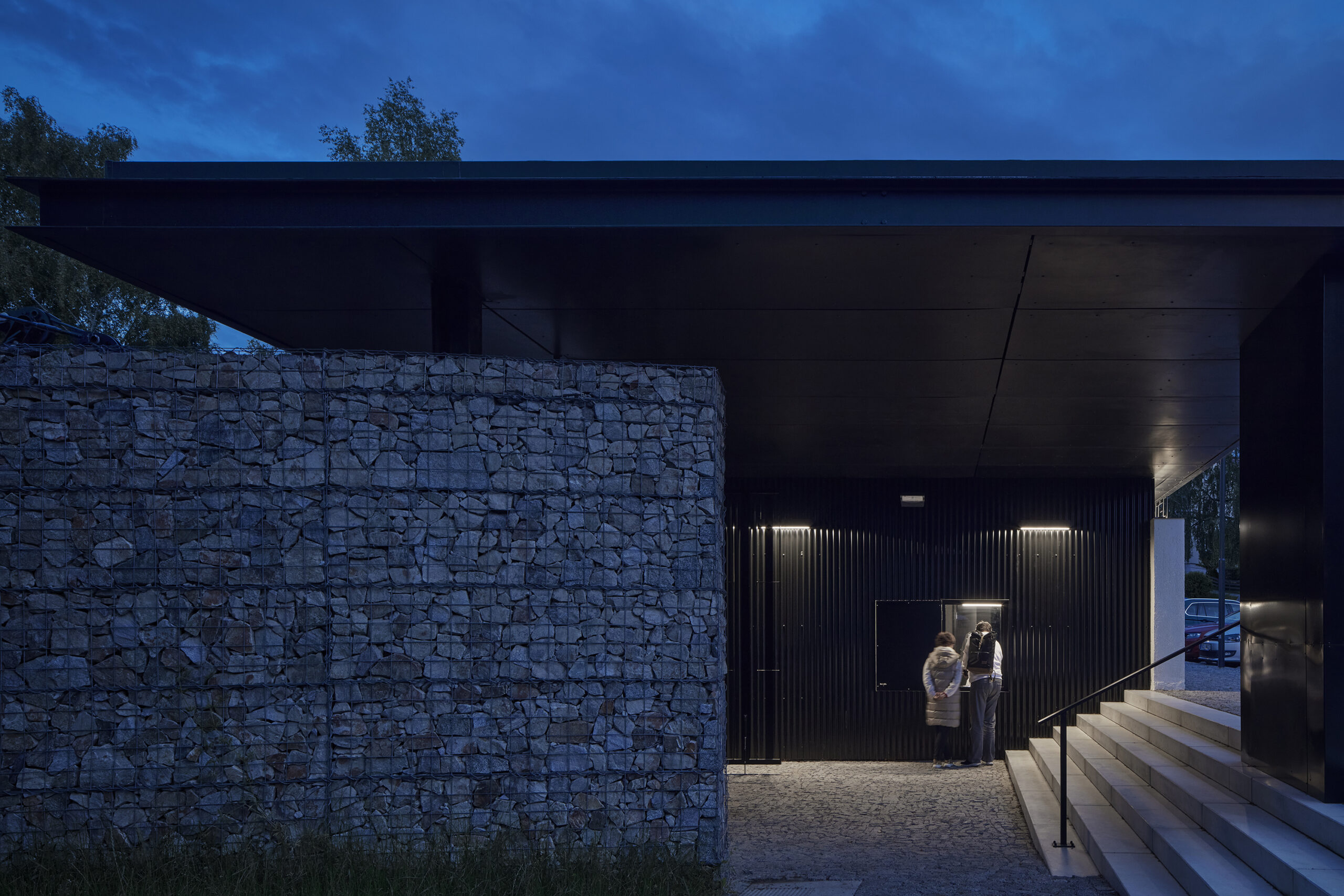

The original buildings were demolished and replaced with three new steel-frame facilities, while a smaller projection wall substitutes the monolithic original that once cast shadows across the park. A defining feature of the project is the use of gabion walls, which echo the preserved “fractured” fencing along the residential edge. These are complemented by extensive granite paving within the cinema grounds and around it, linking the site to the town’s material character. In contrast to the heavy stonework and drawing on film reel wheels, a tensile canopy supported by steel cables and corrugated steel sheets creates an ephemeral quality while improving comfort and acoustics.
China Yellow Sea Wetlands Museum Railway Park
By Shanghai Dushe Architectural Design DSD, Yancheng, China
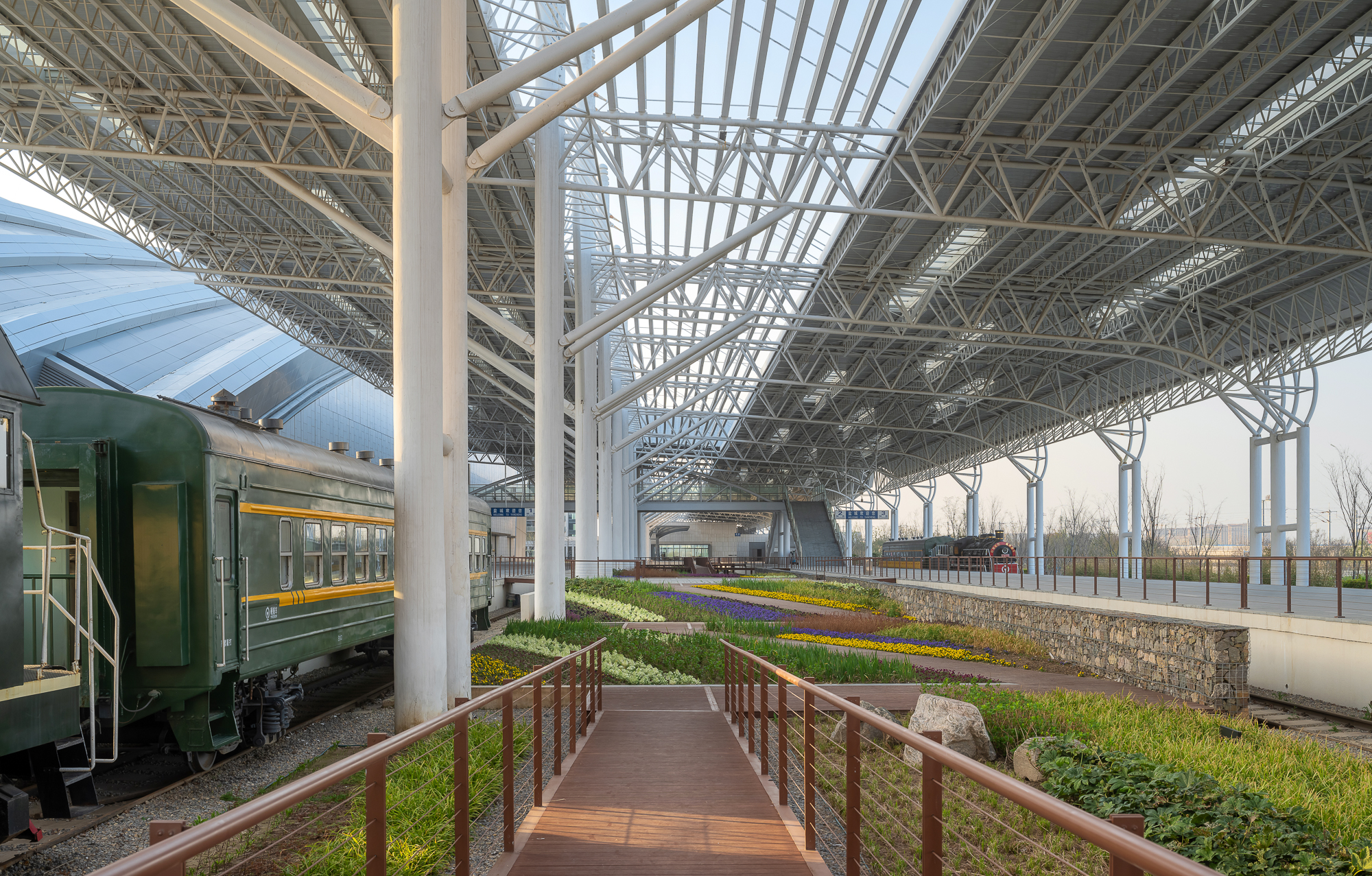
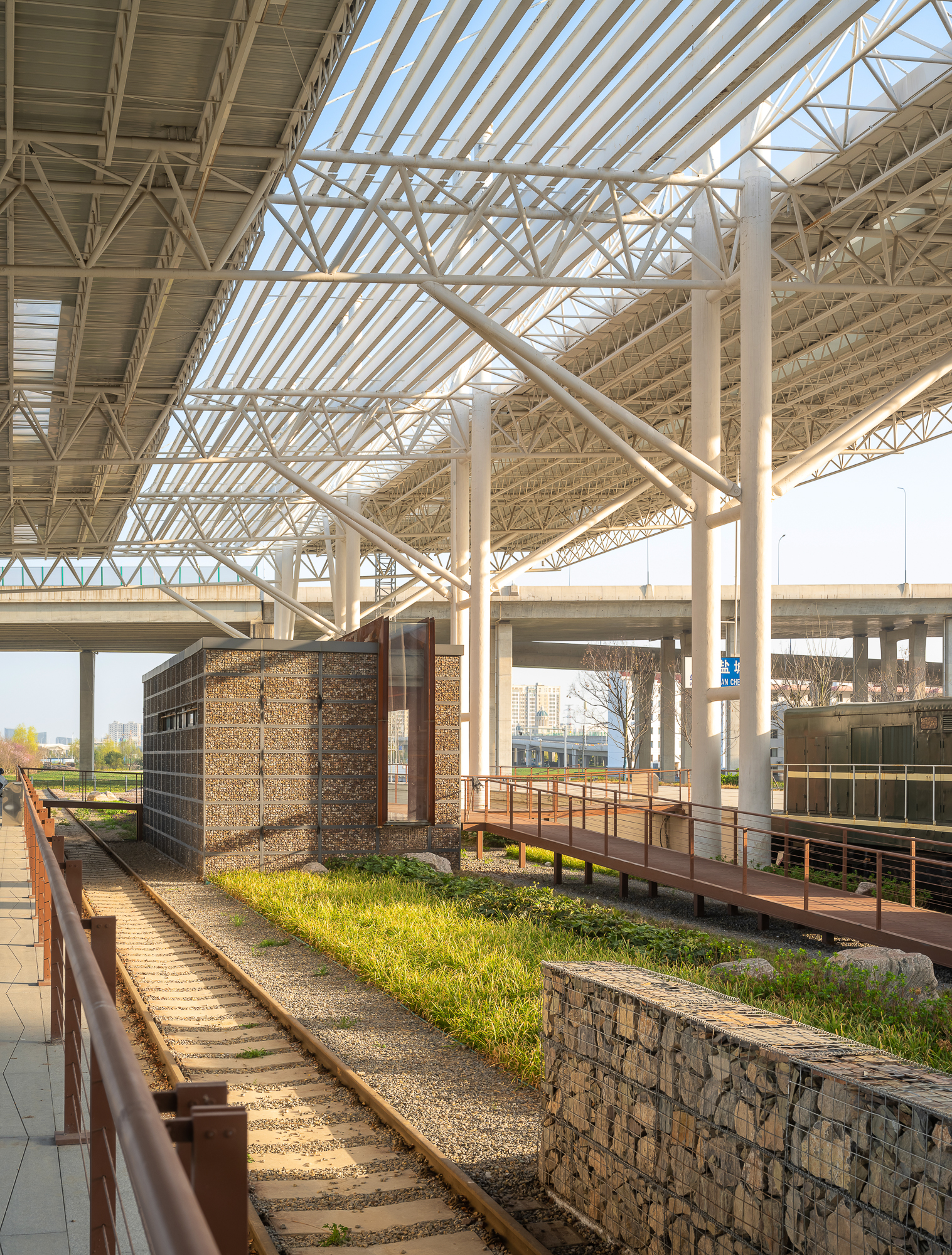


A central feature of the project is the reuse of railway gravel, which was repurposed to form gabion walls. These walls serve both as part of the landscape design and as the façades of small accessory buildings, such as public toilets and computer rooms. The integration of a local material directly tied to the site’s history adds a sense of continuity and reduces the need for new materials.
Eco Park Durrës
By Casanova Hernandez Architects, Durrës, Albania
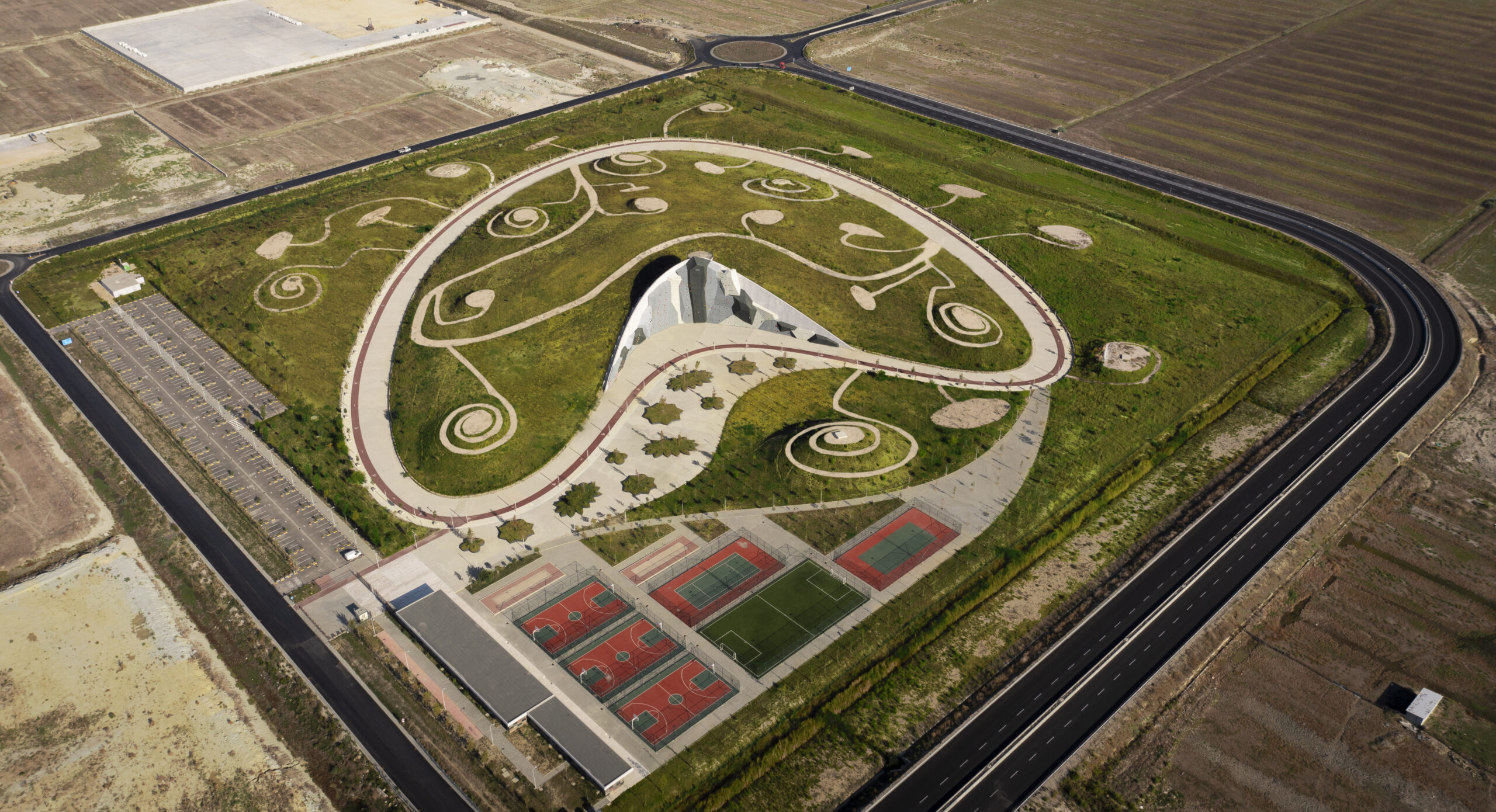
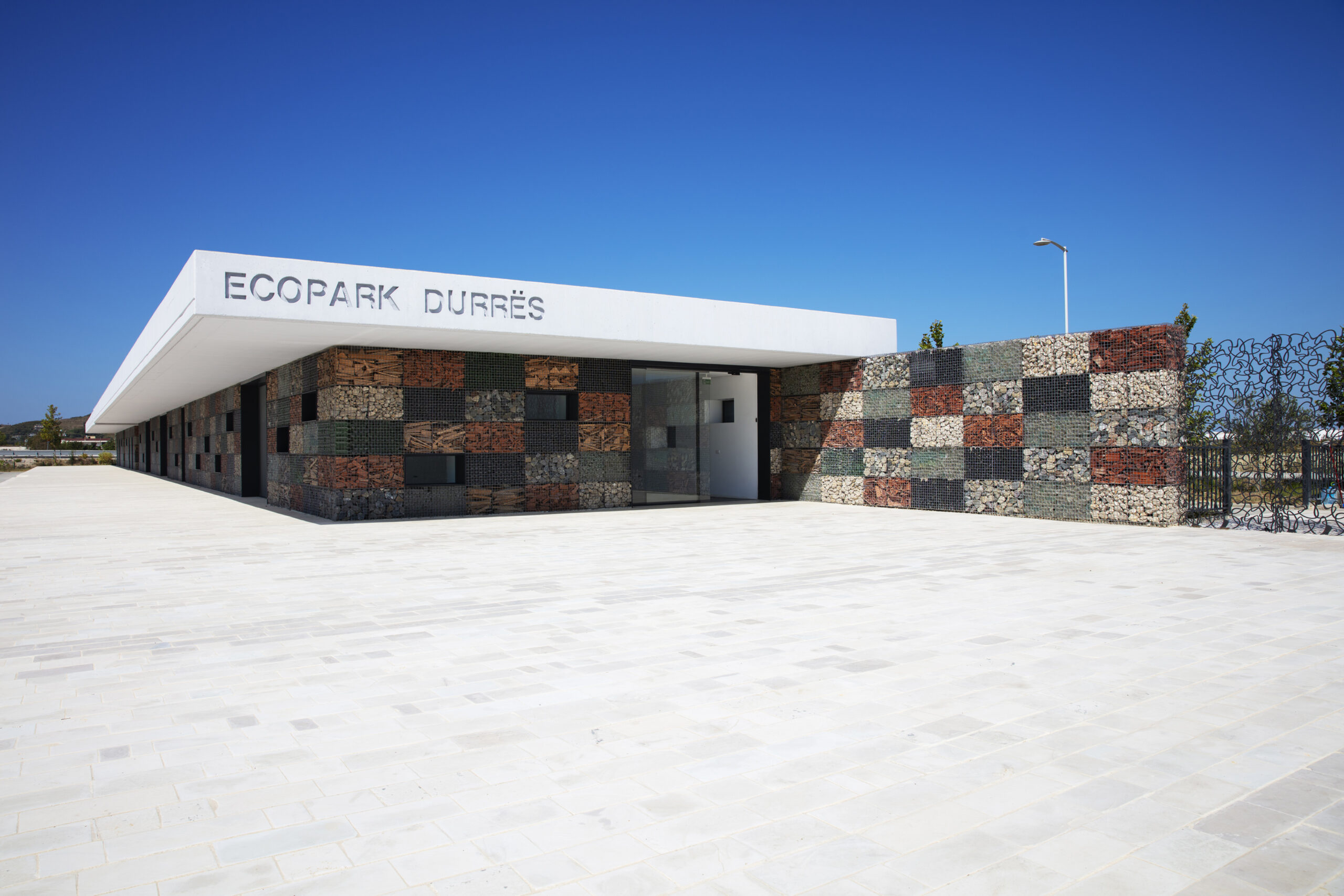
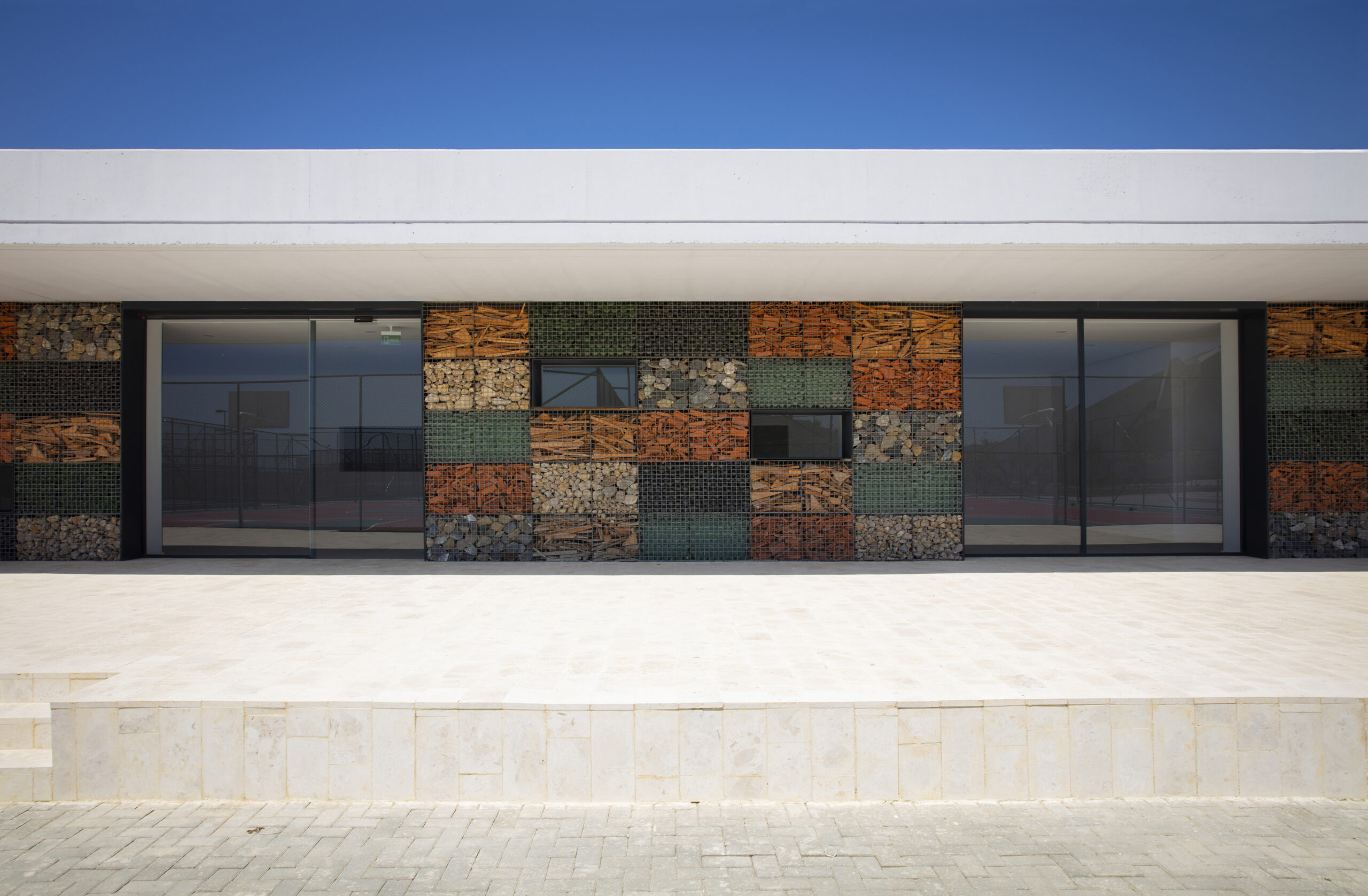
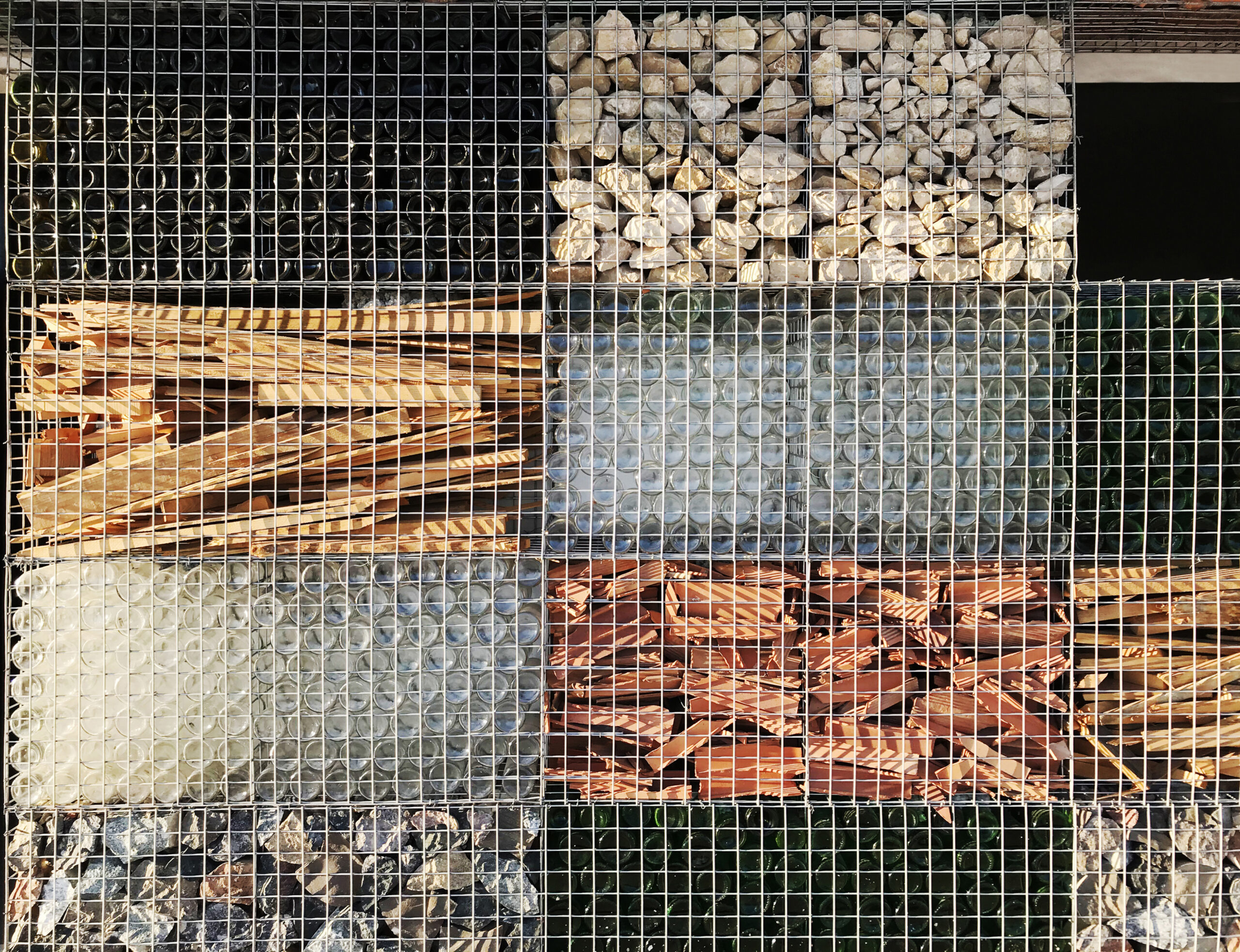


Gabion walls are a notable design feature of Ecopavilion. While gabion are most commonly filled with stone, in this case, galvanized steel cages are filled with a variety of recycled materials. This creative design solution highlights the versatility of gabion structures and demonstrates how alternative infill materials can be functional and aesthetic. In addition to providing enclosure, the gabion façades’ multicolored and irregular textures reinforce the park’s environmental message of reuse.
University of Arkansas Library Storage Facility
By MBL Architecture Interiors Planning, Fayetteville, Arkansas
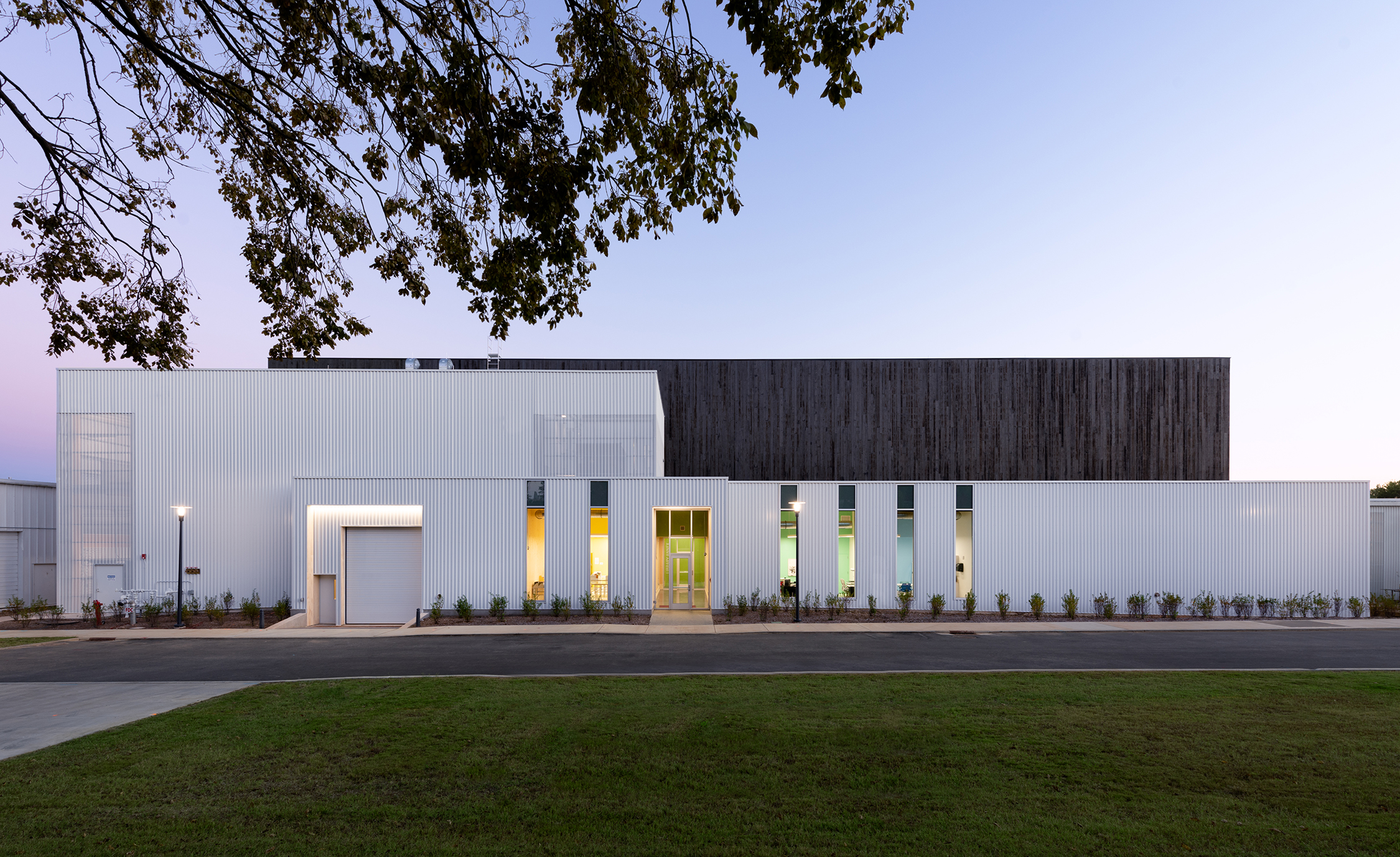
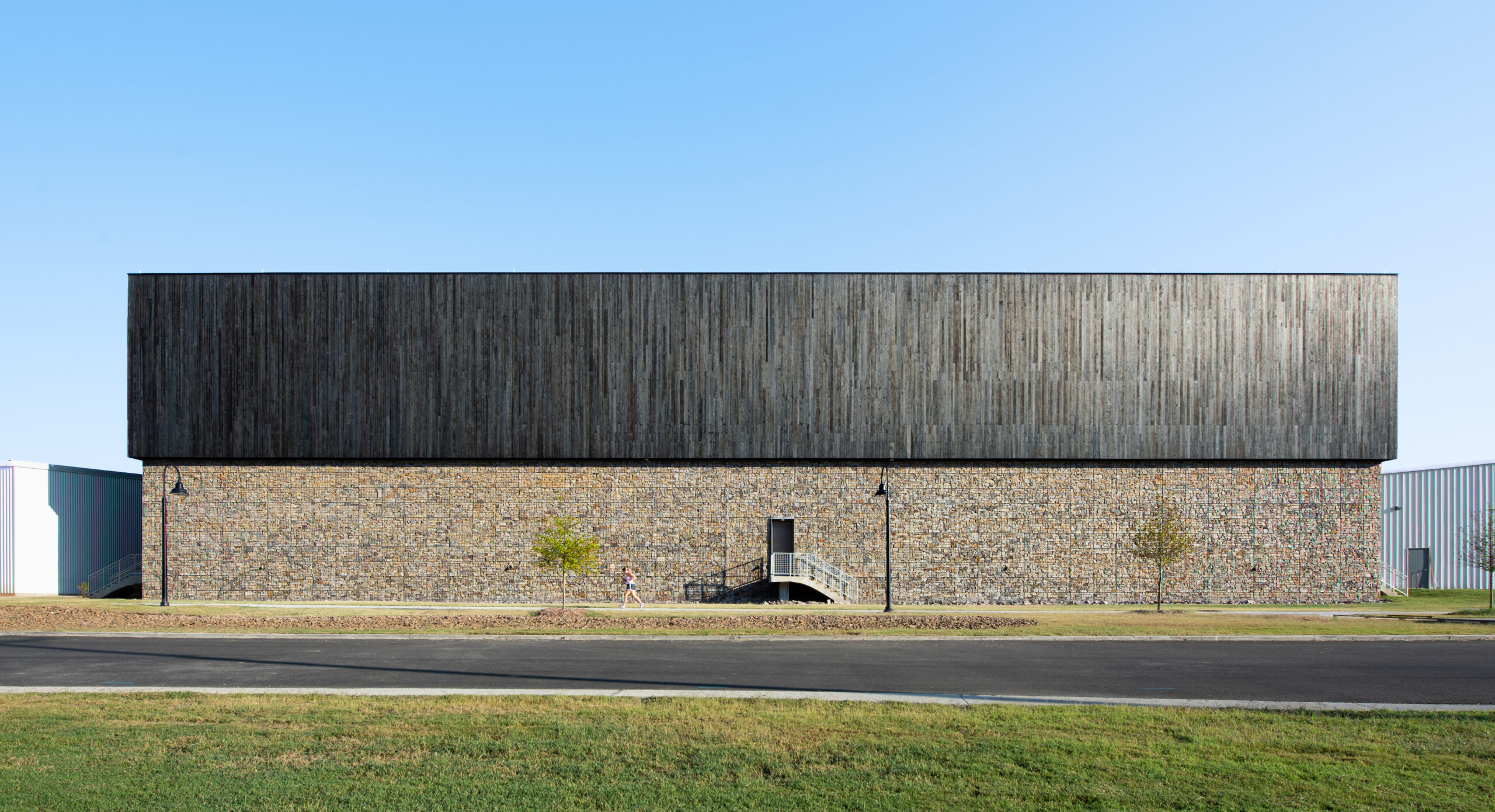
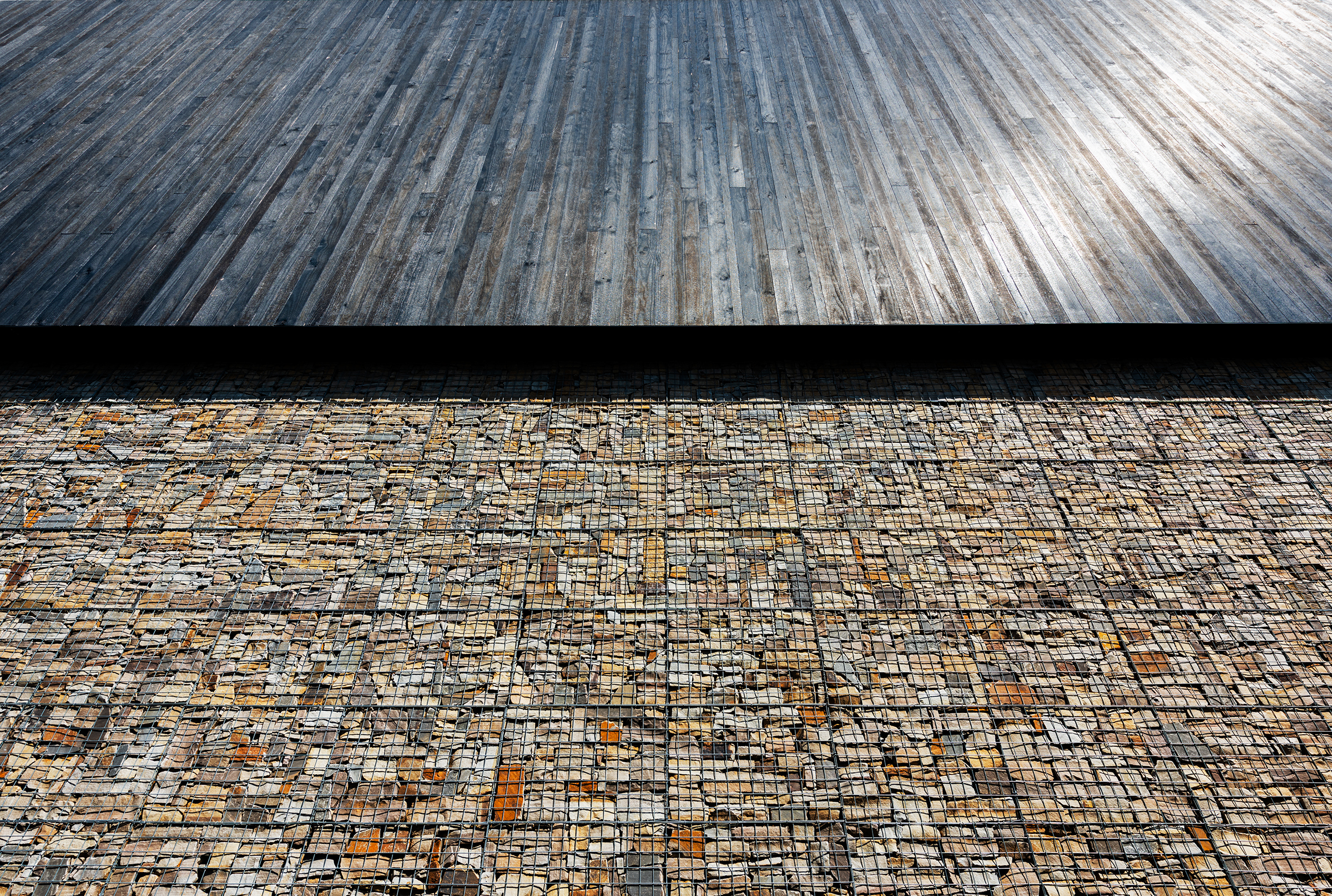


The 28,000-square-foot (2,600-square-meter), 50-foot-tall (15-meter) facility is an elegant expression of durability, balancing precision, texture and massing through the use of charred wood siding, architectural metal panels and stone-filled gabion panels. As part of the building’s exterior cladding system, the gabion wall integrates local stone into the building design, contributing to durability and cost efficiency. The project achieved LEED Gold certification and received an AIA Arkansas Honors Award in 2019.
Lodge in a Glade
By blipsz architecture, HR, Romania
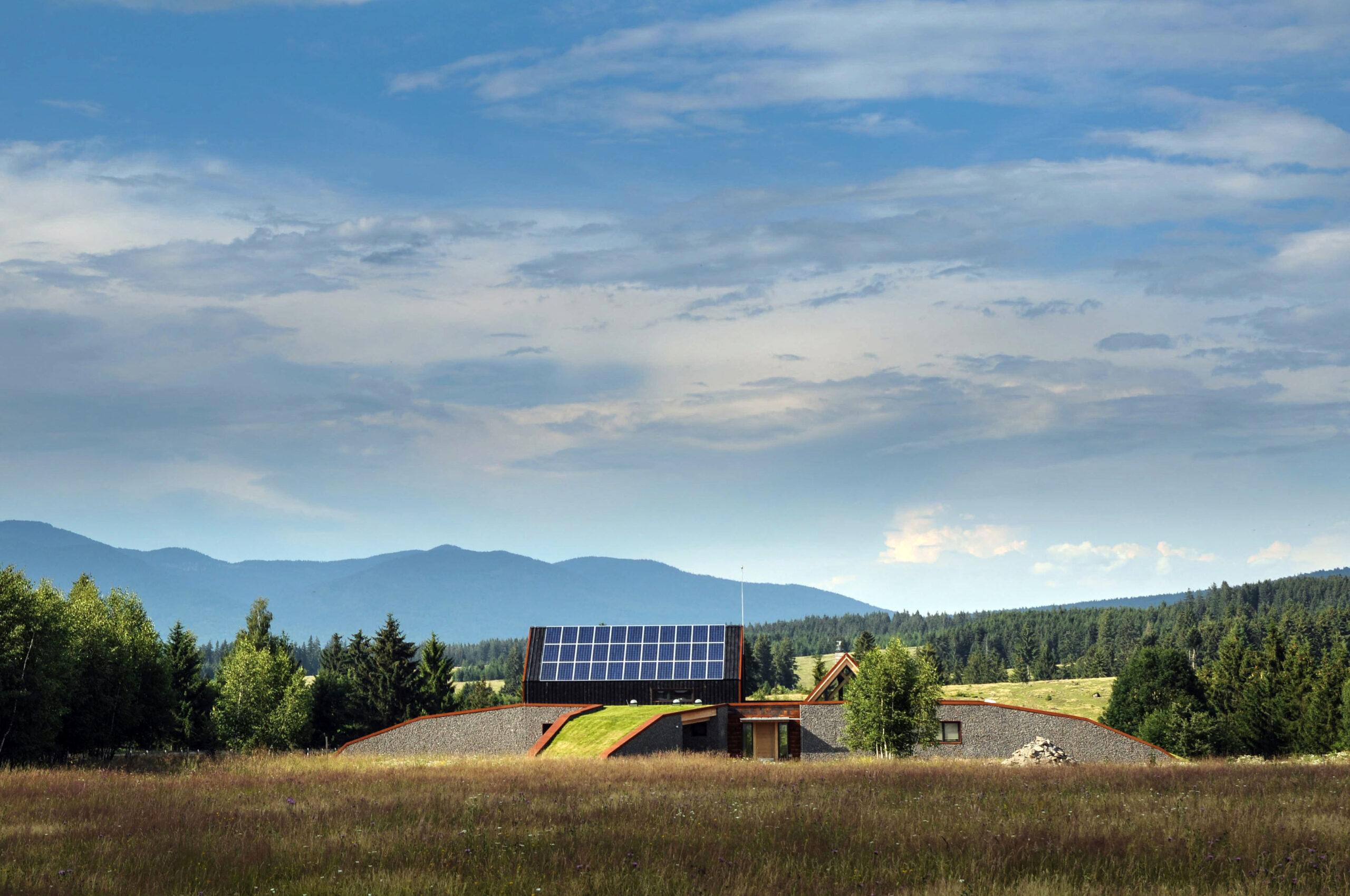
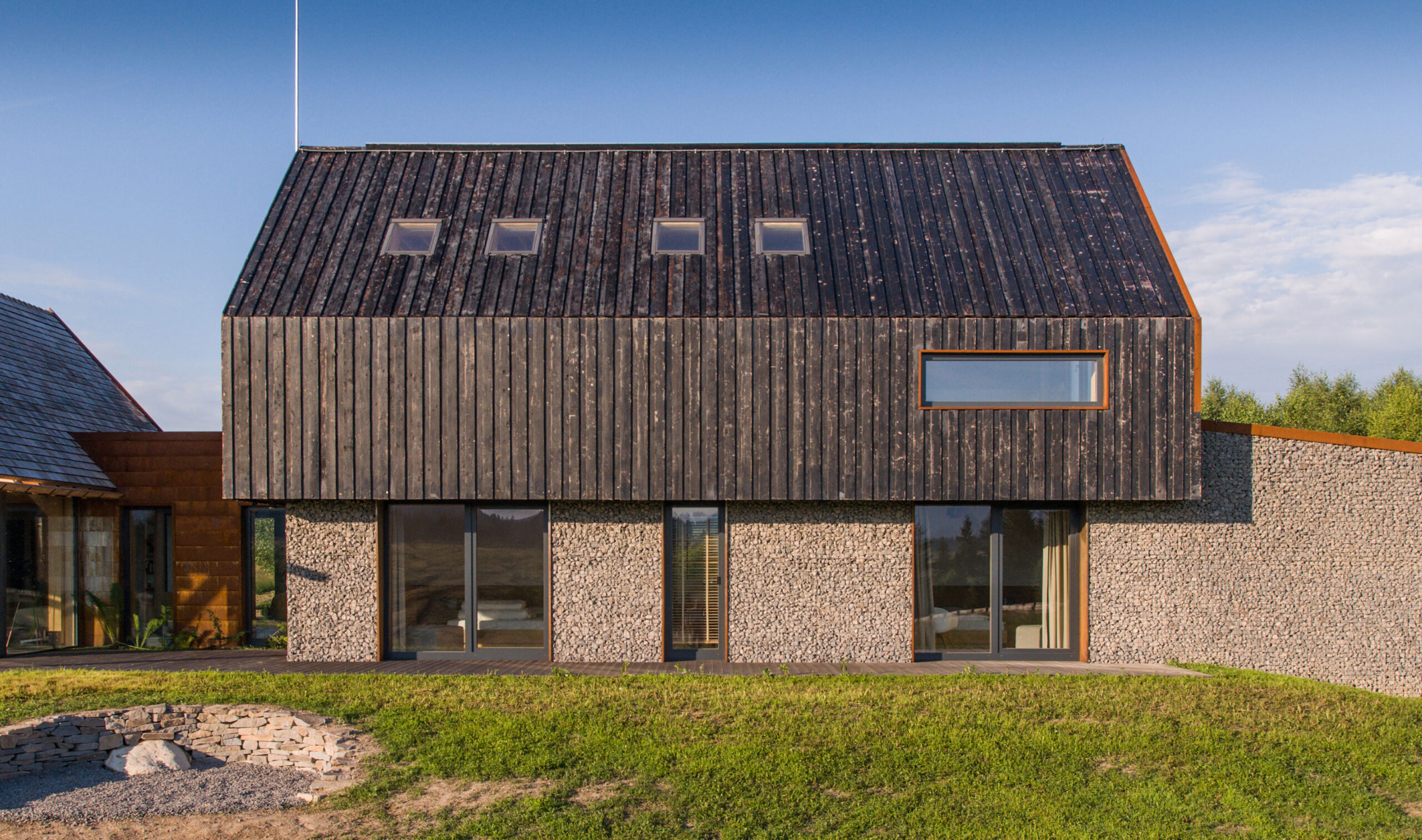
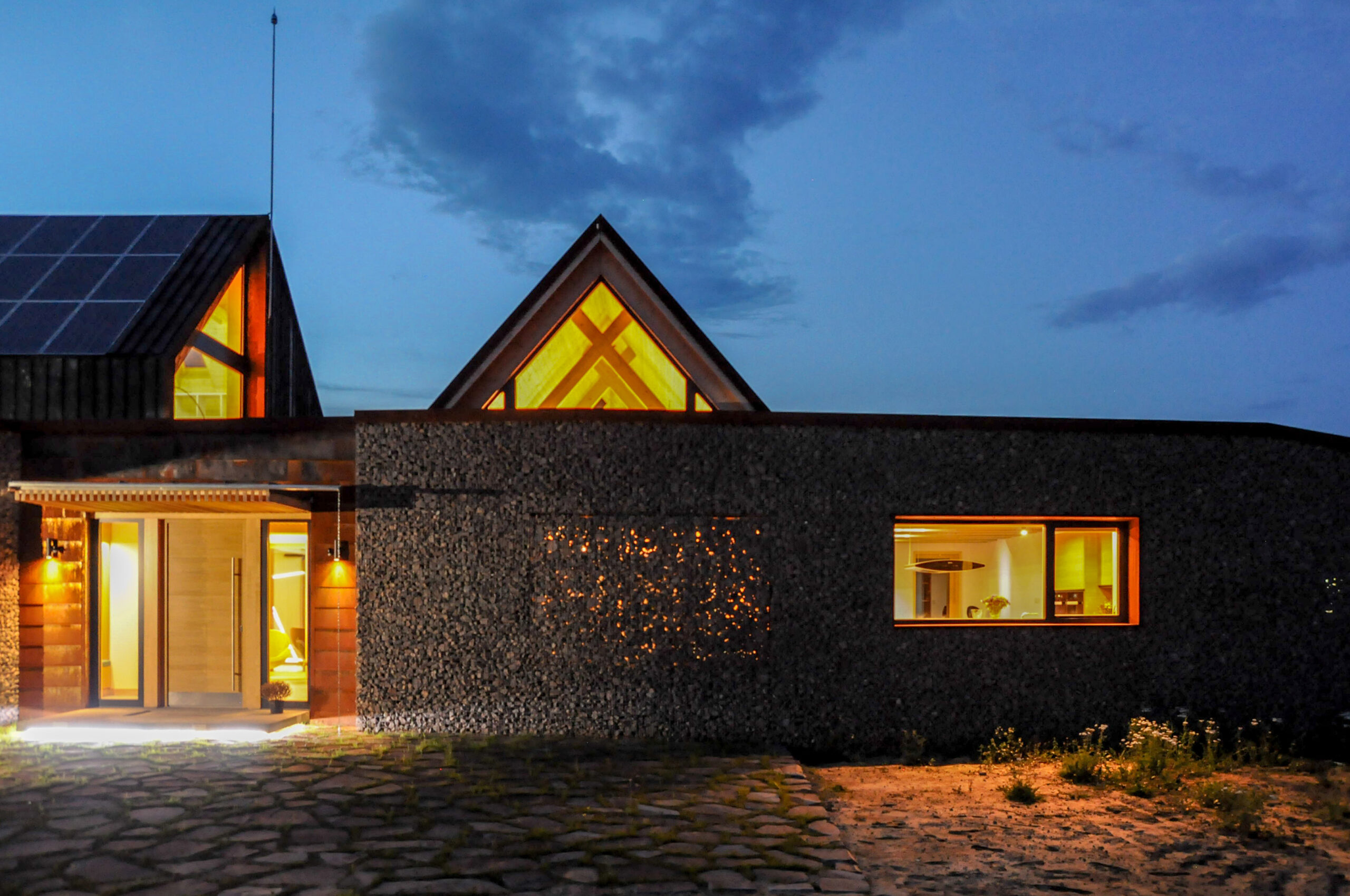


Rock Guitar
By how architects, Athens, Greece
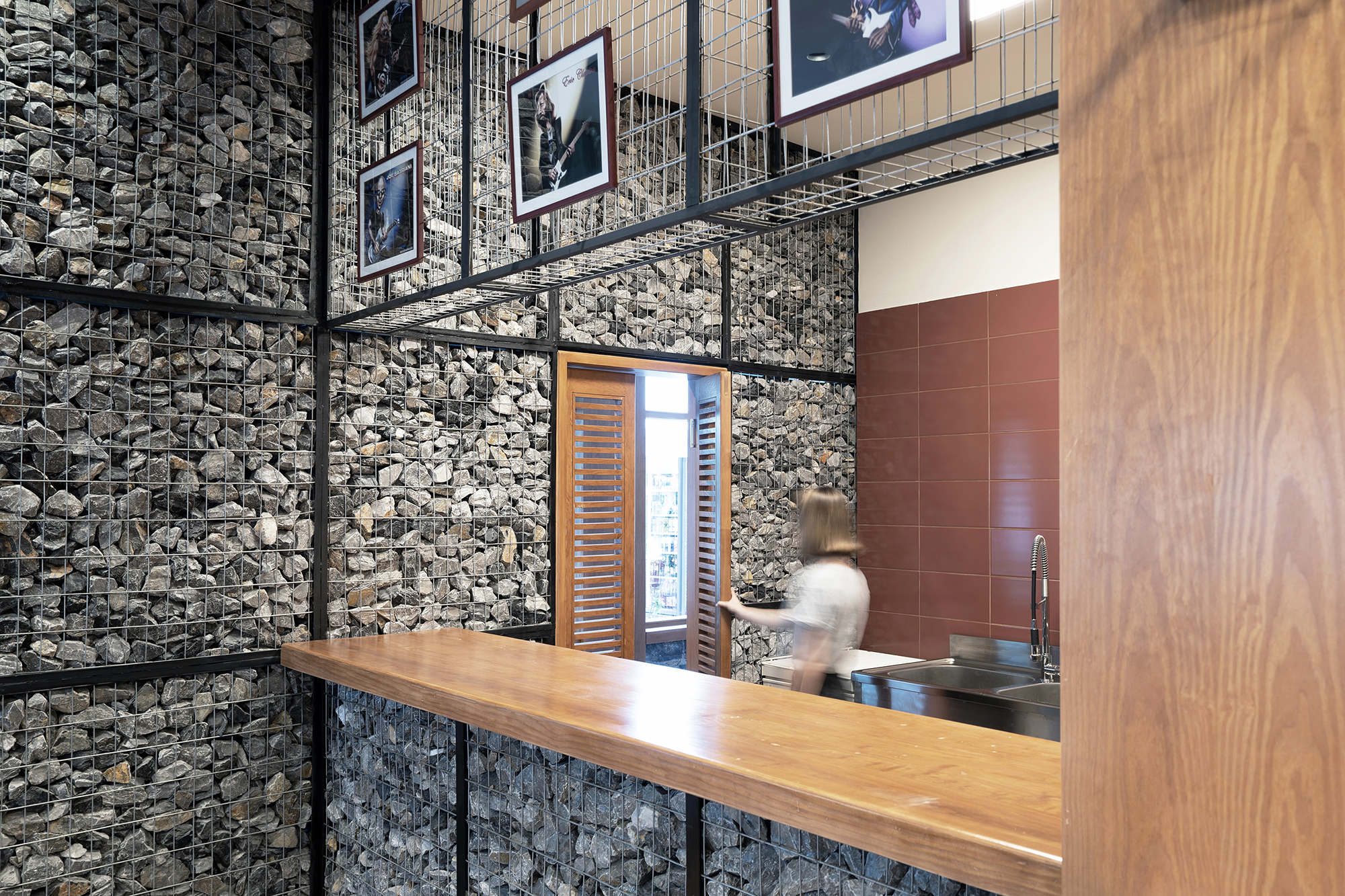
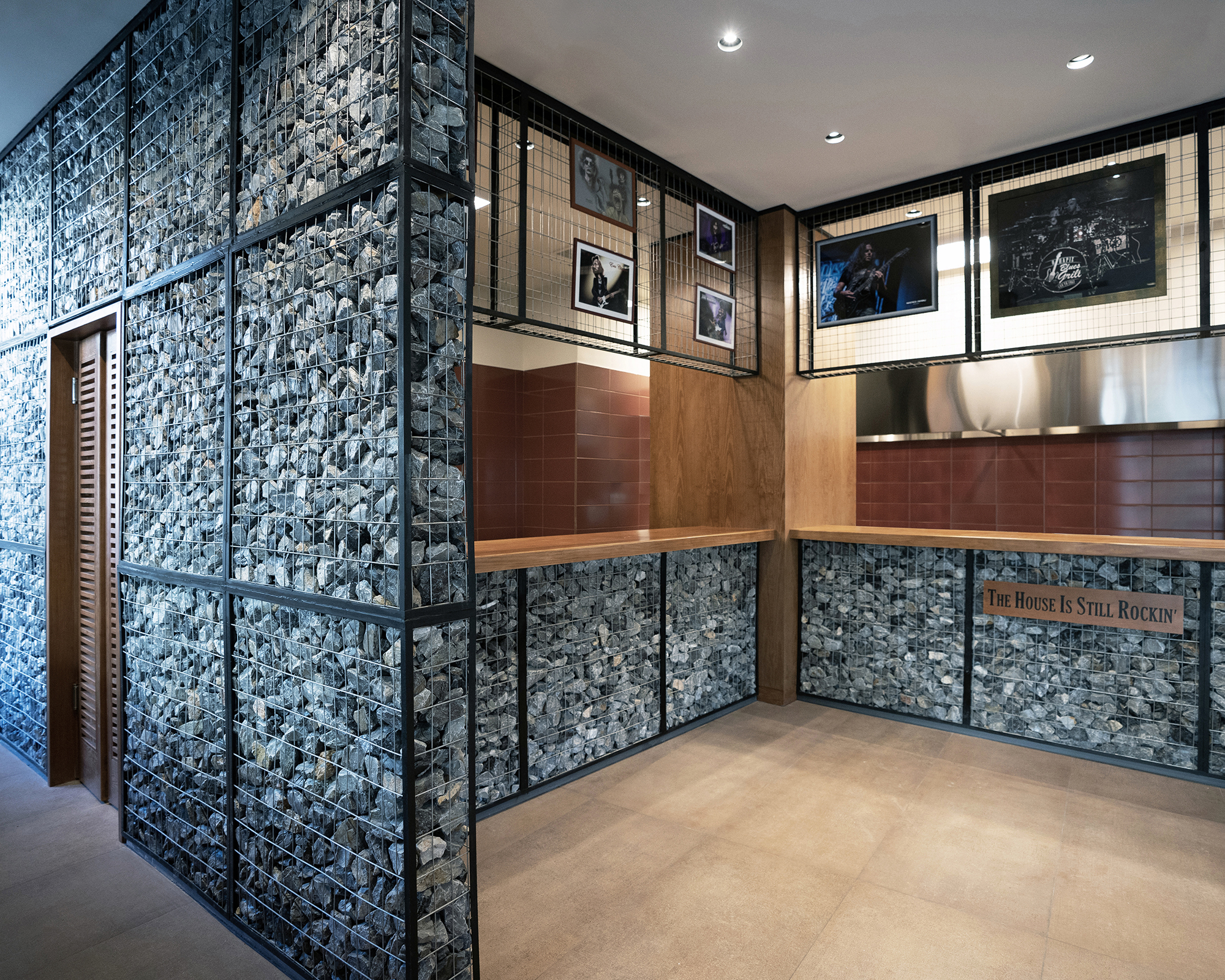

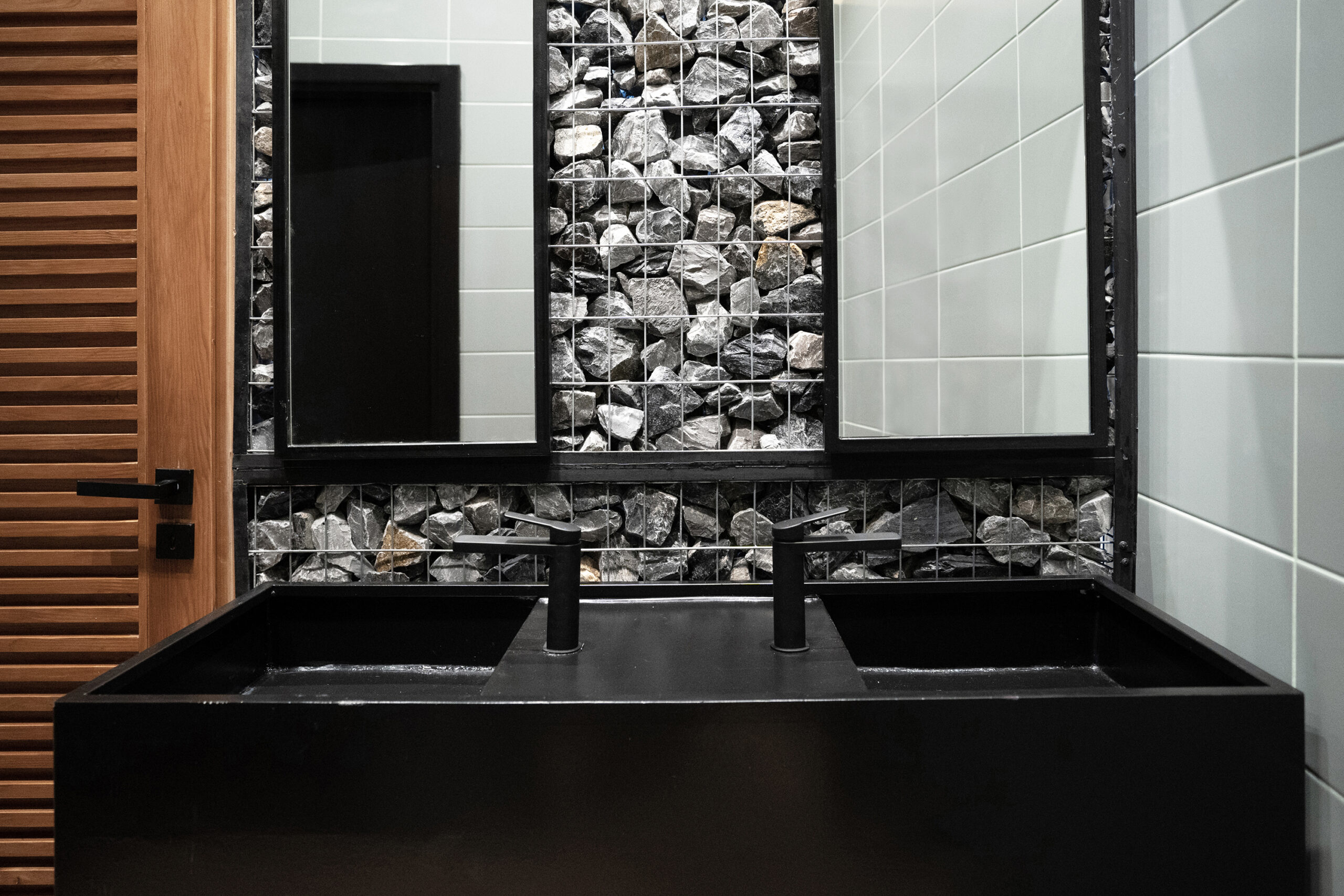
Set against tiled surfaces and wood elements, the gabion walls are enhanced by black-painted steel frames, forming a grid that recalls the strings and frets of electric guitars. The overall design highlights an earthy, rustic atmosphere that gives the restaurant a distinctive character and a sense of identity.
Long’s Peak Privies
By Colorado Building Workshop / University of Colorado Denver, Rocky Mountain National Park, Colorado
Jury Winner, Architecture + Stone, 7th Architizer A+Awards
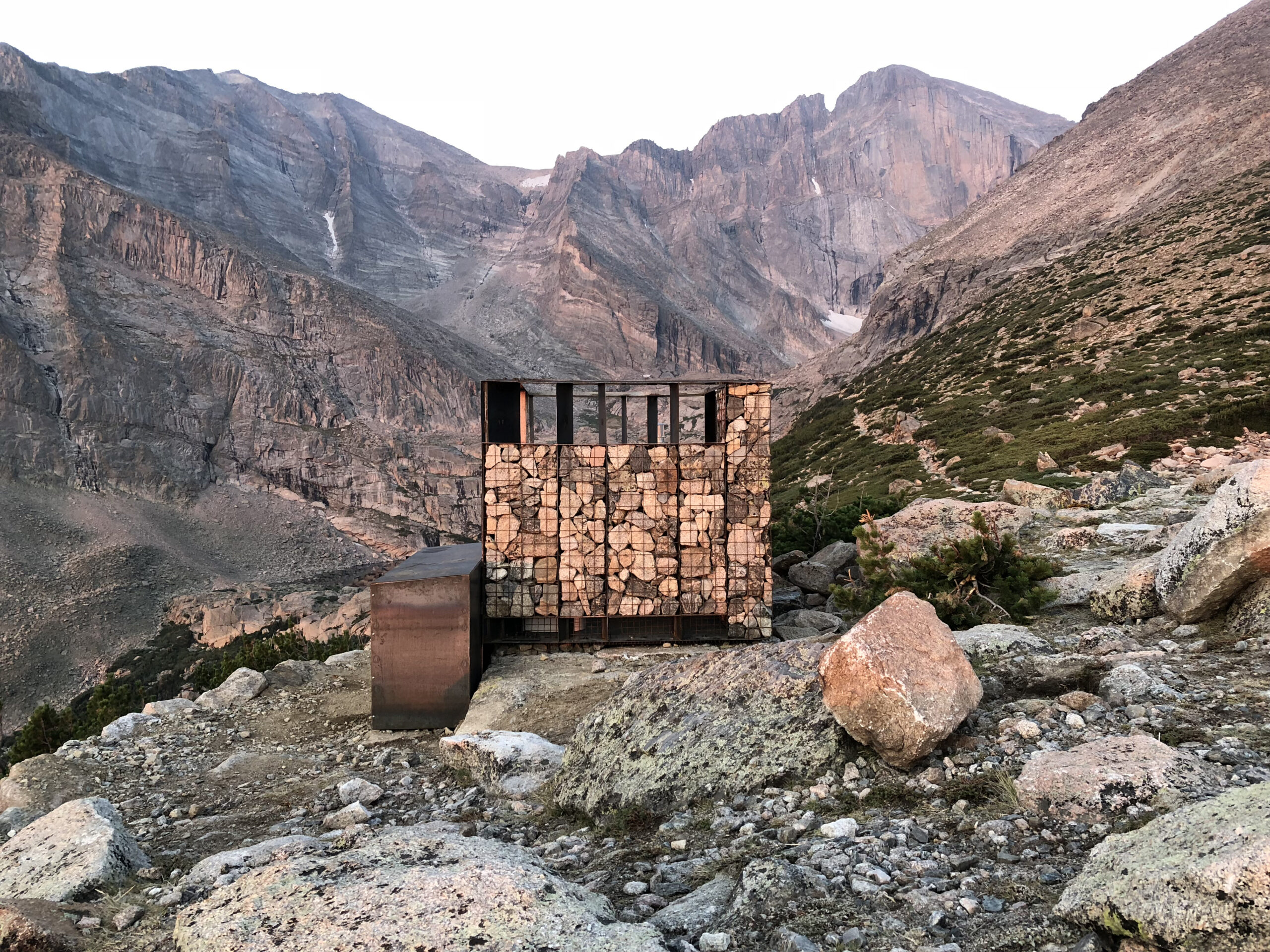
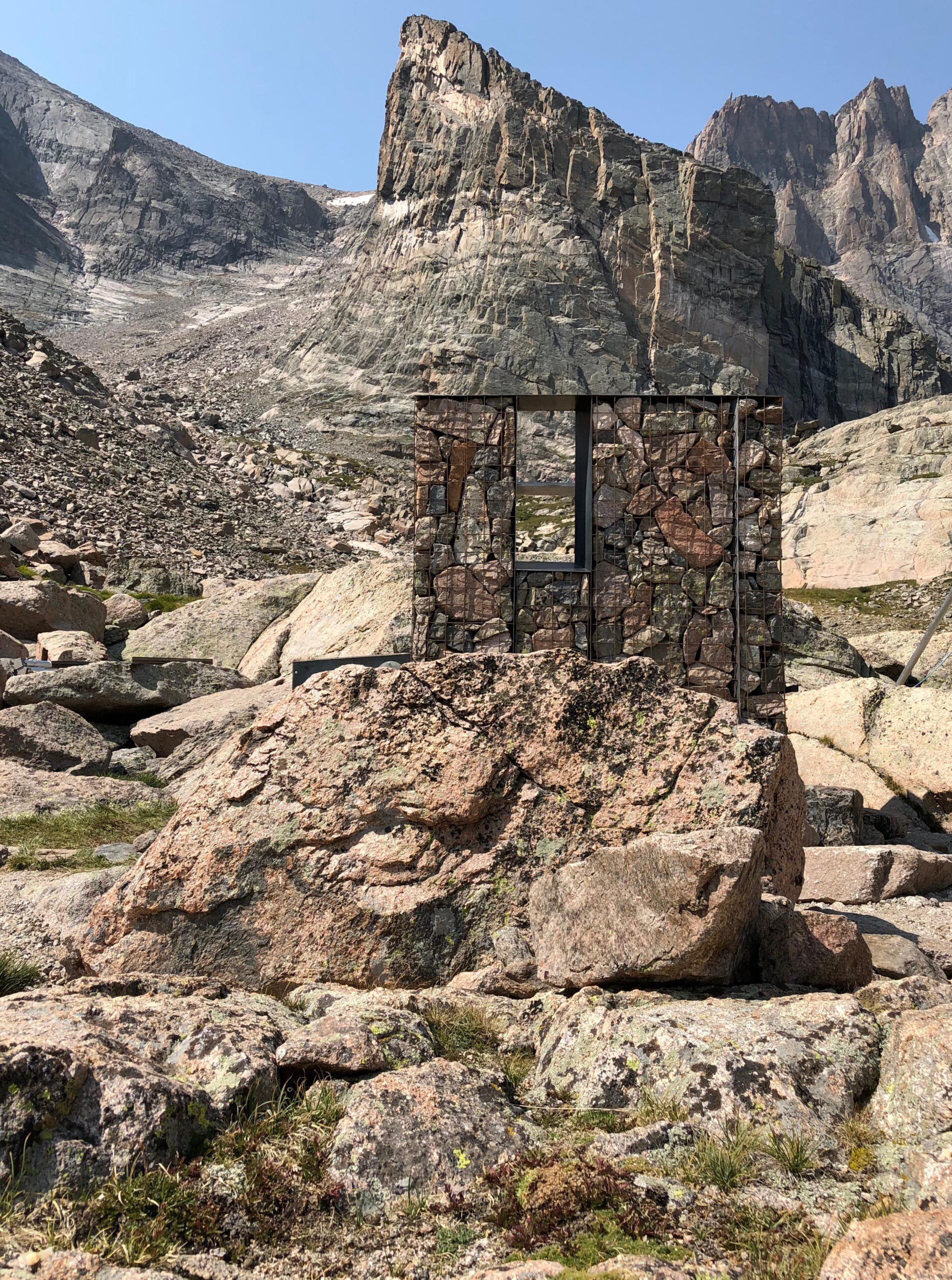
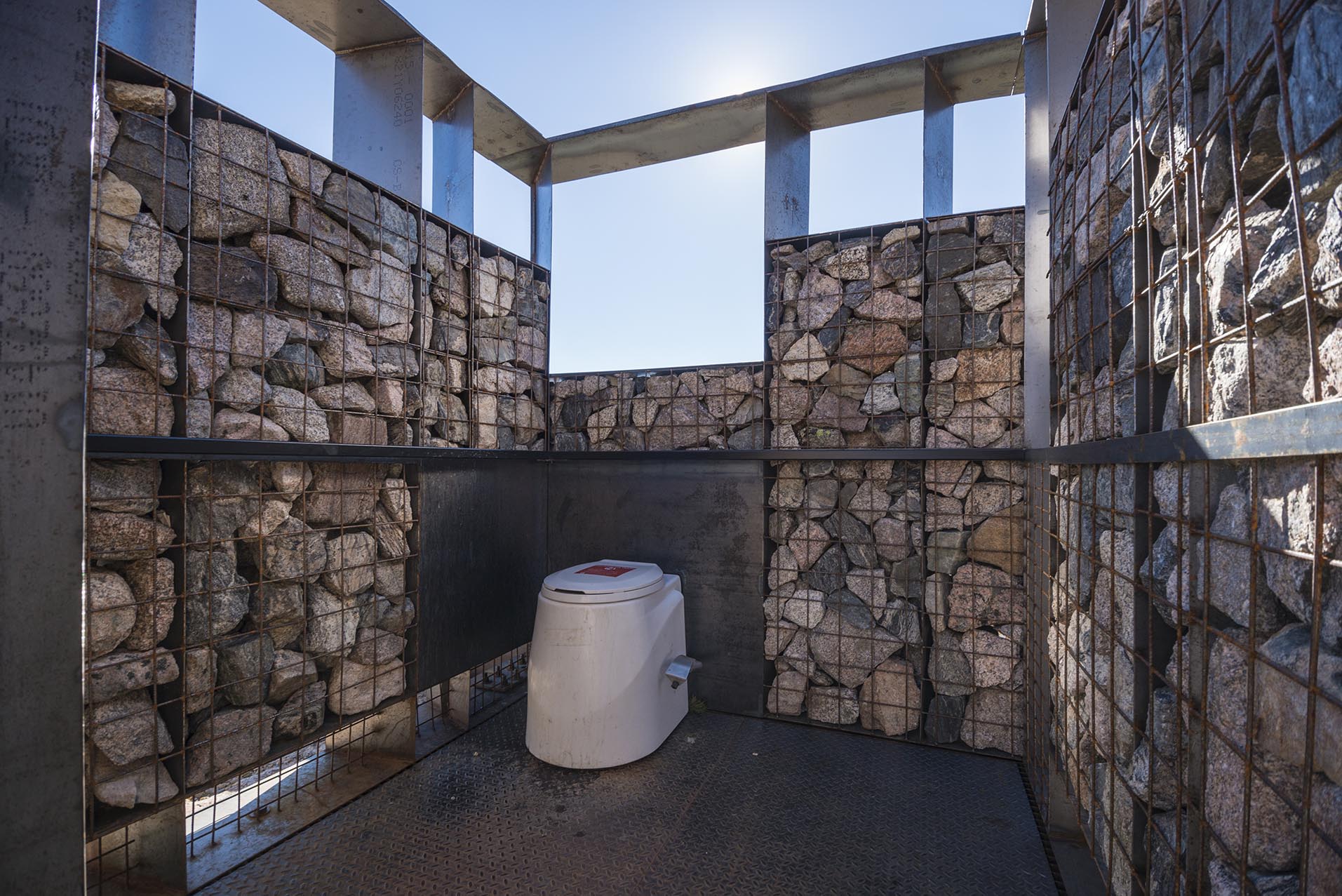


Due to the remote location, the design focused on easy construction and the implementation of efficient methods of waste collection and transportation to minimize the human impact on the environment. The outhouses are composed of a series of prefabricated gabion walls filled with locally collected rocks and supported by thin steel plate moment frames to stabilize lateral loads. This prefabricated system made possible the installation of all four structures in just eight days, providing a durable solution for waste management in the backcountry while ensuring they visually blend with the rocky landscape.
Architects: Want to have your project featured? Showcase your work by uploading projects to Architizer and sign up for our inspirational newsletters.