The judging process for Architizer's 14th A+Awards is now underway. Subscribe to our Awards Newsletter to receive updates about Public Voting, and stay tuned — winners will be announced later this spring.
Sports architecture has long suffered from a credibility problem. Amid the general public and designers alike, stadiums and athletic centers are often dismissed as indulgent, over-scaled spectacles — expensive icons designed for fleeting moments of visibility rather than long-term public value. (Of course, I am speaking about the general public and omit loyal fanbases who have converted pitches such as Camp Nou and Old Trafford into quasi-pilgrimage sites.) Meanwhile, in professional discourse, this typology is evaluated according to capacity and square footage or political symbolism, instead of architectural intelligence. Think back to your history of architecture textbooks: did any stadiums show up amongst those pages?
This generalization, however, obscures the reality of how many sports buildings actually function. These projects not only manage enormous flows of people and structure public space, but they also have high energy operating costs, meaning that they contain the possibility to model new ways of saving higher amounts of energy through smart design. In short, they operate as some of the most complex buildings in the urban environment.
Architects, however, are increasingly pushing back against the idea that all sports buildings are indulgent icons; new projects are arguing for the typology’s potential to serve as both social and economic infrastructure. Likewise, more and more environmental considerations are being poured into the latest iterations of these large-scale projects. For this reason and more, Architizer’s A+Awards champion sports design with categories that include Sustainable Sports & Recreation, Stadiums & Arenas, and, new this year, Sustainable Infrastructure.
How Sports Buildings Became Architectural Punchlines

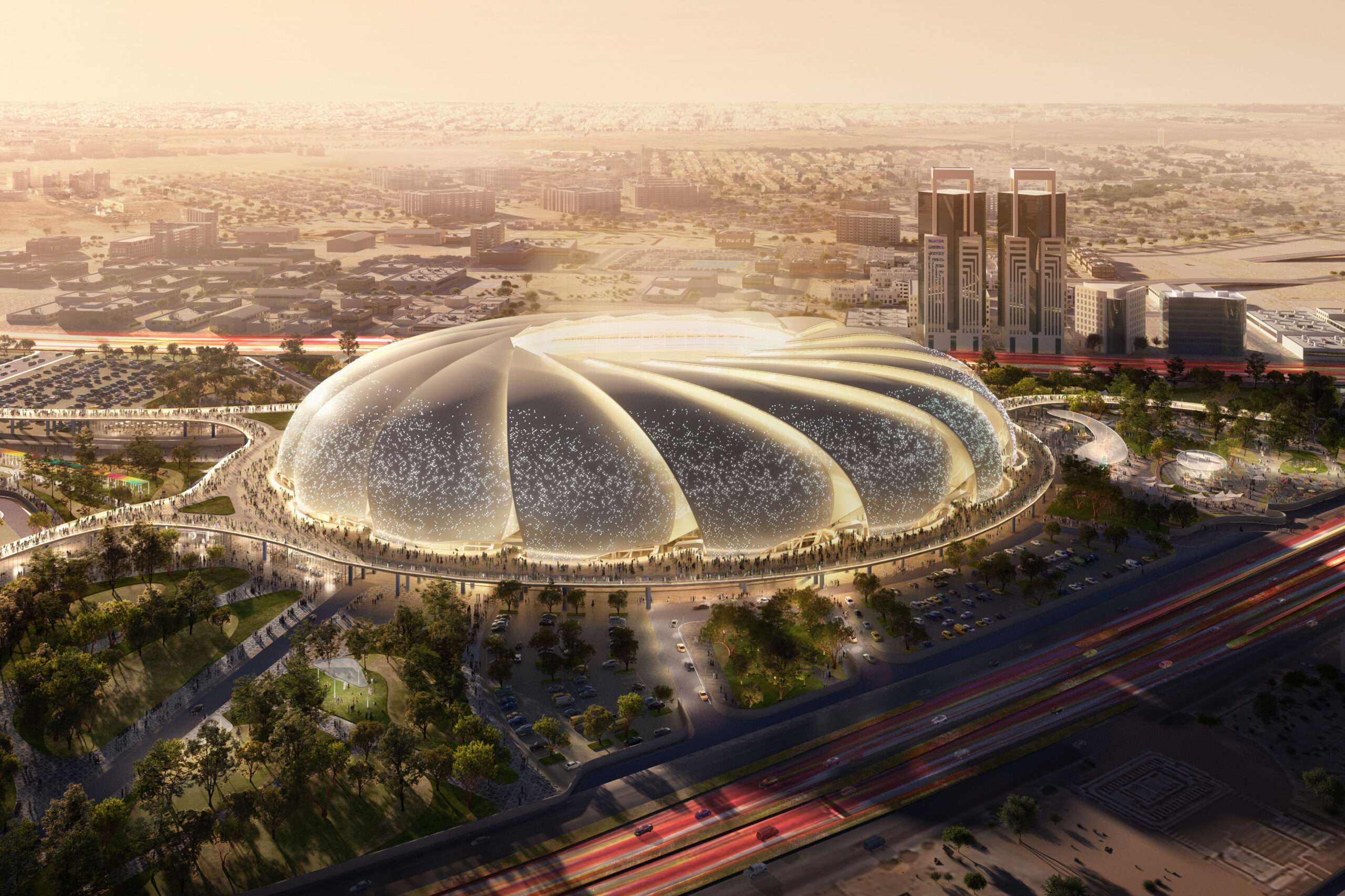
Aramco Stadium by Populous, Saudi Arabia | Jury Vote & Popular Choice Winner, Unbuilt Sports & Recreation, 13th Architizer A+Awards
The perception of sports architecture as spectacle is not accidental. Over the past several decades, the rise of mega-events and the increasingly global reach of sports broadcasting has reshaped expectations around what these buildings should do. In this context, architectural success has been equated with visibility, leading to dramatic forms and record-breaking spans.
Because of the scale of these designs, their successes and, more often, their failures, are bound to politics. And when sports buildings fail, they fail loudly: underused venues, ballooning budgets, opaque procurement processes, and human rights abuses in the construction. Yet, when they succeed, their architectural intelligence is absorbed into a broader narrative of entertainment or economic development, rendering the clever work of the designers invisible.
In both cases, architecture is treated as secondary (to politics, revenue, data, franchises, etc). The result is a narrow critical framework that overlooks what sports architecture does best: organize large-scale public life under demanding environmental and operational constraints.
Beyond Spectacle: Sports Architecture as Everyday Infrastructure

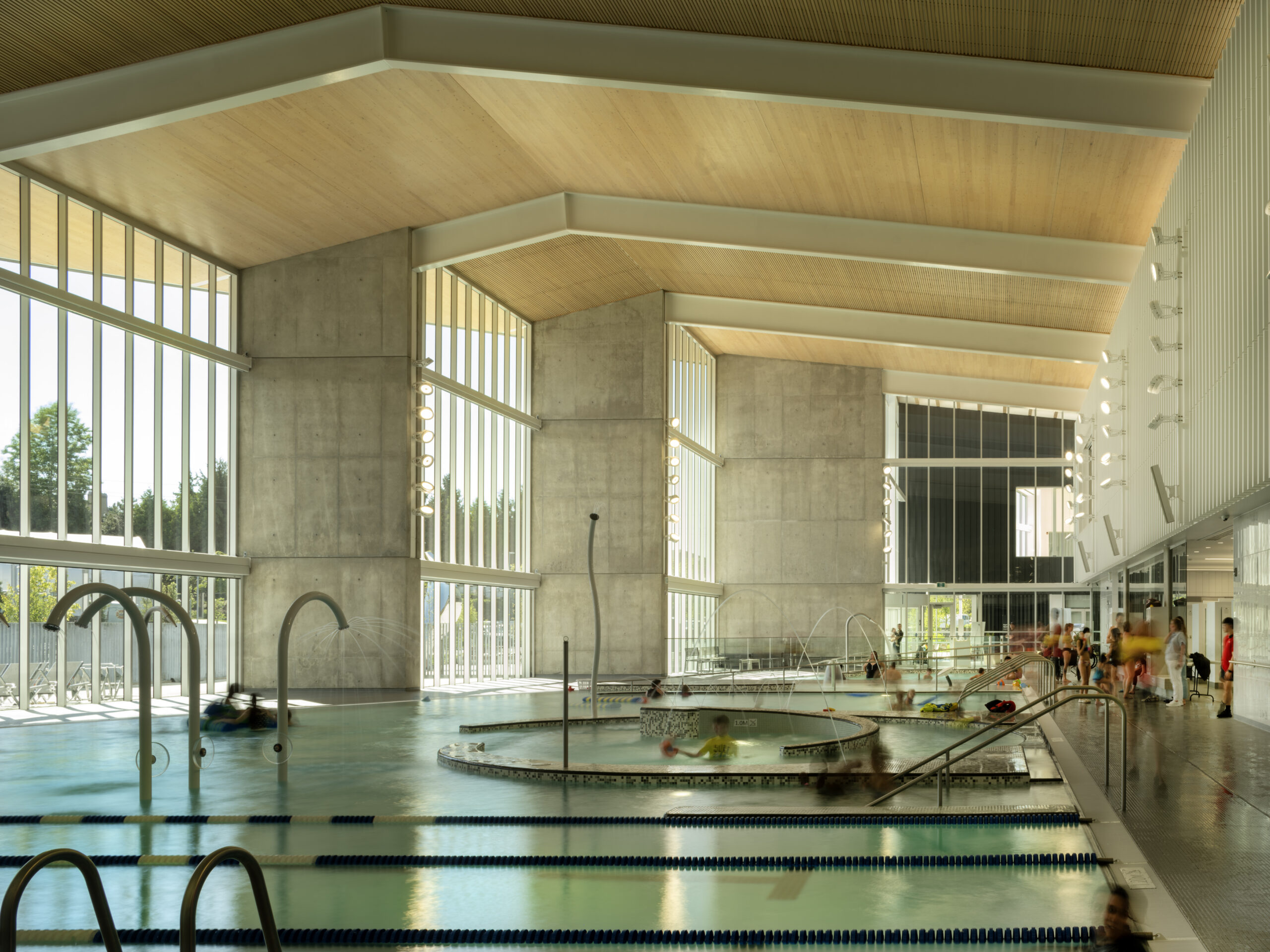
təməsew̓txʷ Aquatic and Community Centre by hcma architecture + design, New Westminster, Canada | Jury Winner, Sustainable Sports & Recreation Building, 13th Architizer A+Awards
When sports buildings are evaluated primarily as icons, key architectural questions disappear. How do these projects perform on non-event days? How do they integrate into surrounding neighborhoods and, at a larger scale, the surrounding region more broadly? How do they manage climate, water and energy at scale? How do they support daily use rather than episodic consumption?
Put plainly, reducing sports architecture to moments of spectacle flattens its civic potential. Sustainability becomes a technical add-on rather than a design driver. Public access is treated as a bonus rather than a baseline requirement. Architecture is judged by how it looks from afar. Yet many of the most consequential sports projects today are defined not by formal bravura but by how thoroughly they embed themselves into the everyday life of their users, and how they project themselves into the future of those same communities.
Across contexts, a growing body of work is quietly challenging the assumption that sports buildings exist primarily for elite performance or mass entertainment. These projects operate as shared civic assets, blurring boundaries between recreation, wellness, education and public space.

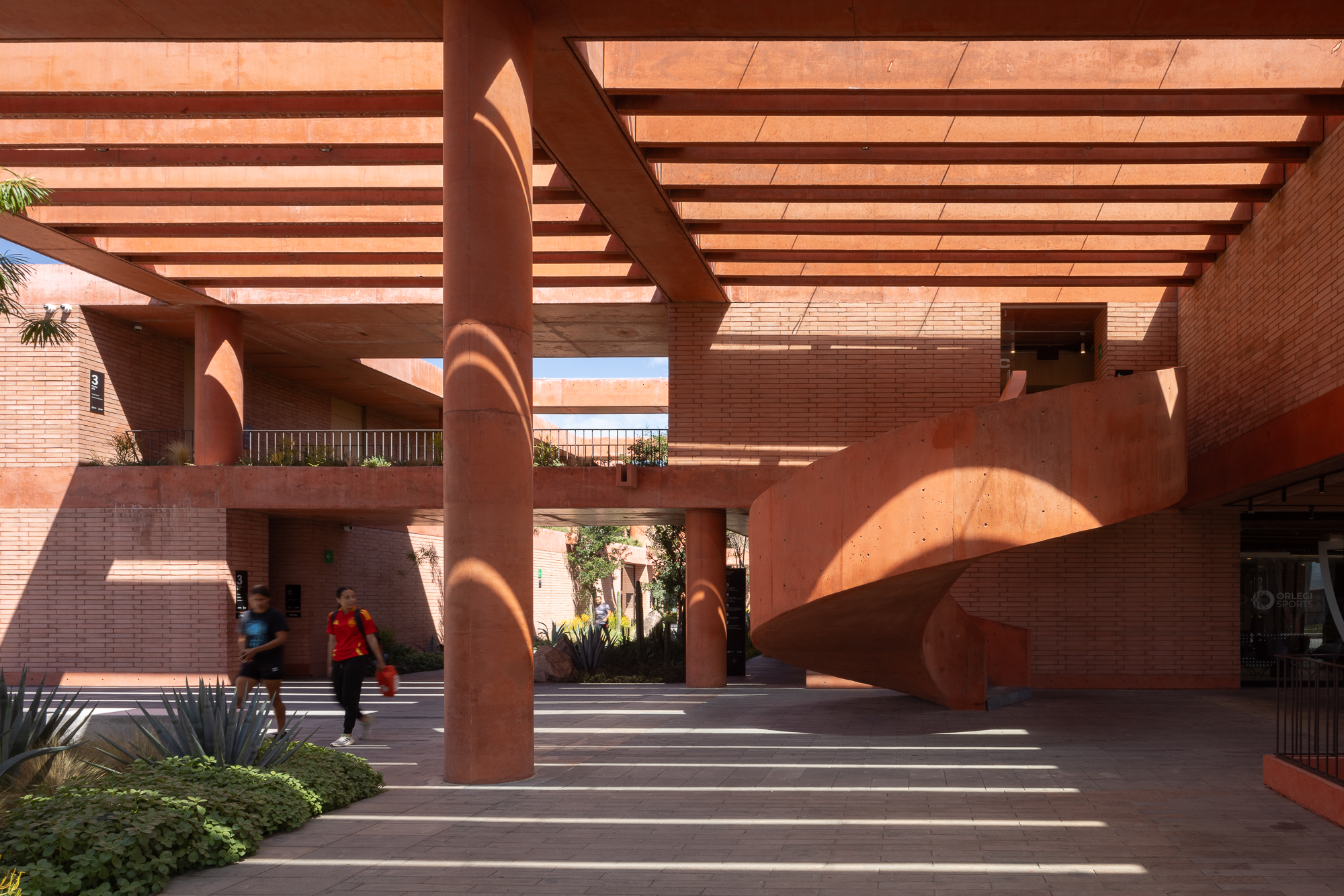
Academia Atlas by Sordo Madaleno, Zapopan, Mexico | Jury Winner, Gyms and Recreation Centers, 13th Architizer A+Awards
The TMSEWTXW Aquatic and Community Centre exemplifies this shift. Rather than isolating athletic programs as specialized destinations, the project positions sport within a broader civic framework, supporting daily community use alongside more formal training and competition. More than a container for events, the building acts as a mediator between physical activity and public life.
Similarly, though designed as home to one of Mexico’s most long-lived football teams, Atlas FC, Academia Atlas integrates athletic space into a larger educational and social environment. Beyond the function of the program itself, the decisions that drove its construction were made with an eye to the surrounding community: materials were procured locally and traditional construction techniques created jobs for a local workforce.
The Shaoxing University Stormproof Playground pushes this logic further by merging sports infrastructure with climate resilience. The lower level remains open and exposed, transforming the ground plane into a durable, all-weather space for collective use. Indeed, the design dissolves programmatic boundaries, favoring a continuous spatial landscape rather than a series of fixed zones.
Environmental Performance at Civic Scale

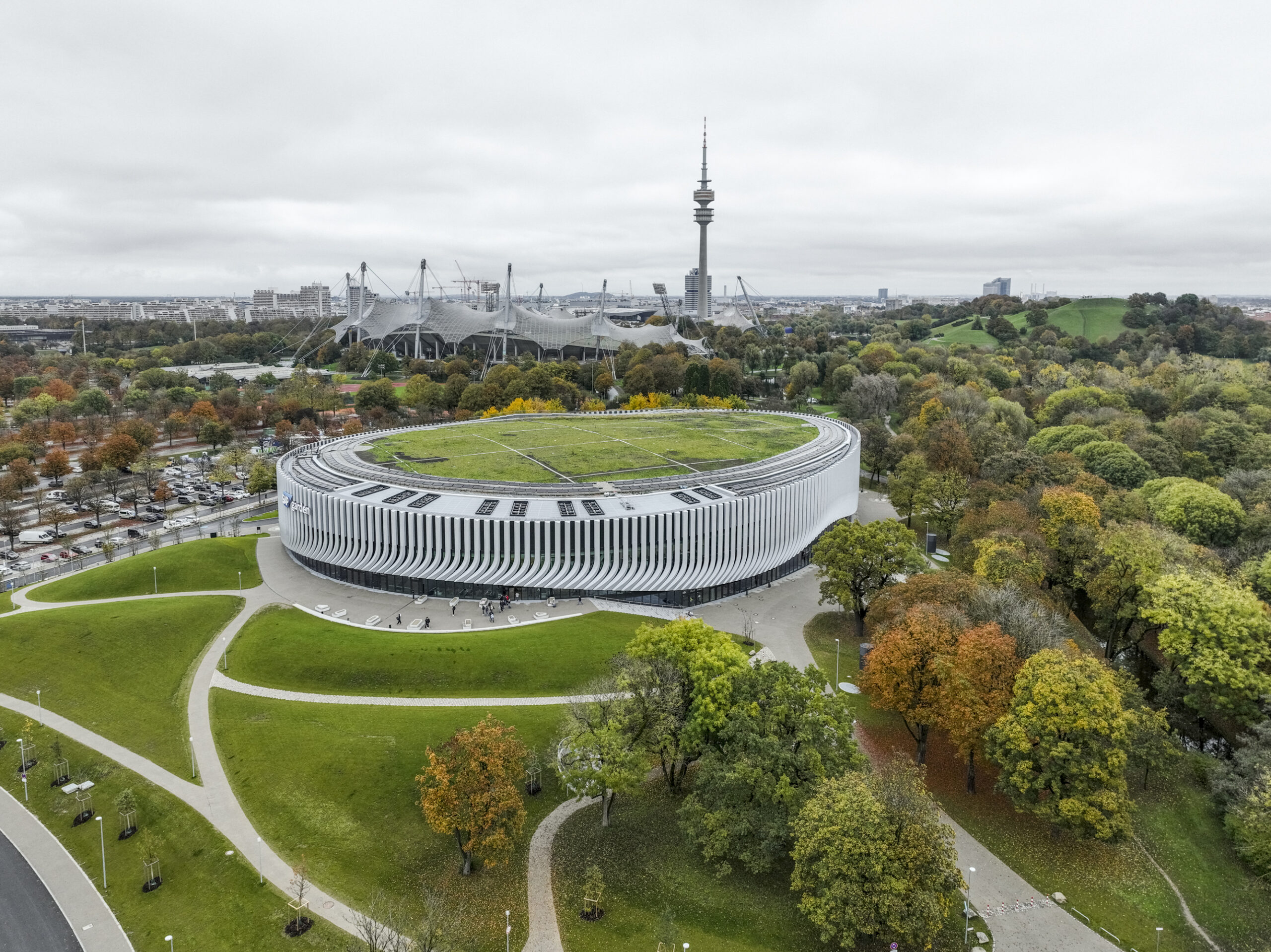
SAP Garden by 3XN, Munich, Germany | Jury Vote Winner, Stadium & Arena, 13th Architizer A+Awards
Few building types concentrate environmental demand as intensely as sports architecture. Large spans, significant enclosures, fluctuating occupancy and extensive mechanical requirements make these projects both high-risk and high-opportunity from a sustainability standpoint.This is where architectural decision-making matters most. In sports buildings, sustainability cannot rely on marginal gains or isolated technologies. It must be structural — embedded in a bevy of ways, from form, orientation and enclosure to systems thinking, material strategy and more.

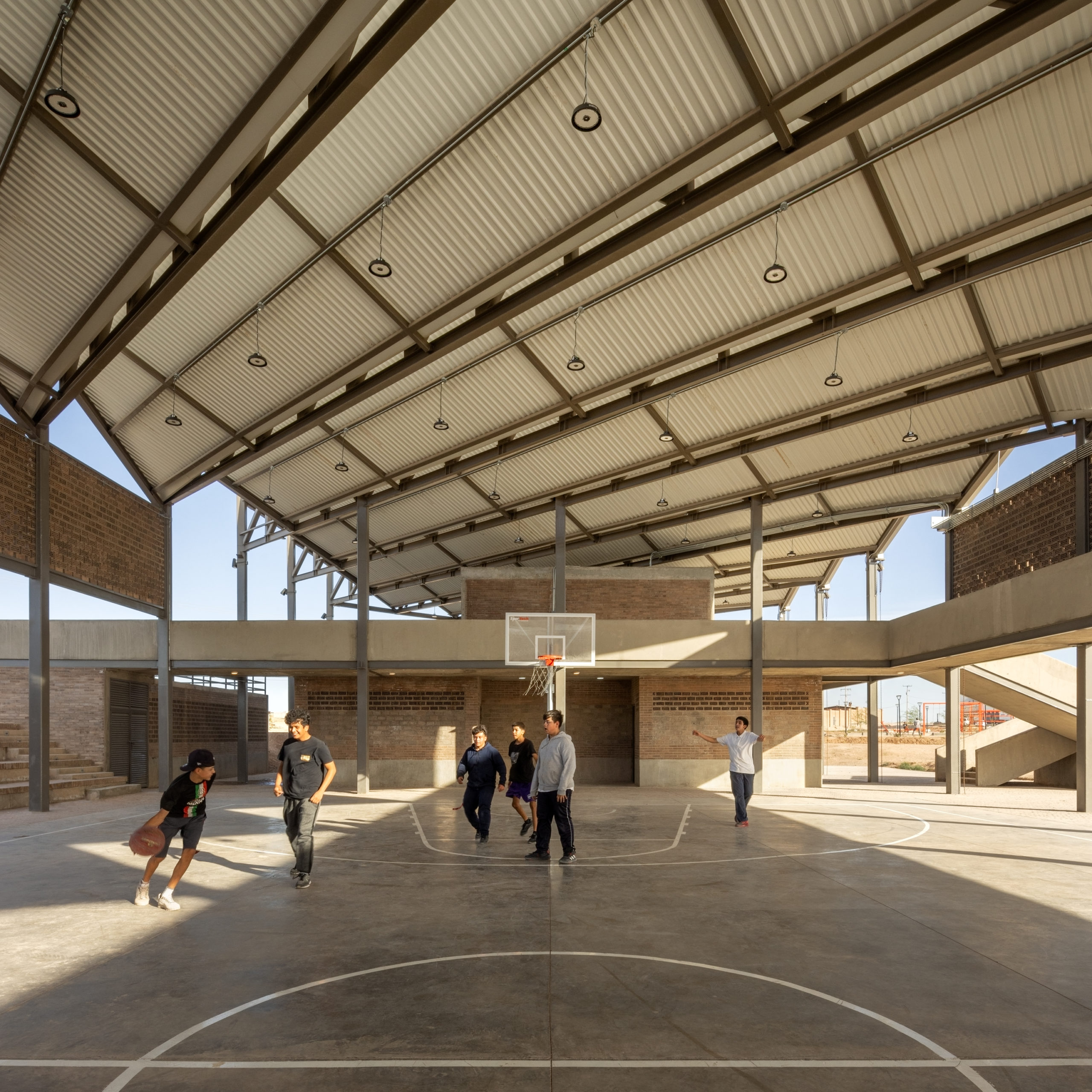
Sports Center in the Sonoran Desert by Fernanda Canales, Agua Prieta, Mexico
Projects like SAP Garden demonstrate how large-scale venues can address these issues through architectural systems rather than spectacle alone (though formal choices can reinforce this ethos; for example, the arena conceals part of its programming beneath an artificial hill that organically continues the existing pathways and landscape of the park in which it is embedded).
Likewise, the Sports Center in the Sonoran Desert shows how climate-responsive design becomes inseparable from program in extreme conditions. Here, architecture mediates light and airflow, shaping how sport is practiced and experienced rather than merely housing it.
Beyond Global Icons: Rethinking the Stadium

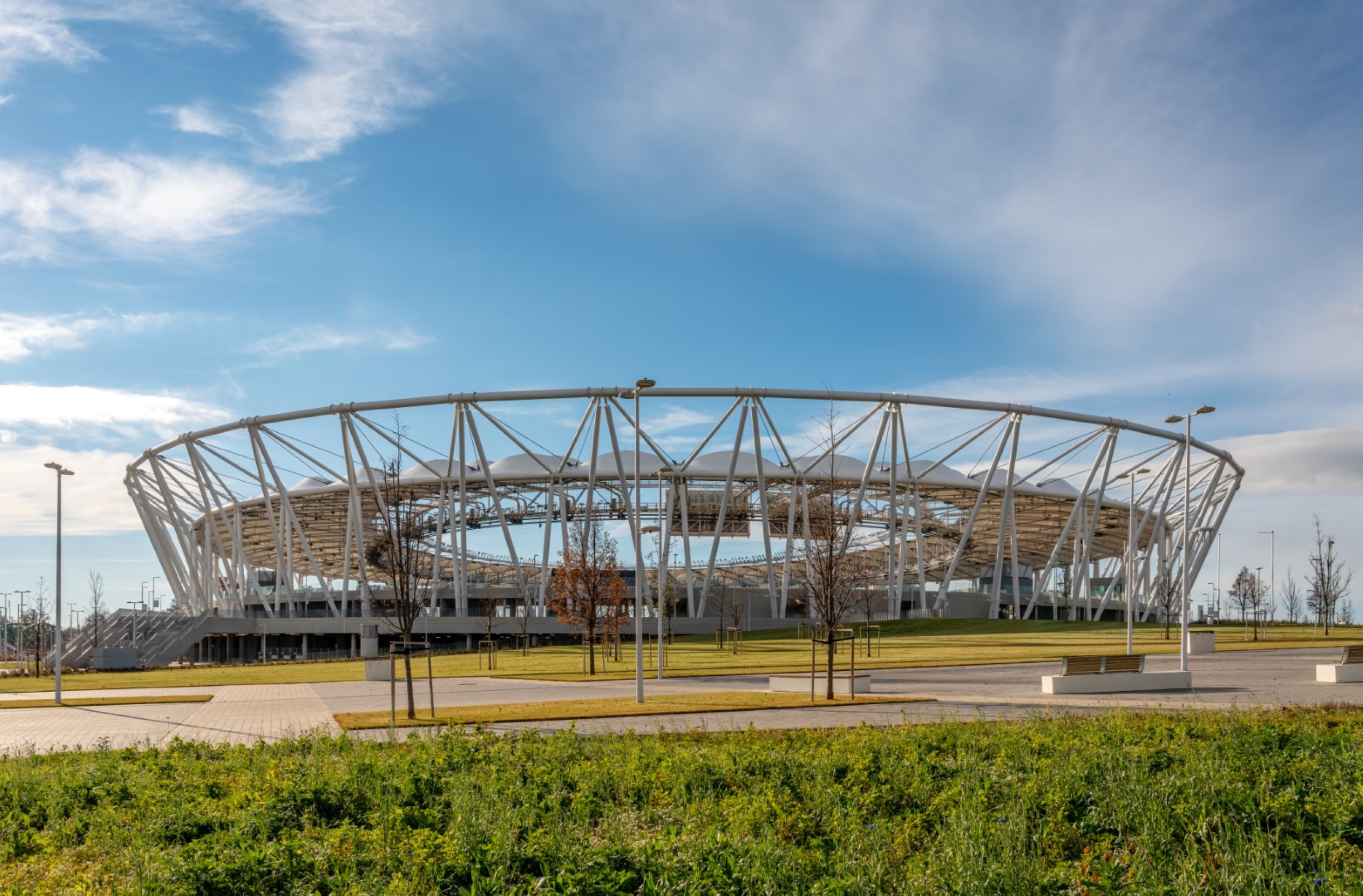
OPEN ARENA | National Athletics Center by NAPUR Architect, Budapest, Hungary | Popular Choice Winner, Stadium & Arena; Popular Choice Winner, Sustainable Sports & Recreation Center, 13th Architizer A+Awards
As mentioned at the outset of this article, stadiums occupy a particularly contested place in public discourse. They are often criticized as single-use megastructures — expensive to build, difficult to maintain and underutilized outside of event cycles. While these critiques are not unfounded, they are not inevitable outcomes of the typology.
The Open Arena National Athletics Center in Budapest offers a different model. By prioritizing public accessibility beyond event schedules, the project reframes the stadium as an everyday urban space rather than a sealed object. Though built for the 2023 World Athletics Championships, the stadium’s temporary upper stands were designed to be removed, so that after the event, they could be replaced by an extensive covered leisure park, called the “Open City Ring.”
At a much larger scale, projects like Aramco Stadium reveal how infrastructural thinking can coexist with visibility. The challenge is not scale itself, but whether architecture is deployed to support long-term civic use rather than short-term impact. In short, stadiums succeed when they are designed as systems, with a long view to adaptability and cultural engagement, rather than as monuments.
Why Recognition Matters

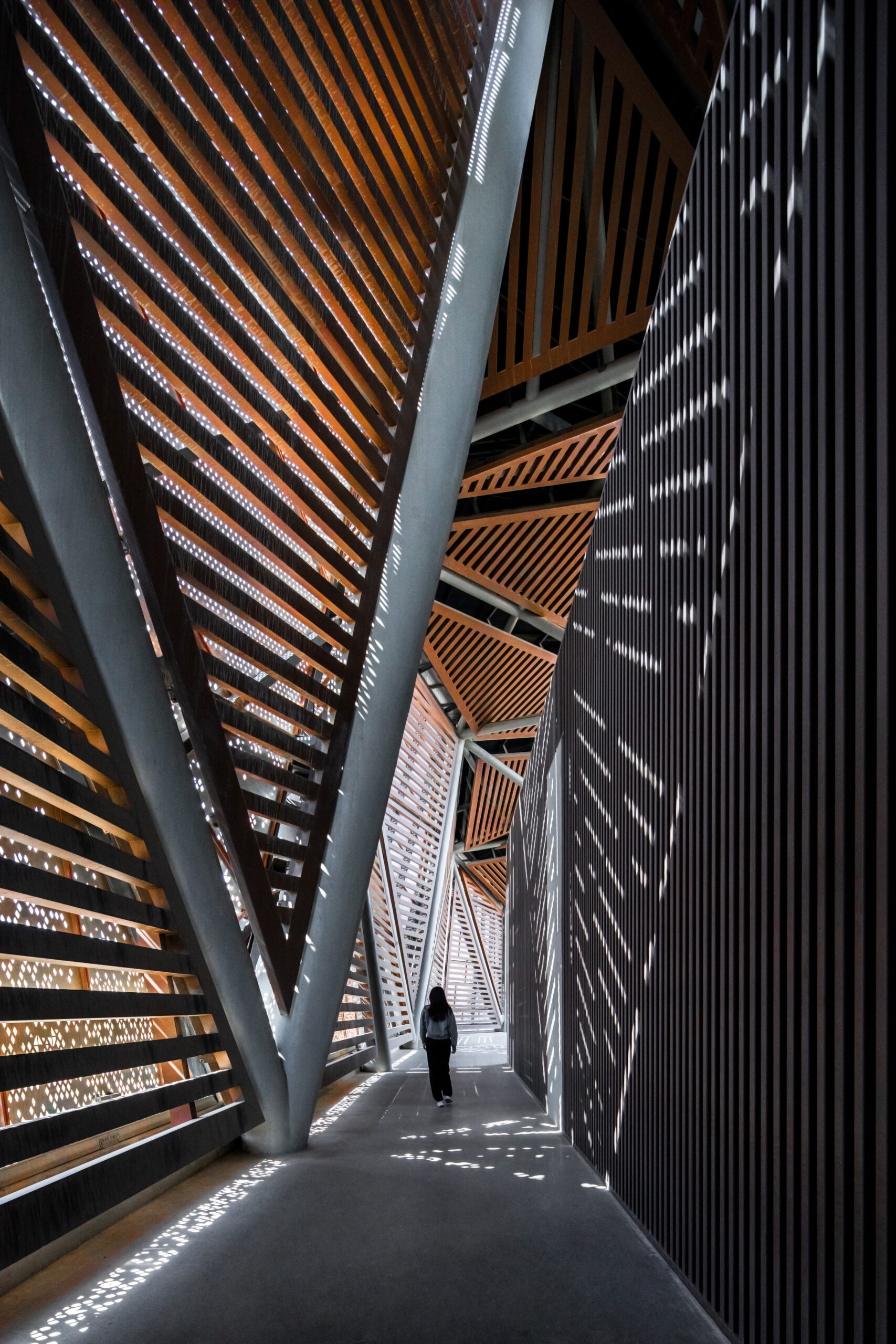
Haidong City Sports Center by Character Architecture Design Studio, China Architecture Design & Research Group, Haidong, China
Sports architecture occupies an uncomfortable position between categories: civic building, infrastructure, cultural venue and environmental system. When recognition frameworks prioritize novelty or iconography, the architectural labor that allows these buildings to endure often goes unnoticed.
The most consequential sports architecture today is not always found in global capitals or Olympic host cities. Increasingly, it appears in regional contexts, where buildings must work harder, longer and for broader constituencies. Take, for example, the Haidong City Sports Center, which, on top of offering a space for daily recreation, seeks to articulate local identity. The project demonstrates that infrastructure does not need international visibility to have a lasting impact.
Awards do more than celebrate outcomes. They signal what the profession values. They shape client expectations and influence how architects approach future briefs. When sports architecture is judged rigorously — on spatial intelligence, sustainability and civic performance — design ambition follows. Conversely, when these projects are dismissed as indulgent or secondary, the message is clear: architectural thinking is optional here.

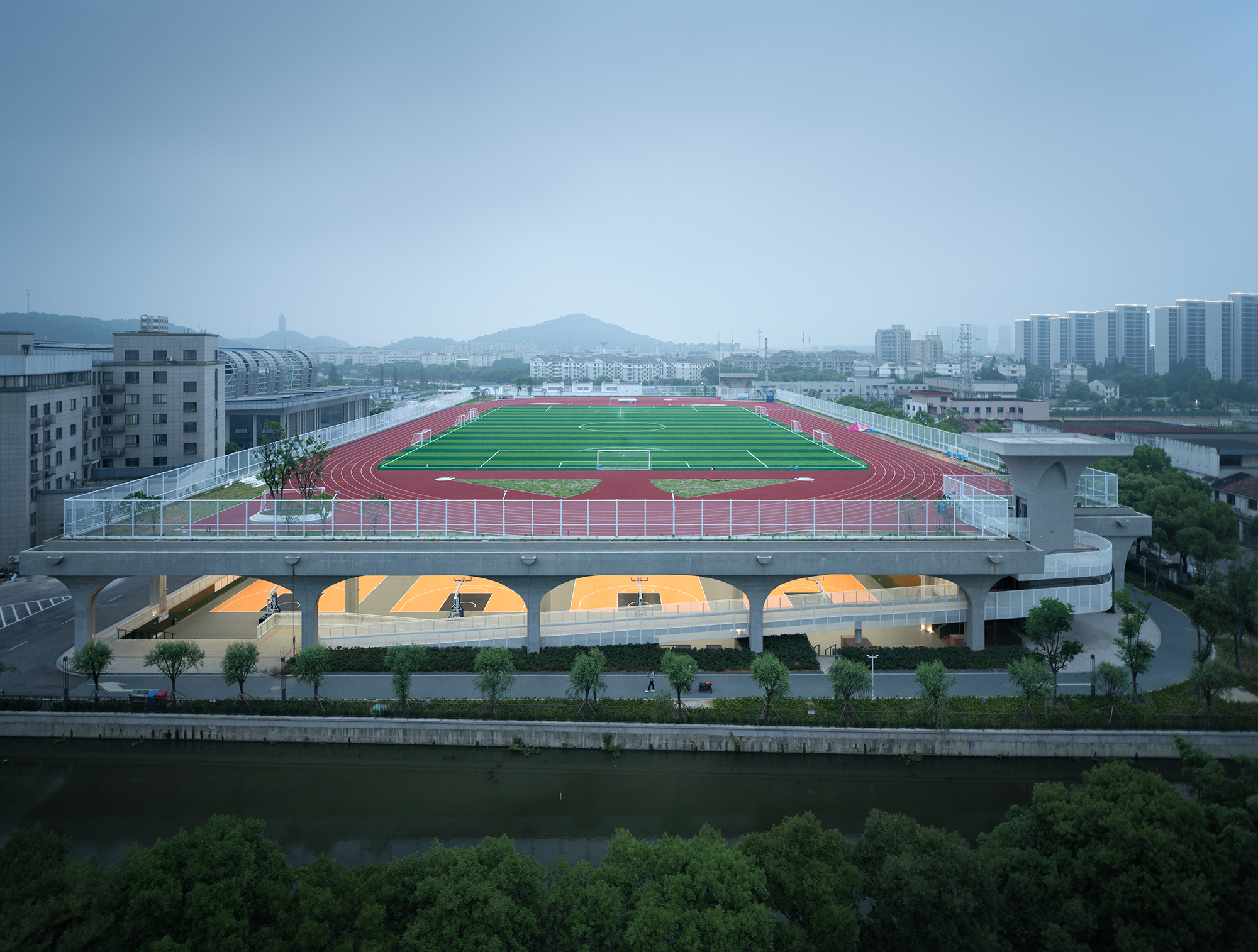
Shaoxing University Stormproof Playground by The Architectural Design & Research Institute of Zhejiang University (UAD), Shaoxing, China | Popular Choice Winner, Gyms and Recreation Centers, 13th Architizer A+Awards
Sports architecture organizes collective life at scale. It structures public space, manages environmental demand and supports social interaction across demographics. These buildings are not luxuries. They are urban utilities with cultural weight. Treating sports architecture as spectacle underestimates its civic responsibility and architectural potential. If architecture wants to claim relevance where it is most visible and most demanding, it must take sports buildings seriously — not as icons, but as infrastructure.
The judging process for Architizer's 14th A+Awards is now underway. Subscribe to our Awards Newsletter to receive updates about Public Voting, and stay tuned — winners will be announced later this spring.
Enter Your Sporting Venue in the 14th A+Awards→
Featured image (top): OPEN ARENA | National Athletics Center by NAPUR Architect, Budapest, Hungary | Popular Choice Winner, Stadium & Arena; Popular Choice Winner, Sustainable Sports & Recreation Center, 13th Architizer A+Awards