For more ways to supercharge your workflow, check out more articles in our Tech for Architects series, which includes our recommendations of Top Laptops for Architects and Designers.
Architecture has long operated under two almost unquestioned principles: always design for the user and create buildings that will stand the test of time. Yet, if we look closely at those two ambitions, we realize that, in fact, they contradict each other. Designing a workplace tailored to specific company needs may support the desired functions for the client’s immediate occupation, but in the long run, the space can become outdated rather quickly. In other words, user-centric design may unintentionally lead to more disposable buildings, posing the question of how architects can design spaces that will actually remain useful.
According to the European Real Estate Society, commercial and office spaces can become functionally obsolete in as little as 10-15 years, while buildings in general are expected to last approximately 50 to 80 years. The rapid changes in market demand, cultural shifts such as workplaces adapting to hybrid work, changes in zoning or environmental regulations and a wider technological impact on the built environment, act as proof that the “user” is no longer stable enough to serve as architecture’s primary design reference.
In fact, adaptive reuse is becoming an increasingly popular tactic to extend a building’s life, with structures becoming repurposed multiple times throughout their lifespan. Consequently, rather than designing for a specific user, many contemporary architecture firms are experimenting with strategies that anticipate change.
Designing for (Unknown) Future Occupants
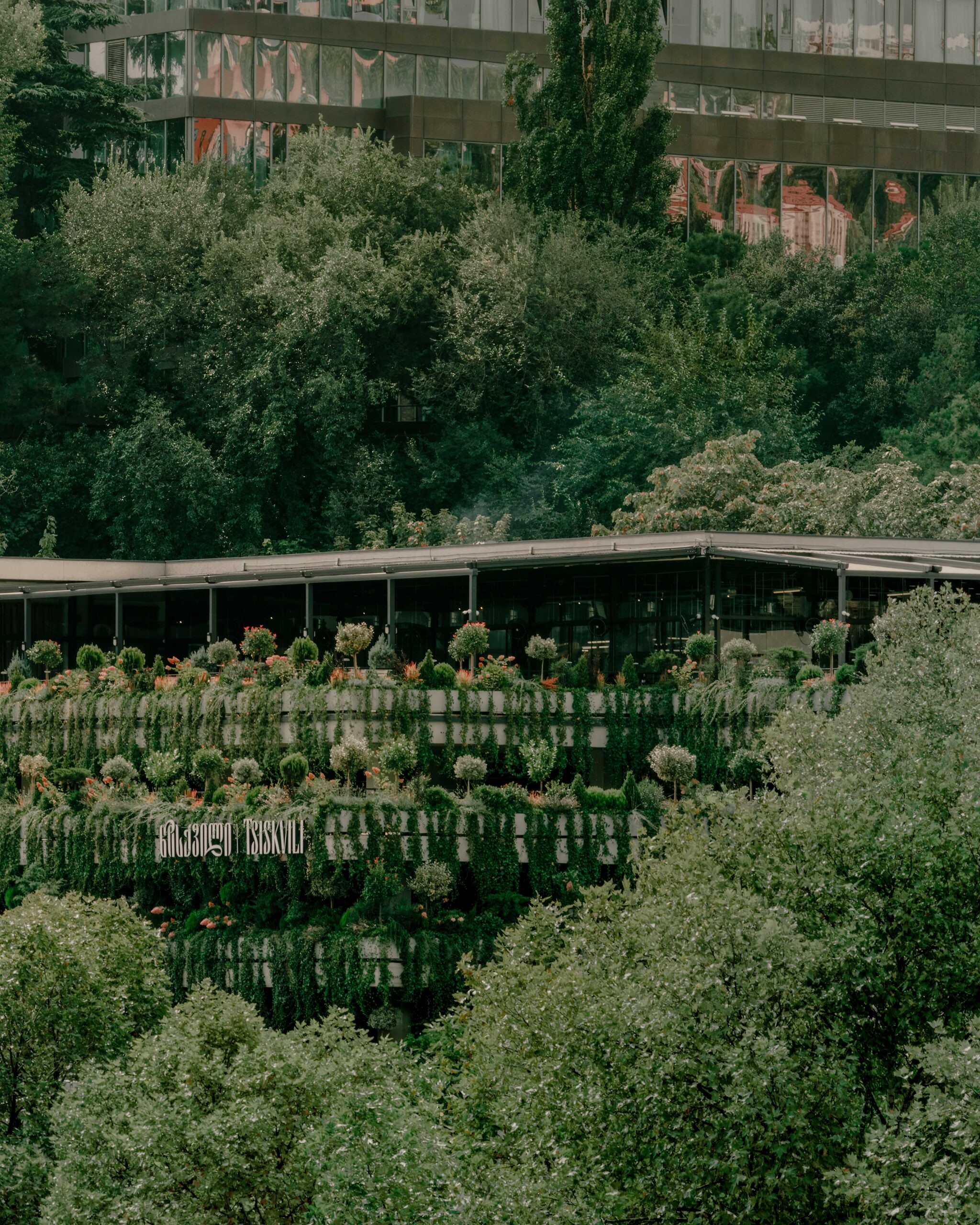


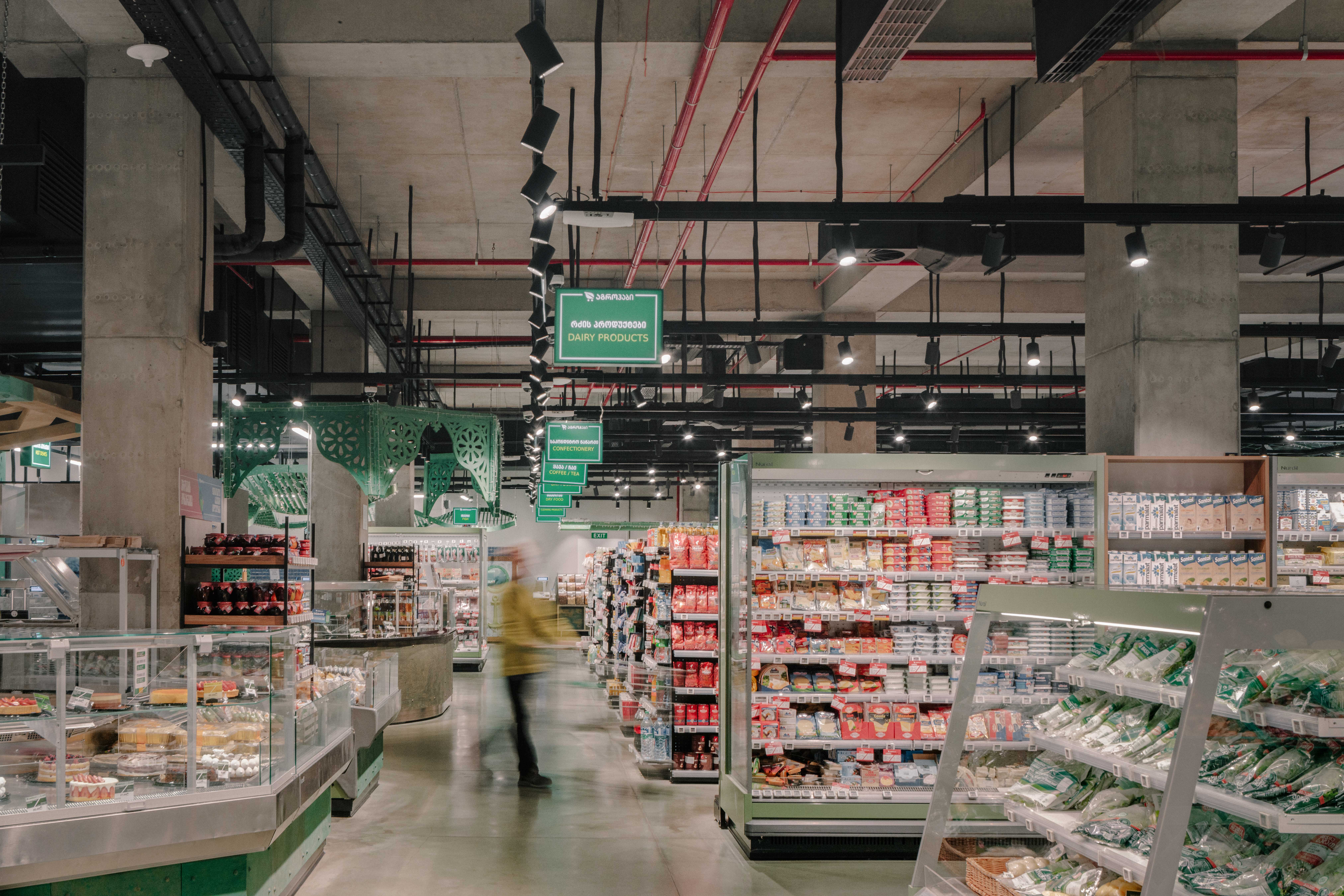
Multifunctional Landmark on the Riverbank by STUDIO 9, Tbilisi, Georgia | Jury Vote & Popular Choice Winner, Commercial – Mixed Use (S<25,000 sq. ft.), 13th Architizer A+Awards
One tactic is to design for future unknown occupants. By incorporating regular structural grids, adaptable service cores, efficient circulation routes and spacious floor-plans the building can outlive its original tenants and support programmatic migration. The Multifunctional Landmark on the Riverbank project, for example, is a mixed-use complex that houses retail, dining and public access within a single, layered structure. A hypermarket designed for direct, high-traffic access is located on the ground floor, while the upper levels house restaurants as well as open, public spaces and parking lots. The programs are partially stacked and interconnected, with large terraces, green facades and a long central staircase linking the different levels.
While the building accommodates specific functions today, its spatial logic also demonstrates a strategy of designing for unknown occupants. Specifically, the open floor plates, accessible circulation and the layered structure enable a variety of future programmatic shifts. Moreover, the building balances large public spaces with more intimate corners, establishes connections with the city and prioritizes spatial capacity and connectivity rather than strict dedicated user scenarios.
Embracing Architectural Ambiguity
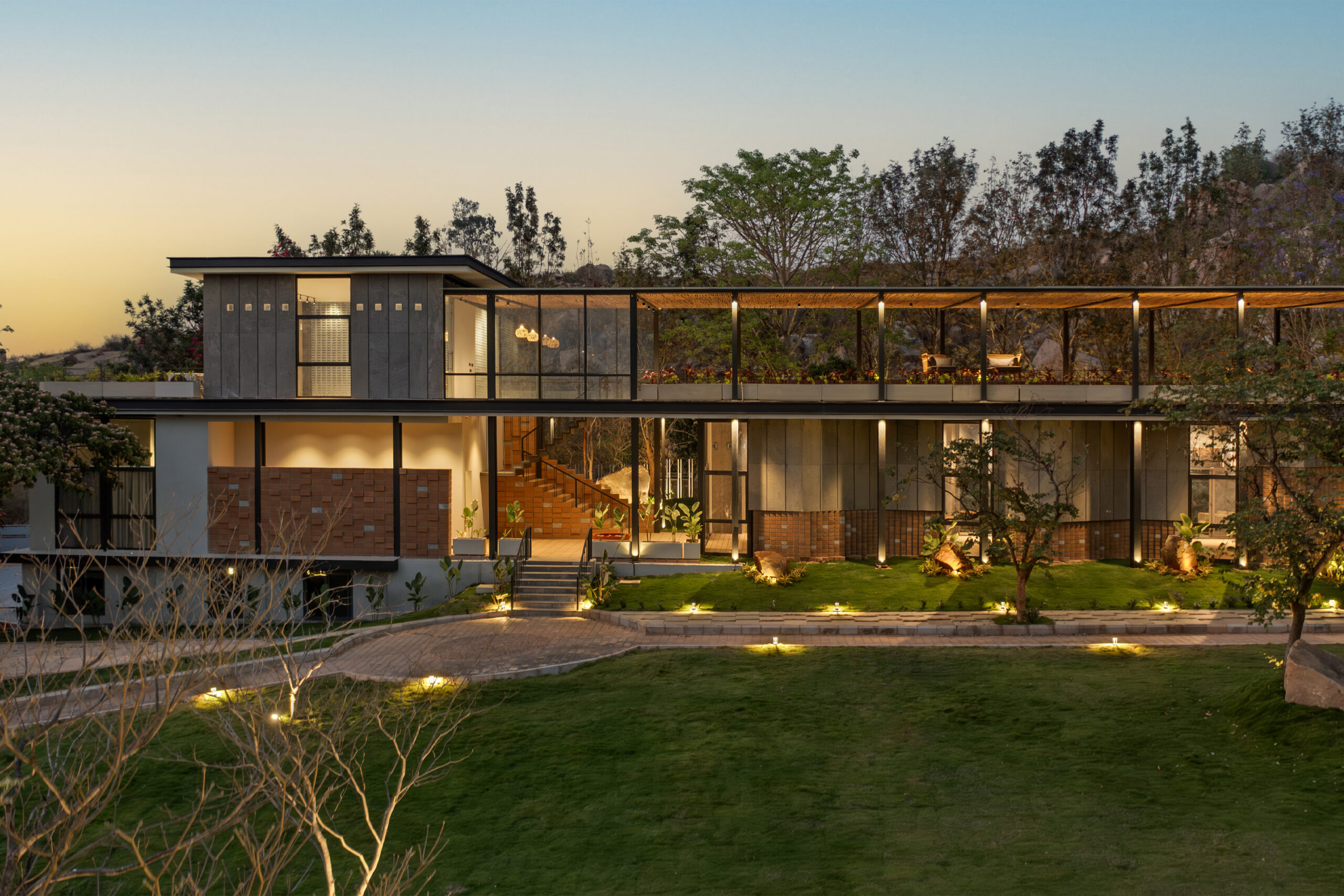

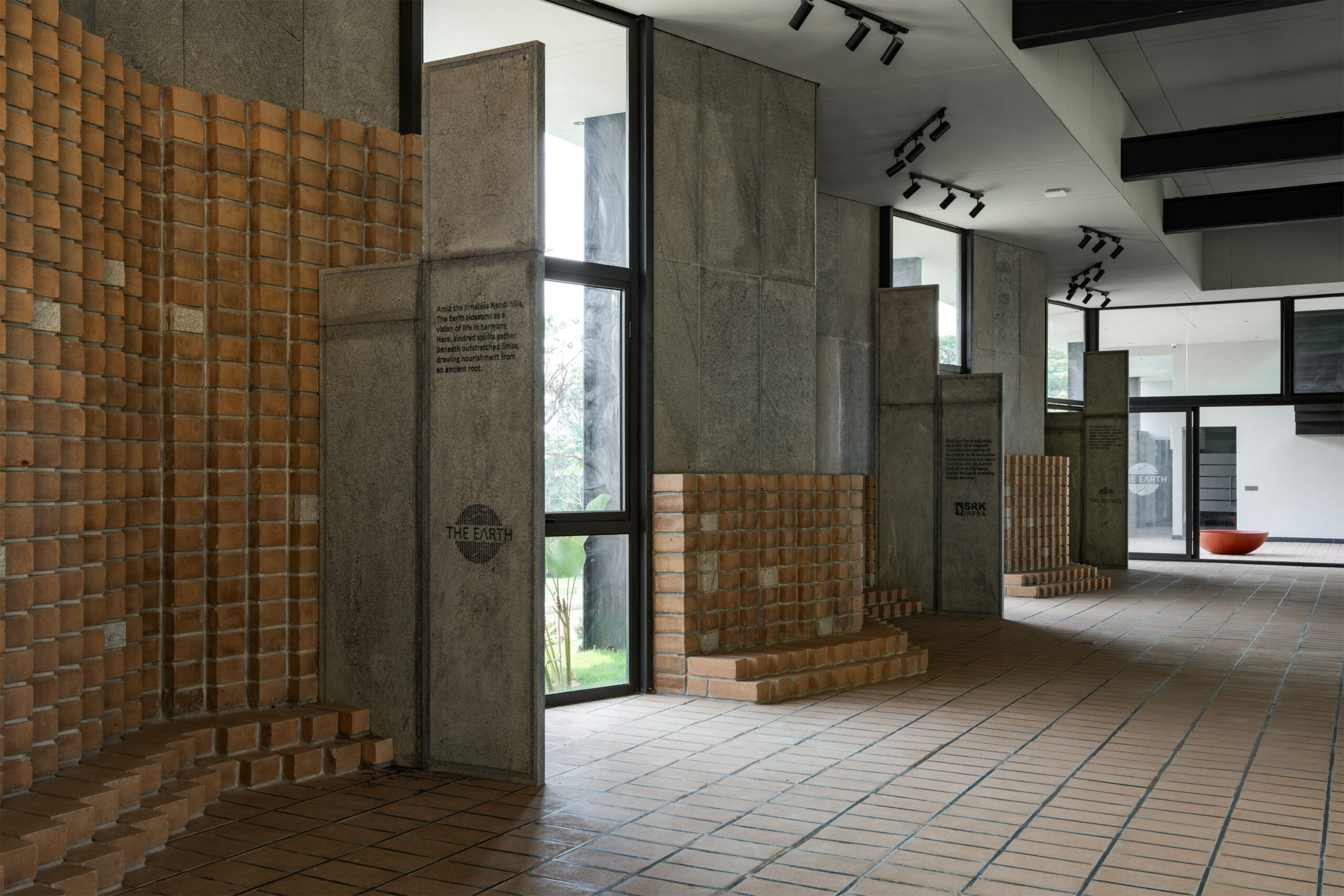
Another approach is to shift the attention away from the person and focus on the activity. For example, instead of designing a one-bedroom apartment for the “philosophy student / DJ hobbyist”, architecture could support broader spatial conditions — in this case, private silent corners versus spaces for gathering. In that sense, this architectural ambiguity allows for hybrid programming.
For example, The Earth is an experience center originally designed as a marketing gallery. However, the project was envisioned from the outset as a structure that could support different forms of occupation over time. The design sets up a simple, spatial framework where a lightweight MS-framed structure sits within a reflective pool of water, while walls and floors constructed from locally sourced compressed earth blocks blur the boundary between vertical and horizontal surfaces.
The project also experiments with dry granite cladding assembled through interlocking rebate joints and concealed metal clamps, thus allowing the building to remain materially efficient. By creating large open interior spaces, divided via a series of flexible and thoughtfully constructed partitions, the exhibition center can accommodate programs that go beyond the client’s original marketing brief.
From Static Object to Adaptable Infrastructure
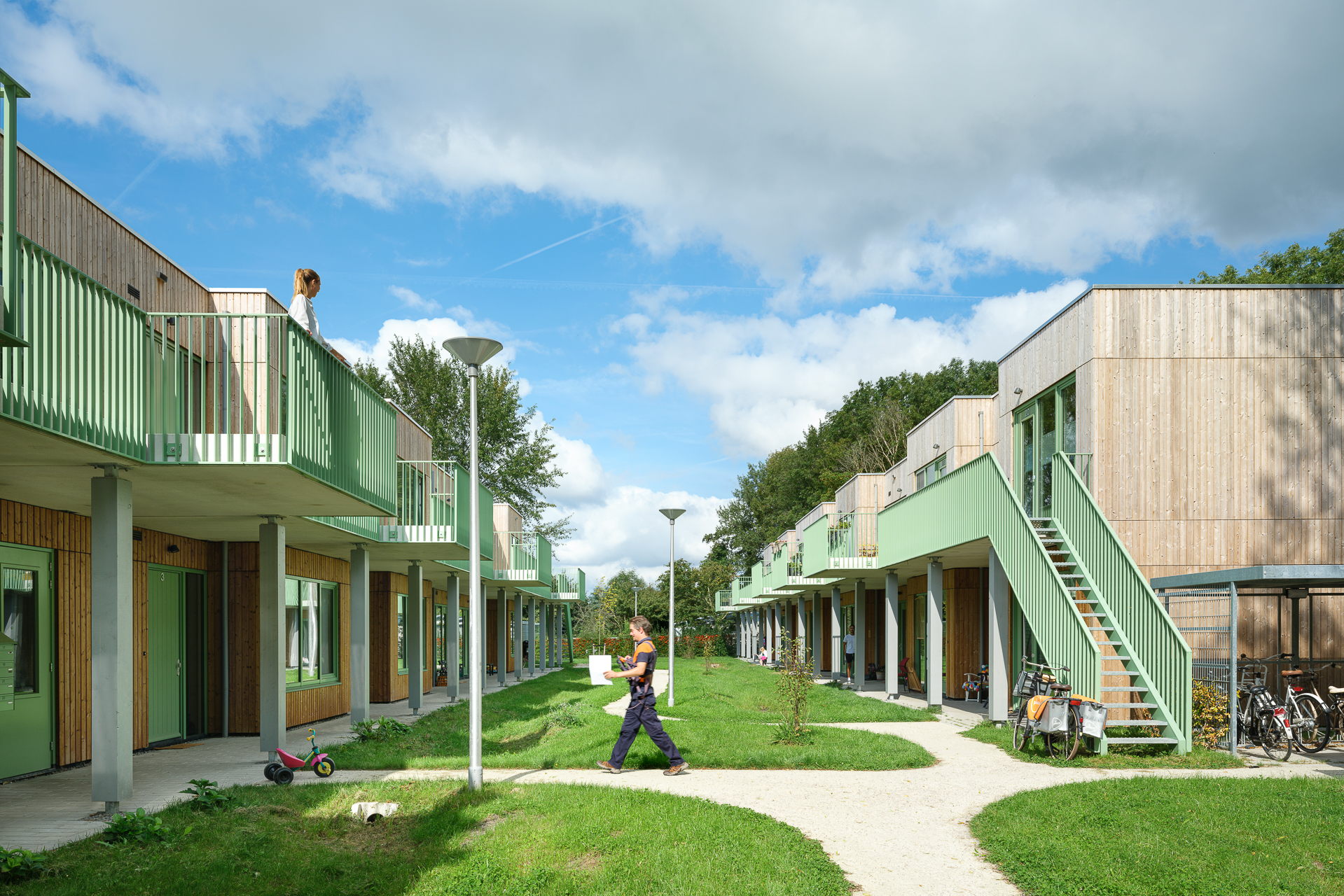

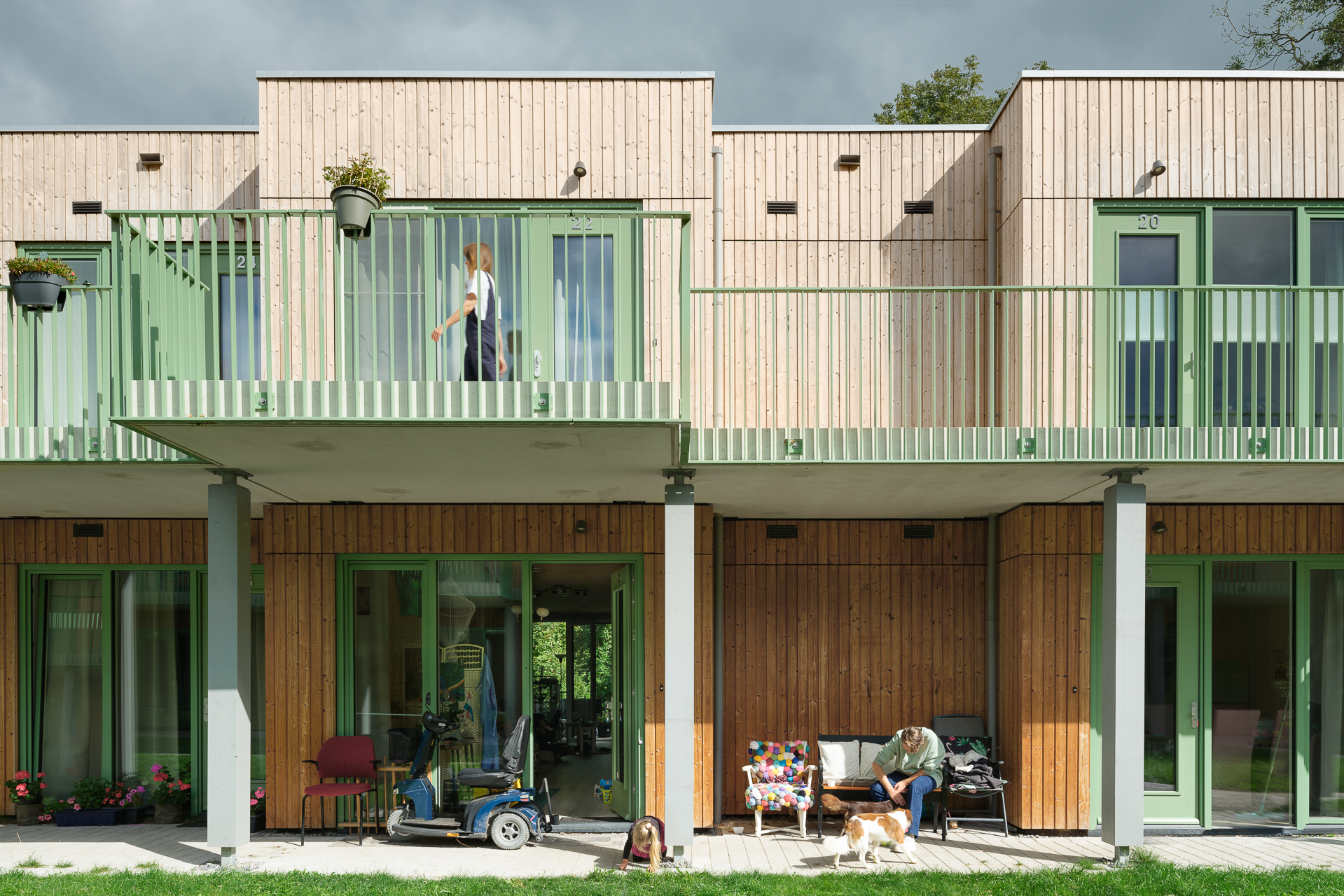
Moos Euterpe by concrete, Maasland, Netherlands | Popular Choice Winner, Affordable Housing, 13th Architizer A+Awards
Lastly, a third approach treats architecture not as a finished object but rather as an infrastructure that can spatially adapt for different programmatic conditions. Moos Euterpe in Maasland explores a housing model concept designed through an adaptable construction system. The project addresses the Dutch housing shortage and develops a design that can accommodate a diverse mix of residents. Two facing buildings are organized around a shared garden, while stepped galleries function as verandas, mediating between private homes and collective spaces. The architecture provides a spatial structure capable of supporting multiple forms of living and social interaction, allowing the residents to discover their own personal way of occupying the space.
Apart from the spatial plasticity, however, the project is also conceived as structurally flexible as well. Each dwelling is composed of two modules: a fixed “basic” module containing essential domestic functions and a “personal” module that residents can adapt according to their needs, both produced in factories and assembled on site. Through this plug-and-play system, the architecture enables rapid construction while creating a long-lasting infrastructural framework that can accommodate an array of programs and occupants.
The Changing Role of the Designer
Frankly, designing for uncertainty can be intimidating for architects, who long relied on relatively stable scripts: a kindergarten school for students, a home for a four-person family, etc. Designing for adaptation pushes architects to relinquish some of this control. But what if this shift also reveals a different role for the architect? What if instead of being problem-solvers, they become choreographers, establishing frameworks or conditions that can be transformed or reinterpreted?
Personally, I find this shift far more exciting than pretending architecture can perfectly anticipate how life will unfold inside it.
For more ways to supercharge your workflow, check out more articles in our Tech for Architects series, which includes our recommendations of Top Laptops for Architects and Designers.
Featured Image: Multifunctional Landmark on the Riverbank by STUDIO 9, Tbilisi, Georgia, Jury & Popular Winner, Commercial – Mixed Use (S<25,000 sq. ft.), 13th A&Awards