Architects: Want to have your project featured? Showcase your work by uploading projects to Architizer and sign up for our inspirational newsletters.
A wise architect once said a good floor plan starts by pulling the building apart. Or something like that. Either way, the idea has been around for a long time. Long before contemporary architects began talking about decentralization, many settlements grew this way naturally; as clusters of houses, courtyards and narrow paths shaped by terrain, climate, and daily life.
Nowadays, that same logic continues to influence design. Instead of packing every function into a single compact block, dispersed floor plans spread programs across a site as a series of smaller volumes. The spaces between them become courtyards, paths and outdoor rooms that bring nature movement into the architecture.
The following projects show how this approach continues to shape our spaces, turning buildings into small spatial landscapes rather than singular objects.
Yoma Suites
By Urban Soul Project, Zakynthos, Greece
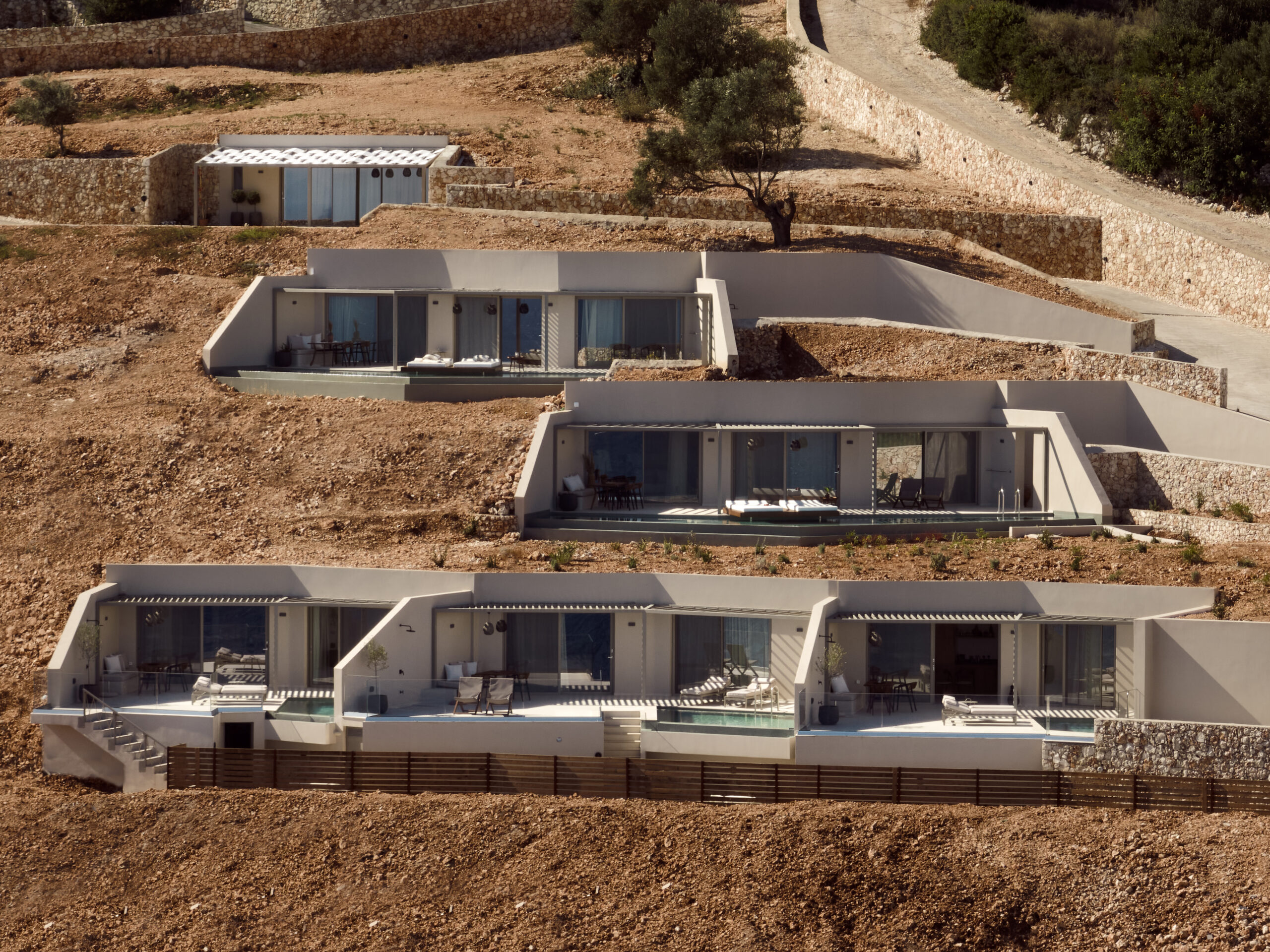
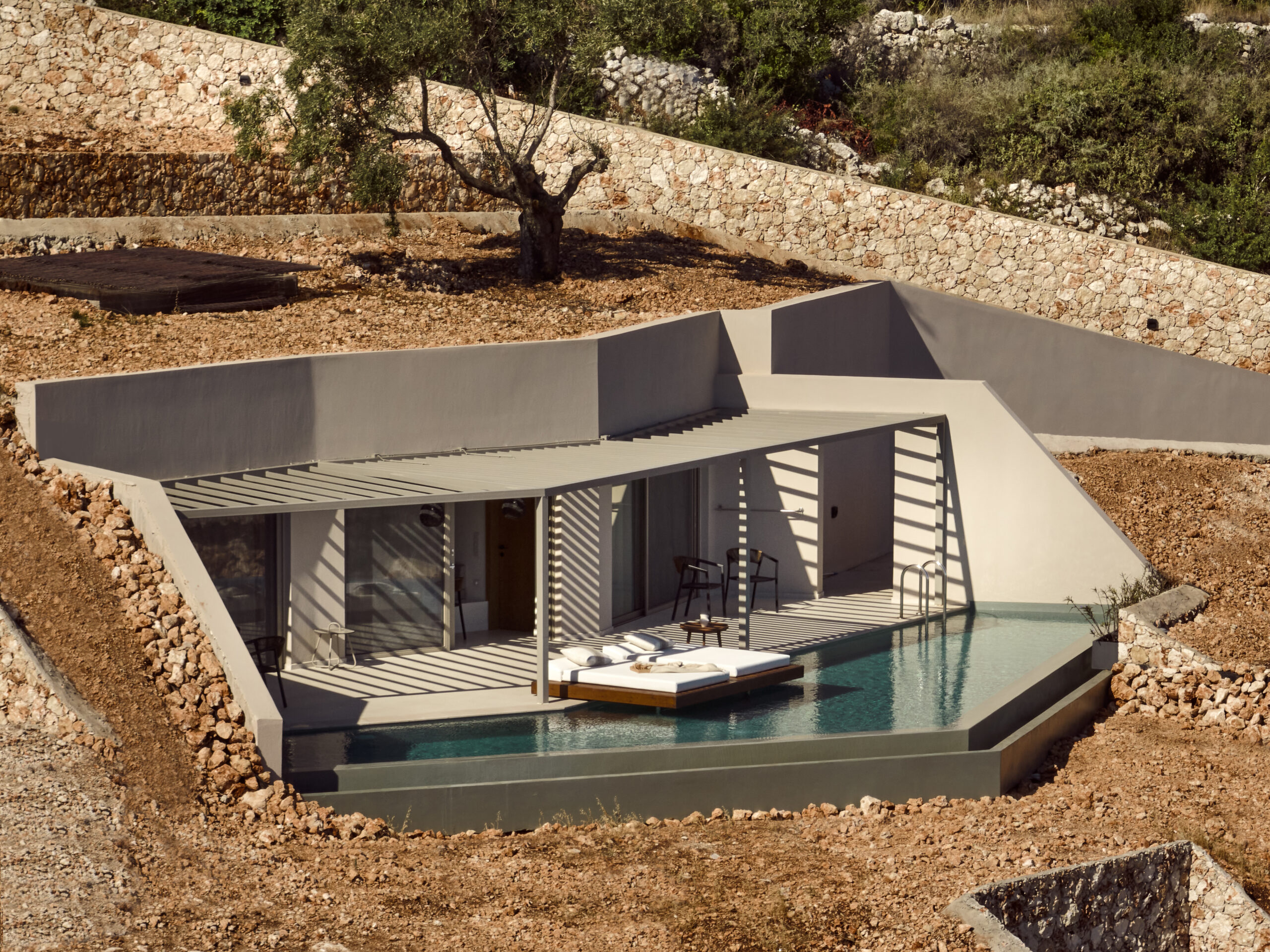

Thick walls extend outward to form terraces and small pools, creating pockets of privacy between neighbors. Light wells draw daylight deep inside, while earth-toned plaster, oak, soft fabrics and veined marble reflect the island’s natural palette.
Village House
By Studio MK27, Porto Feliz, Brazil
Popular Choice Winner, Residential Interiors (>3,000 sq ft), 13th Annual A+Awards
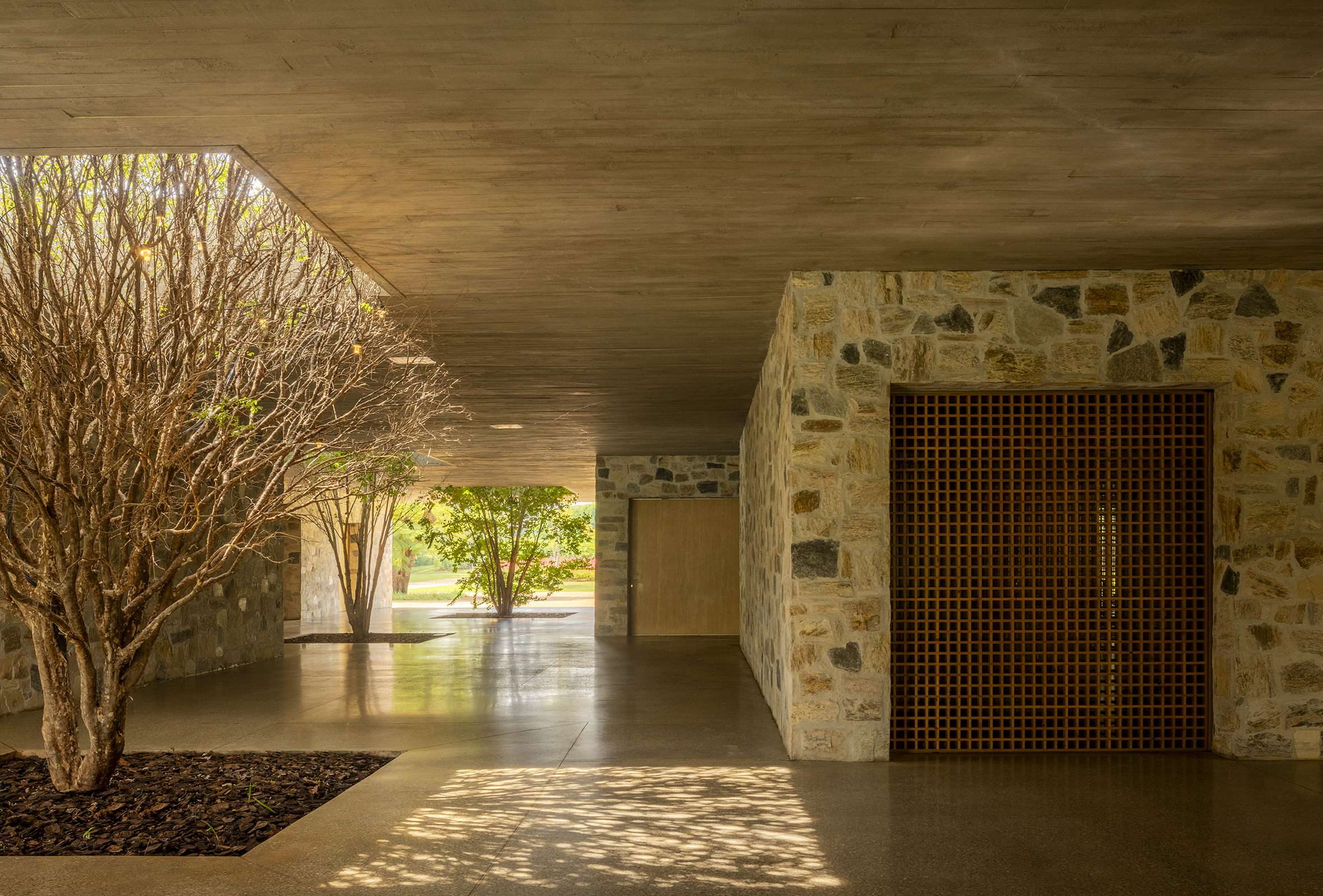
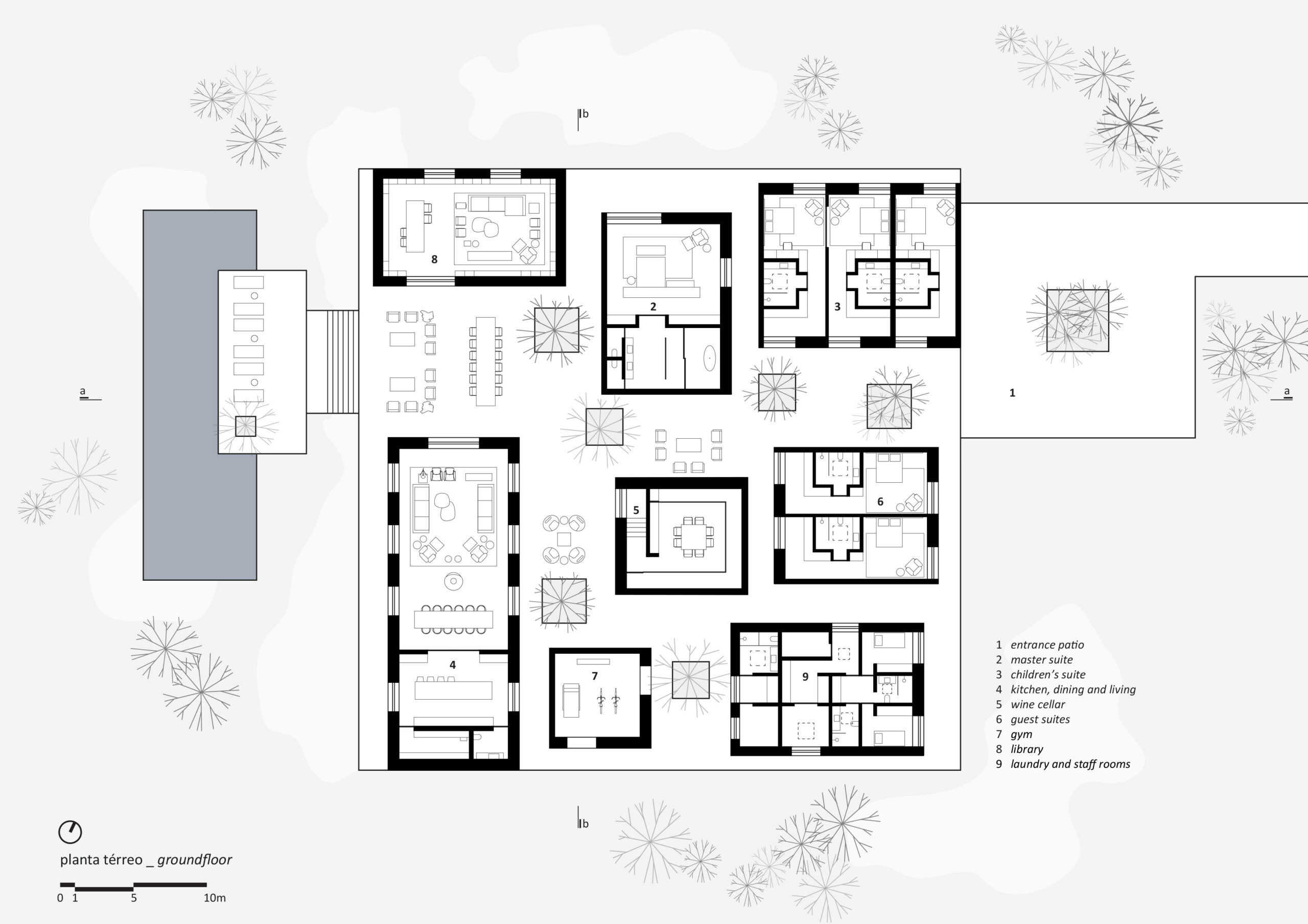


Narrow alleys and small piazzas connect these pieces, turning movement through the house into a relaxed walk between rooms. Along the way, thick stone walls offer privacy while carefully placed openings reveal light and shifting views. Inside, wood-lined surfaces add warmth and comfort. Natural fabrics, leather and rough stone reinforce the rural atmosphere, giving the dispersed layout the easy rhythm of a place meant to be wandered.
JST Production Engineering Center
By Arcari + Iovino Architects, Harrisburg, Pennsylvania
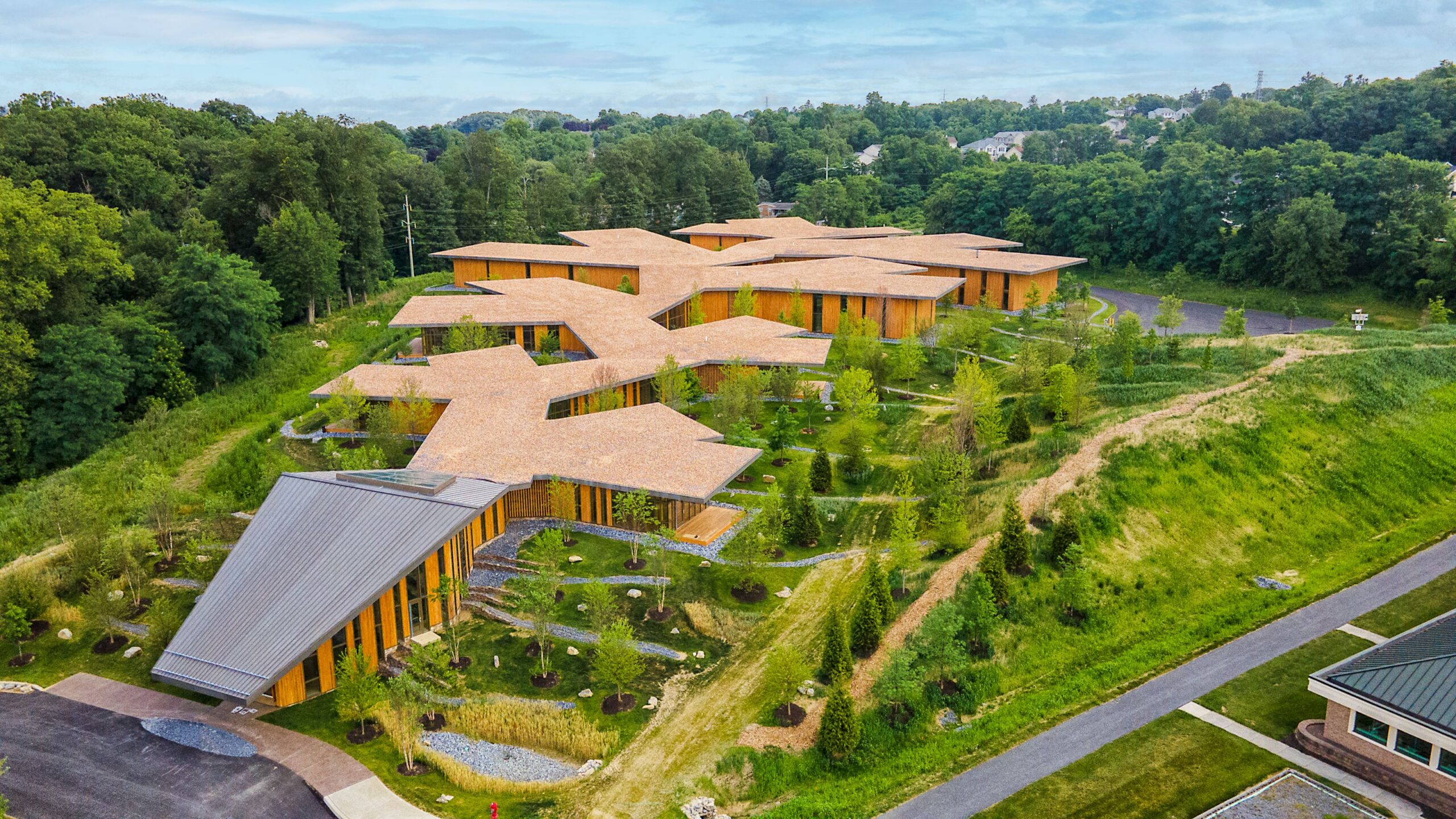
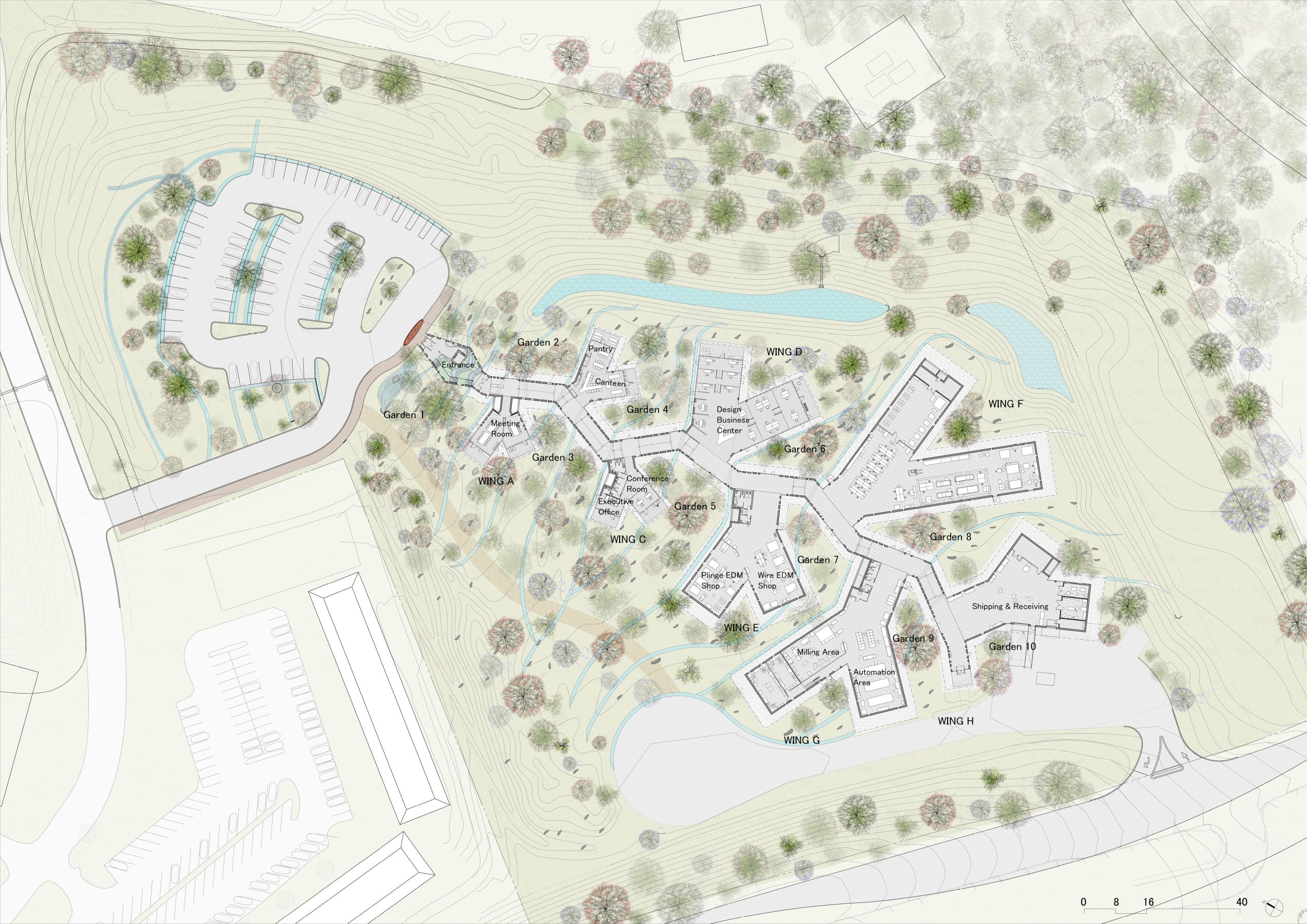


Gardens fill the spaces between the wings, bringing views and daylight deep into the workplace. As the building spreads across the site, the plan follows the slope and settles into the landscape. Timber structures frame the interiors, with Douglas Fir columns, Cypress surfaces and concrete floors shaping warm, grounded spaces. Outside, planted swales collect rainwater while forming small green pockets that soften the edges of the building.
Hidden Ladies
By inDetail Architecture, Chania, Greece
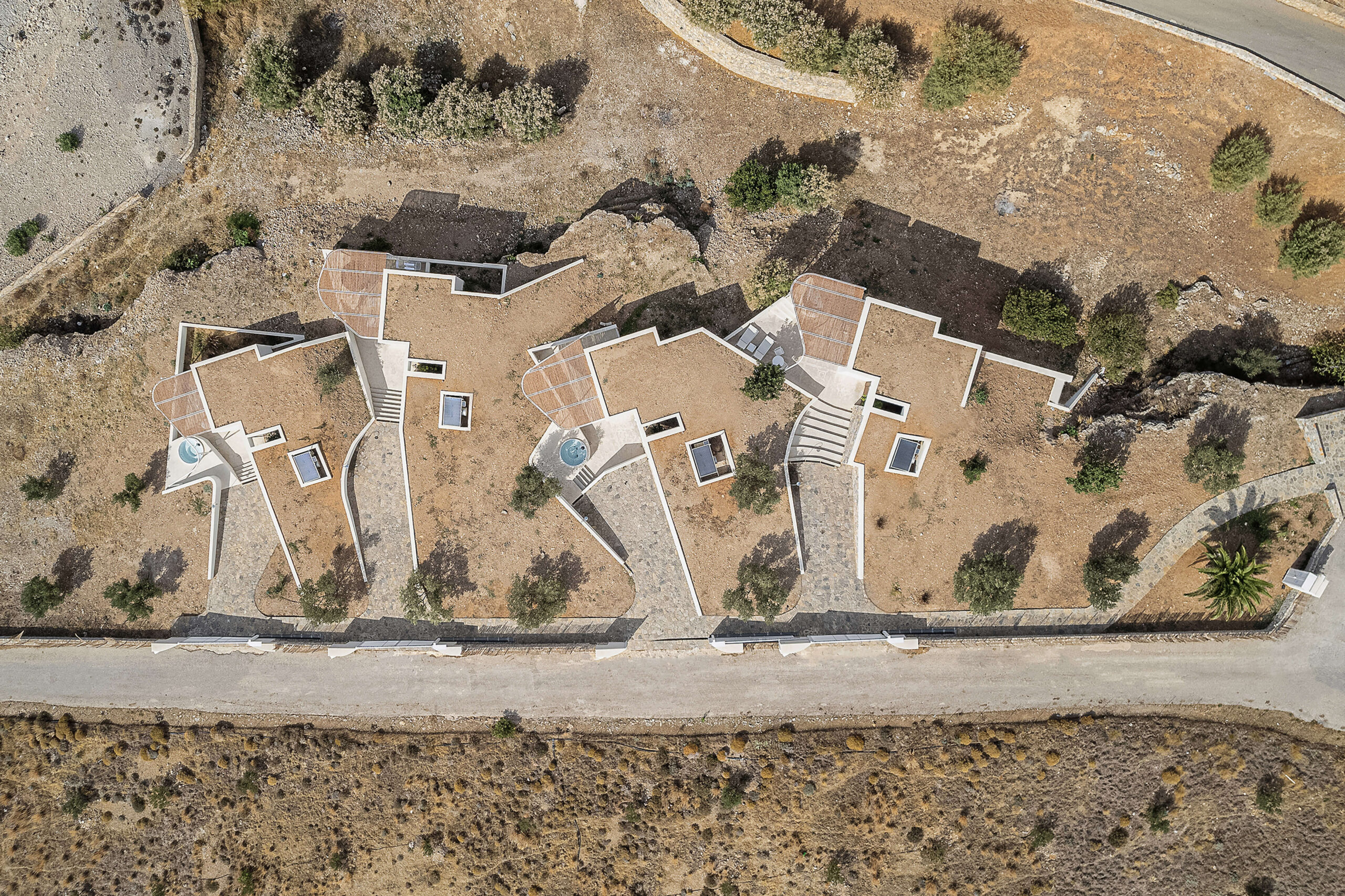
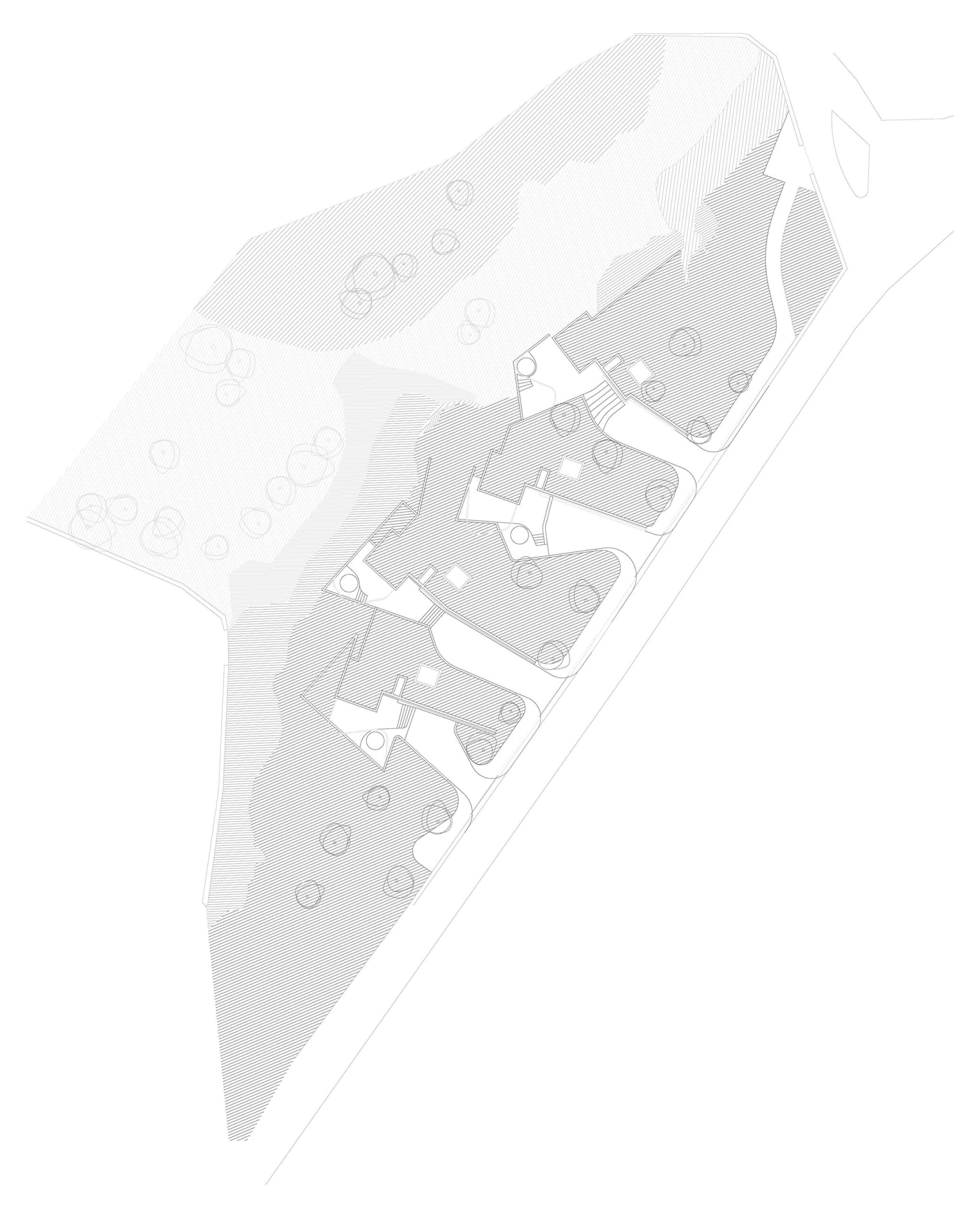


Four small suites settle into the rugged terrain of southern Crete, drawing inspiration from the dry gullies that run toward the sea. Instead of placing one building on the site, the design carves narrow “valleys” into the slope, with a suite tucked into each one.
This arrangement lets the rooms step gently down the hillside, so every unit keeps its privacy and an open view of the sea and rocky landscape. Stone walls hold the earth in place while white surfaces trace the edges of the cuts. Large glass openings frame the surroundings, and cement floors rise onto the walls, making each space feel shaped directly from the ground.
Library in Ice-Chrysanthemum Field
By Atelier XI, Xiuwu County, Jiaozuo, China
Jury Winner, Architecture +Environment, 13th Annual A+Awards
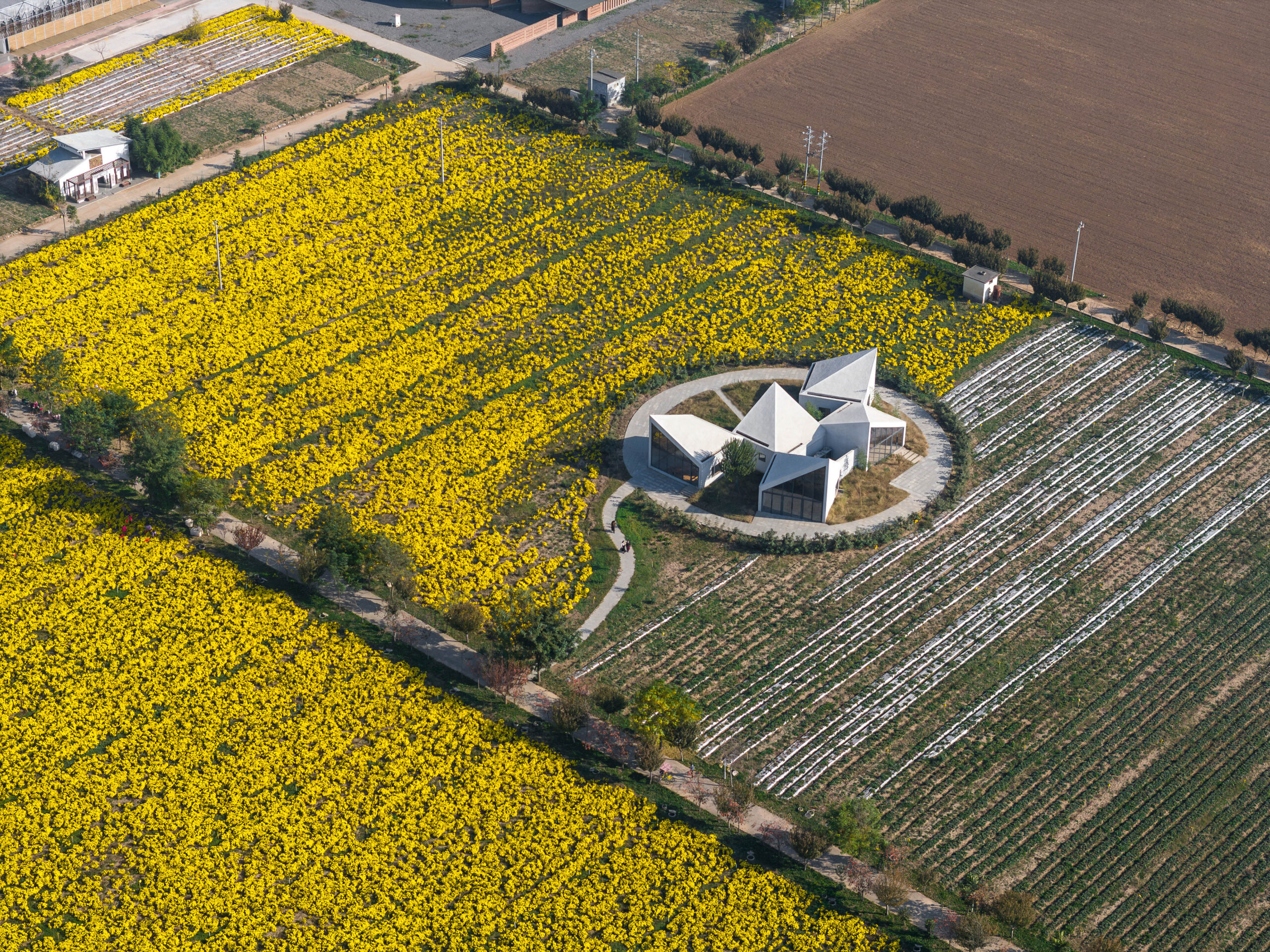
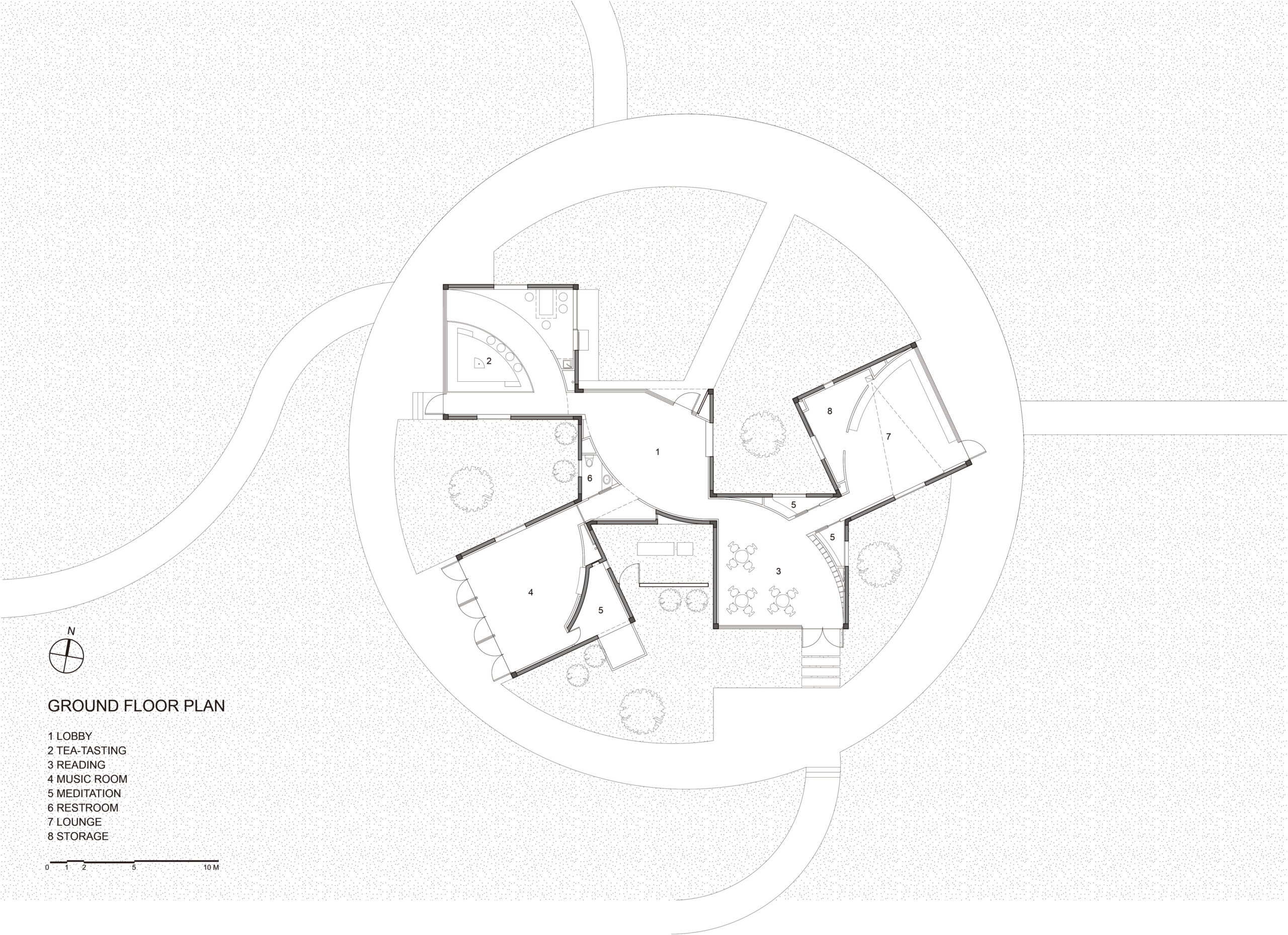


Set within a field of ice-chrysanthemums, this small community library breaks away from the idea of a single large building. Instead, the program spreads into five cubic volumes placed across the plantation. Short passages and shared outdoor spaces connect them, allowing each room to host a different activity, from reading to tea tasting to workshops. This layout keeps views open across the fields while giving events their own space.
Sloped roofs reference nearby rural houses, while white stucco walls give the buildings a simple sculptural presence. Inside, curved wooden walls shape warm gathering spaces, and windows frame the changing colors of the surrounding fields throughout the year.
KALHA Hotel·“Unico” Village Renewal
By CPLUS, Zhangjiakou, China
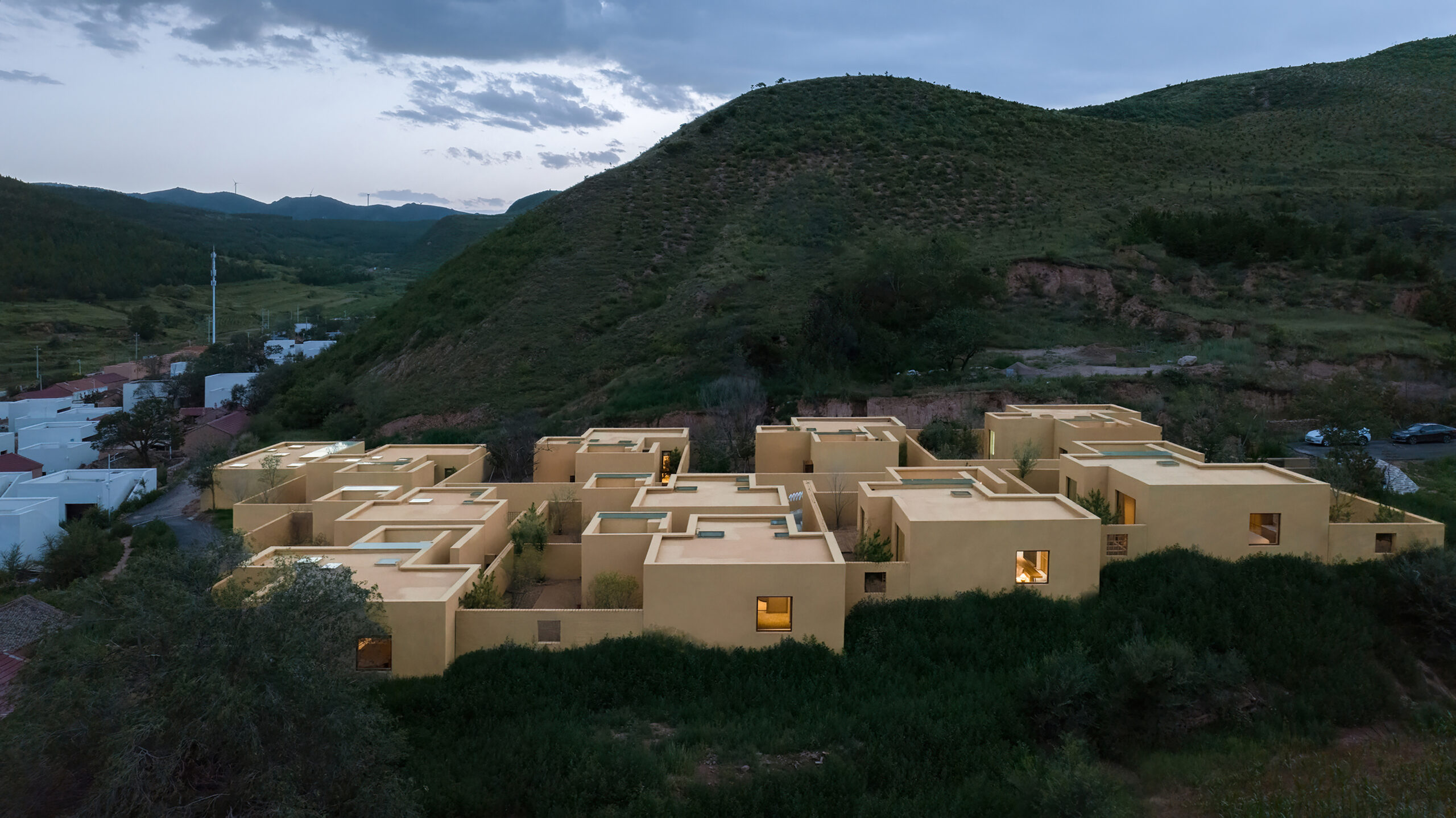
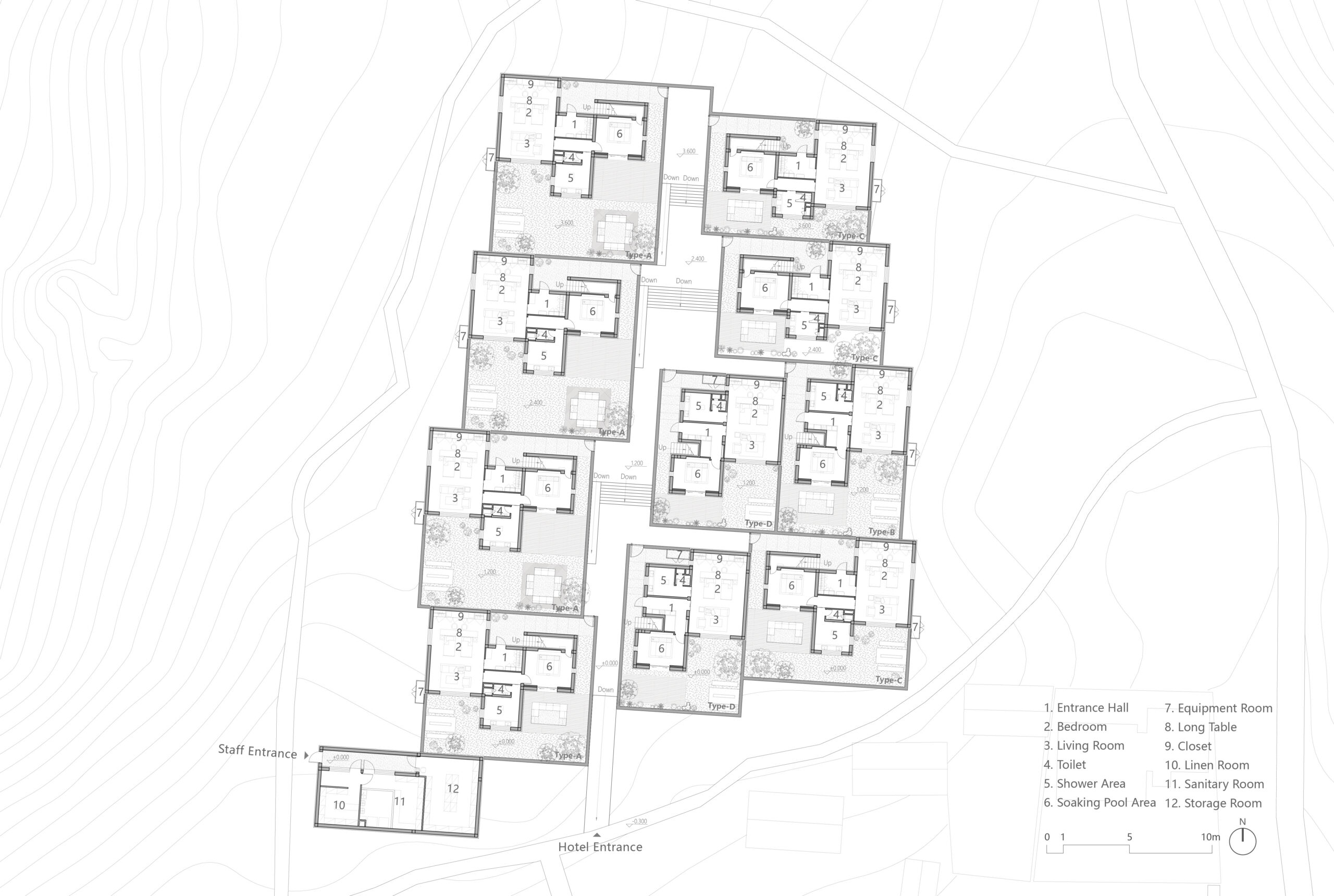


Each suite sits behind its own wall and private yard, offering quiet space while opening views toward the mountains. The irregular layout follows the contours of the land, allowing the complex to grow naturally along the slope. Earth-toned walls mirror the color of the soil, giving the settlement the quiet presence of simple forms rising from the ground.
San Bruno Beach House
By reyes ríos + larraín arquitectos, Telchac Puerto, Mexico
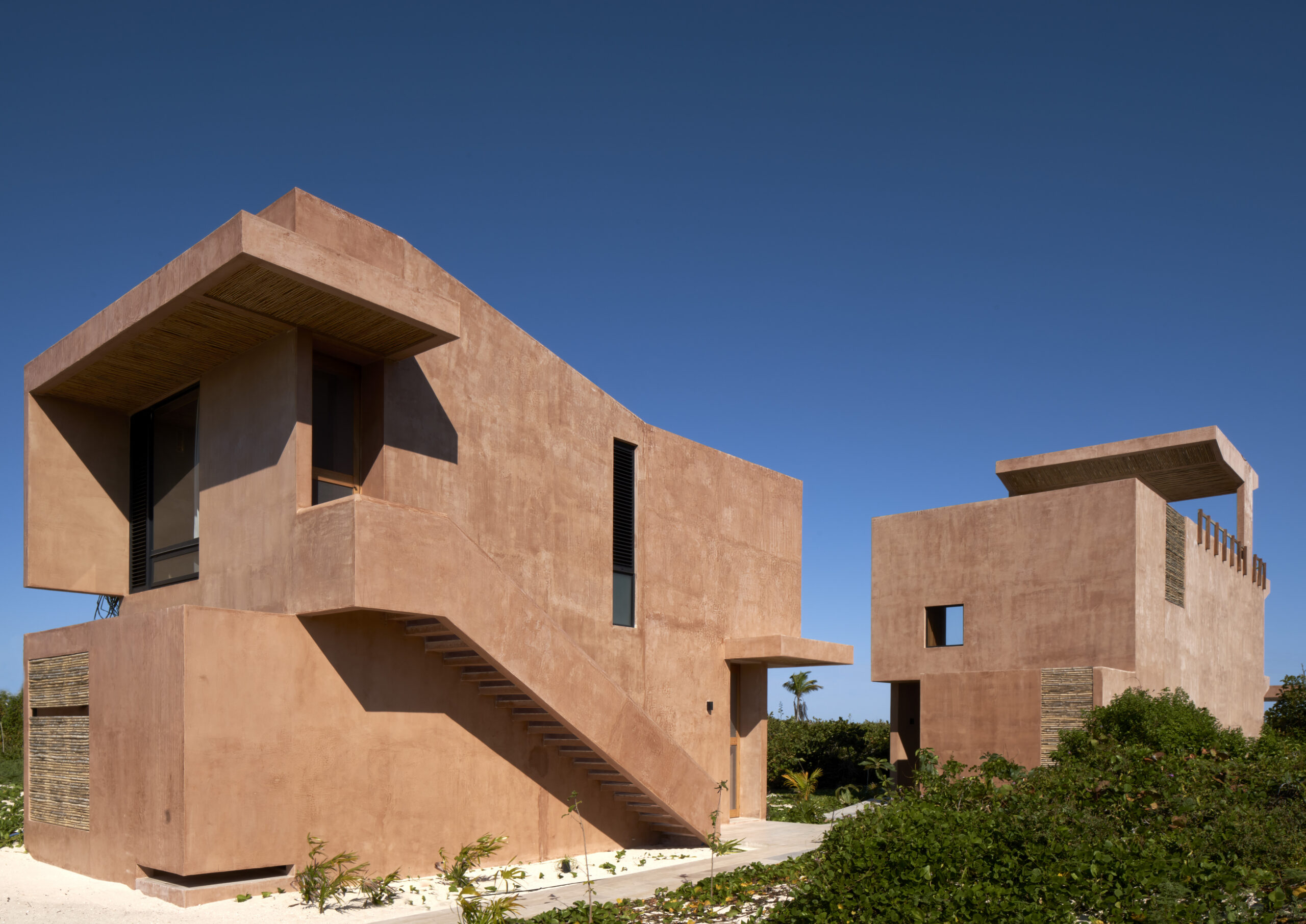
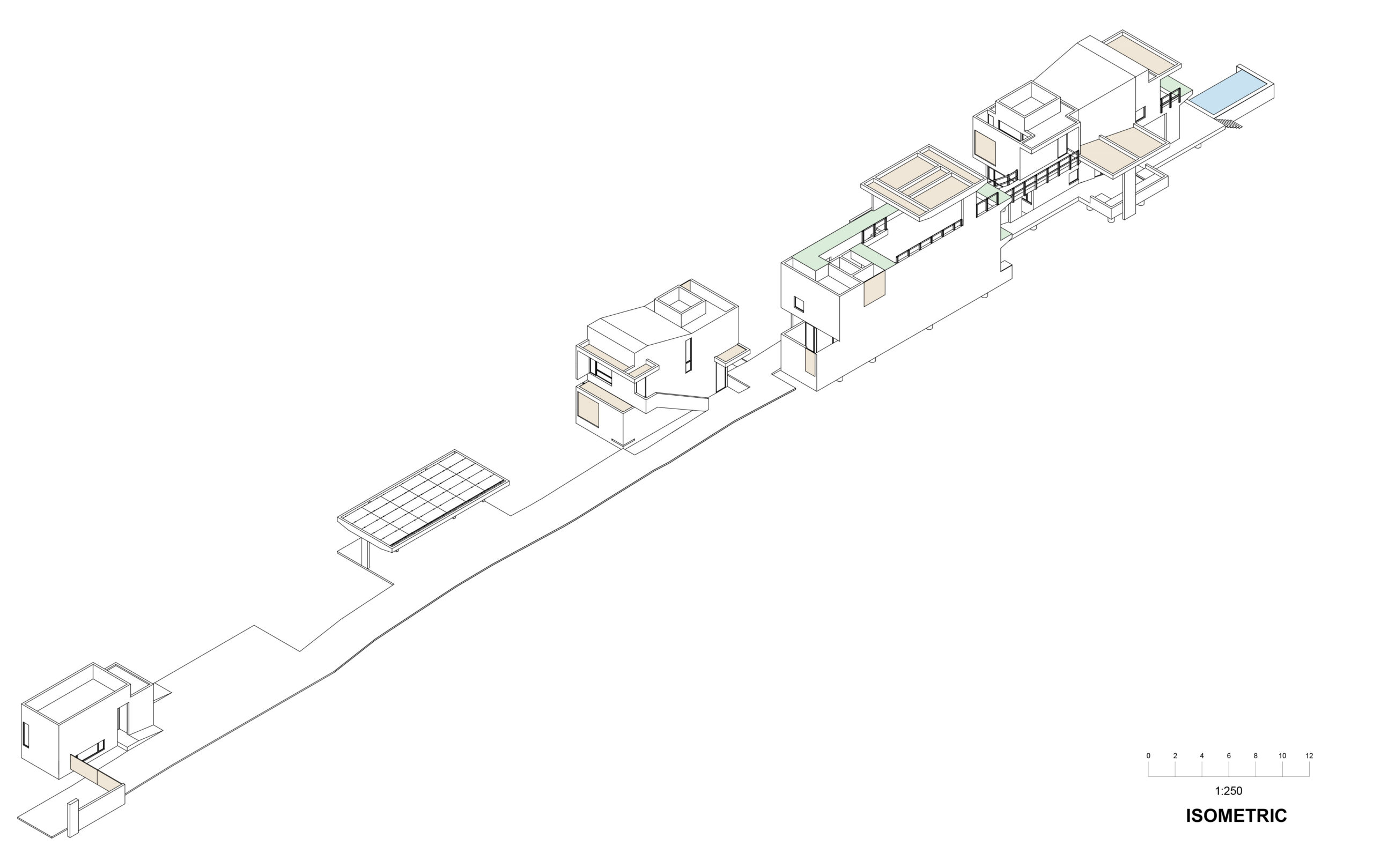


Keeping each pavilion narrow allows views to open toward the sea on one side and the lagoon on the other, while also letting breezes pass easily through the interiors. Two of the volumes stand on concrete pilings behind the dunes to protect the terrain. Bamboo, limestone, hardwood and mineral stucco give the house a character shaped by the coastal climate.
Architects: Want to have your project featured? Showcase your work by uploading projects to Architizer and sign up for our inspirational newsletters.