Architects: Want to have your project featured? Showcase your work by uploading projects to Architizer and sign up for our inspirational newsletters.
Architecture shapes how we perceive space — how we move through it, how we feel within it, and ultimately, what we take away from the experience. A grand hotel lobby, all polished marble and towering ceilings, signals power and prestige. A dimly lit corridor, with its end just out of sight, stretches time, making every step more hesitant and uncertain. A cafe, with neat rows of booths and the heavy hum of fluorescent bulbs, should feel familiar and welcoming. That is, until the lighting is just a little too harsh, the symmetry is a little too perfect, or the exuberance is too over the top. That’s when things change. Architects understand this, and so did David Lynch.
As a filmmaker, Lynch didn’t just use locations as backdrops for scenes. He built experiences with the same precision any good architect would, carefully selecting materials, adjusting light levels, or forcing sightlines to evoke particular reactions. His sets, whether it’s the warm wood panelling of the Double R Diner or the eerie theatricality of Club Silencio, show his unmatched understanding of how space influences emotion. He knew that red velvet curtains don’t just frame a scene—they absorb sound, close a space in, create an uncanny sense of isolation. A chevron-patterned floor isn’t just a bold graphic choice. It’s a pattern that tricks depth perception, making a room feel infinite and claustrophobic at once.
With his passing, we reflect on the extraordinary depth of David Lynch’s creative legacy — not just in film, but in the way he shaped atmosphere, manipulated perception and turned everyday spaces into something layered with meaning. The following projects weren’t designed to mimic Lynch’s films, but they tap into the same principles and mastery of place. These spaces, through contrast, repetition and material choices, guide interpretation just as Lynch so cleverly did, designing emotion as much as function. If his films teach us anything about architecture, it’s that a space is never just a space. It’s an experience defined as much by what it suggests as by what it shows.
The Double R Diner (Twin Peaks 1990)
JULIETTE’S DINER
By: Andrea Langhi Design, Italy
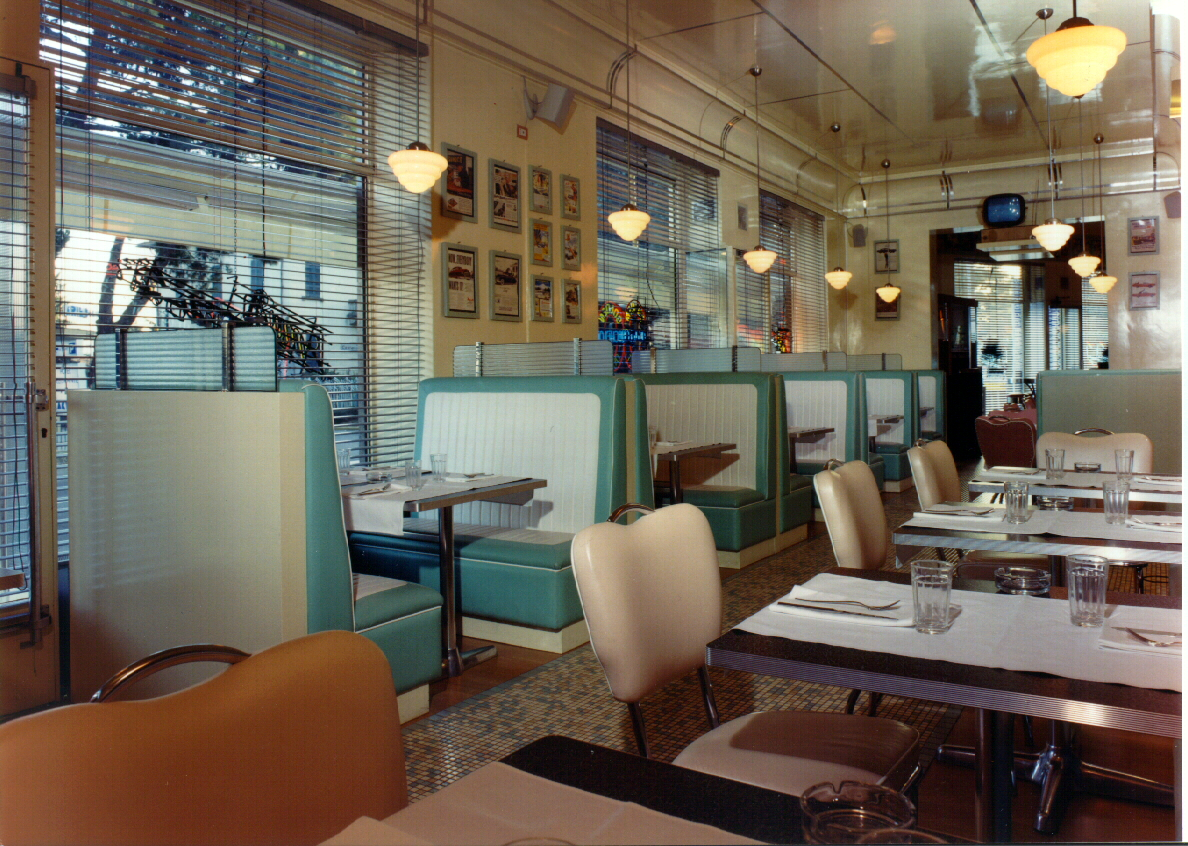
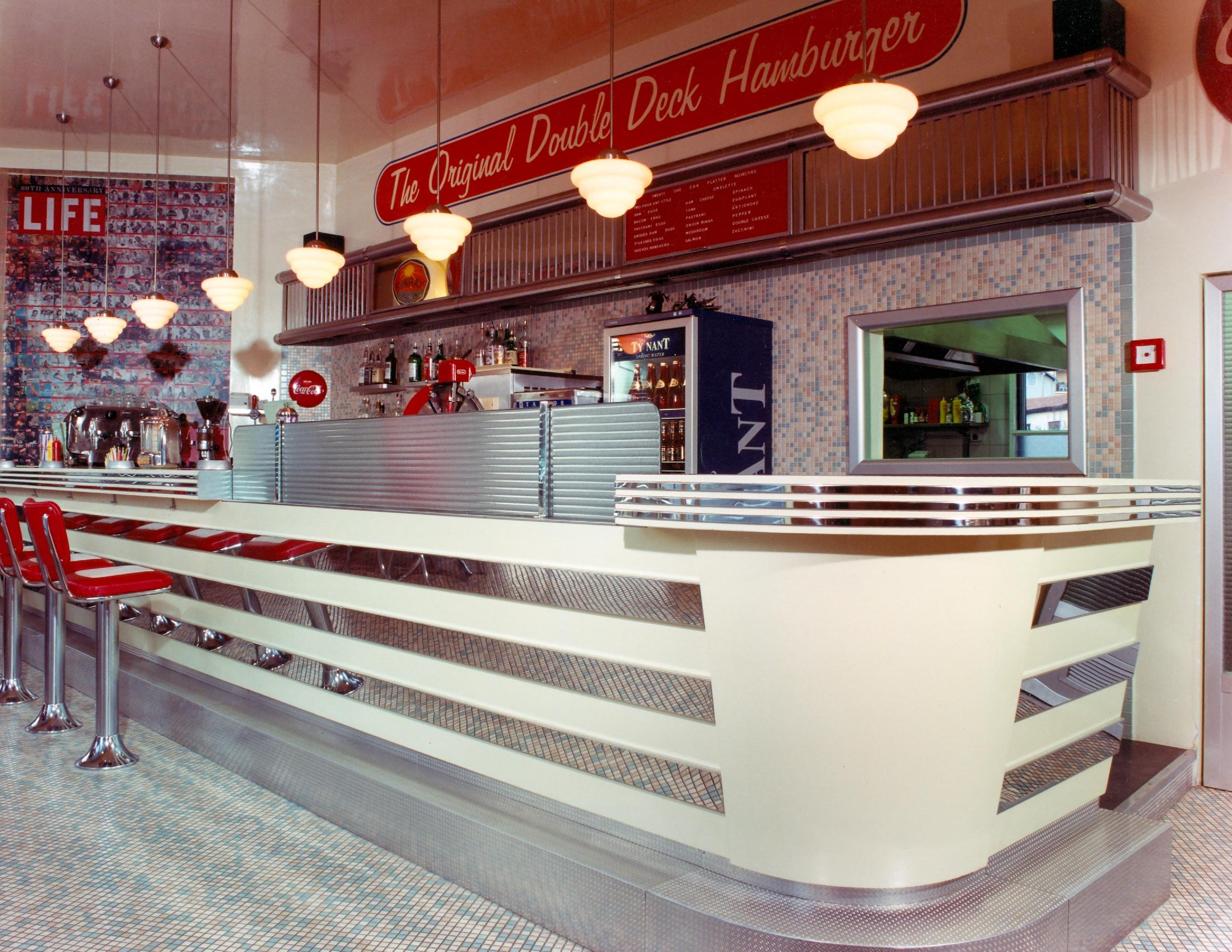


Juliette’s Diner is a perfect example of this kind of heightened nostalgia. The colour palette is textbook mid-century Americana: mint-green and cream vinyl, pink leather chairs and checkerboard floors. The materials, chrome, laminate and glossy tile, reflect just enough light to make the space feel pristine and untouched by time. The lighting is carefully controlled, casting an even glow that flattens shadows, making everything feel crisp and defined. The effect isn’t so much eerie, but it is certainly cinematic. A space so precisely composed that it almost feels lifted from a set.
Club Silencio (Mulholland Drive, 2001)
Bar Lotus
By: Office AIO, Shanghai, China


The design, if you can see it past the heavy crowds, is precise. Wooden block archways absorb sound, gold leaf tunnels catch the light just enough to shift focus, and the sharp neons create the ambient unease, so typically Lynch. The layout reinforces its purpose: the seating makes visitors passive spectators rather than active participants like those in the movie’s original theatre. The lighting changes subtly, ensuring that no moment feels entirely fixed. Even silence is deliberately engineered through soundproofing so that the absence of noise feels just as intentional as the thrumming music in the evenings when the general public are allowed to descend.
Bar Lotus is designed with a similar sense of distorted reality. Its green archways creating a tunnel-like procession, framing the space while guiding movement and punctuating the atmosphere with pools of light. The rippled reflective ceiling skews the light and movement in the space, producing an atmosphere that feels in constant flux.
The Red Room (Twin Peaks, 1990)
Le Studio
By: Agence Spatiale, Quebec City, Canada


Le Studio taps into this same sense of theatricality. The deep red drapery stretches across the bar, swallowing sound, absorbing light and enclosing the space like a stage set waiting for something to begin. The lighting here is deliberate and feels performative. The round globes are suspended in looping formations that are both decorative and directional. The bar itself, clad in red vertical ridges, doubles the sense of enclosure, drawing the eye inward, while the raw concrete and black seating areas create a bold contrast and just enough darkness to make you aware of how the light is affecting the space.
However, where the Red Room in Twin Peaks is designed to disorient, Le Studio is designed to immerse. It uses the same cinematic tools: repetition, contrast and materiality, but in this case, it channels them into an atmosphere that’s immersive rather than unnerving.
The Madison’s Home (Lost Highway, 1997)
BETON BRUT
By: tHE gRID Architects, Ahmedabad, India

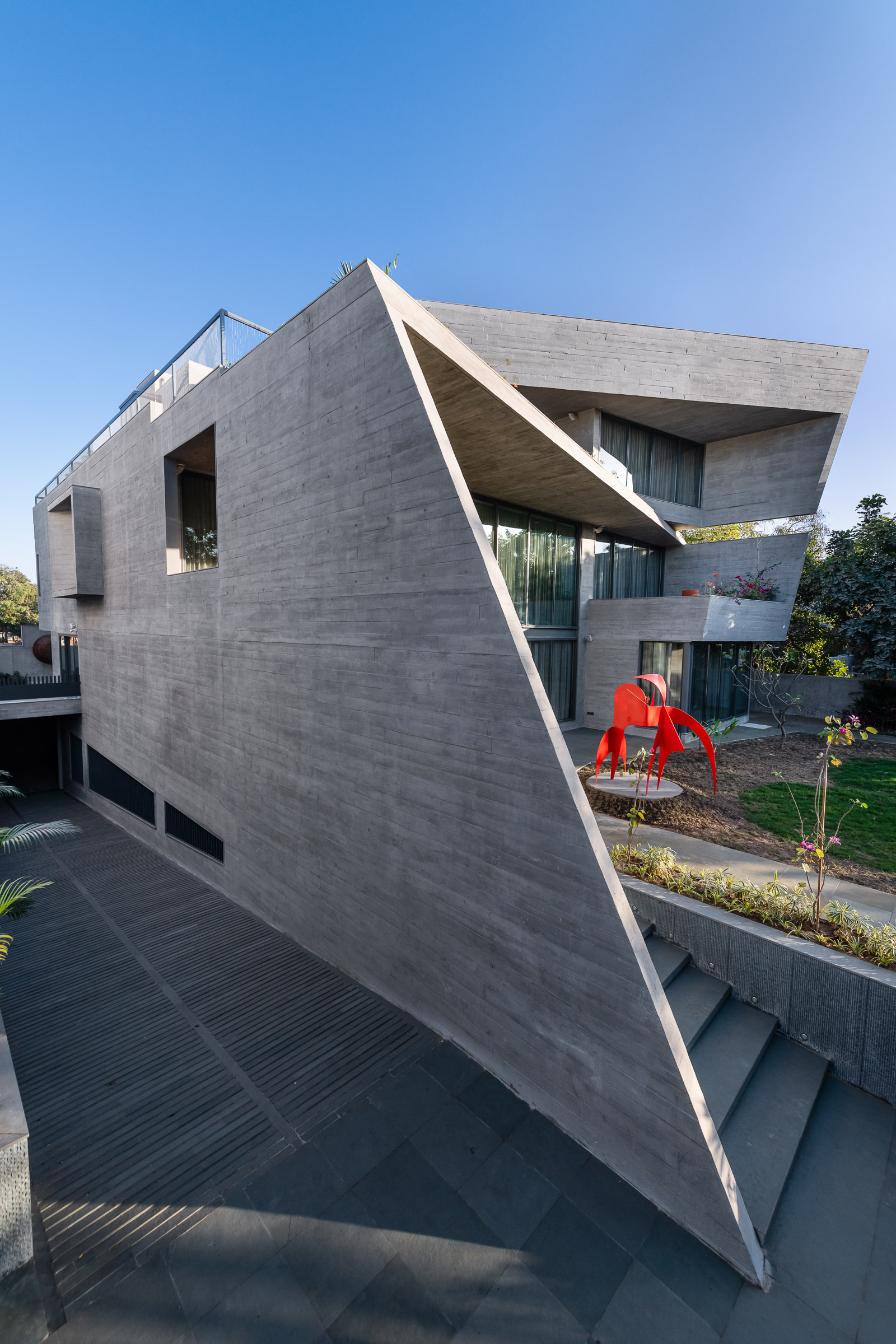


Beton Brut operates with a similar sense of controlled minimalism, thankfully without the terrifying homeowner. Its sharp angles and raw concrete surfaces give it a monolithic presence, while the narrow, deeply set windows dictate precise slivers of light and visibility. There is no excess here, only structure, form and material. The architecture creates atmosphere through mass and proportion alone. Both the houses in Lost Highway and Beton Brut show architecture in its most stripped back yet commanding form.
The Pink Room (Twin Peaks: Fire Walk With Me, 1992)
MASSminors
By: One Fine Day Studio & Partners, Guangzhou, China
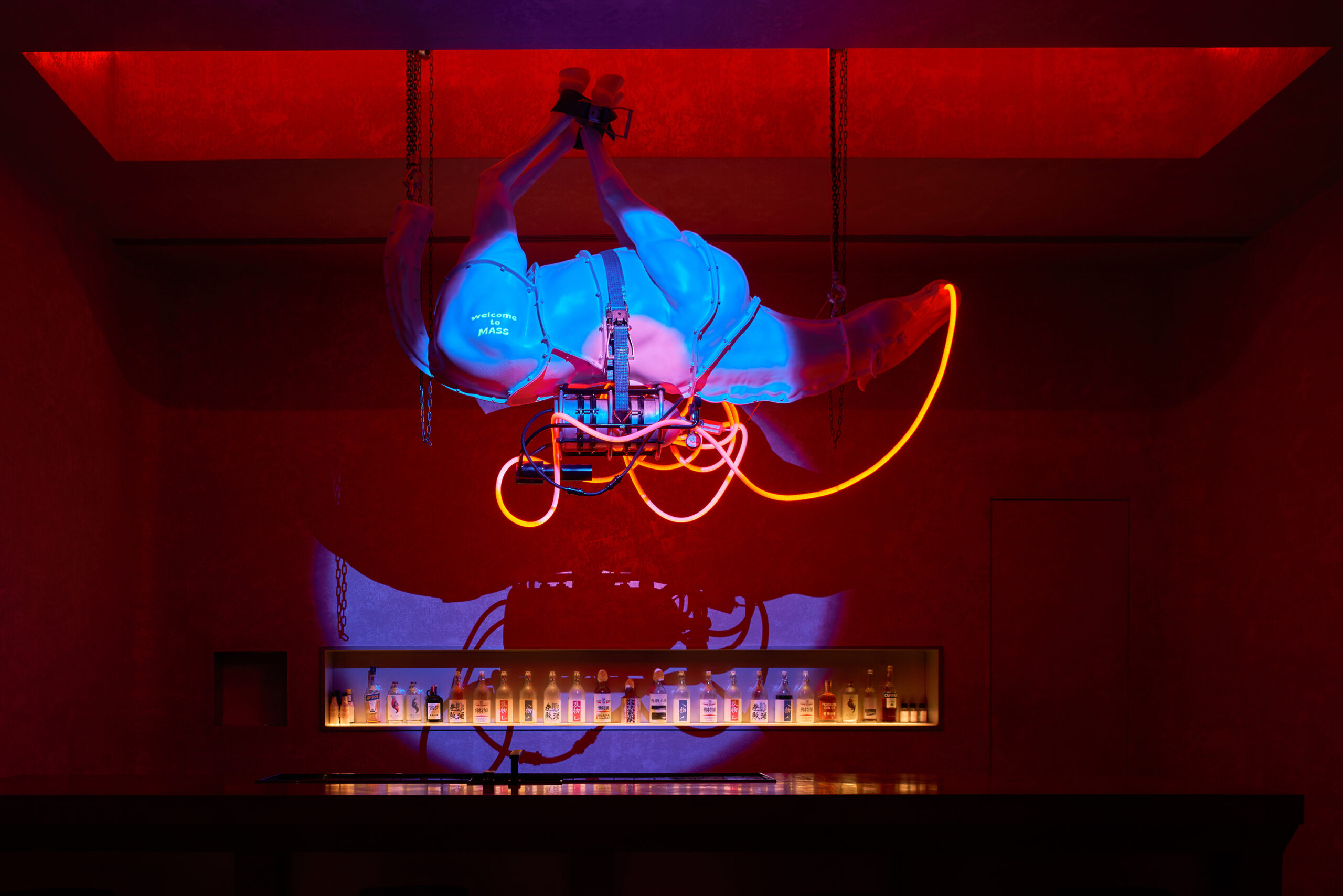
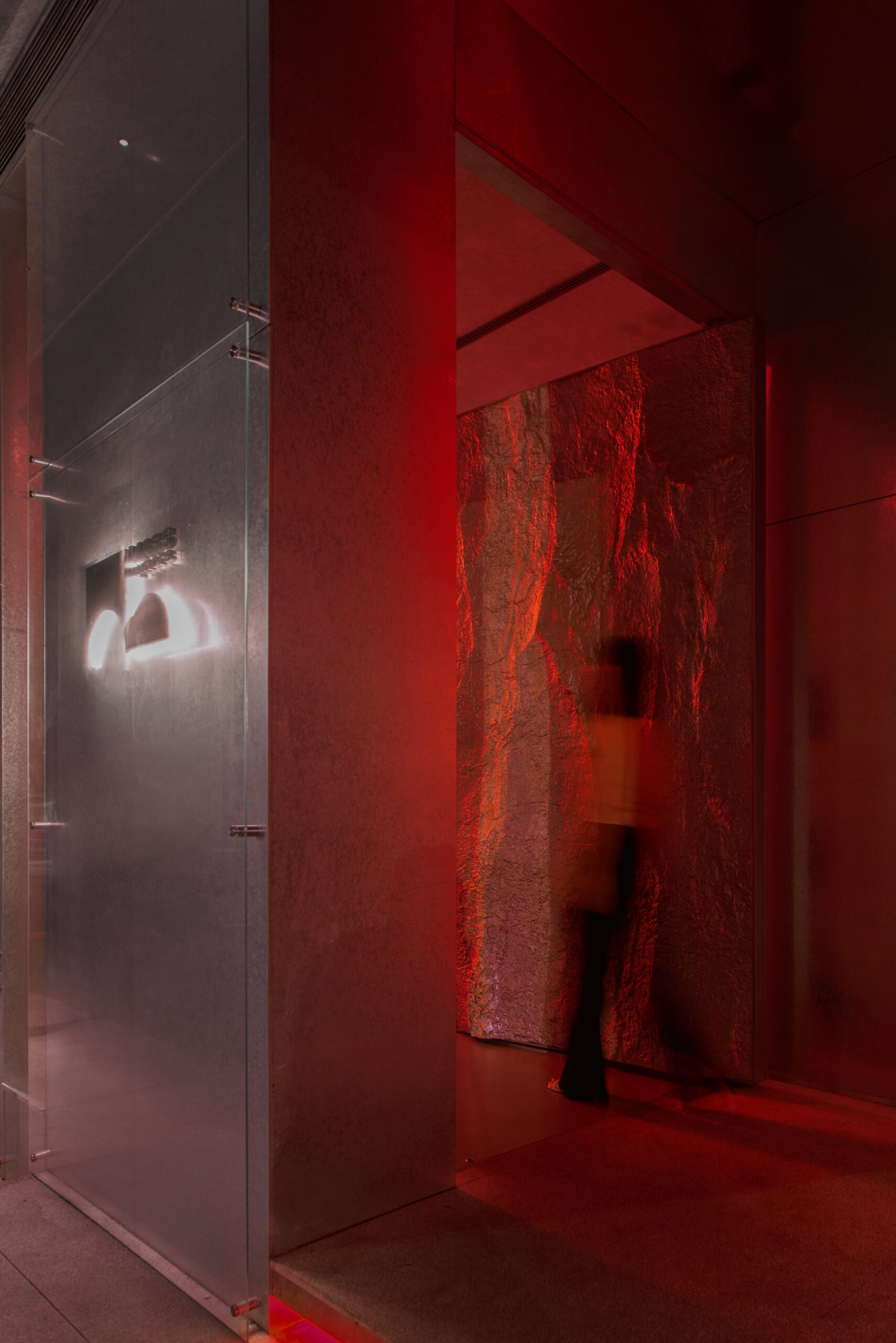


MASSminors is designed with that same heightened intensity. The deep red glow above the bar saturates the space. While the neon tubing, text projections and light washing are in contrast to the ornate detailing and modern art pieces. It’s a dream-like space, where nothing sits comfortably together as every individual element is designed to consume attention, leaving no neutral ground. Like The Pink Room, it doesn’t just set the scene—it is the scene.
The Slow Club (Blue Velvet, 1986)
The Hook
By: NOOD, Atlantic City, New Jersey




In Blue Velvet, The Slow Club isn’t what you would call extravagant but it is deliberate in its design. The main space is dark and full of atmosphere, while the stage, the central focal point, is backed by rich red velvet, as is Lynch’s signature, with neon blue light forcing all attention on Dorothy Vallens’s (Isabella Rossellini’s) performance. It’s overly saturated and hyperreal. It’s a space designed entirely for mood and tension. Nothing distracts from the singer, yet the setting itself is not secondary. It’s distinctively intense.
The Hook, by NOOD, has this same hyperreality. Taking an even more elaborate approach than Lynch but with the same architectural intent, that is, to frame and heighten the act of performance using layering of embellishment and light. The proscenium is in sharp, geometric contrast to the heavy stage curtain, edged in blue neon, that acts to reinforce the separation between audience and performer. The seating layout is designed for immersion, while the rich colors, both material and light and the excessive objet d’art create a heavily layered ambience that veers into oppressive. The elaborate patterns and intense lighting add to the surreal atmosphere that is a combination of theatrical glamour and grungy reality. The inclusion of an antler motif references Blue Velvet’s own club signage as a nod to the dramatic and strange.
The Roadhouse (Twin Peaks, 1990)
Best Friends: RoadHouse and Mercantile
By: WOW atelier, Kanab, Utah


Best Friends Roadhouse & Mercantile comes from that same architectural tradition but modernizes it. The extended overhang and exposed steel supports recall the classic roadside pitstop, while the mix of timber, metal and corrugated textures gives it a toughness suited to it’s desert landscape. The stacked firewood, the open-air seating, and the glow from within are all reminiscent of the historical roadhouse designed to be stopped at and gathered in across America.
Both spaces lean into their setting — one in the damp, pine-lined world of Twin Peaks, the other in the wide-open sprawl of the Utah desert. But they share the same core principle: a roadhouse is a waypoint, a landmark, a place where stories are told and retold.
Architects: Want to have your project featured? Showcase your work by uploading projects to Architizer and sign up for our inspirational newsletters.
Top image: ‘Blue Lounge’ Agli Amici 1887 by Visual Display – Interior Architecture and Design, Udine, Italy