Architizer's diverse jury of global experts is currently reviewing submissions to the 14th A+Awards! Sign up to receive updates on Public Voting and spring winner announcements.
In a city defined by velocity, Shenzhen Bay Culture Square arrives with a different ambition. Rather than asserting itself as another towering icon in the city’s already crowded skyline, the project reads as a landscape intervention — low, continuous and porous — inserting cultural gravity into one of Shenzhen’s most rapidly densifying districts. Designed by MAD Architects with development and operating partner CR Land, the complex marks a shift in the city’s architectural timeline, where cultural infrastructure is no longer conceived as a singular monument, but as an immersive, public-facing terrain.
Located in Houhai, Nanshan District, the 46-acre (18.8-hectare) Shenzhen Bay Culture Square anchors a new civic core between the waterfront and the city’s high-rise financial district. Against a backdrop of supertall towers, MAD’s architecture deliberately turns inward and downward, trading vertical spectacle for spatial continuity, topographic form and a carefully choreographed relationship to the ground.
A Cultural Landscape, Not a Standalone Object

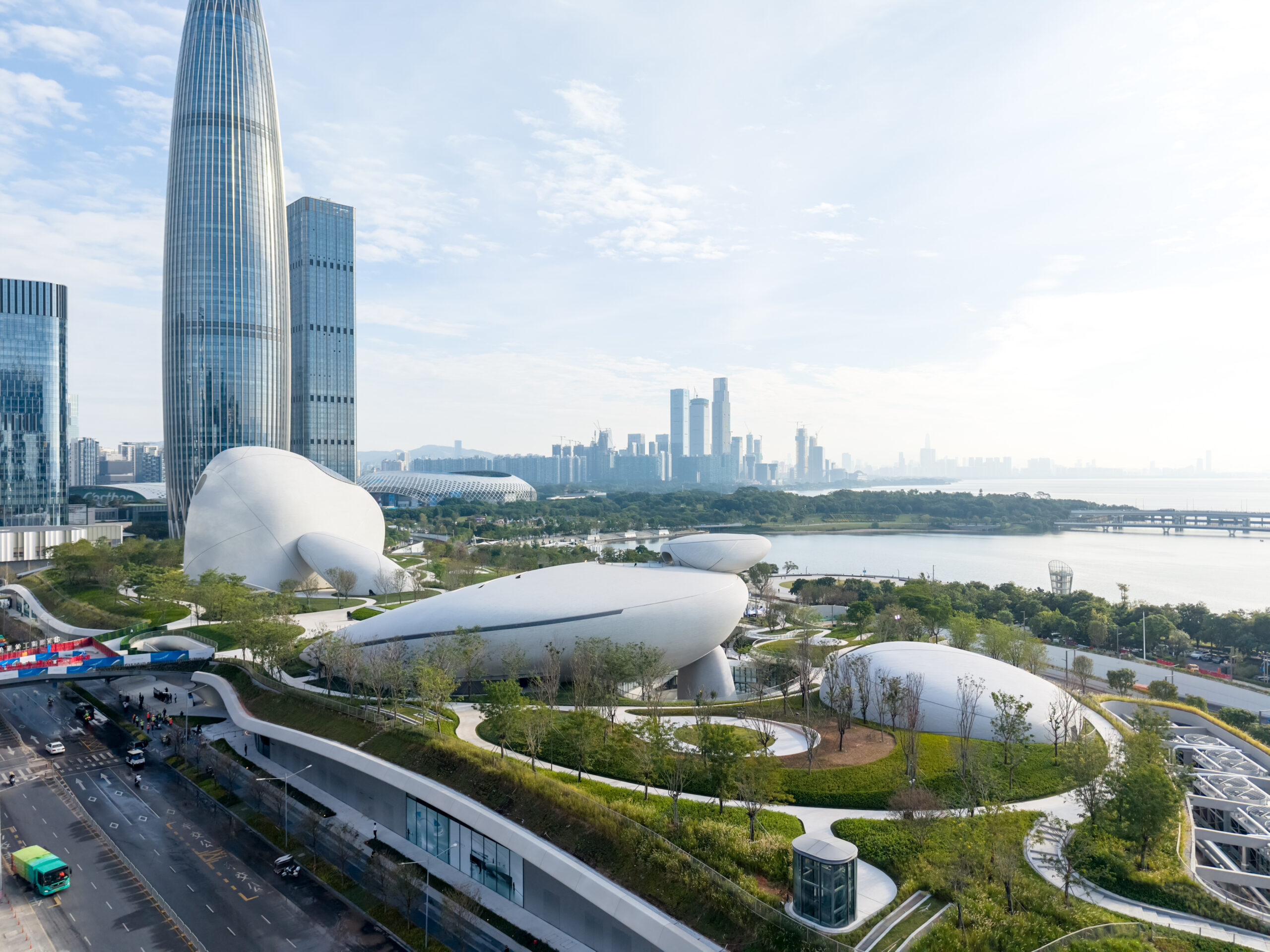
Shenzhen Bay Culture Square by MAD Architects, Shenzhen, China
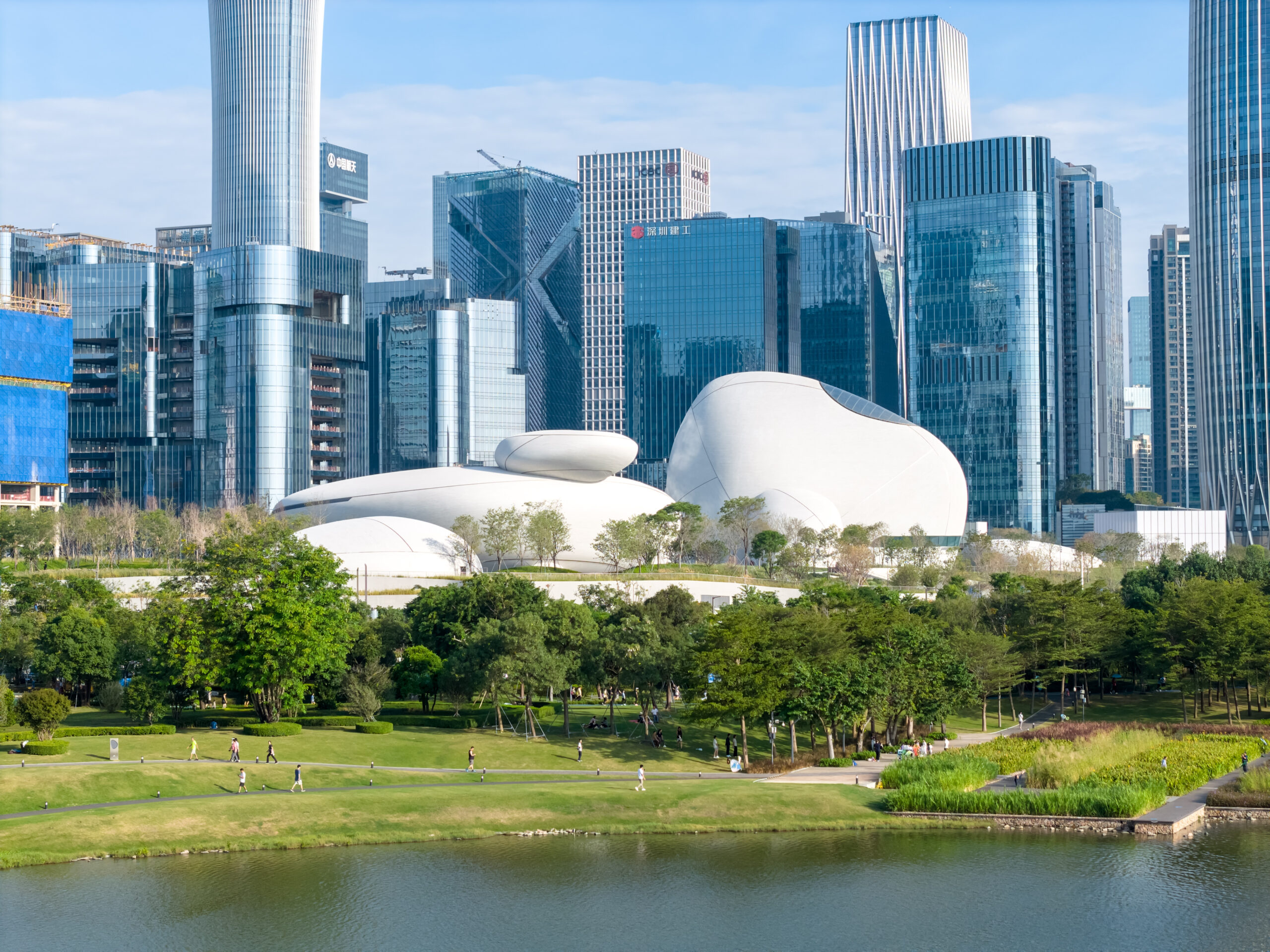
Shenzhen Bay Culture Square by MAD Architects, Shenzhen, China| Images via CR Land
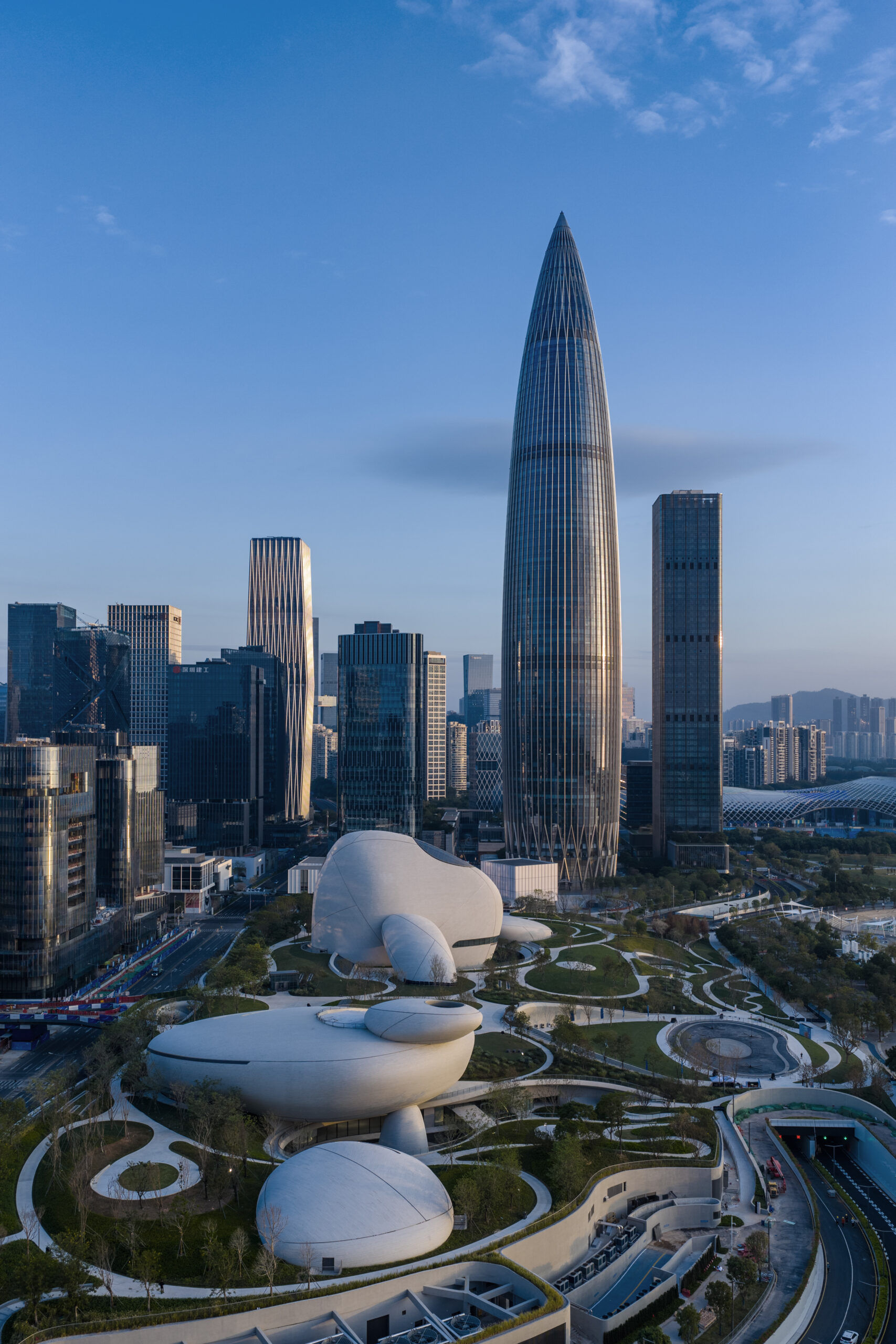
Shenzhen Bay Culture Square is composed of three primary volumes — the North Hall, South Hall and Thematic Hall — unified by a continuous, landscaped public realm that flows across and around the buildings. Rather than presenting a clear front or back, the architecture is read through movement: curving paths, sloped lawns, and gently rising ramps guide visitors across the site.
The building forms are smooth and stone-like, shaped by soft curves and a muted, mineral palette that contrasts sharply with the glass-and-steel skyline surrounding it. From above, the complex reads almost geological, as if eroded into form by wind and water rather than assembled through conventional architectural logic. This approach situates the project firmly within MAD’s broader oeuvre, where architecture often blurs into landform — a theme explored in projects ranging from Harbin Opera House to The Cloudscape of Haikou.
Here, that sensibility is recalibrated for an urban condition. The buildings sit low against the horizon, allowing skyline views to remain uninterrupted while establishing a new horizontal datum for public life.
Forming Openness Through Section

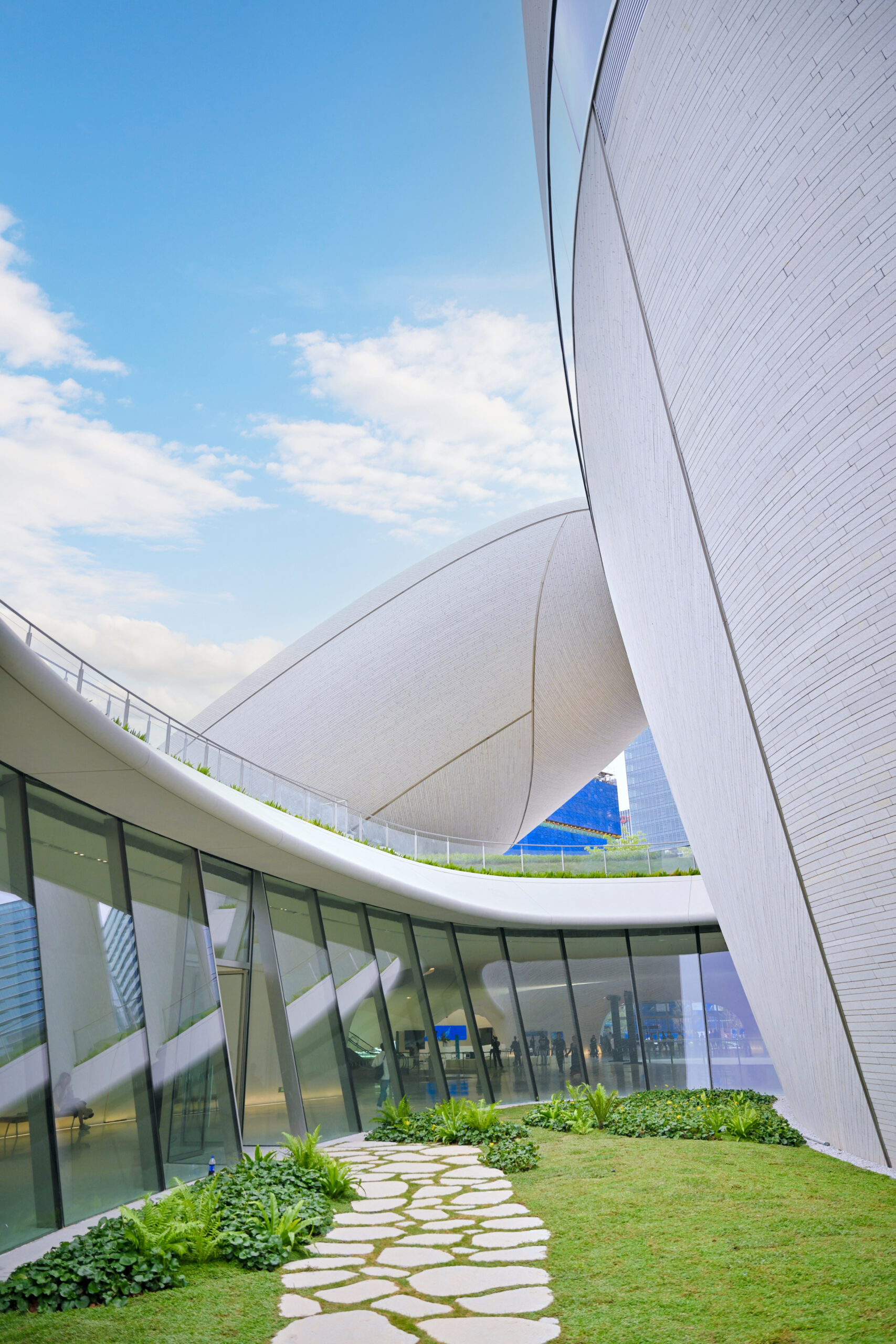
Shenzhen Bay Culture Square by MAD Architects, Shenzhen, China| Images via CR Land
While the exterior presents a unified landscape, the spatial complexity of Shenzhen Bay Culture Square is revealed in section. Four above-ground levels and three underground levels are organized not as stacked floors, but as interlocking volumes connected through ramps, voids and layered circulation.
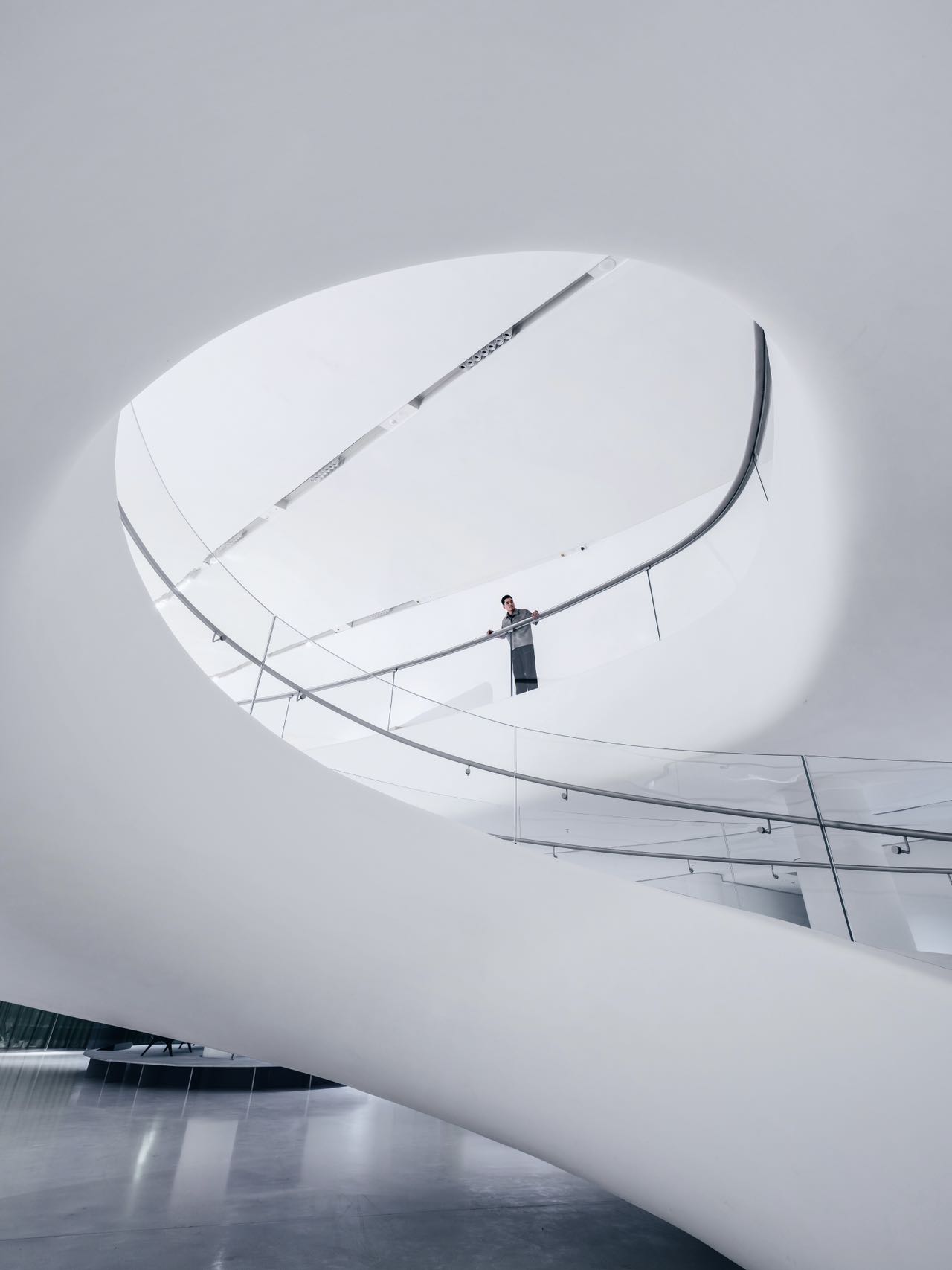
Large elliptical oculi puncture roofs and floor plates, pulling daylight deep into the interior and creating moments of visual connection between levels. These openings are not decorative gestures; they are critical to how the building functions as a public institution, orienting visitors through light rather than signage.
Internally, circulation unfolds as a continuous promenade. Sloped ramps replace abrupt or sculptured staircases, allowing exhibitions, forums and public programs to bleed into one another. Beautiful and strategic façade incisions invite dramatic, unexpected beams of light and an atrium feel throughout. This strategy reinforces the project’s stated ambition to function as a “living platform” rather than a static museum — an environment where learning, encounter and informal use are encouraged.
Exhibition Spaces as Flexible Infrastructure
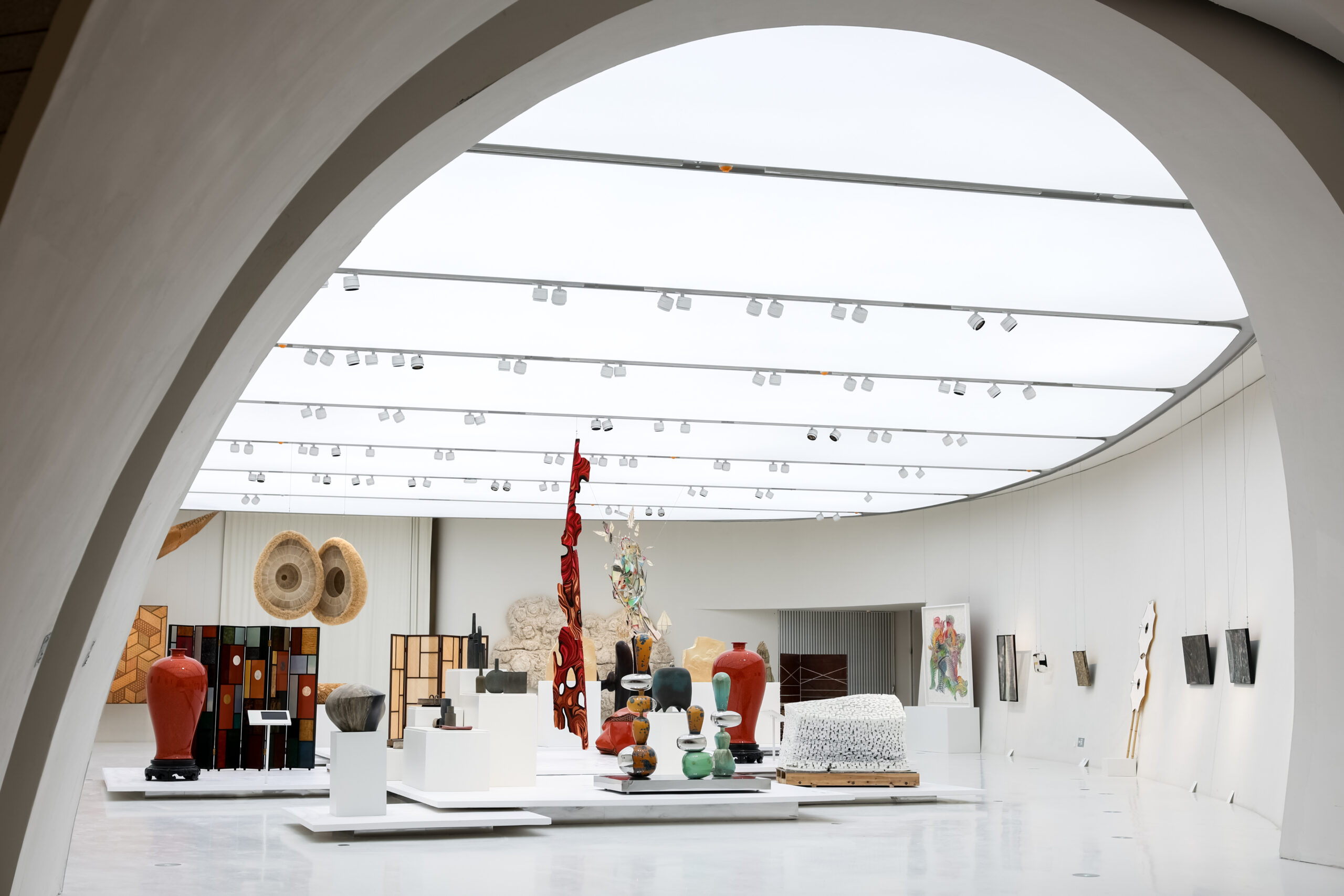

Shenzhen Bay Culture Square by MAD Architects, Shenzhen, China| Images via CR Land
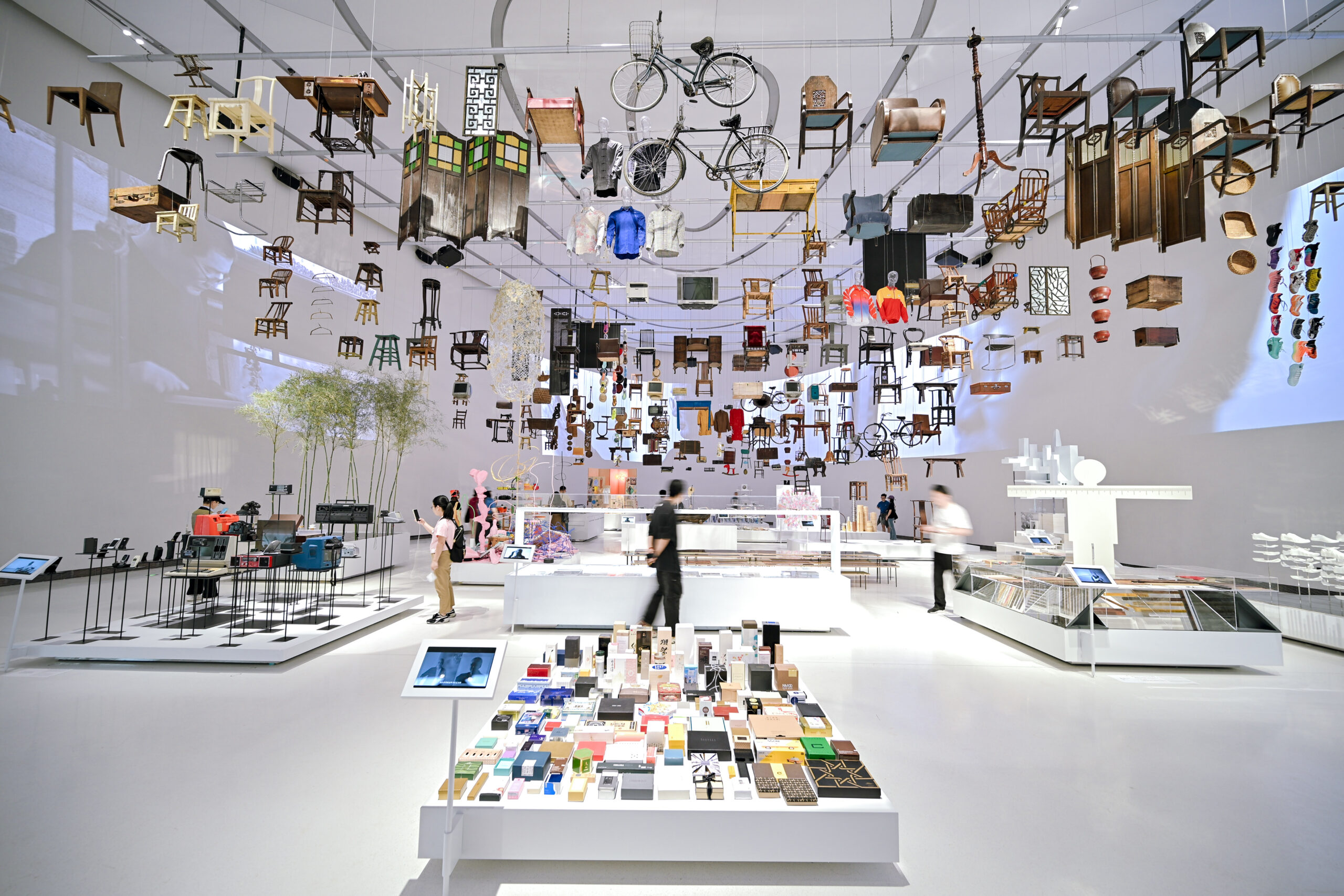
At the heart of the project are nine galleries totaling nearly 538,195 square feet (50,000 square meters). Rather than designing these as neutral white boxes, MAD treats exhibition space as adaptable infrastructure — robust enough to host international touring shows, yet flexible enough to support evolving curatorial formats.
Ceiling heights vary subtly across galleries, responding to different scales of work, from design objects to immersive installations. Natural light is carefully modulated, ensuring controlled illumination while maintaining a sense of connection to the outside world. In select galleries, daylight becomes part of the exhibition experience itself, reinforcing the project’s emphasis on design as a lived, environmental practice rather than an abstract discipline.
This balance between control and openness reflects MAD’s long-standing interest in experiential architecture — spaces that are felt as much as they are observed.
Architecture That Encourages Learning by Movement

Shenzhen Bay Culture Square by MAD Architects, Shenzhen, China| Images via CR Land
The building is a landmark cultural facility invested in and owned by the Shenzhen Municipal Government with the aim of acting as a two-way bridge for global design-cultural exchange. Part of the design brief, then, was that the building act as China’s frontline showcase for design going abroad, becoming a living platform where the public can keep learning design.
Beyond exhibitions, Shenzhen Bay Culture Square integrates educational, social and performative programs into a single architectural continuum. The Future Design Academy is embedded directly into the complex, positioned not as a separate institution but as an extension of the public realm.
Workshops, studios and learning spaces are arranged along circulation routes, making the act of learning visible. Visitors moving through the building encounter making, discussion and experimentation as part of their spatial journey. This deliberate exposure reinforces the idea that design culture is not something to be consumed passively, but practiced openly.
The same logic extends to the Raw-Stone Theatre, Design Forum and social clusters, where performance, debate and informal gathering are woven into the architectural fabric. The result is a building that resists programmatic silos, favoring overlap and adjacency instead.
Materiality: Softness at an Urban Scale
Shenzhen Bay Culture Square by MAD Architects, Shenzhen, China| Images via CR Land
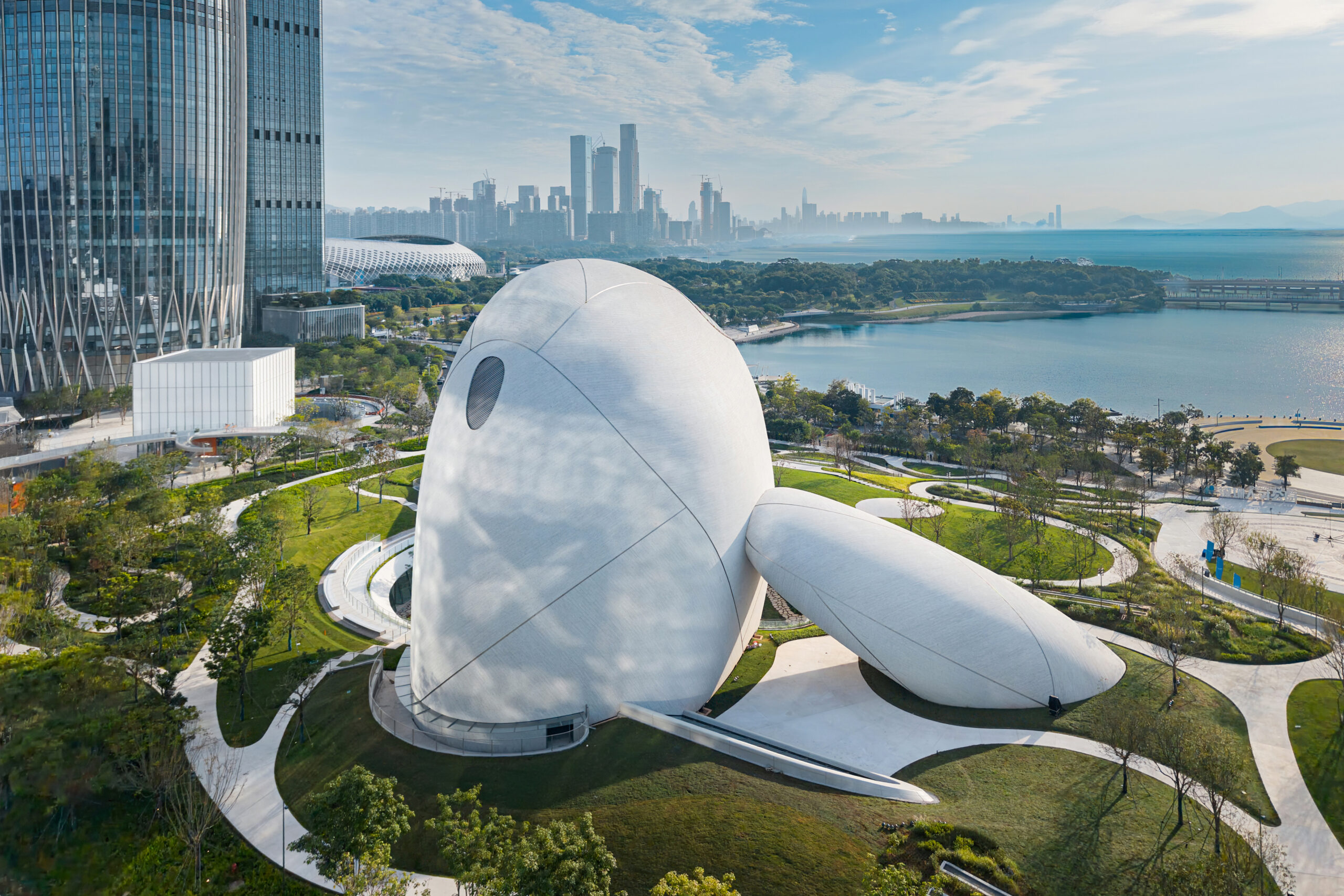
Materially, Shenzhen Bay Culture Square departs from the reflective surfaces typical of the district. The exterior cladding reads as smooth and matte, its pale tone shifting subtly under changing light conditions. This restrained material palette allows form and shadow to carry the architectural expression, rather than surface articulation.
Inside, finishes remain deliberately minimal. White surfaces, polished floors and continuous handrails emphasize movement and light, allowing exhibitions and people to animate the space. The architecture acts as a quiet framework — present, but never overwhelming — reinforcing MAD’s recurring strategy of designing buildings that support emotional and sensory experience without visual excess.
New Marker in MAD’s Urban Work
Shenzhen Bay Culture Square by MAD Architects, Shenzhen, China | Images via CR Land
Within MAD Architects’ portfolio, Shenzhen Bay Culture Square represents an evolution rather than a departure. The project carries forward the studio’s signature interest in organic form and landscape integration, but applies it to an intensely urban, civic condition.
Unlike MAD’s more isolated cultural landmarks, this project is embedded directly within the city’s daily rhythms. It does not retreat from density; it absorbs it, offering a counterpoint to Shenzhen’s vertical expansion through horizontal openness and spatial generosity.
As Shenzhen continues to define itself on the global stage, Shenzhen Bay Culture Square signals a maturation of its architectural ambitions — one that prioritizes cultural continuity, public access and experiential richness over pure spectacle. In doing so, MAD Architects deliver a complex that is not only a destination, but a new ground condition for design culture in the city.
Architizer's diverse jury of global experts is currently reviewing submissions to the 14th A+Awards! Sign up to receive updates on Public Voting and spring winner announcements.