At Architect’26, the ASEAN’s largest building technology exposition, taking place this year in Bangkok, the gathering of exhibitors and designers translates innovation into experience across eight distinct thematic pavilions — the largest number ever presented. Each installation is conceived as a site for both exploration and inspiration, welcoming architects and design enthusiasts alike to encounter and engage with the spaces first-hand.
Other than that, for the first time this year, Architect’26 has started a new project, transforming the space in front of the Sky entrance to become the “Gateway of the exposition” where 40 designers collaborated with exhibitors to create 80 Moodboards, presenting them in the form of an Exhibition called “Palette of Materials Pavilion”.
These dedicated zones reveal the expansive potential of design made possible through collaborative processes that weave together the technical know-how of material manufacturers with the realized imagination of architects.
Before construction begins and installations rise within the exhibition halls of Architect’26, we invite readers to explore and reflect on the conceptual framework behind one of the event’s most anticipated highlights: the Thematic Pavilions and Palette of Materials Pavilion
Watsadu niyom x HAA Studio
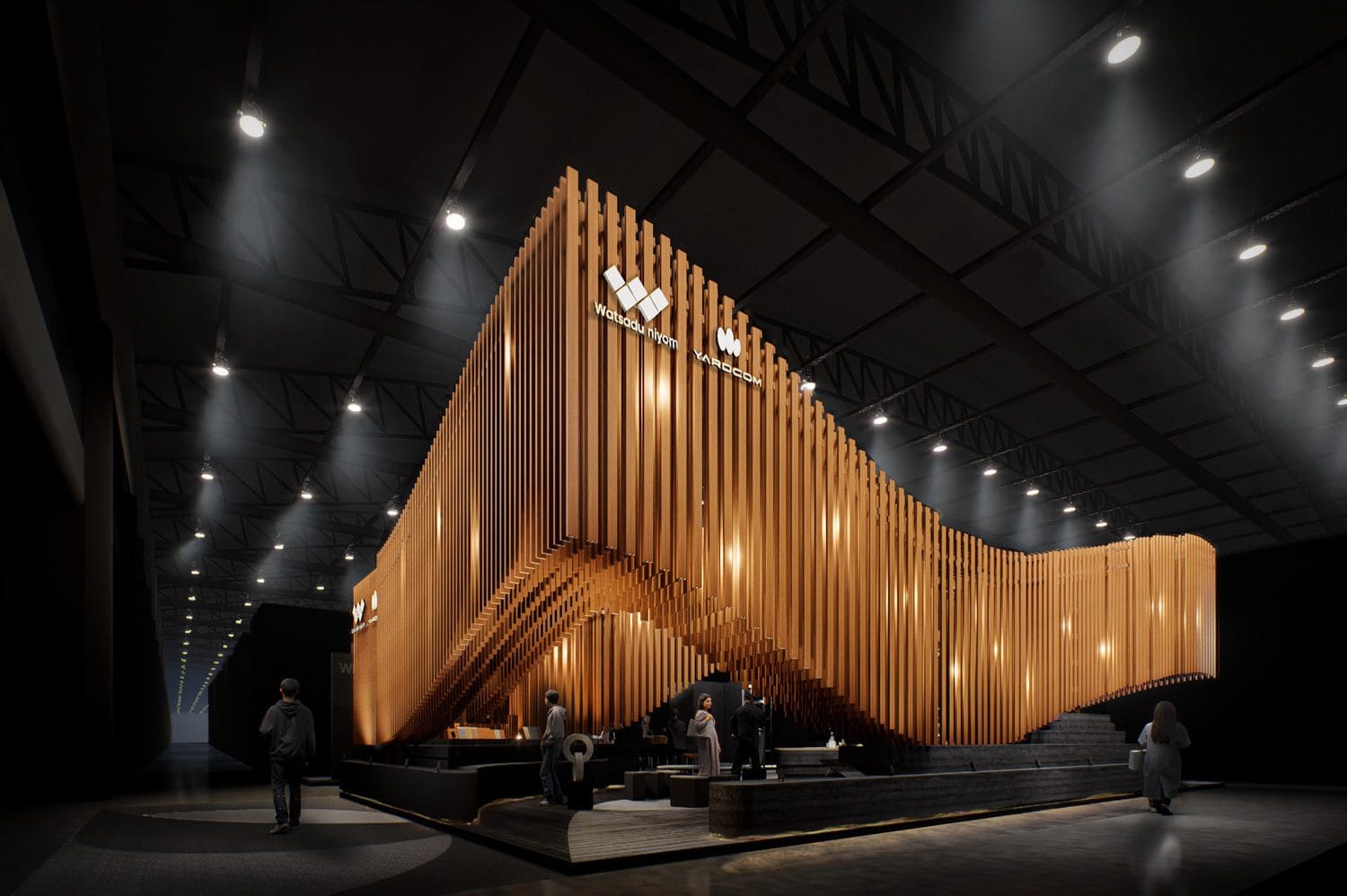

Temporality need not equate to wastefulness. The pavilion thus becomes a point of recognition, both as a spatial presence and as a statement of systemic responsibility toward materials. Its form draws inspiration from the fluid movement of the aurora across the night sky, reflecting the brand, Watsadu Niyom’s ongoing journey of transformation. Familiar materials such as wood-plastic composite louvers are reinterpreted through artistic expression and spatial composition, opening new perspectives on the material itself. The pavilion communicates through an environmental aesthetic shaped by ecological awareness across the material’s entire life cycle.
Vanachai x Studio Tofu
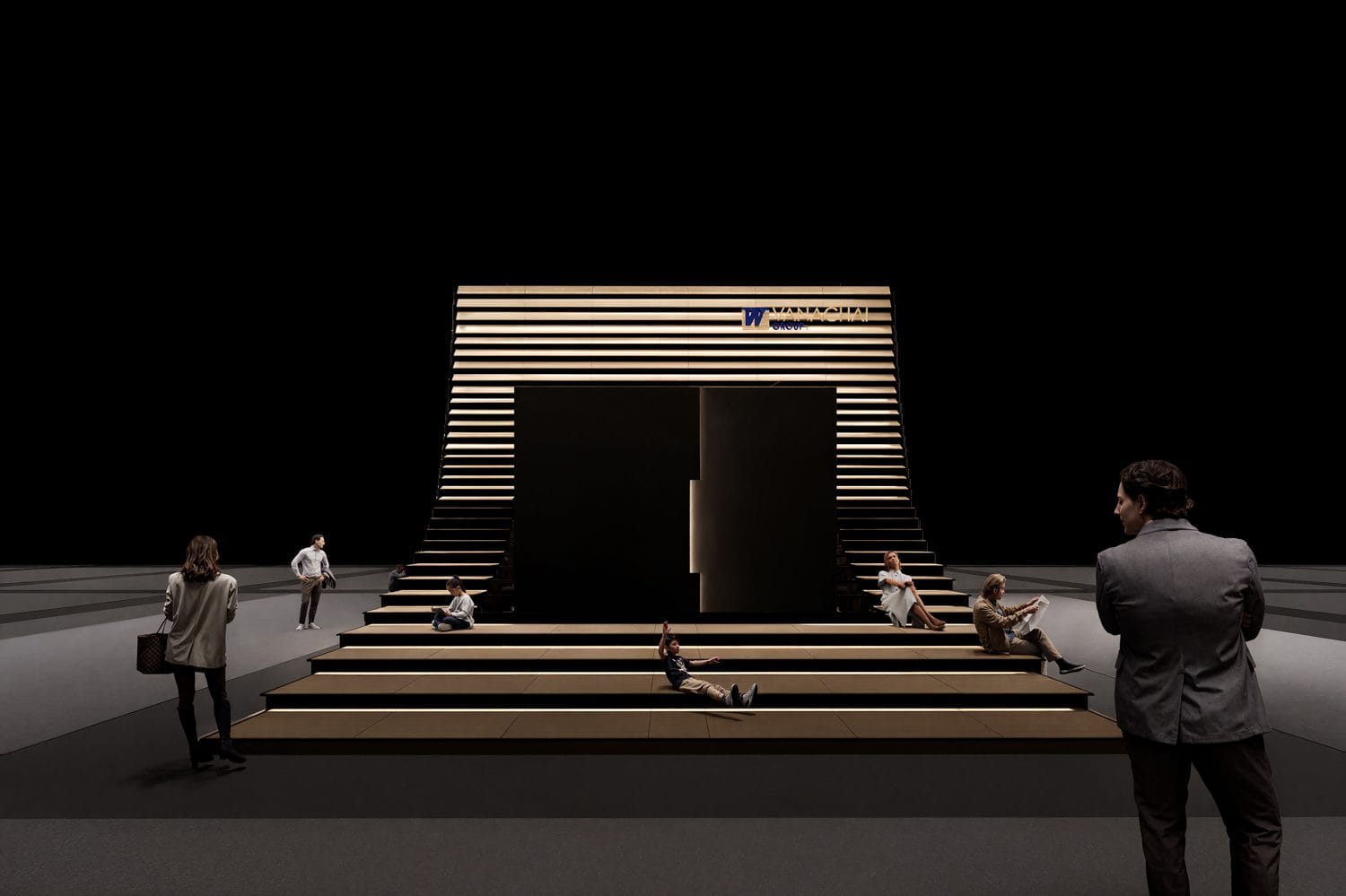

The installation process was executed from the outset with precise calculations to minimize material waste. Should any offcuts remain from production, Vanachai has established a system to channel these remnants to a biomass power plant, where they are converted into energy. The project, therefore, reflects a material-conscious approach throughout the entire process, ensuring that each component is utilized efficiently and to its fullest potential.
TODA x Supermachine Studio
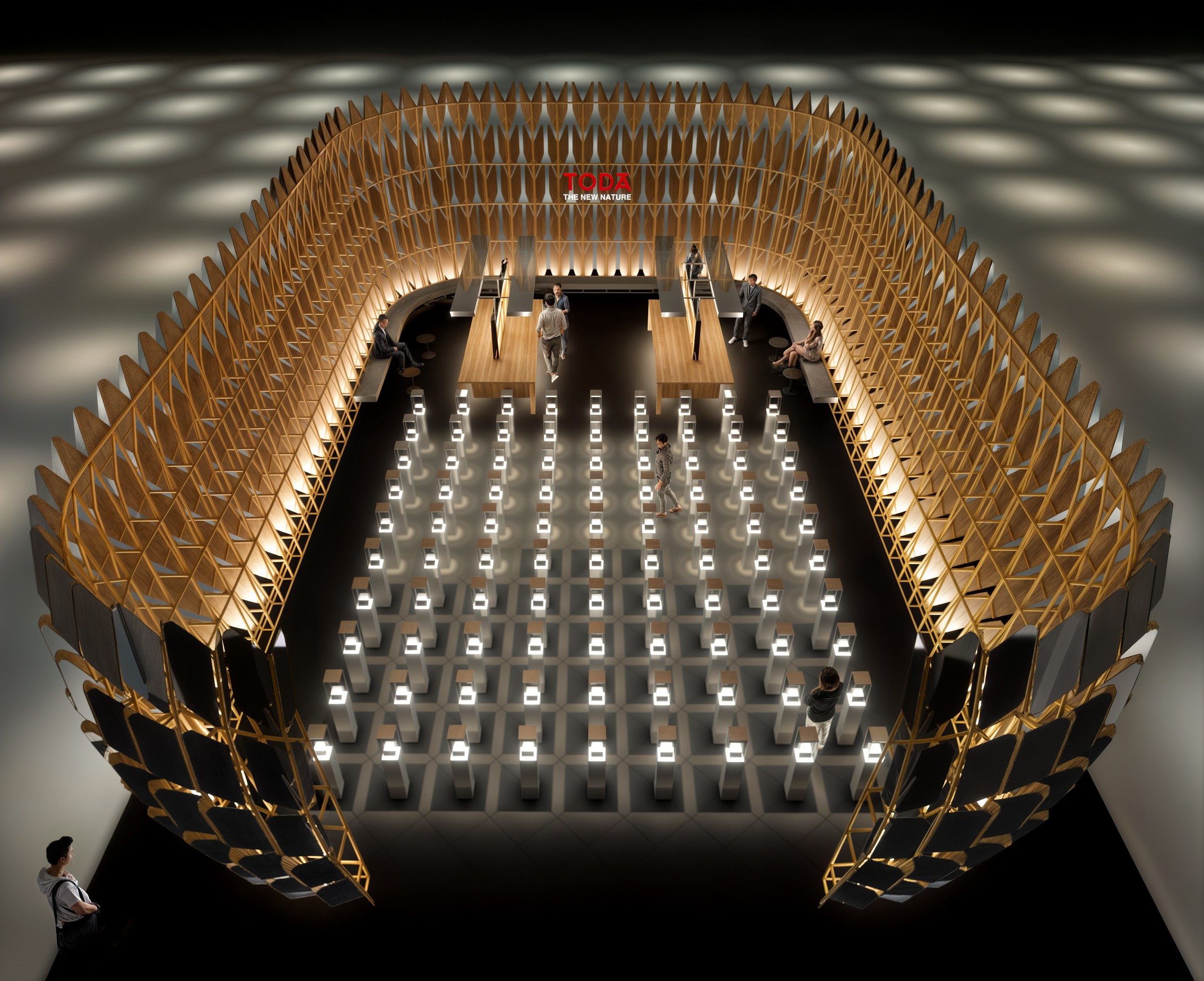

The design draws upon the atmosphere of science fiction to construct a mechanical life-form vessel enveloped in 860 metal petals. Four natural materials, leather, wood, stone, and sand, serve as representatives of the natural resources from which TODA’s alternative materials originate. These elements act as carriers of a central proposition: that the future demands design and material development oriented toward responsibility, ensuring coexistence with people over the long term.
Panel Plus x ACa Architects
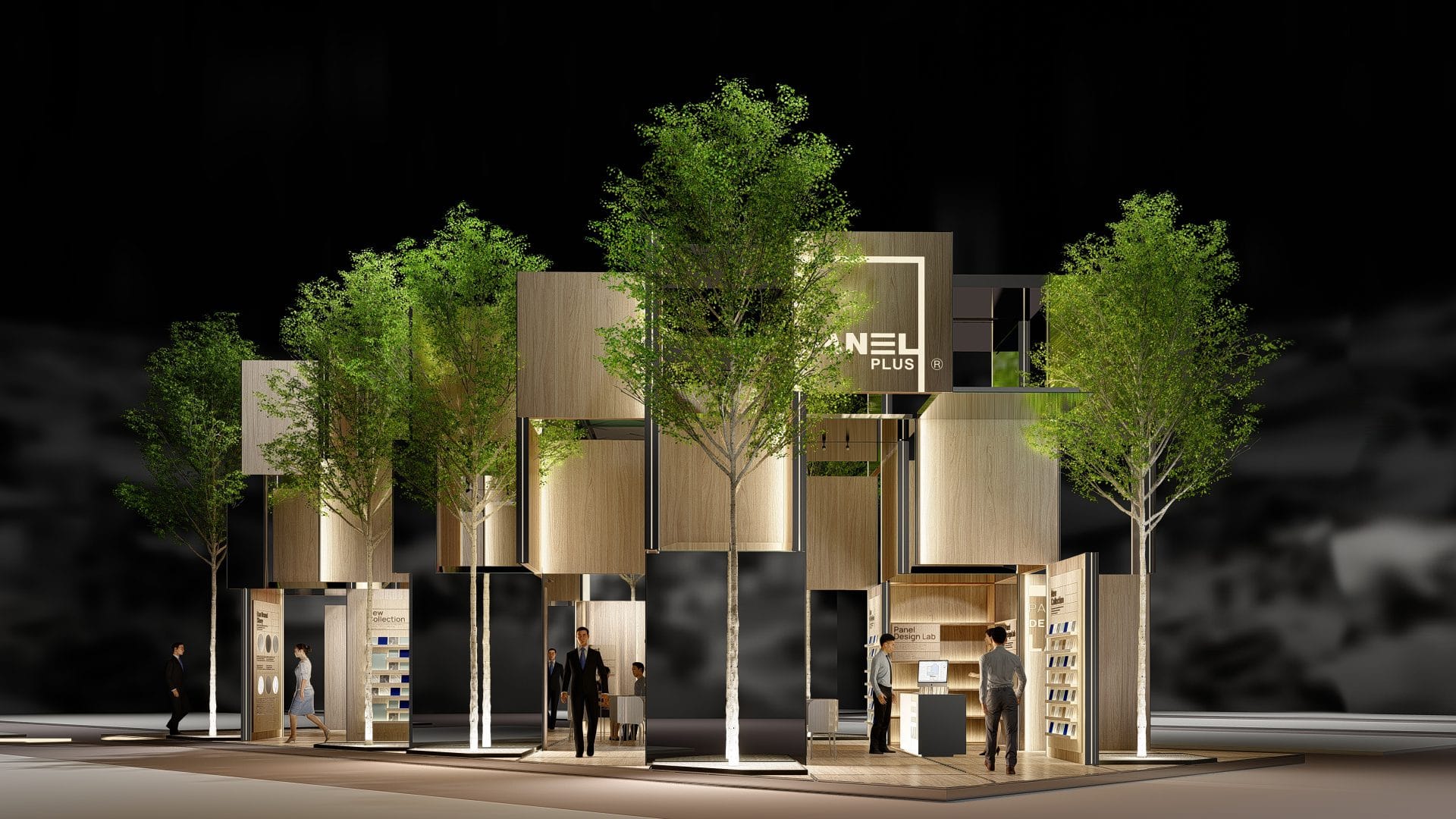

Given the pavilion’s limited footprint, the layout employs diagonal axes and layered spatial configurations to increase both material surface area and functional use. This approach unlocks the potential of wood board products, revealing them as a generative starting point for broader creative possibilities. Wood-grain textures and color variations are juxtaposed with mirrored aluminum panels to create reflections and spatial depth, while lighting design further accentuates the material’s details through the viewer’s own sensory perception.
Häfele x Jenchieh Hung + Kulthida Songkittipakdee / HAS design and research
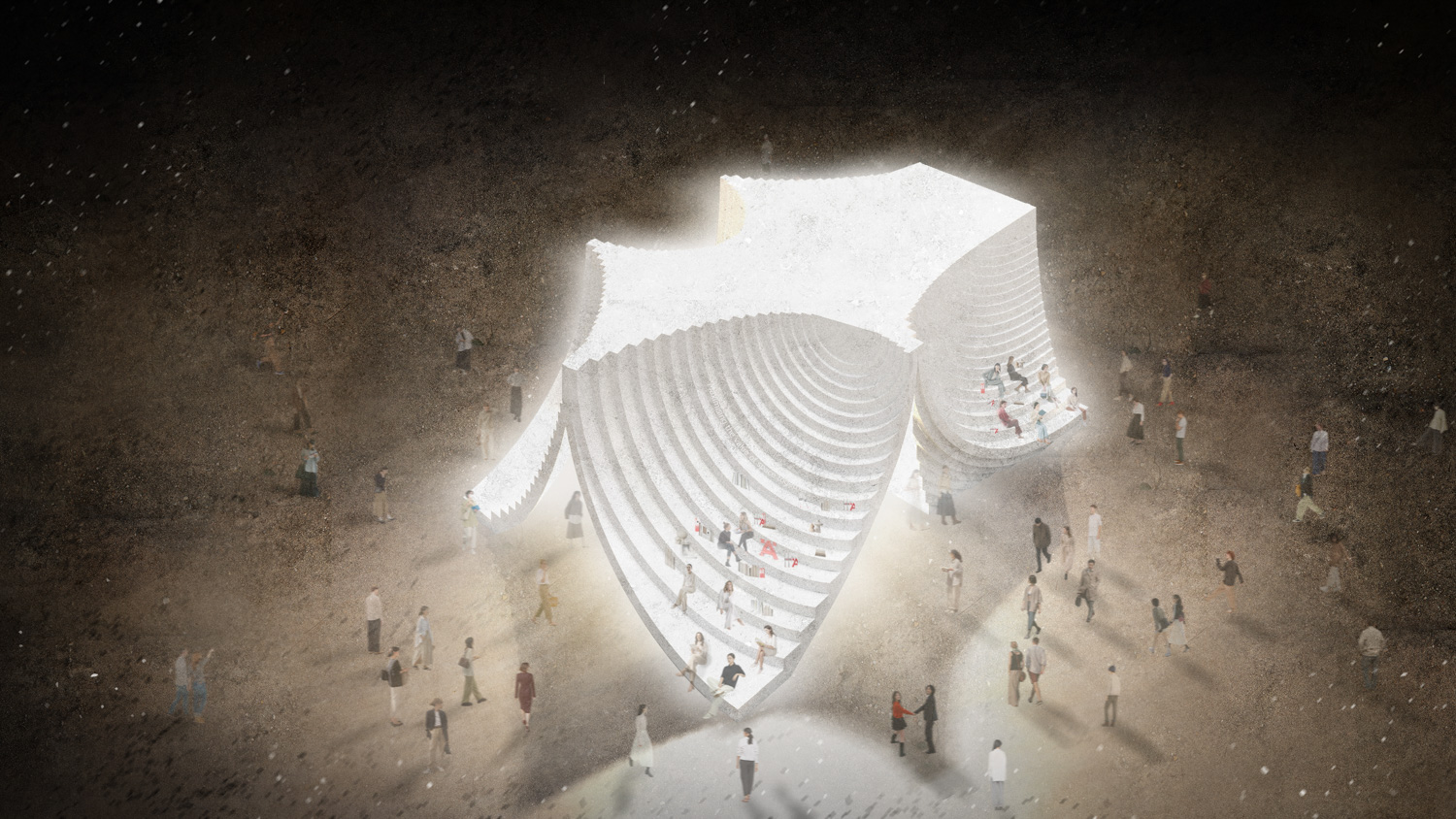

The pavilion’s design and installation process prioritize resource efficiency and the reduction of post-exhibition waste. Eco-friendly materials are employed to achieve complex architectural forms while reducing the load on the primary structure. The pavilion is designed for disassembly and future reassembly, enabling reuse beyond the event. In this way, the project aligns creative production with the brand’s broader direction toward sustainable building solutions for the future.
SCG x SaTa Na
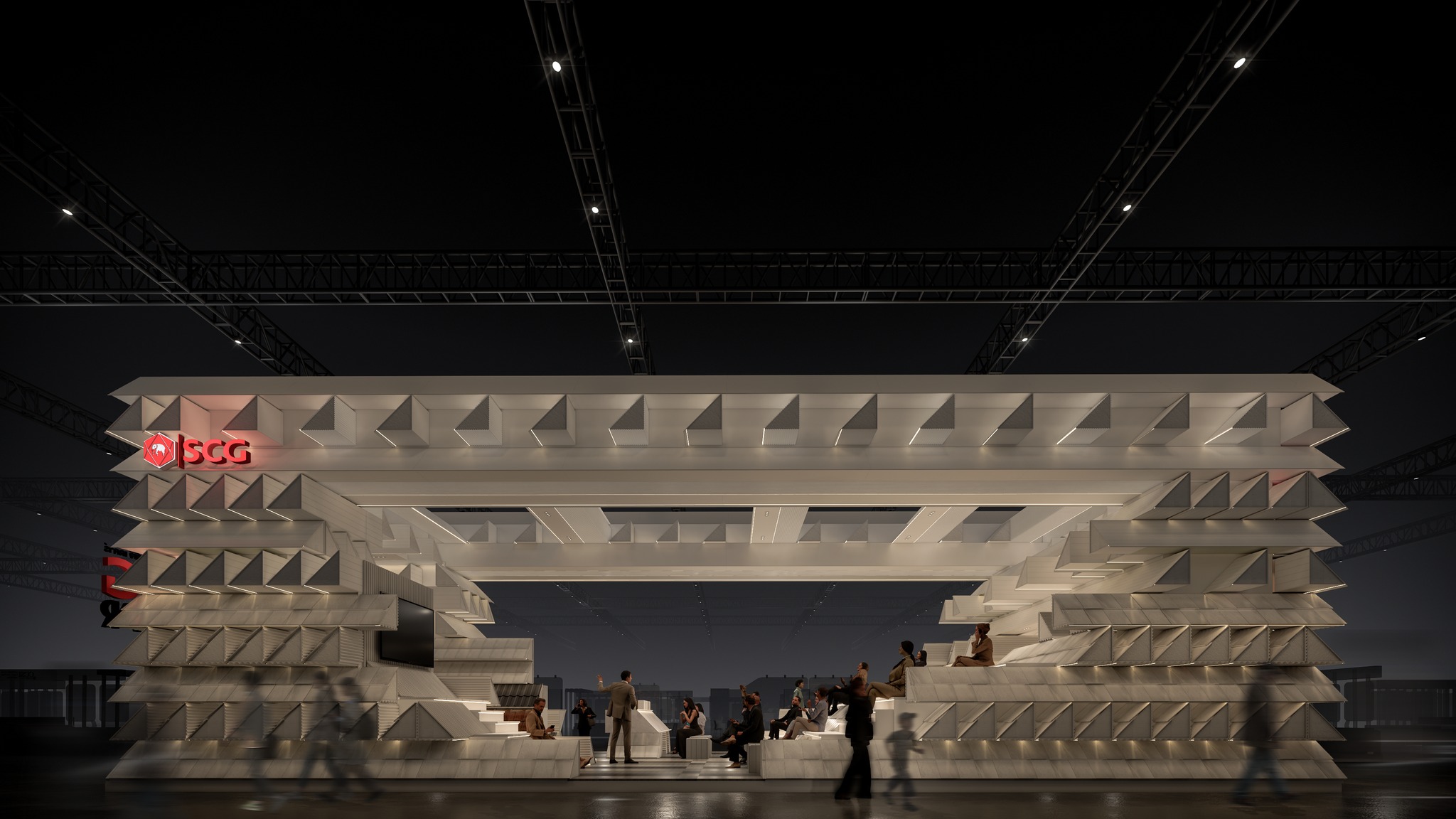

The pavilion demonstrates that material itself reveals processes of thought, structural strength, and architectural potential, while remaining a tactile surface within close reach of the body. When material is touched, understood, and assembled, the architectural space becomes a space for people; one that can be actively inhabited and animated from within.
SMARTMATT INTO SPEC x Context Studio
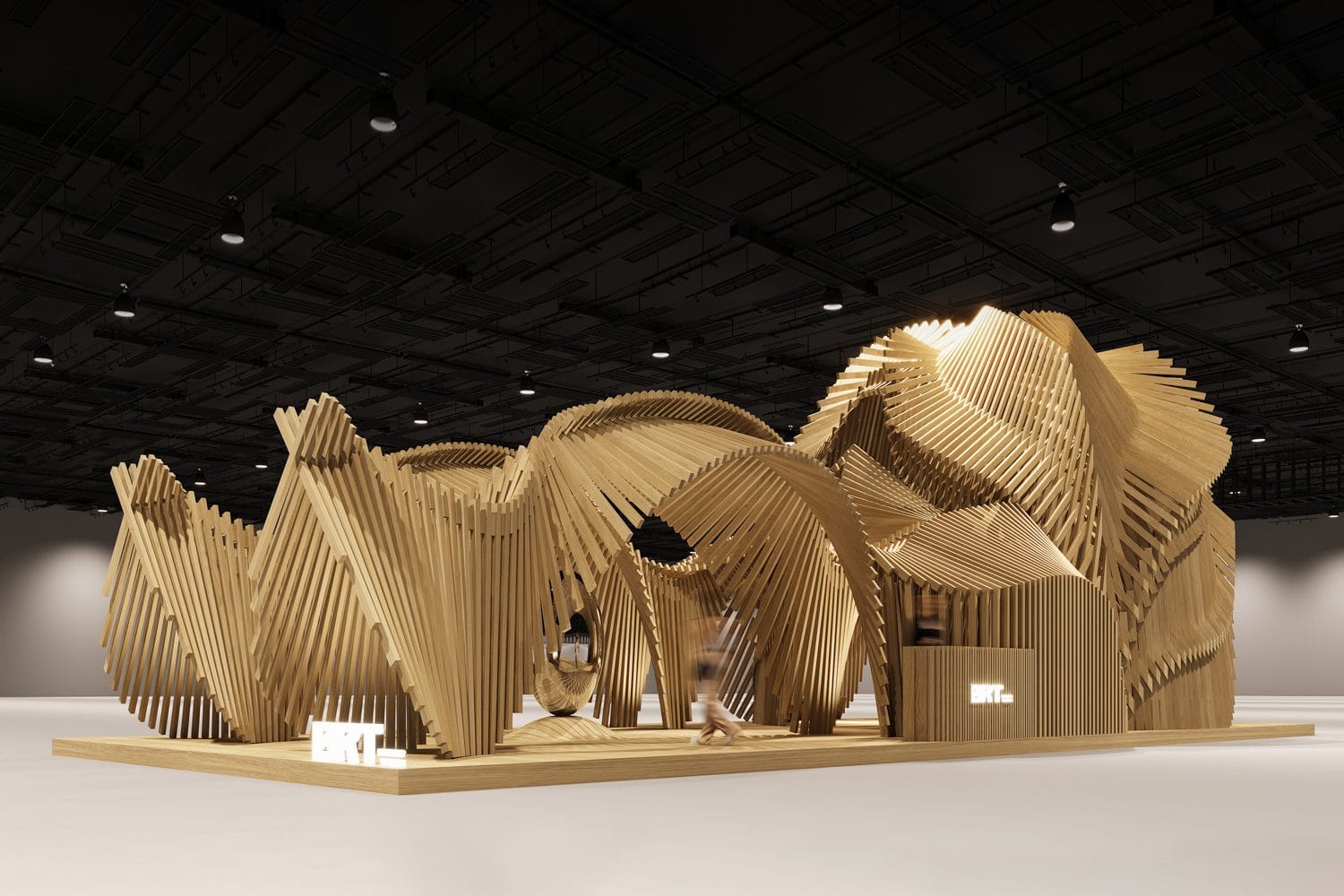

SMARTMATT’s SPC synthetic wood material is composed with careful precision, measured intervals, and voids that form fluid, rounded geometries. These spatial gestures generate atmosphere and shared sensory experience for visitors moving through Pransathan. The material system and structural components are designed for disassembly and reconfiguration, allowing the form to be adapted to varying activities, scales, and sites. In this way, the pavilion conveys its conceptual narrative fully through form and design process.
aluframe x Unknown Surface Studio
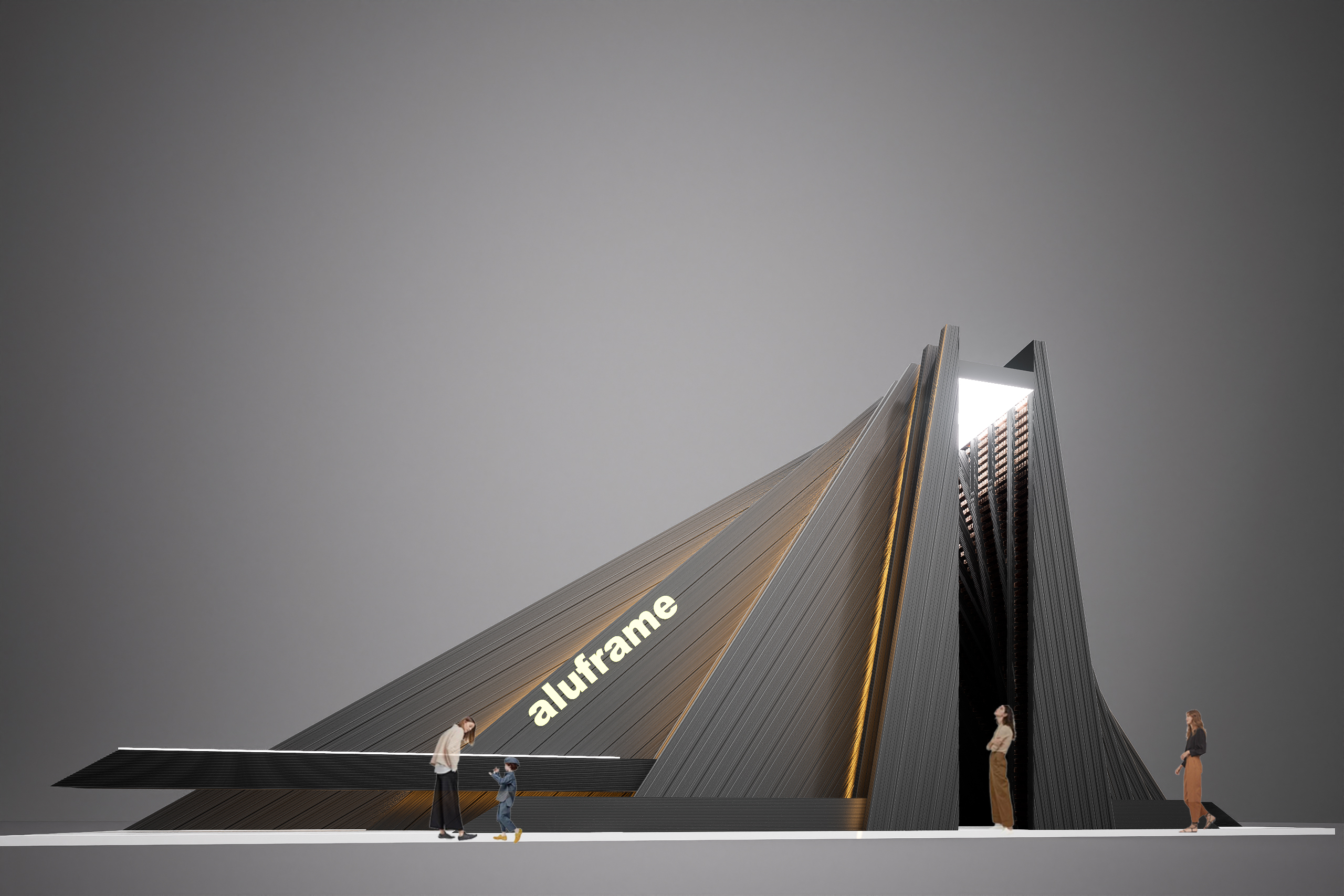

A triangular structure unfolds in a fan-like formation, generating multiple overlapping layers reminiscent of materials drawn from storage racks and transformed into architectural space. The voids between layers filter light and create rhythms of light and shadow shaped by the constant movement of people. Surface articulation is achieved by arranging aluminum cross-sections into patterned compositions, animating the industrial material. This strategy is integrated with aluframe’s aluminum sliding system, seamlessly connecting spatial design with engineering systems.
Palette of Materials Pavilion
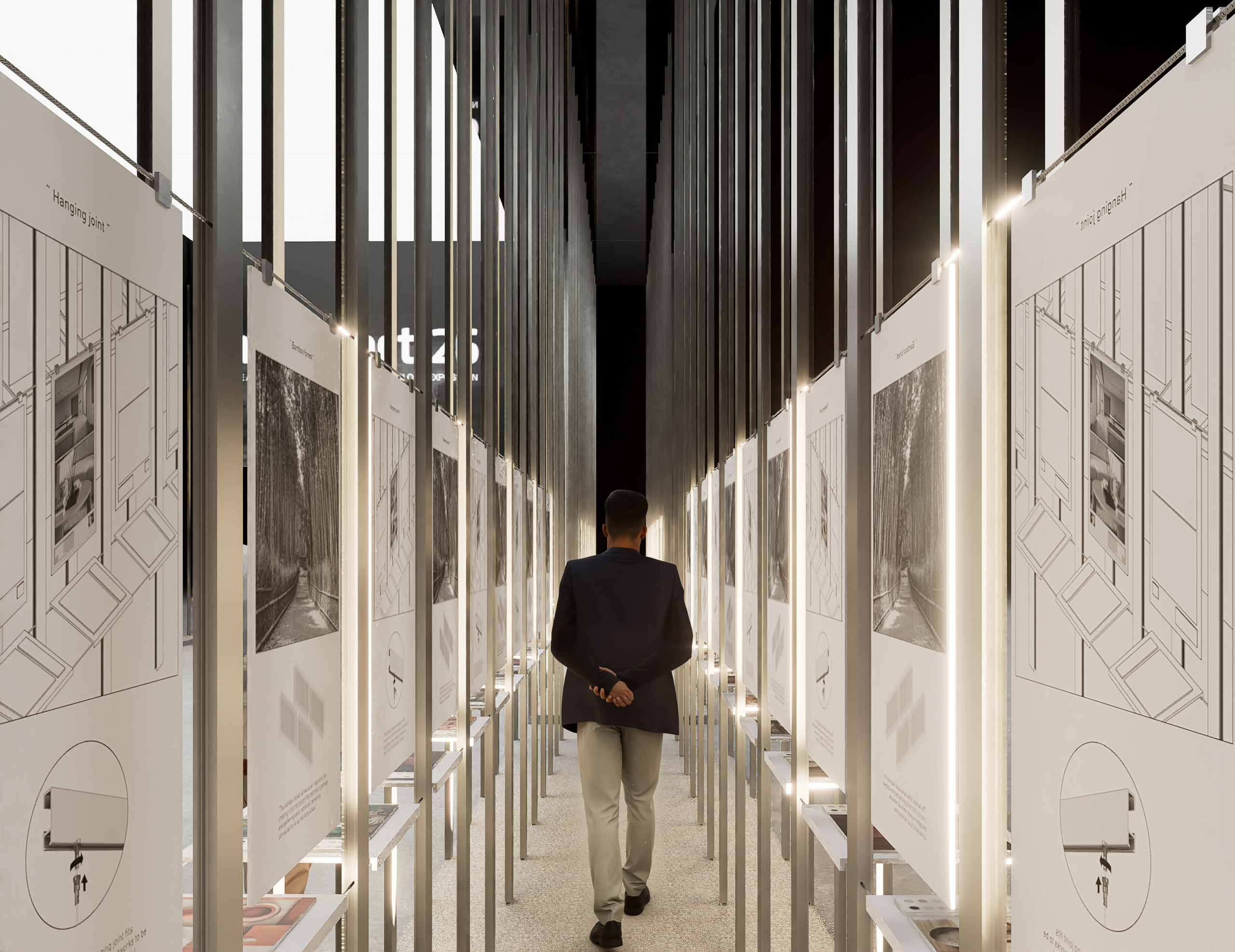

This pavilion features a striking design built on a sustainable concept: reusing the Aluminum structures from S-one Group, which were previously featured in last year’s Architect Expo.
Beyond the main structure, several partners provided materials and equipment to enhance the visitor experience:
● LUMICÈLE™ by CPH: Smart ceiling and lighting systems.
● UNILAMP: ALPHA spotlights.
● TODA: Smart Flex Mirror panels.
● DEFG: A 3 x 2.5 meter LED screen.
● Zonic Vision: Audio and control systems.
● IS DELIGHT: Surrounding landscape design.
● Panel Plus: MDF wood bases for the mood boards.
● Pioneer: Furniture.
● Mahajak: Sound Systems
● Bua: Outdoor Furniture
Together, these elements complete the atmosphere and create a seamless experience for everyone who enters the space.
All eight Thematic Pavilion and Palette of Materials Pavilion can be experienced at Architect’26, taking place from April 28 to May 3, 2026, between 10:00 AM and 8:00 PM, at Challenger Hall, IMPACT Muang Thong Thani. Advance registration is now open — click here to register.
For further updates and detailed information, please visit www.ArchitectExpo.com or follow the official channels on Facebook at งานสถาปนิก : ASA Architect Expo and Instagram at ASA Architect Expo 2026.