Architects: Want to have your project featured? Showcase your work by uploading projects to Architizer and sign up for our inspirational newsletters.
FX’s hit series Love Story has given JFK Jr. new life as a fashion icon. Max Berlinger, writing for GQ, argued that the show is “the most influential menswear show since Mad Men,” going on to explain that the drama plays well to existing trends, as Jr’s style “crystallized menswear’s obsessions du jour with prep, ‘old money style,’ and fawning over the 1990s.” As a man myself, it is hard to watch the show without wondering if I could pull off the looks that Jr. did, especially the irreverent way he wore designer suits, pairing them with backward hats and chain wallets. Above all, Jr.’s style emphasized a quality of ease, even a charming aloofness. You got the sense that there was nowhere that he would feel out of place.
In general, the Kennedy mystique is tied up with that peculiar Americana aesthetic that is sometimes called prep or Ivy. Core to the appeal of this look is a lack of fussiness. If you try too hard to look or sound like American royalty, as Jay Gatsby did, people see through it and react with suspicion — or disgust, as was the case with Richard Nixon. During the nation’s first-ever televised presidential debate, Nixon suffered horribly by being placed onstage next to the tanned and casually regal JFK Sr. The nation had known Nixon for years as Eisenhower’s vice president, but never before did it notice how deeply insecure he was with himself. Some say this debate won Kennedy the presidency.
There is something paradoxical about the “old money style,” which demands you both look great and not let on that you care how you look. Like all aspirational aesthetics, it is, by design, impossible. And yet there are those who pull it off — not just in fashion, but in architecture and interior design.
Architecturally, the Kennedy name usually evokes something beachy, like a Dutch colonial home with cedar shingles perched on a windy hill in Cape Cod. The Kennedys’ storied Kennebunkport Compound in Hyannis Port, Massachusetts, includes six houses that roughly fit this bill, although they have traditional white siding, not cedar shingles. (A shame).
However, it must be noted that these are historic homes. If one were to emulate the Kennedy style in a new build, simply recreating these types of structures would not work. It would feel forced, as if JFK Jr. dressed exactly like his father had, skinny tie and all. Really nailing the Kennedy aesthetic in 2026 requires holding classic American style lightly, blending in modern elements when they are called for, like pairing a backward Kangol with an Armani suit. Here are a few projects that get it right.
Marlboro Reich Music Hall
By HGA, Marlboro, Vermont
Jury Winner, Higher Education & Research Facilities, 13th Architizer A+Awards
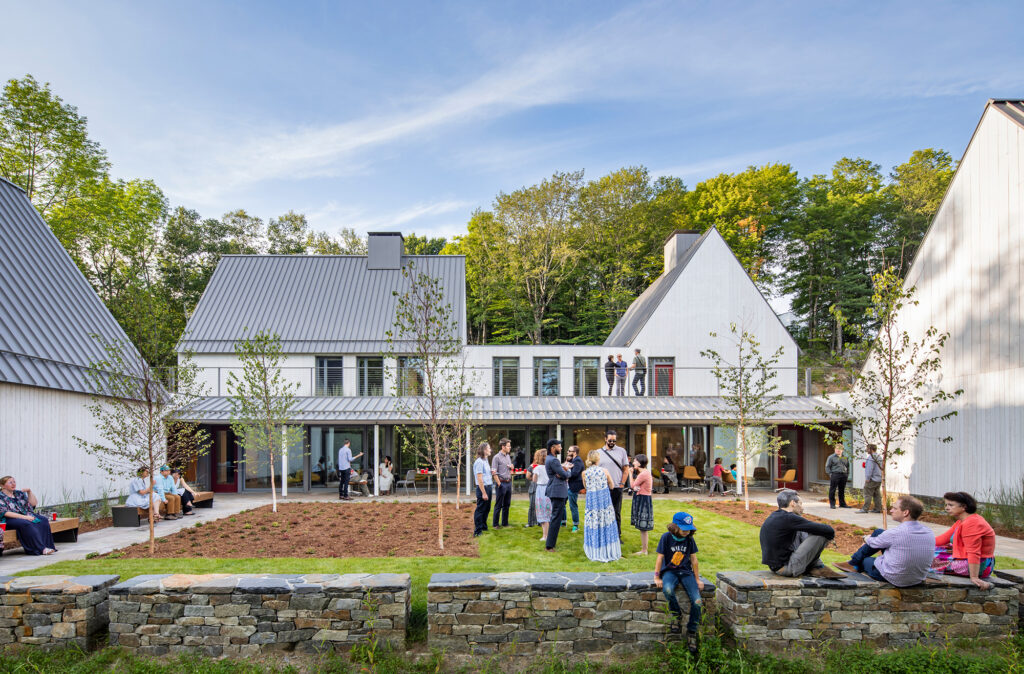

“The design for Reich Hall was inspired by a Cape Cod cottage—a 400-year-old typology derived from 17th-century English settlers’ dwellings in New England and the primary inspiration for Marlboro College’s centuries-old buildings,” explains HGA. While Marlboro College is sadly defunct, the continuation of the Marlboro Music Festival in this incredible venue allows its memory to live on.
Studio Whitehorse
By Joe Fischer Architect, Plymouth, Massachusetts
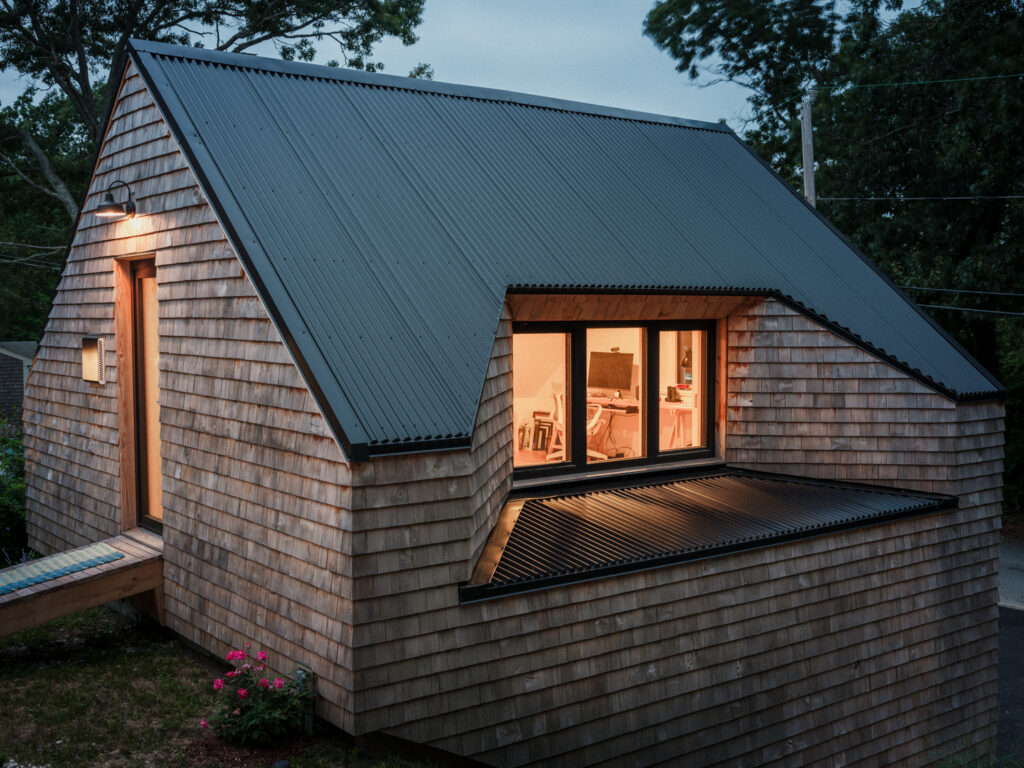

Aesthetically, this structure reminds me of really old New England — like the clapboard houses in Salem that reflected the spartan tastes of the Puritans. Like the Puritans’ dwellings, this studio has steep gables and modestly sized windows. Unlike 17th century homes, this one is fortified against the elements with triple-glazed windows and advanced insulation. The environmental specs here are impressive, as the home meets the North American Passive House standard for energy efficiency. And this is not to mention the incomparable charm of raw cedar shingles.
House on Sag Harbor
By 1100 Architect, Sag Harbor, New York
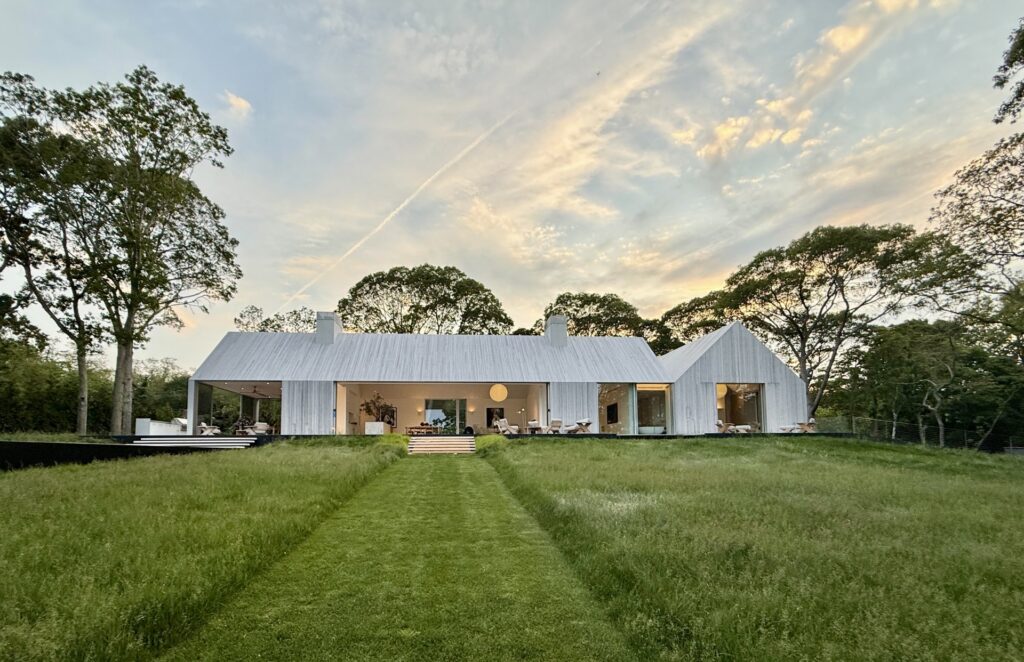

1100 Architect’s House on Sag Harbor doesn’t go for this historical look, but its understated elegance is very Kennedyesque. Jackie, who raised horses and oversaw a horse farm in New Jersey throughout her adult life, would especially appreciate the way this project’s proportions nod to barn architecture. I love the way the same weatherized timber cladding is used for both the roof and the facade, providing a quiet sense of unity.
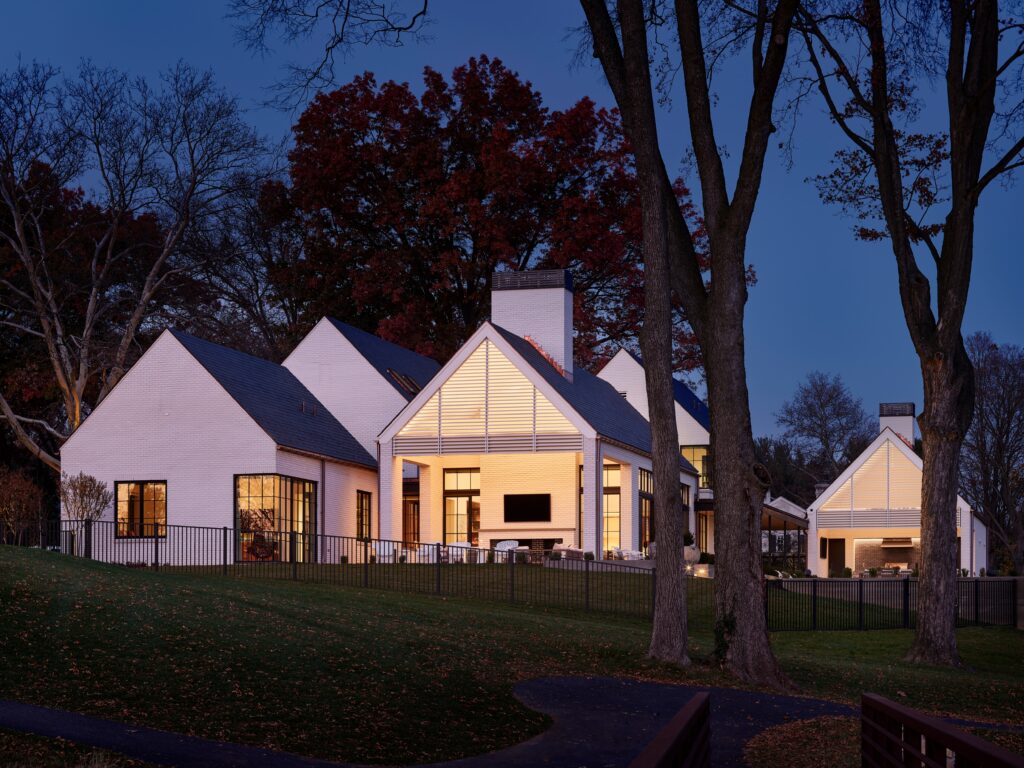
Five Gables
By Ziger|Snead Architects, Lancaster, Pennsylvania
Long Dune Residence
By Hammer Architects, Truro, Massachusetts
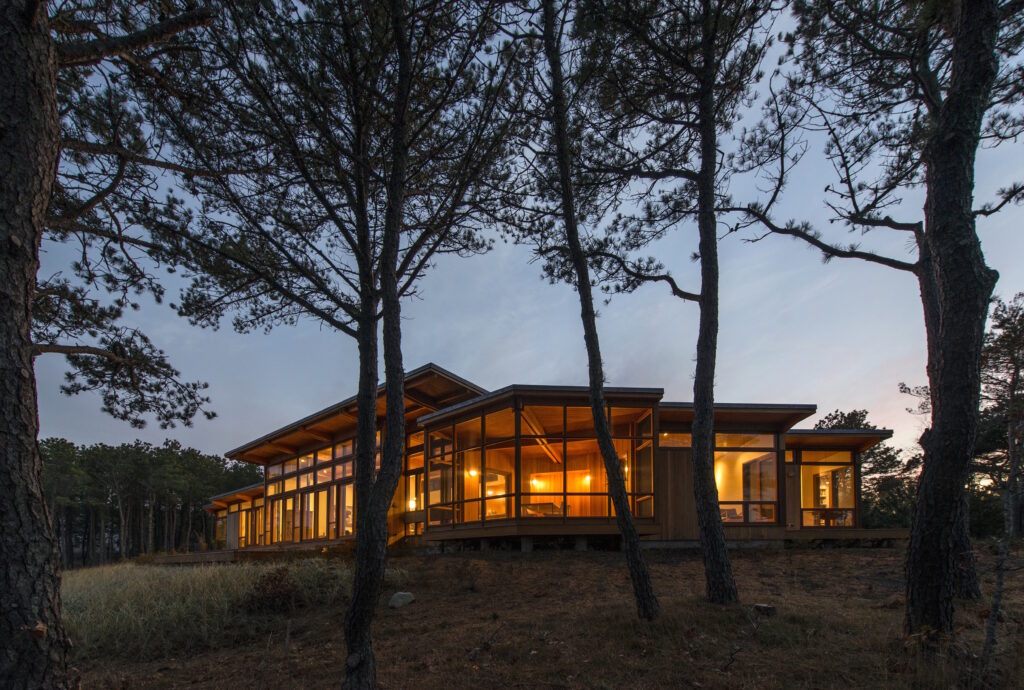

“Perched on a coastal bluff overlooking the Atlantic Ocean, this new residence is designed to additionally afford views of the Pamet River and a freshwater pond,” explains Hammer Architects. “Little is revealed until entering the house through a tall glass door that emerges as one approaches the house. Once inside, the living and dining rooms, which occupy the building’s center, open to the dramatic water views through a floor-to-ceiling glass wall that features large sliding doors connecting to a multi-level outdoor deck.”
Indeed, the effort that was taken to maximize ocean views would appeal to JFK Sr., especially, who was an avid sailor. While the style of this structure is clearly modern, its use of natural materials and reverence for its context make it a perfect addition to the collection. I can imagine JFK Jr. and Carolyn Bessette staying here to avoid the paparazzi. Jr. famously allowed himself to smoke one cigarette per day, and it is easy to picture him enjoying it contemplatively while walking through the slate pathway in the front garden.
Architects: Want to have your project featured? Showcase your work by uploading projects to Architizer and sign up for our inspirational newsletters.
Cover Image: Interior view of Long Dune House, showcasing the ocean view.